This post was created with help from AI tools and carefully reviewed by a human (Muntaseer Rahman) . For more on how we use AI on this site, check out our Editorial Policy.
Check Out These FREE Tools We Made JUST For You!
12 Best Pet Frogs For Handling (And 5 You Should Never Touch)
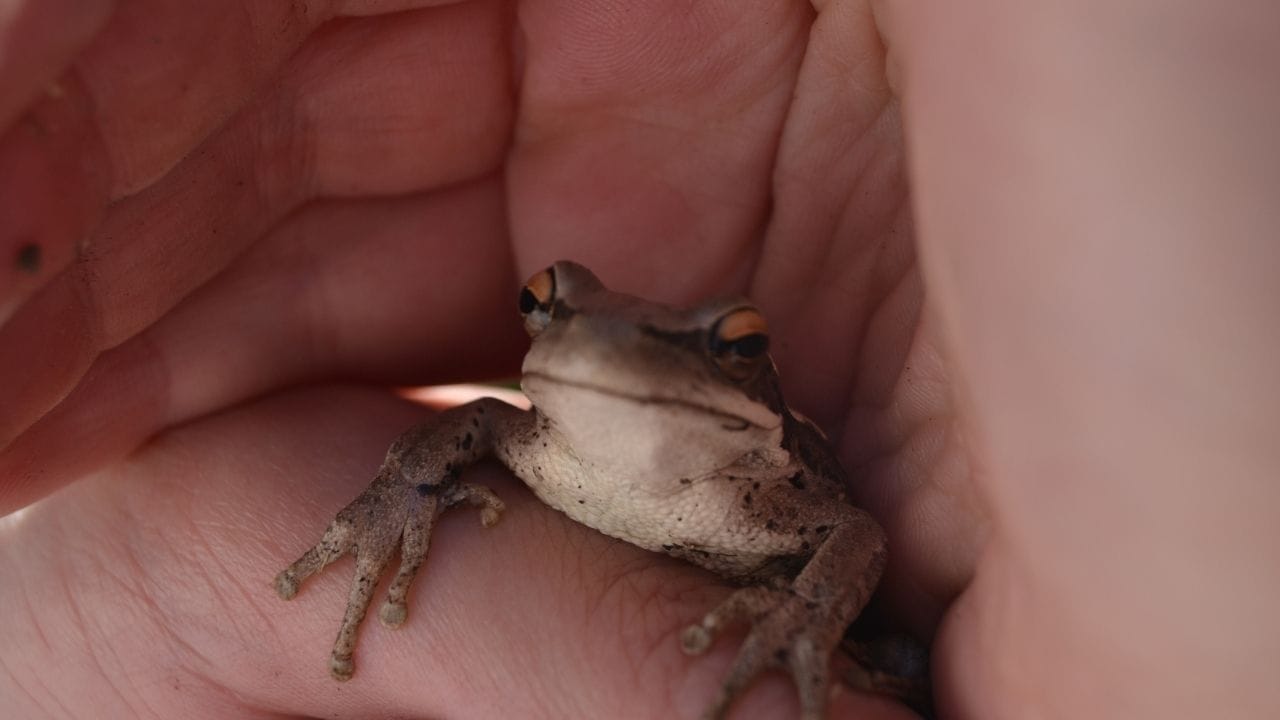
You bought the frog. You set up the tank. And now it is sitting there on a branch looking like a tiny green stress ball, and every part of your brain is screaming pick it up.
Here is the thing nobody puts at the top of these lists. No frog on earth enjoys being held. Not one.
What some frogs do is tolerate it. They sit still, they do not panic, and they walk away from a short session with no harm done. That is a real difference and it is the only thing worth ranking frogs on.
So this is not a list of cuddly frogs, because that list is empty. This is a list of which species can take a five minute handling session without it costing them, which ones you should only touch in an emergency, and which ones you genuinely should never pick up at all.
The Short Answer
The White’s tree frog is the best pet frog for handling, full stop. It is chunky, slow, non-toxic, does not bite, and it will sit on a damp palm for ten minutes without freaking out.
If you want a frog you can occasionally hold, buy a captive-bred White’s tree frog and stop reading the rest of the internet’s suggestions.
Everything else on this list is a step down from that, and about a third of the frogs people commonly recommend for handling should not be handled at all.
What “Good For Handling” Actually Means
A frog’s skin is not like ours. It is thin, semi-permeable, and it is a working organ that the frog breathes and drinks through.
That means whatever is on your hands goes into your frog. Soap residue, hand cream, sunscreen, bug spray, the salt in your own sweat, all of it crosses straight into the bloodstream.
So when I say a frog “handles well,” I am rating it on five things:
- Temperament. Does it sit still or does it launch itself across the room
- Bite risk. Some of these frogs draw blood
- Secretions. What comes out of the skin when it panics, and whether that hurts you
- Body toughness. Can it survive a small fumble
- Recovery. Does it go back to normal behavior fast, or sulk for two days
A frog that scores well on all five is a frog you can handle briefly. It is still not a frog that wants to be handled.
Quick Comparison Table
| Frog | Adult Size | Handling Tier | Bites? | Skin Secretion | Safe Frequency |
|---|---|---|---|---|---|
| White’s tree frog | 3 to 4.5 in | Tier 1 | No | None of concern | 10 to 15 min, 1 to 2x a week |
| Amazon milk frog | 2.5 to 4 in | Tier 1 | No | Mild, sticky | 5 to 10 min, weekly, adults only |
| White-lipped tree frog | 4 to 5.5 in | Tier 1 | No | None of concern | 10 min, weekly |
| American toad | 2 to 3.5 in | Tier 1 | No | Bufotoxin, wash after | 5 to 10 min, weekly |
| African bullfrog | 4 to 9 in | Tier 2 | Yes, hard | Mild, harmless to us | Emergencies only |
| Waxy monkey frog | 2 to 3 in | Tier 2 | No | Waxy, harmless | 5 min, rarely |
| Vietnamese mossy frog | 2 to 3.5 in | Tier 2 | No | None of concern | Emergencies only |
| Tomato frog | 2.5 to 4 in | Tier 2 | No | Sticky, allergenic | Emergencies only |
| Chubby (Asian painted) frog | 2 to 3 in | Tier 2 | No | Sticky glue | Emergencies only |
| Red-eyed tree frog | 2 to 3 in | Tier 2 | No | None of concern | Emergencies only |
| Oriental fire-bellied toad | 1.5 to 2 in | Tier 2 | No | Irritant, gloves required | Emergencies only |
| Gray tree frog | 1.5 to 2.5 in | Tier 2 | No | Irritant to eyes and lips | Emergencies only |
| Pacman frog | 4 to 7 in | Tier 3 | Yes, very hard | Mild | Never, use a cup |
| African dwarf frog | 1 to 1.5 in | Tier 3 | No | None | Never, use a net |
| Dart frog | 0.75 to 2 in | Tier 3 | No | Non-toxic in captivity | Never, too fragile |
Tier 1: Frogs That Genuinely Tolerate Short Handling
These four are the only frogs I would put in a beginner’s hands on purpose.
1. White’s Tree Frog
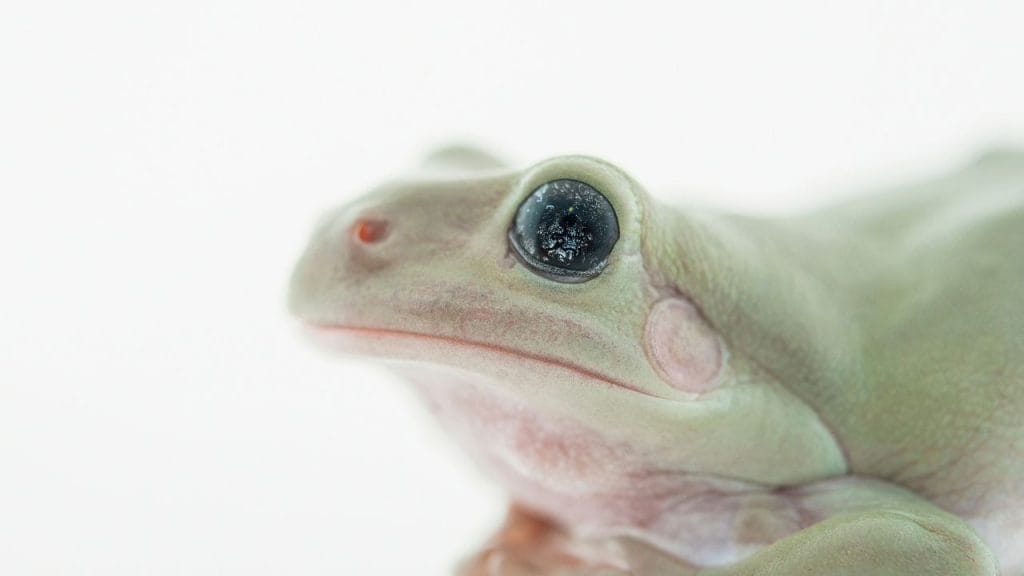
| Scientific name | Litoria caerulea |
| Adult size | 3 to 4.5 inches |
| Lifespan | 10 to 16 years, some hit 20 |
| Temperament | Calm, slow, almost lazy |
| Toxicity | None that matters to you |
| Bite risk | None |
This is the frog. If your whole reason for getting an amphibian is that you want to hold it sometimes, this is the one you buy and there is not a close second.
White’s tree frogs are built like little water balloons with a permanent smug expression. They move slowly, they do not bolt, and they do not have the panic reflex that makes most tree frogs jump off your hand mid-session.
Ten to fifteen minutes, once or twice a week, is the ceiling most keepers and vets agree on. Past that you are drying out their skin, and dry skin is the beginning of a lot of frog health problems.
They are non-toxic, so there is no secretion to worry about on your end. Just wash your hands after, because they carry salmonella like every other amphibian.
One warning. These frogs are famously food-motivated and they will absolutely lunge at a moving finger thinking it is a cricket. It does not hurt, they have no real teeth, but it will startle you.
Buy captive-bred. They are widely available and cost around 30 to 60 dollars, and captive-bred animals settle into handling far faster than imports.
2. Amazon Milk Frog
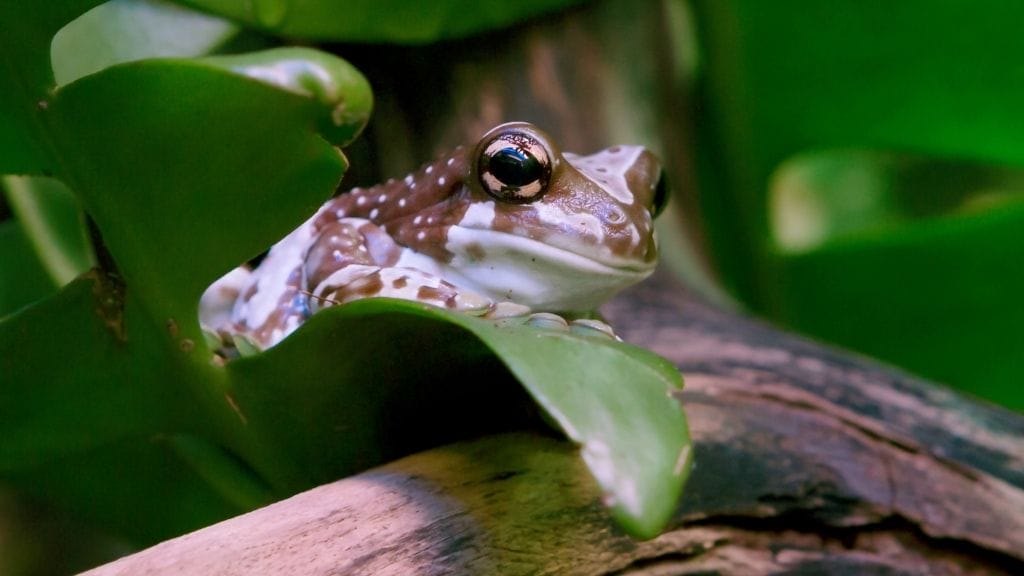
| Scientific name | Trachycephalus resinifictrix |
| Adult size | 2.5 to 4 inches |
| Lifespan | 8 to 10 years |
| Temperament | Bold, curious, calm as adults |
| Toxicity | Mild sticky secretion, harmless to humans |
| Bite risk | None |
The blue-grey and cream banding makes these one of the best-looking frogs you can keep, and adults are surprisingly sturdy for a tree frog.
The size rule matters more here than with any other frog on this list. Do not handle a milk frog under 2 inches. Juveniles are genuinely fragile and a lot of them die from over-handling in the first few months.
Once they hit adult size they are bold and easy to work with. Five to ten minutes weekly is plenty.
They produce a sticky white secretion when stressed, which is where the “milk” name comes from. It is not dangerous to you and captive frogs rarely bother producing it.
Our full Amazon milk frog care guide covers the setup side.
3. White-Lipped Tree Frog

| Scientific name | Litoria infrafrenata |
| Adult size | 4 to 5.5 inches |
| Lifespan | 10 or more years |
| Temperament | Calm but more alert than White’s |
| Toxicity | None of concern |
| Bite risk | None |
This is the biggest tree frog in the world and basically the White’s tree frog’s leggier cousin.
They handle nearly as well, and their size means there is less to fumble. A five inch frog is much harder to accidentally injure than a one inch one.
The trade-off is that they are quicker and more likely to jump than a White’s. Stay seated, stay low to the ground, and keep the session under ten minutes.
Wild-caught imports are still common with this species, and those are noticeably twitchier. Ask the seller directly.
4. American Toad

| Scientific name | Anaxyrus americanus |
| Adult size | 2 to 3.5 inches |
| Lifespan | 10 or more years in captivity |
| Temperament | Placid, almost inert |
| Toxicity | Bufotoxin from the parotoid glands |
| Bite risk | None |
Nobody puts toads on frog handling lists and that is a mistake, because the American toad is arguably the most handleable amphibian in the hobby.
Their skin is thicker and drier than a frog’s, so they do not dry out as fast in your hands and they absorb less from your skin. They also just sit there.
The catch is the toxin. All toads secrete bufotoxin from the parotoid glands behind the eyes. It will not hurt intact skin, but get it in your eyes, mouth, or an open cut and you are in for a bad afternoon.
So: handle, then wash before you touch your face. That is the entire protocol.
Skip the big tropical toads though. Cane toads and Colorado river toads produce enough toxin to kill a dog and they belong nowhere near this list.
Tier 2: Handle Only When You Have To
These are frogs you can pick up safely when there is a reason. Tank cleaning, a vet trip, a health check. Not for fun, and not on a schedule.
5. African Bullfrog
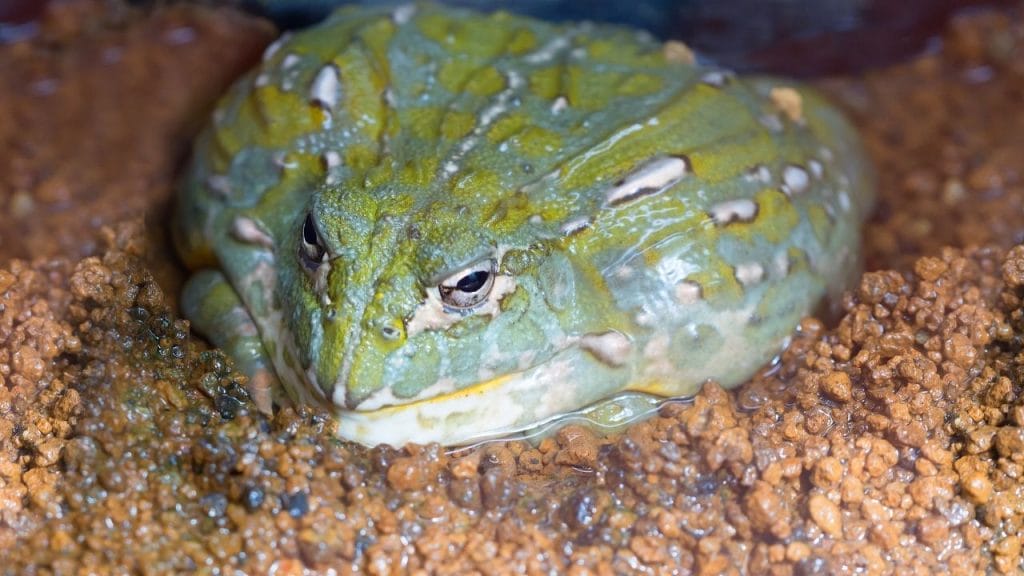
| Scientific name | Pyxicephalus adspersus |
| Adult size | 4 to 9 inches |
| Lifespan | Up to 35 years |
| Temperament | Calm until it is not |
| Toxicity | Mild skin toxin, harmless to humans |
| Bite risk | High, and it hurts |
Every list puts this frog in the “handleable” column because it is big and it usually sits still. Both true. Both misleading.
African bullfrogs have odontoid projections, which are basically tooth-like spikes in the lower jaw, and a determined one will break skin. They are ambush predators with a strong bite and a short fuse about territory.
They also live up to 35 years, which is longer than most people’s marriages, so this is a serious commitment before you even get to handling.
If you have to move one, use a container. If you must use hands, wet them, go in from behind and above, and support the whole body. Never dangle a finger in front of that mouth.
More on which frogs actually bite and how much it hurts in can a frog bite you.
6. Waxy Monkey Frog

| Scientific name | Phyllomedusa sauvagii |
| Adult size | 2 to 3 inches |
| Lifespan | 8 to 10 years |
| Temperament | Slow and deliberate |
| Toxicity | Waxy skin coating, harmless to humans |
| Bite risk | None |
These frogs walk instead of hopping, hand over hand like a tiny sloth. It is genuinely one of the best things in the hobby to watch.
That slow movement makes them easy to handle in the mechanical sense. They will not leap out of your grip.
But they coat themselves in a waxy secretion to stop water loss, and rubbing that off with your fingers is a real cost to the animal. Every time you handle one you are stripping part of its waterproofing.
Five minutes, rarely, and only with damp hands.
7. Vietnamese Mossy Frog
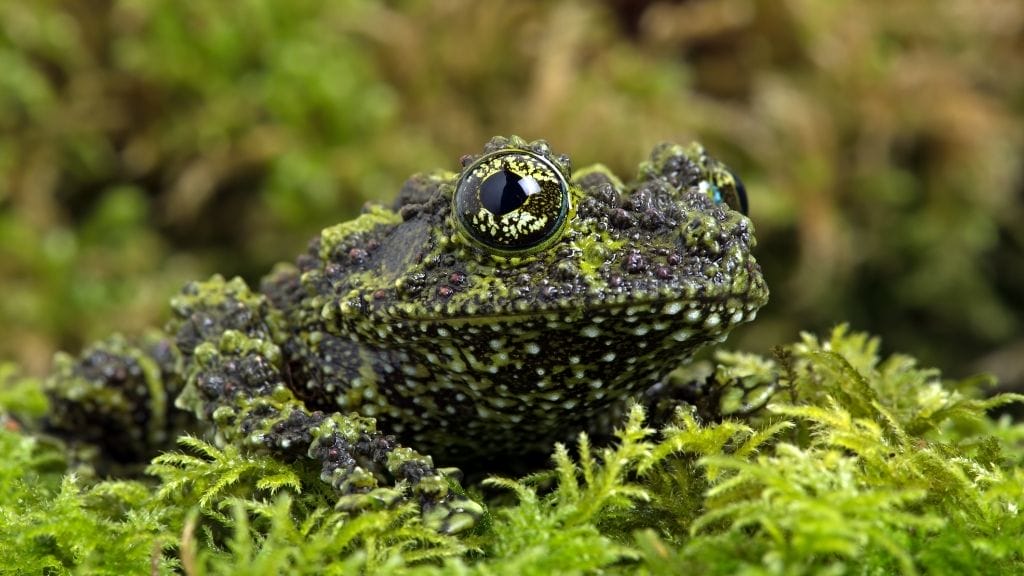
| Scientific name | Theloderma corticale |
| Adult size | 2 to 3.5 inches |
| Lifespan | 10 or more years |
| Temperament | Shy, freezes when scared |
| Toxicity | None of concern |
| Bite risk | None |
Mossy frogs look like a wet clump of moss and they act like it too. When you reach for one it goes completely still and tucks into a ball.
That stillness reads as calm. It is not. It is a predator response, and the frog is doing it because it thinks it is about to be eaten.
They are non-toxic and they do not bite, so handling them is safe for you. It is just pointless stress for the frog.
Move them with a cup and enjoy them through the glass. The Vietnamese mossy frog care guide has the rest.
8. Tomato Frog
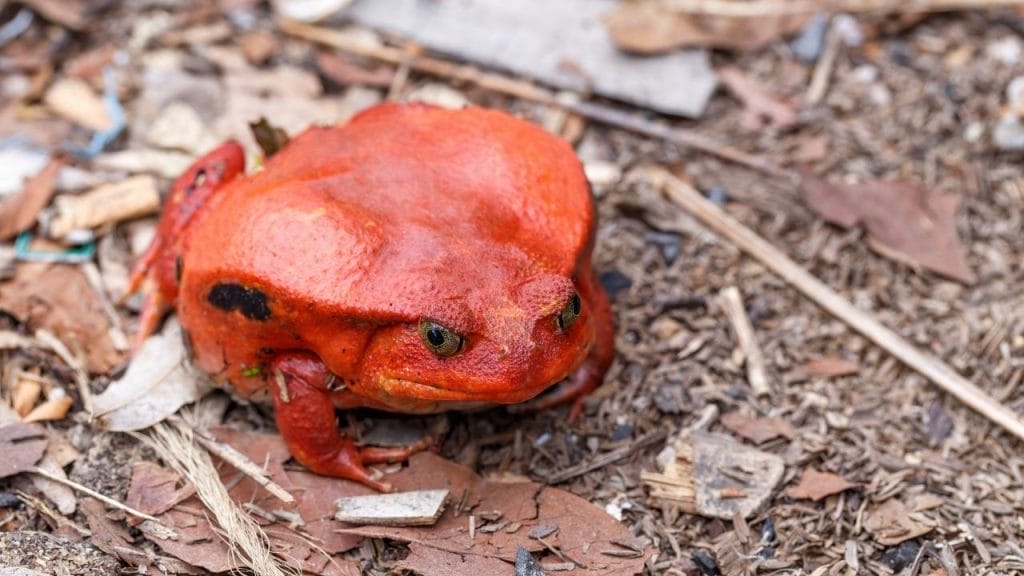
| Scientific name | Dyscophus guineti / Dyscophus antongilii |
| Adult size | 2.5 to 4 inches |
| Lifespan | 6 to 8 years |
| Temperament | Docile but nervous |
| Toxicity | Sticky secretion, causes allergic skin reactions |
| Bite risk | None |
Bright orange, round, and one of the most striking frogs you can keep on a beginner budget.
When threatened, a tomato frog produces a thick white glue from its skin, and that goo contains histamine-like compounds that cause redness, itching, and swelling on human skin. Some keepers react badly, most barely notice.
The stuff is also genuinely sticky, as in it functions as glue in a snake’s mouth, which is the whole point of it.
Gloves are not optional with this species. Handle only when you have to, and never let it get near your eyes.
9. Chubby Frog (Asian Painted Frog)

| Scientific name | Kaloula pulchra |
| Adult size | 2 to 3 inches |
| Lifespan | 8 to 10 years |
| Temperament | Timid, hides constantly |
| Toxicity | Sticky defensive secretion |
| Bite risk | None |
The chubby frog looks exactly like a small brown dinner roll with legs, which is most of its appeal.
It is also a burrower that spends most of its life underground and hates being exposed, let alone lifted.
Stressed chubby frogs produce a sticky, glue-like secretion. Not dangerous, extremely annoying, and a clear sign you should put the frog down.
Give a new one several weeks to settle before you even think about touching it.
10. Red-Eyed Tree Frog
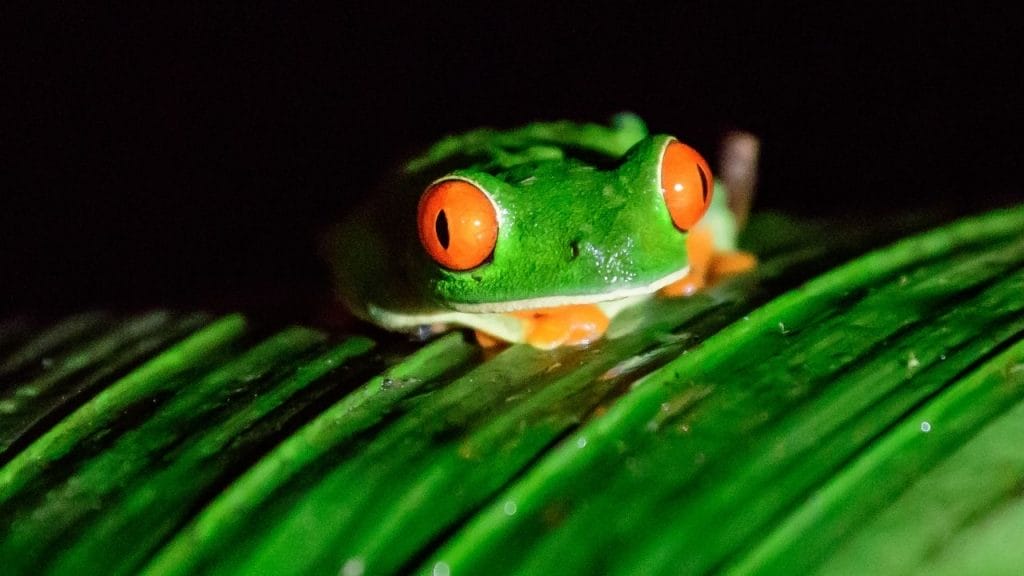
| Scientific name | Agalychnis callidryas |
| Adult size | 2 to 3 inches |
| Lifespan | 5 to 8 years |
| Temperament | Very skittish |
| Toxicity | None of concern |
| Bite risk | None |
The most photographed frog on the planet, and one of the worst on this list for handling.
They are non-toxic and harmless to you. The problem is entirely on their side. Red-eyes are nocturnal, delicate, and they startle at basically everything.
Pick one up during the day and you are waking it up, blinding it, and scaring it all at once. It will launch itself off your hand and it can hurt itself doing that.
These are display animals. Beautiful ones. See the red-eyed tree frog care guide for how to keep them happy without touching them.
11. Oriental Fire-Bellied Toad

| Scientific name | Bombina orientalis |
| Adult size | 1.5 to 2 inches |
| Lifespan | 10 to 20 years |
| Temperament | Active, social, bold |
| Toxicity | Irritant secretion, real risk to your eyes |
| Bite risk | None |
These are some of the most entertaining amphibians you can keep. They are active all day, they are social with each other, and they cost about 10 dollars.
They are also the species on this list most likely to actually hurt you.
Fire-bellied toads secrete a milky irritant containing bombesin and serotonin compounds. Get it in your eyes and you are looking at intense pain, swollen eyelids, and temporary vision changes.
They flash the orange belly as a warning first. That display is the frog telling you it is loaded.
Gloves every single time, no exceptions, and never rub your eyes during tank maintenance.
12. Gray Tree Frog

| Scientific name | Dryophytes versicolor |
| Adult size | 1.5 to 2.5 inches |
| Lifespan | 7 to 9 years |
| Temperament | Skittish, nocturnal |
| Toxicity | Irritant to eyes, lips, and cuts |
| Bite risk | None |
I am including this one because it appears on almost every “frogs you can handle” list, and it mostly should not.
Gray tree frogs are native to the eastern US, which means nearly every one in the hobby is wild-caught. Wild-caught frogs are more stressed, more parasitized, and far less tolerant of handling than captive-bred animals.
Their skin secretion is not medically serious but it stings on lips, eyes, and open cuts.
They are also small. A two inch frog has very little margin for a fumble.
If you already have one, handle it with damp gloves and only when necessary. More detail in are gray tree frogs poisonous.
Tier 3: Frogs You Should Never Pick Up
This section matters more than the list above it, because these are the species beginners most often get wrong.
Pacman Frogs
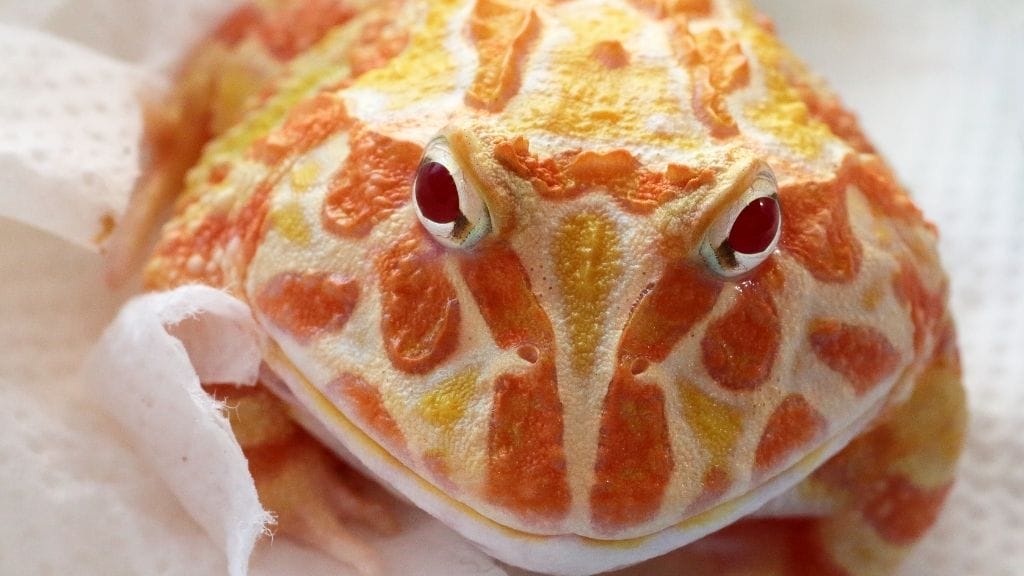
Pacman frogs show up on handling lists constantly and it is baffling. These are ambush predators that bite anything warm that enters their strike range, and a big one can draw serious blood.
They are also almost pure water balloon. Their bodies are soft, their skin is thin even by frog standards, and they get stressed by being lifted more than most species.
Use a deli cup. Scoop from underneath, lid on, move the cup. If you must hold one, read holding Pacman frogs properly first.
African Dwarf Frogs and African Clawed Frogs

Fully aquatic frogs should never leave the water for a cuddle. They cannot support their own weight properly on land, they are extremely slippery, and they injure themselves thrashing.
There is also a hard public health reason here. A CDC investigation traced a multi-year salmonella outbreak to pet African dwarf frogs, sickening around 400 people, most of them children.
Move these with a net or by cup, underwater, always. See African clawed frog care for the safe method.
Dart Frogs

Good news first: captive-bred dart frogs are not poisonous. Their toxins come entirely from wild-diet ants, mites, and beetles, and a frog raised on fruit flies never develops them.
So the danger is not to you. It is to the frog.
Dart frogs are tiny, thin-skinned, and stress-prone, and a lot of them are under an inch long. There is no version of handling one that benefits the animal.
Full picture in dart frogs as pets.
Budgett’s Frogs

The screaming meme frog. They rear up, shriek, and lunge, and they have odontoid fangs plus a genuinely nasty attitude.
Cup only.
Any Wild-Caught Frog From Your Yard

Wild frogs are stressed by captivity, often carry parasites, and can spread chytrid fungus into and out of a collection. Many are also protected by state law.
Leave them where they are. Can you keep wild frogs as pets covers the legal side.
The Two Rules That Beat Species Choice
Species matters less than these two things, and almost nobody mentions them.
Rule 1: Under Two Inches, Do Not Handle
It does not matter how docile the species is. A frog under 2 inches has bones you can break by closing your hand slightly too fast.
Juvenile White’s tree frogs are sold at under 2 inches all the time and people handle them immediately. Wait until they bulk up.
Rule 2: Captive-Bred Beats Wild-Caught Every Time
A captive-bred frog has been around humans since it was a tadpole. A wild-caught import spent its whole life avoiding predators and then got shipped across the world in a bag.
The same species can be night-and-day different depending on origin. Ask the seller before you buy, and if they cannot tell you, buy elsewhere.
How Often Is Actually Safe
There is no universal number, but here is a working guide.
| Tier | Max Session | Max Frequency | Hard Stop |
|---|---|---|---|
| Tier 1 | 10 to 15 minutes | 1 to 2 times a week | Any stress sign |
| Tier 2 | 5 minutes | Only when needed | Any stress sign |
| Tier 3 | Zero | Never | N/A |
Also stop entirely for the first two to four weeks after you bring a frog home. A new frog is already at its stress ceiling just from the move.
Signs You Need To Put The Frog Down Right Now
Frogs do not have expressive faces, so people miss this constantly. Watch for:
- Screaming or squeaking. That is a predator alarm, not a greeting
- Puffing up to look bigger
- Going completely rigid or playing dead
- Peeing on you. A stress dump, and it also costs the frog water it needs
- Any secretion appearing on the skin
- Frantic scrambling or repeated jumping
- Color darkening or going pale
Any one of these means the session is over. Put it back in the enclosure and leave it alone for the rest of the day.
If your frog goes off food or hides for days after handling, that is a delayed stress response and you handled it too long. Chronic stress is one of the quiet killers behind sudden frog deaths.
The Glove Question Most Guides Get Wrong
You will read constantly that you should use latex gloves for frogs. Do not use latex gloves.
Latex is documented as lethal to amphibian larvae. Studies testing latex, vinyl, and nitrile gloves found latex killed tadpoles across every species tested, with vinyl also causing deaths in several.
Nitrile is the correct choice, and it has a second benefit. Rinse water from disposable nitrile gloves instantly kills around 99 percent of chytrid fungus zoospores, which is why hygiene protocols for amphibian work specify them.
That matters a lot if you keep more than one frog. Handling an infected animal bare-handed transmits chytrid; a fresh pair of nitrile gloves between animals does not.
So: powder-free nitrile, rinsed in dechlorinated water before you touch the frog, fresh pair per animal. Powder is an irritant, so powdered gloves of any material are out.
The step-by-step technique for actually lifting the frog is covered in safe handling rules for beginners.
Better Than Handling: Four Ways To Interact Without Touching
If what you actually want is to feel like you have a relationship with your frog, these work better than picking it up.
Tong feeding. Offer a cricket with soft-tipped tongs. Most Tier 1 and Tier 2 frogs learn the routine fast and will come to the front of the tank when they see the tongs.
Hand stationing. Rest a damp hand flat in the enclosure and wait. A settled White’s tree frog will often climb on by itself, which is the only version of handling the frog actually chose.
Target feeding at a dish. Same idea as tongs but hands-free, and it lets you monitor how much each frog eats in a group tank.
Rearranging the enclosure. Adding a new branch or plant gives the frog something to explore and gives you something to watch. Far more enrichment than five minutes in a fist.
Myths Worth Killing
“My frog sits still, so it likes being held.” Sitting still is the freeze response. Prey animals go motionless when they think they are about to die.
“Handle it more and it will get tame.” Frogs do not tame like reptiles. Repeated handling produces tolerance at best and chronic stress at worst.
“Frogs give you warts.” They do not. Warts come from a human virus. Full explainer in does frog pee cause warts.
“Captive-bred dart frogs are still poisonous.” They are not, and the difference is entirely dietary.
“Wash with soap first.” Soap residue is one of the fastest ways to hurt a frog. Plain lukewarm water before, soap after.
“Hand sanitizer is safer than soap.” It is dramatically worse. Alcohol destroys frog skin. Never sanitize and then handle.
Best Pick If A Kid Wants A Frog
Honest answer: a White’s tree frog, with the adult doing all the handling.
The CDC lists children under 5 as high-risk for serious salmonella infection, and kids are also the ones most likely to squeeze. Amphibians are generally not recommended in homes with under-5s at all.
For a school-age kid, a White’s tree frog plus a strict wash-your-hands rule works well. The frog is durable, the setup is forgiving, and it lives long enough to be worth the effort.
Also consider an American toad. Cheap, tough, native, and genuinely fine with brief handling.
What To Ask Before You Buy
Five questions that tell you whether the frog in front of you will handle well.
- Captive-bred or wild-caught? If they hesitate, assume wild-caught
- How long have you had it? Freshly imported animals are the most stressed
- Is it eating, and what? A frog that is not eating at the store is a frog with a problem
- How big is it now, and how big will it get? Under 2 inches means wait
- Can I see it move? A healthy frog reacts. A lethargic one is sick
FAQs
Which frog likes to be handled?
None of them. Some species tolerate it without harm, and White’s tree frogs tolerate it best, but no frog seeks out human contact the way a dog or a cat does.
What frogs are safe to touch?
White’s tree frogs, white-lipped tree frogs, adult Amazon milk frogs, and American toads are all safe to touch with clean damp hands. Fire-bellied toads, tomato frogs, and gray tree frogs are safe only with gloves because of their skin secretions.
Is it OK to pick up toads?
Yes, with a caveat. American toads handle better than most frogs, but every toad secretes bufotoxin from the parotoid glands behind its eyes. That will not hurt intact skin, but wash before you touch your eyes or mouth. Avoid cane toads and Colorado river toads entirely.
Can you handle frogs with bare hands?
You can, if your hands are washed in plain water with no soap residue and kept wet the whole time. Gloves are safer for both of you, and required for any species with an irritant secretion.
What are the best pet toads for beginners?
American toads, fire-bellied toads, and Woodhouse’s toads. American toads are the most handleable of the three; fire-bellied toads need gloves.
What are some non-poisonous frogs for beginners?
White’s tree frogs, white-lipped tree frogs, Amazon milk frogs, and Pacman frogs are all non-toxic to humans. Only the first three should be handled, because Pacman frogs bite.
What is the best tiny frog for a pet?
Dart frogs and mantellas are the best small display frogs, but none of them should be handled. If you want small and handleable, that combination does not really exist. See small pet frogs that stay small.
Is it cruel to keep frogs as pets?
Not if the setup is right and the animal is captive-bred. Correct humidity, temperature, space, and a hands-off approach make for a frog that lives its full lifespan. Cruelty comes from wild-caught animals in bad enclosures being handled daily.
Do frogs recognize their owners?
There is no good evidence that they do. Some frogs learn to associate a keeper’s presence with food, which looks like recognition but is a feeding response.
How long can I hold my frog?
Ten to fifteen minutes maximum for the most tolerant species, five minutes for everything else, and zero for Tier 3. Stop sooner at the first stress sign.
Final Words
The frogs worth handling are a short list, and the honest version of it is four species long.
White’s tree frog if you want the best one. White-lipped or adult Amazon milk frog if you want variety. American toad if you want cheap and tough.
Everything else is a display animal, and that is not a downgrade. Watching a mossy frog vanish into a piece of bark or a waxy monkey frog walk hand-over-hand across a branch beats five minutes of a scared frog sitting in your palm.
Get the species right, keep the sessions short, use nitrile, and wash your hands. Your frog gets to live out its full fifteen years, and you still get to hold it now and then.
Not a bad trade.

About Author
Hello, I’m Muntaseer Rahman, the owner of AcuarioPets.com. I’m passionate about aquarium pets like shrimps, snails, crabs, and crayfish. I’ve created this website to share my expertise and help you provide better care for these amazing pets.
Disclaimer
This site is owned and operated by Muntaseer Rahman. AcuarioPets.com is a participant in the Amazon Services LLC Associates Program, an affiliate advertising program designed to provide a means for sites to earn advertising fees by advertising and linking to Amazon.com. This site also participates in other affiliate programs and is compensated for referring traffic and business to these companies.