This post was created with help from AI tools and carefully reviewed by a human (Muntaseer Rahman) . For more on how we use AI on this site, check out our Editorial Policy.
Check Out These FREE Tools We Made JUST For You!
Do African Dwarf Frogs Jump Out Of Water? 7 Reasons Why
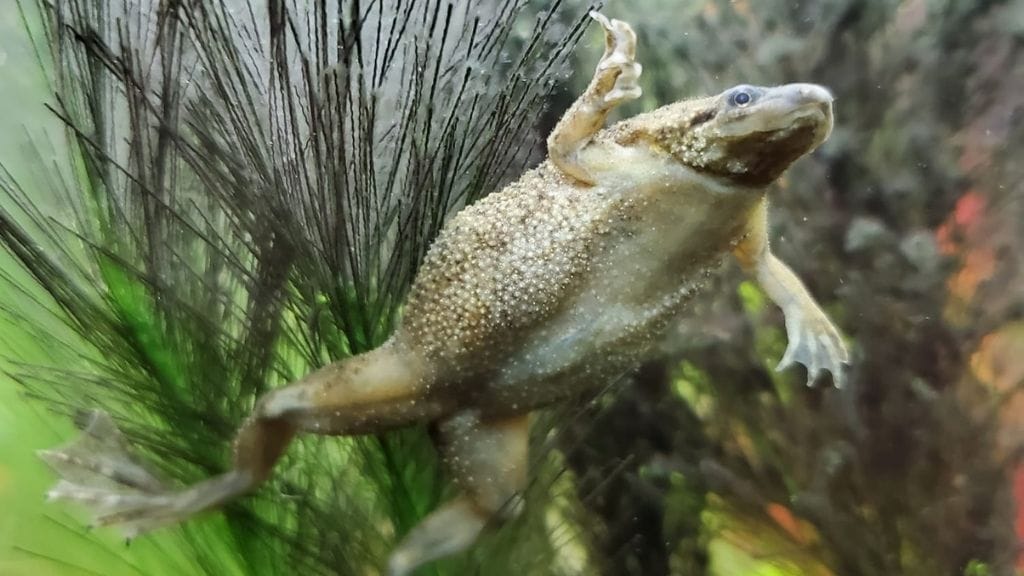
So you wake up one morning, shuffle over to your tank to say good morning to your little aquatic buddy, and… he’s gone.
You check behind the tank. Under the stand. Inside the filter.
Then you find him—dried up on your carpet like a tiny, crispy pancake.
Heartbreaking, right?
Here’s the thing: African dwarf frogs absolutely will jump out of their tanks, even though they’re fully aquatic and literally cannot survive on land. It’s like watching someone who can’t swim dive into the deep end.
Makes zero sense. But they do it anyway.
Let me explain why this happens and, more importantly, how to stop it.
Quick Answer: Yes, They Jump (And They’re Really Good At It)
African dwarf frogs can launch themselves 3-4 inches into the air from a solid surface. Some sources even report jumps of up to 2 feet when they really get going.
For a frog that’s only 1-2.5 inches long, that’s like you clearing a small building.
The problem? These frogs can only survive about 15-20 minutes outside of water before they start to dehydrate and die. Their skin needs constant moisture to function.
So we’ve got Olympic-level jumpers who will literally die if they succeed.
Let’s fix that.
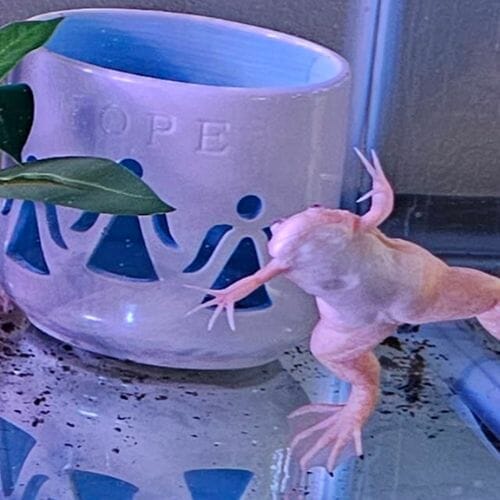
The 7 Reasons Your African Dwarf Frog Is Trying to Escape
1. Your Water Quality Is Garbage
This is the number one reason frogs try to bail.
Think about it: if your apartment started filling with toxic fumes, you’d run for the door too.
African dwarf frogs have zero tolerance for ammonia and nitrite. Their skin absorbs everything in the water directly into their bloodstream.
Here’s what your water parameters should look like:
| Parameter | Ideal Range |
|---|---|
| Ammonia | 0 ppm (absolutely zero) |
| Nitrite | 0 ppm (non-negotiable) |
| Nitrate | Below 20 ppm |
| pH | 6.5 – 7.8 |
| Temperature | 72-78°F (22-25°C) |
| GH | 5-15 |
| KH | 4-15 |
If your ammonia or nitrite shows anything above zero, your frog is basically swimming in poison.
Fix it: Test your water weekly. Do 25-30% water changes religiously. Get a proper filter—but not too powerful (more on that in a second).
2. There’s Toxic Stuff Building Up
Even with “okay” parameters, toxins can accumulate from sources you might not expect.
Leftover food rotting on the bottom? Toxic.
Dead plant material decomposing? Toxic.
That cool decoration you bought that wasn’t actually aquarium-safe? You guessed it.
Your frog can sense when the water is becoming a chemical soup, and its survival instincts kick in.
Fix it: Remove uneaten food within 20 minutes. Trim dying plants immediately. Only use decorations specifically rated for aquariums.
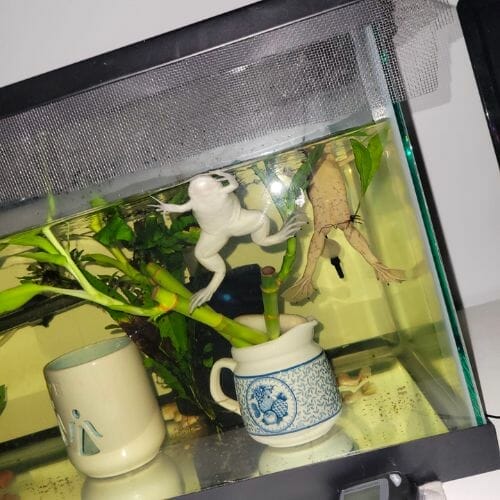
3. Your Filter Is Creating a Water Tornado
Here’s an ironic problem: you bought a great filter to keep the water clean, but now it’s creating currents strong enough to make your frog feel like it’s in a washing machine.
African dwarf frogs are terrible swimmers. Seriously, they’re adorable but they swim like they’re having a mild panic attack.
Strong currents stress them out. They can’t rest. They can’t eat properly. They can’t swim to the surface to breathe without getting blown around.
Eventually, they decide anywhere is better than this endless aquatic treadmill.
Fix it: Use a sponge filter (ideal for frogs) or baffle your HOB filter. You want gentle circulation, not a tsunami.
4. Chytrid Fungus Is Making Them Sick
This one’s scary.
Chytrid fungus (Batrachochytrium dendrobatidis) is a deadly disease that has devastated frog populations worldwide. It attacks their skin—the same skin they need to breathe and absorb water through.
One of the telltale symptoms? Infected frogs try desperately to climb out of the water.
Other symptoms include:
- Excessive skin shedding (skin looks gray-white and peels off)
- Lethargy and loss of appetite
- Thrashing at the water’s surface
- Rough, flaky skin texture
The fungus has a two-month incubation period, meaning a frog can look perfectly healthy while carrying and spreading the disease.
Fix it: Quarantine new frogs for at least 8 weeks before adding them to an established tank. If you suspect chytrid, consult an exotic vet immediately. Treatment exists but must be started early.
5. Their Tank Mates Are Bullies
African dwarf frogs are peaceful little creatures. They’re the Switzerland of the aquarium world—neutral, friendly, just want to chill.
Put them with aggressive fish? They’re toast.
Even fish that seem peaceful might harass, chase, or nip at your frogs. When a frog feels like its life is in danger, jumping out of the tank starts to seem like a reasonable escape plan.
Good tank mates:
- Betta fish (usually works, but watch for aggression)
- Small peaceful tetras
- Corydoras catfish
- Snails
- Small peaceful community fish
Bad tank mates:
- Cichlids
- Large fish that might see frogs as food
- Aggressive or fin-nipping species
- Anything with a mouth big enough to eat the frog
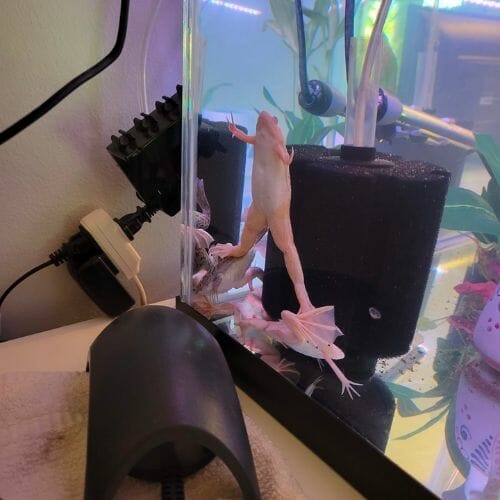
6. Something Scared the Living Daylights Out of Them
African dwarf frogs don’t have traditional ears, but they can sense vibrations through the water like nobody’s business.
Sudden loud noises—a door slamming, a vacuum cleaner starting up, your dog barking right next to the tank—can trigger a reflexive jump.
It’s not a calculated decision. It’s pure instinct.
One minute they’re peacefully floating, the next they’ve launched themselves three inches into the air because someone dropped a pan in the kitchen.
Fix it: Keep the tank in a quiet area away from high-traffic zones, loud appliances, and windows (traffic noise). Give them plenty of hiding spots so they feel secure.
7. It’s Just… What They Do
Sometimes there’s no tragic backstory.
Sometimes your frog is perfectly happy, well-fed, in pristine water, with no predators in sight—and it still tries to yeet itself out of the tank.
Why? Because African dwarf frogs are naturally curious explorers. In the wild, they move between pools and waterways.
If they see an opening at the top of your tank, some part of their brain says “wonder what’s over there.”
It’s not personal. It’s just frog brain.
Fix it: Get a lid. Seriously. Every single opening needs to be covered.
What To Do If Your Frog Escapes (And Survives)
Found your escapee before it’s too late? Here’s the critical info:
Don’t just throw them back in the main tank.
A dehydrated frog is weak and may not be able to swim properly. If you toss them into deep water, they could drown.
Instead:
- Get a shallow container (a tub or large bowl)
- Fill it with a small amount of tank water
- Place your frog in it so they can touch the bottom while keeping their nose above water
- Float this container in your main tank to keep the temperature stable
- Wait several days before returning them to the main tank
- Don’t feed them until you see them pooping normally
They need time to rehydrate through their skin.
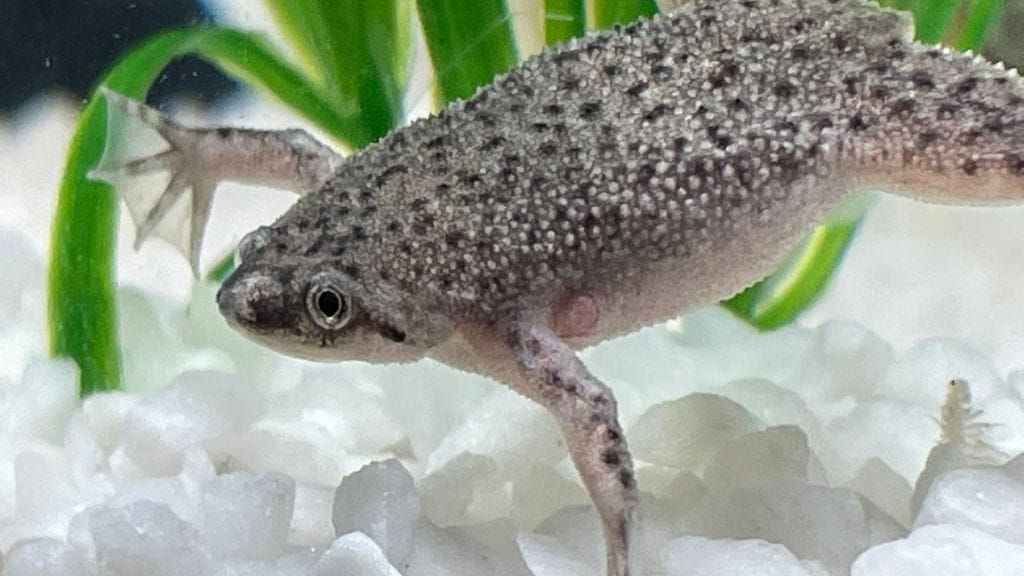
How to Fort Knox Your Frog Tank
Prevention is everything here. Once they’re out, you’re racing against a 15-20 minute clock.
Get a Secure Lid
This is non-negotiable.
Glass lids work great. Mesh screens work too. The key is no gaps.
Frogs have escaped through:
- 1-inch openings in the back of hoods
- Gaps around filter intakes
- Feeding holes left uncovered
- That little space where the heater cord comes out
If you can fit your finger through it, a determined frog can probably squeeze through it.
Pro tip: Use duct tape or plastic wrap to seal any small openings. It’s not pretty, but neither is a dead frog.
Lower Your Water Level
Keep the water level 2-3 inches below the top of the tank.
This gives them less launching power to clear the rim. They can still reach the surface easily to breathe, but jumping out becomes much harder.
Remove “Launching Pads”
Anything that lets your frog get close to the surface is a potential escape route:
- Tall plants reaching the top
- Decorations near the water line
- Heater cords they can climb
- Filter intakes and outputs
You don’t have to remove everything, but be strategic. Keep climbing opportunities away from any gaps in your lid.
Keep Them Happy
A content frog is less likely to try escaping.
This means:
- Perfect water parameters (test weekly!)
- Gentle filtration
- Plenty of hiding spots
- Compatible tank mates
- Consistent feeding schedule
- Stable, warm temperature (72-78°F)
Happy frogs spend their time doing hilarious things like floating spread-eagle at the surface or sitting on their haunches like tiny Buddha statues. Stressed frogs spend their time plotting their escape.

Frequently Asked Questions
How long can African dwarf frogs survive out of water?
15-20 minutes maximum. After that, dehydration causes irreversible damage. Some frogs have survived longer in humid conditions, but don’t count on it.
How high can African dwarf frogs actually jump?
From a solid surface, they can jump 3-4 inches easily. Some reports suggest they can reach up to 2 feet when really motivated. That’s wild for a frog that fits in your palm.
Will they jump if the water quality is fine?
Yes. Sometimes they jump because they got startled. Sometimes they’re just curious. Sometimes their one brain cell said “do it.”
A secure lid is essential regardless of water quality.
Can African dwarf frogs climb?
Sort of. They can climb up heater cords, filter tubes, and tall plants to reach the surface. Once there, jumping out is easy.
What’s the minimum tank size to prevent escaping?
Tank size doesn’t prevent escaping—a proper lid does. But for reference, 5 gallons minimum for 2-3 frogs, with water depth no more than 12-20 inches (they need to reach the surface to breathe easily).
Final Thoughts
Here’s the reality: African dwarf frogs will always have the potential to jump out.
It’s baked into their DNA.
Your job isn’t to change their nature—it’s to make escaping impossible and staying in the tank so pleasant they don’t want to leave.
Keep your water pristine. Get a secure lid. Seal every gap.
Do those three things, and your little underwater weirdo will be doing its goofy zen pose at the surface for the next 5-10 years (yes, they can live that long with proper care).
Now go check your tank lid. I’ll wait.
About Author
Hello, I’m Muntaseer Rahman, the owner of AcuarioPets.com. I’m passionate about aquarium pets like shrimps, snails, crabs, and crayfish. I’ve created this website to share my expertise and help you provide better care for these amazing pets.
Disclaimer
This site is owned and operated by Muntaseer Rahman. AcuarioPets.com is a participant in the Amazon Services LLC Associates Program, an affiliate advertising program designed to provide a means for sites to earn advertising fees by advertising and linking to Amazon.com. This site also participates in other affiliate programs and is compensated for referring traffic and business to these companies.