
This post was created with help from AI tools and carefully reviewed by a human (Muntaseer Rahman) . For more on how we use AI on this site, check out our Editorial Policy.
Check Out These FREE Tools We Made JUST For You!
How To Handle A Pacman Frog Without Hurting It (Or Getting Bitten)
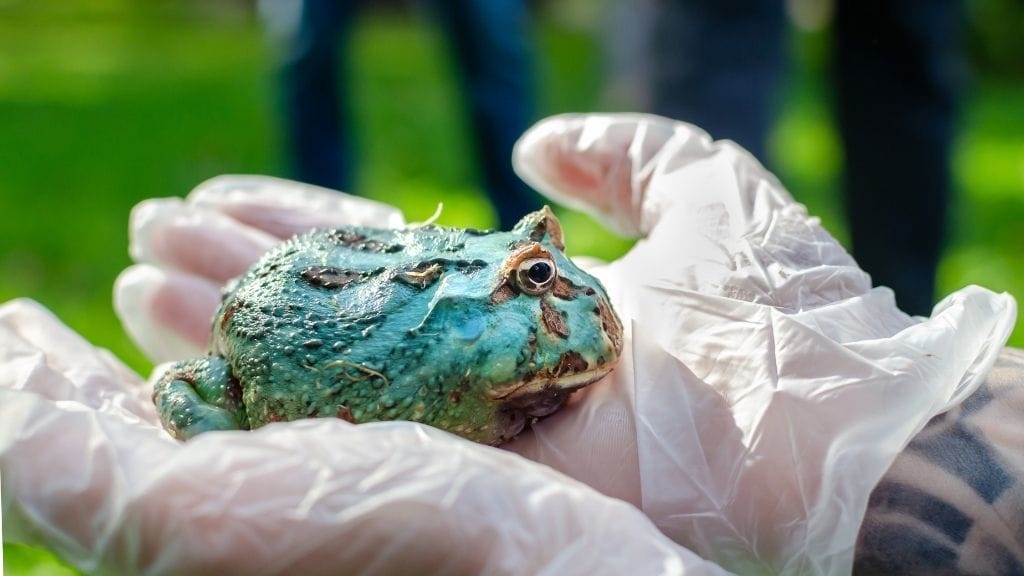
Look, I get it.
You just got yourself a Pacman frog, it’s sitting there looking all round and grumpy like a tiny green potato, and your first instinct is to pick it up.
Don’t.
Or at least, don’t do it the wrong way. Because handling a Pacman frog isn’t like picking up a hamster. One wrong move and you could hurt your frog, get a nasty bite, or accidentally transfer harmful chemicals through its skin.
Here’s everything you need to know about handling your Pacman frog safely — and why you should almost never do it.
Quick Reference: Pacman Frog Handling Do’s And Don’ts
| Do | Don’t |
|---|---|
| Wear powder-free nitrile gloves | Handle with dry or lotioned hands |
| Dampen hands with dechlorinated water | Use soap-covered or freshly sanitized hands |
| Approach from the side or behind | Reach in from the front of their face |
| Handle over a low, soft surface | Hold them high off the ground |
| Keep handling under 2-3 minutes | Handle daily or for extended periods |
| Wash hands before and after | Touch your face before washing up |
| Let them settle 2-3 days after | Handle again the next day |
Should You Handle Your Pacman Frog?
Short answer: no.
Longer answer: only when you absolutely have to.
Pacman frogs are what experts call a “look but don’t touch” pet. They don’t enjoy being handled. They don’t bond with you through physical contact. And unlike a dog that wags its tail when you reach for it, a Pacman frog is more likely to chomp down on your finger.
They’re display animals. Think of them like a living piece of art in a tank. You watch, you admire, you feed — and that’s about it.
But there are times when you have no choice. Tank cleaning, health checks, moving them to a new enclosure — these situations require handling. And when that time comes, you better know what you’re doing.
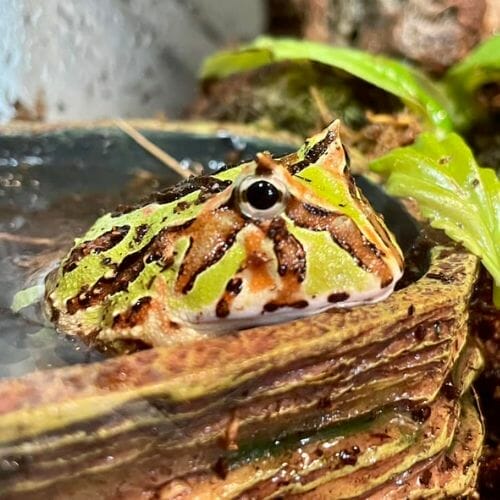
Why You Shouldn’t Handle Pacman Frogs
There are two sides to this. Handling can hurt them, and it can hurt you.
Let’s break both down.
It’s Dangerous For Your Frog
Their Skin Absorbs Everything
Pacman frogs have permeable skin. That means their skin works like a sponge — it absorbs moisture, oxygen, and unfortunately, whatever chemicals happen to be on your hands.
Hand lotion? Absorbed. Soap residue? Absorbed. The oils your skin naturally produces? You guessed it — absorbed.
Even if you just washed your hands, leftover soap can irritate their skin badly. This isn’t some minor annoyance for them either. Toxic substances absorbed through their skin can lead to a condition called “toxic out syndrome,” which causes erratic jumping, muscle spasms, cloudy eyes, and can even be fatal.
Handling Stresses Them Out
Pacman frogs are ambush predators. They spend most of their day buried in substrate with just their eyes poking out, waiting for food to walk by.
Being picked up by a giant hand is basically their worst nightmare.
Stressed frogs may stop eating, become lethargic, or try to leap out of your grasp. And a Pacman frog that jumps from any real height can seriously injure itself. We’re talking broken bones, internal injuries — bad stuff for an animal that weighs less than a pound.
It’s Risky For You Too
Salmonella Is Real
All amphibians — including Pacman frogs — can carry Salmonella bacteria on their bodies and in their droppings. According to multiple state health departments and the FDA, you don’t even need to touch the frog directly. Just touching its tank, water dish, or substrate can transfer the bacteria to your hands.
The high-risk groups are children under 5, pregnant women, elderly people, and anyone with a weakened immune system. For everyone else, Salmonella usually means a few miserable days of stomach cramps, diarrhea, and fever.
Not exactly a fun weekend.
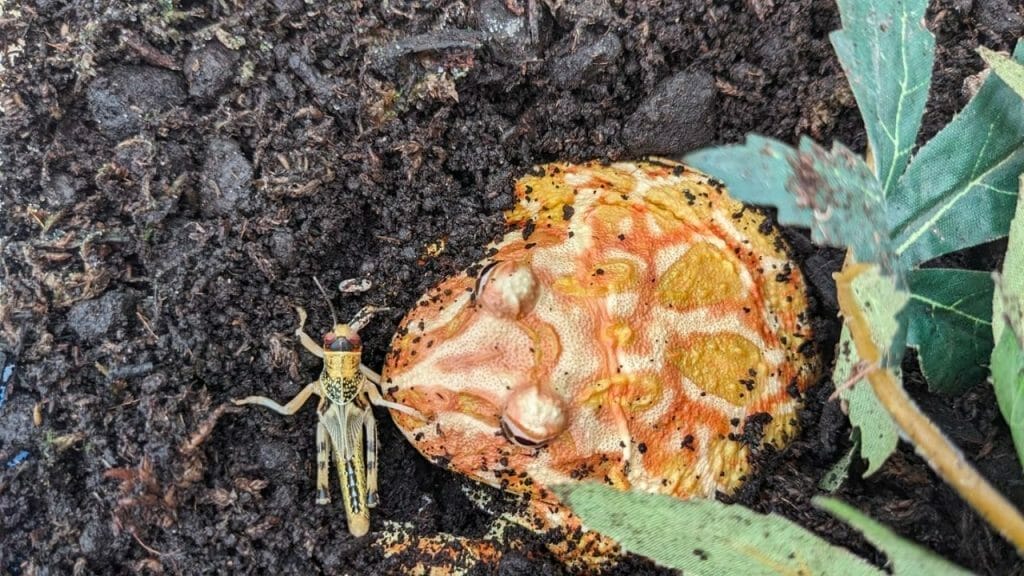
They Bite — And It Hurts More Than You’d Think
Here’s a fun fact most new owners don’t expect.
A small Pacman frog with a head width of about 4.5 cm can bite with a force of 30 Newtons. That’s roughly 6.6 pounds of pressure concentrated on the tip of your finger.
And it gets worse. A 2017 study published in Scientific Reports found that larger horned frogs can generate up to 500 Newtons of bite force — comparable to some mammals of the same head size.
Their prehistoric ancestor, the Beelzebufo (literally called the “Devil Toad”), could bite with up to 2,200 Newtons of force. That’s wolf territory.
Now, your pet Pacman frog isn’t going to bite your finger off. But it has sharp vomerine teeth on the roof of its mouth, and a bite from a full-grown adult can absolutely draw blood. The worst part? Sometimes they clamp down and refuse to let go.
Not poisonous. Just very, very committed.
When You Actually Need To Handle Your Pacman Frog
There are really only a few situations where handling is necessary:
| Situation | Why Handling Is Needed |
|---|---|
| Deep tank cleaning | You need to move the frog to a temporary container while you disinfect the enclosure |
| Health checks | Inspecting for signs of infection, shedding issues, or injuries |
| Enclosure transfer | Moving to a new or upgraded tank |
| Veterinary visits | Transporting to an exotic vet |
That’s it. If your reason for picking up your Pacman frog isn’t on this list, you probably don’t need to be picking it up.
How To Handle A Pacman Frog Safely
Alright, so you need to handle your frog. Here’s how to do it without turning it into a disaster.
Step 1: Get Your Hands Ready
This part is critical.
Wash your hands thoroughly with unscented soap and then rinse them completely. And I mean completely. Any soap residue left on your hands will be absorbed right through their skin.
After rinsing, wet your hands with dechlorinated water. Tap water contains chlorine and chloramine, which are also harmful to amphibian skin. If you use a water conditioner for your frog’s tank, use that same treated water to dampen your hands.
Or better yet, just wear gloves.
Step 2: Use Gloves (Seriously)
Powder-free nitrile or latex gloves are the gold standard. They protect both you and the frog.
Here’s the process:
- Wash your hands before putting on the gloves (dirty hands = dirty gloves)
- Dampen the gloves with dechlorinated water
- Handle the frog
- Remove gloves carefully so the outer surface doesn’t touch your skin
- Wash your hands again after removing the gloves
It takes 30 extra seconds and saves a lot of potential problems.
Step 3: Pick Them Up Properly
Approach slowly. Pacman frogs have decent peripheral vision and sudden movements will trigger a defensive bite.
Method 1 — The Scoop: Slide your fingers under the frog from the side or behind. Let the frog rest on your flat palm with your fingers gently curled around its body. Don’t squeeze.
Method 2 — The Gentle Hold: Place one thumb on the frog’s back just below its head. Wrap your fingers around the torso so the frog is resting on your fingertips. Use light pressure to keep it still — just enough so it doesn’t leap.
Never approach from directly in front of its face. That’s where the mouth is. That’s where the teeth are. Don’t be a target.
Step 4: Stay Low
This one is easy to forget but super important.
Always handle your Pacman frog over a soft surface close to the ground. A table works. The floor is even better. These frogs are jumpy, and they will try to escape.
A fall from even a couple feet can cause serious injury to an animal with a body built for sitting, not flying.
Step 5: Keep It Short
Handling sessions should last no more than 2-3 minutes. Get in, do what you need to do, and put the frog back.
After handling, give your frog 2-3 days to settle before handling again. They need time to de-stress.
What About Brumation?
During cooler months or periods of low humidity, Pacman frogs sometimes enter a dormant state called brumation. They’ll bury themselves deep in the substrate, stop eating, and their skin may harden into a tough outer layer.
If this happens, do not try to dig them up or handle them.
It might look alarming. You might think your frog is dead. It’s not.
Just keep the tank humidity up (50-80%) and wait it out. When conditions improve, the frog will come out on its own and often eat the dried skin layer. Weird? Yes. Normal? Totally.

What To Do If Your Pacman Frog Bites You
First, don’t panic. And whatever you do, don’t yank your hand away. Jerking your finger out of a Pacman frog’s mouth can dislocate their jaw or break their teeth.
Here’s what to do instead:
- Stay calm. The frog will usually let go on its own within a few seconds.
- If it doesn’t let go, gently place your hand (with the frog still attached) into shallow lukewarm water. This often gets them to release.
- Never pry their mouth open with force. Some owners have used forceps gently, but this should be a last resort.
- After the frog lets go, clean the wound with soap and water and apply antiseptic.
Pacman frog bites are not venomous. They’re just uncomfortable and sometimes bloody. If the pain gets worse or the wound shows signs of infection, see a doctor.
Can You Bond With A Pacman Frog Without Handling?
Absolutely.
Your frog will start to recognize you as the food source. Over time, many Pacman frogs will perk up and move toward the glass when they see you approach — not because they love you, but because they associate you with dinner.
And honestly? That’s as close to affection as you’re going to get from an animal that’s basically a mouth with legs.
You can still enjoy your Pacman frog by:
- Watching feeding time (this is genuinely entertaining)
- Observing their burrowing behavior
- Setting up a naturalistic enclosure that’s fun to look at
- Tong-feeding which creates a safe interaction without direct contact
Wrapping It Up
Pacman frogs are awesome pets. They’re colorful, low-maintenance, and watching them eat is one of the funniest things in the reptile-keeping hobby.
But they’re not meant to be cuddled.
Handle only when necessary. Use gloves. Stay low. Keep it brief. And for the love of everything, wash your hands afterward.
Your frog will be healthier, you’ll avoid an awkward trip to urgent care, and everyone goes home happy. Well, the frog probably won’t be happy either way — but at least it won’t be stressed.


About Author
Hello, I’m Muntaseer Rahman, the owner of AcuarioPets.com. I’m passionate about aquarium pets like shrimps, snails, crabs, and crayfish. I’ve created this website to share my expertise and help you provide better care for these amazing pets.
Disclaimer
This site is owned and operated by Muntaseer Rahman. AcuarioPets.com is a participant in the Amazon Services LLC Associates Program, an affiliate advertising program designed to provide a means for sites to earn advertising fees by advertising and linking to Amazon.com. This site also participates in other affiliate programs and is compensated for referring traffic and business to these companies.