This post was created with help from AI tools and carefully reviewed by a human (Muntaseer Rahman) . For more on how we use AI on this site, check out our Editorial Policy.
Check Out These FREE Tools We Made JUST For You!
How To Setup A Pacman Frog Habitat? [Setup Ideas]
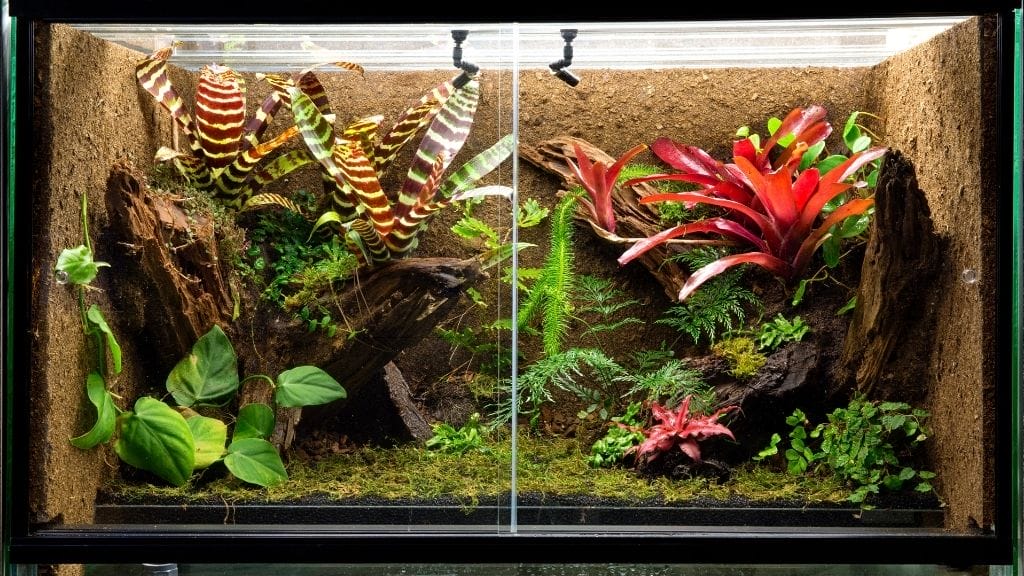
So you’re thinking about getting a Pacman frog. Smart choice.
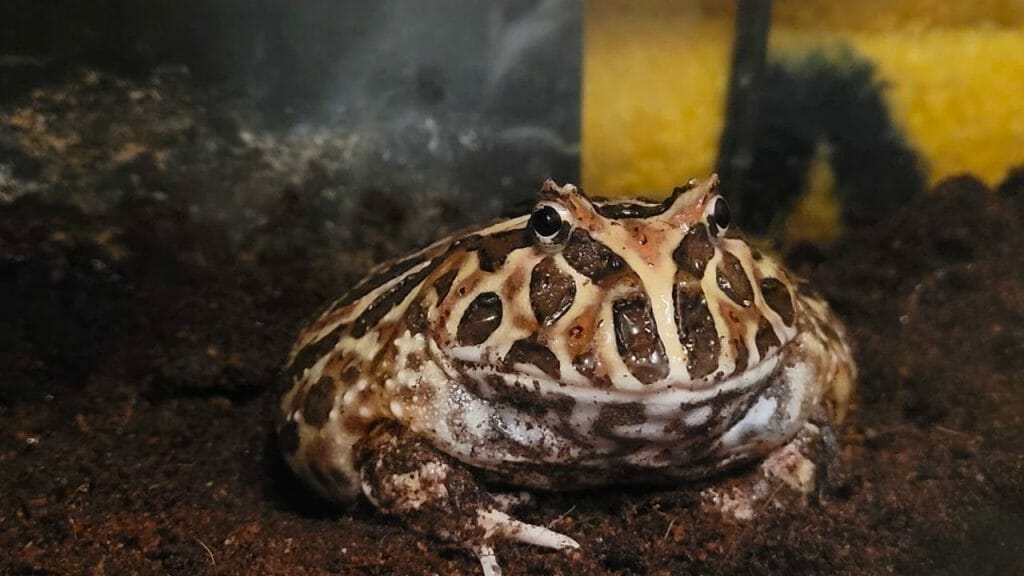
These little guys look like someone stuck googly eyes on a stress ball and gave it teeth. They’re basically living mouths with legs, and honestly, that’s what makes them so cool.
But here’s the thing—before you bring your new pet home, you need to set up their house. And I’m not gonna lie, there’s more to it than just throwing some dirt in a tank and calling it a day.
Don’t panic though. I’m walking you through every single step, from picking the right tank to making sure your frog doesn’t turn into a crispy critter because you forgot the thermometer.
Let’s dive in.
What You Actually Need (The Shopping List)
Before you start, let’s talk about what you’re buying.
People always ask me how much this is going to cost. Here’s the honest answer: the habitat will cost you way more than the frog itself.
A standard Pacman frog might run you $20-$50. The setup? You’re looking at $200-$400 depending on how fancy you want to get.
Here’s what’s on the list:
| Item | What You Need | Approximate Cost |
|---|---|---|
| Terrarium | 20-29 gallon glass tank (bigger is better) | $60-$150 |
| Substrate | Coconut fiber or specialized bioactive soil | $10-$25 |
| Heating | Heat mat or ceramic heater + thermostat | $30-$70 |
| Lighting | UVB bulb (yes, you need this now) | $25-$50 |
| Thermometer/Hygrometer | Digital combo unit | $10-$20 |
| Water Dish | Shallow, sturdy bowl | $8-$15 |
| Substrate Depth | 3-4 inches of loose substrate | Included above |
| Plants | Live or fake plants | $15-$40 |
| Décor | Hides, cork bark, leaf litter | $20-$50 |
| Misting System | Spray bottle or fogger | $5-$30 |
Yeah, it adds up. But you’re building a tiny South American rainforest in your living room, so what did you expect?

Step 1: Pick The Right Tank (Size Actually Matters)
Here’s where people mess up right out of the gate.
You’ll see some guides saying “oh, 10 gallons is fine for an adult Pacman frog.” And technically, they’re not wrong—your frog won’t die in a 10-gallon tank.
But here’s the deal: newer research from 2024 shows that 20-29 gallons is way better for their health and happiness.
The Bio Dude (basically the bioactive setup experts) recommends a 24″L x 18″W x 18″H tank, which is about 29 gallons. That’s the sweet spot.
Why Glass Tanks Are Your Best Friend
Go with glass. Seriously.
Plastic is cheaper and lighter, but glass terrariums are better at maintaining humidity and they don’t get all scratched up from your frog’s chonky digging adventures.
Plus, you want front-opening doors if you can swing it. Top-access tanks are annoying when you’re trying to change water or feed your frog, and your frog will think you’re a predator coming from above.
The Size Reality Check
Baby Pacman frogs can start in smaller enclosures (like those 5-10 gallon setups), but they grow FAST.
Within 6-12 months, your quarter-sized baby will be a 4-7 inch eating machine.
Females get bigger than males (up to 7 inches vs 4 inches), so plan accordingly.
Here’s what you need based on age and sex:
| Frog Type | Minimum Tank Size |
|---|---|
| Baby (under 3 inches) | 5-10 gallons |
| Adult Male | 18″x18″x12″ (20 gallons) |
| Adult Female | 24″x18″x18″ (29 gallons) |
One more thing: these frogs are cannibals. Like, actual cannibals.
Never keep more than one Pacman frog per tank. They will 100% try to eat each other, and it won’t be cute.

Step 2: Get The Substrate Right (This Is Where Things Get Deep)
Your Pacman frog is a burrower. That’s their whole thing.
In the wild, they sit buried in leaf litter with just their eyes poking out, waiting to ambush anything stupid enough to walk by. You need to recreate that.
How Deep Should The Substrate Be?
At least 3-4 inches deep. Some people go even deeper (5-6 inches), and that’s fine too.
If the substrate isn’t deep enough, your frog will just sit there looking sad because they can’t do their favorite activity: hiding like a lumpy potato.
What Type Of Substrate Works Best?
You’ve got options here:
Coconut Fiber (Coco Coir): The most popular choice. It holds moisture like a champ, it’s safe if your frog accidentally eats some, and it’s pretty cheap. Brands like Zoo Med Eco Earth are solid.
Sphagnum Moss: Great for humidity, but use it as a topper over coconut fiber, not by itself.
Bioactive Substrate: This is the fancy option. Products like Josh’s Frogs Pac-Man BioBedding are specially formulated with beneficial bacteria and fungi to break down waste. More on this later.
What NOT To Use
Don’t use gravel or small rocks. If your frog eats them (and they might, because Pacman frogs have terrible decision-making skills), they can cause fatal impaction.
Avoid reptile carpet too. It’s too rough for their sensitive skin.
Keeping It Damp (But Not Soggy)
Your substrate should be damp enough to clump when you squeeze it, but not dripping water.
Think of it like a wrung-out sponge. Mist it daily to keep it from drying out.

Step 3: Set Up Heating (Don’t Cook Your Frog)
Pacman frogs are from South America. They like it warm.
You need to maintain 75-85°F during the day and 65-75°F at night.
Where To Put The Heat Mat
Here’s the biggest mistake people make: they stick the heat mat under the tank.
DO NOT DO THIS.
Your frog burrows, remember? If the heat mat is on the bottom, your frog will burrow down, get too close to it, and basically slow-cook itself.
Put the heat mat on the SIDE of the tank, about halfway down. This heats the air without creating a death trap in the substrate.
If you’re using a heat lamp or ceramic heat emitter instead, mount it on top with a proper dome fixture.
You Absolutely Need A Thermostat
A heat mat without a thermostat is like a car without brakes.
Get a thermostat (around $20-30) and set it to 82°F. This will regulate the temperature automatically so you don’t accidentally turn your frog into frog jerky.
Step 4: Lighting (Yes, UVB Actually Matters Now)
Older guides will tell you that Pacman frogs don’t need UVB lighting.
Those guides are outdated.
Modern research from 2024 shows that UVB lighting has real health benefits for Pacman frogs, including better calcium absorption, improved digestion, and overall better mental health.
What Type Of UVB Light?
The Arcadia ShadeDweller UVB ProT5 Kit is the gold standard for Pacman frogs.
It’s a low-output UVB bulb perfect for these nocturnal, shade-loving frogs. Your frog should be able to get no closer than 10 inches below the lamp.
Replace your UVB bulb every 12 months even if it still looks like it’s working. The UVB output drops over time.
Day/Night Cycle
Keep your lights on for 12 hours during the day and off for 12 hours at night.
You can use a timer so you don’t have to remember to do this manually.
Step 5: Humidity Control (The Make-Or-Break Factor)
Humidity is huge for Pacman frogs. Get this wrong and your frog’s skin will dry out, leading to all kinds of health problems.
You want 60-80% humidity at all times.
How To Measure Humidity
Get a digital hygrometer. The cheap analog ones are basically worthless—they can be off by 20-30%, which is a huge margin of error.
Place the hygrometer where you can see it easily.
How To Maintain Humidity
Mist the enclosure 1-2 times daily with dechlorinated water. Don’t spray your frog directly—they hate that and it stresses them out.
Cover half of the screen lid with plastic wrap or glass to reduce evaporation. You still need airflow, so don’t cover the whole thing.
Add a clump of sphagnum moss in one corner. It acts like a humidity sponge.
The Water Dish Situation
Your Pacman frog needs a shallow water dish large enough for them to sit in.
Make it shallow though. These frogs can’t swim. Like, at all. If the water dish is too deep, they can drown.
Change the water every single day. Frogs poop in their water dishes. It’s disgusting.
Water Quality Matters
Never use tap water directly. It has chlorine and other chemicals that are toxic to amphibians.
Use dechlorinated water (treat it with a water conditioner) or filtered water.
Don’t use distilled water as their main water source—it lacks the minerals they need.
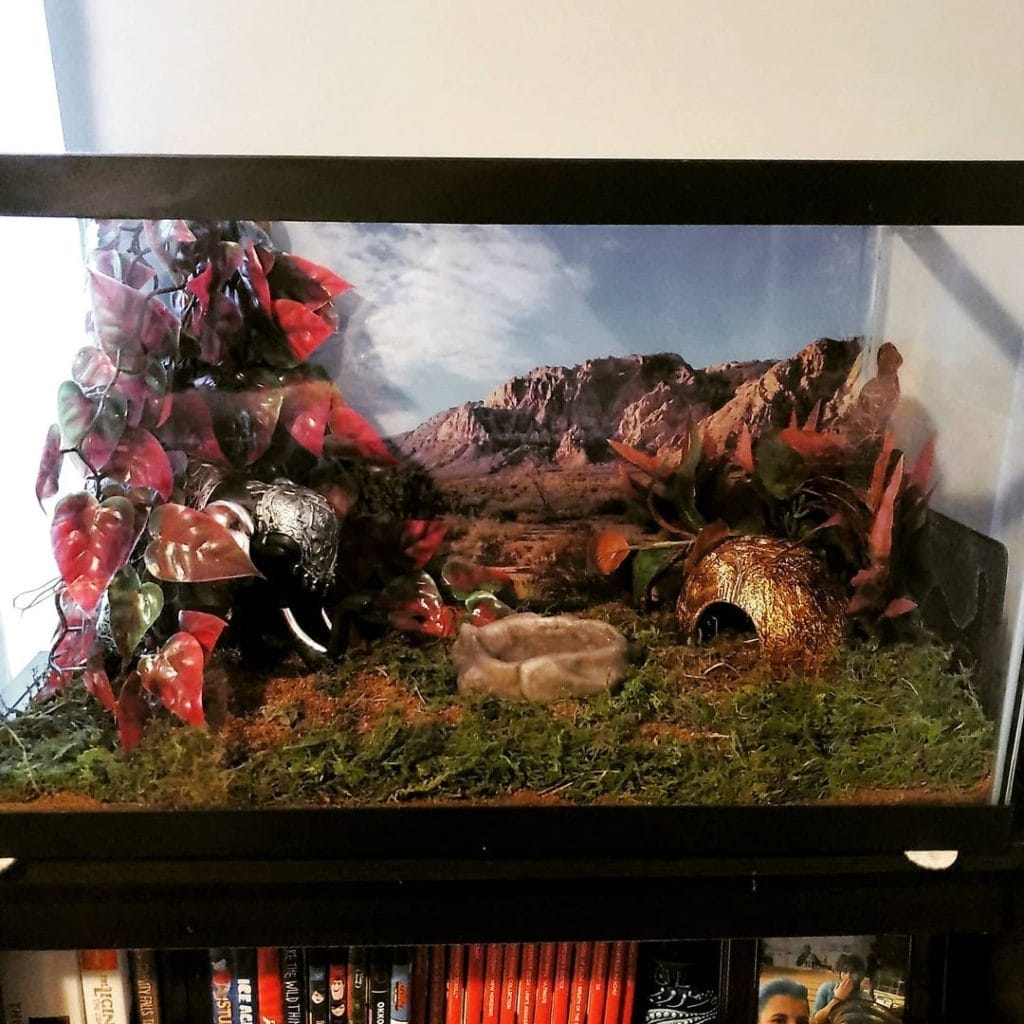
Step 6: Add Plants And Decorations (Make It Look Good)
Now comes the fun part: decorating.
Live Plants vs Fake Plants
Live plants are better if you can manage them. They help regulate humidity, process CO2, and give your frog a more natural environment.
Good plant choices:
- Pothos (super hardy, hard to kill)
- Philodendron
- Ficus
- Bromeliads
- Snake plants
Fake plants work too, especially if you’re not confident in your plant-parenting skills. Just make sure they’re made from safe, non-toxic materials.
Other Décor Items
Add some hides, cork bark, and leaf litter. Your frog needs places to feel secure.
Don’t overcrowd the tank though. Remember, your frog needs floor space to sit and hunt.
Avoid anything with sharp edges or small pieces your frog could swallow.
Step 7: Thermometer And Hygrometer Placement
Stick your digital thermometer/hygrometer combo where you can actually see it.
Don’t put it right next to the heat source or water dish, because that’ll throw off the readings.
Many units come with a probe on a wire—place that probe in the middle of the enclosure at frog level.
Step 8: The Bioactive Setup (Next-Level Stuff)
If you want to be fancy, you can set up a bioactive enclosure.
This is basically a self-cleaning ecosystem that uses live plants and tiny bugs to break down your frog’s waste.
What You Need For Bioactive
- Drainage layer: 1-2 inches of hydro balls (LECA) at the bottom
- Screen barrier: Mesh to separate the drainage layer from substrate
- Bioactive substrate: Special soil mix with beneficial bacteria
- Live plants: Rooted in the substrate
- Clean-up crew: Springtails and isopods (the tiny janitors)
- Leaf litter: On top for your frog to burrow in
The Benefits
A bioactive setup reduces maintenance because the clean-up crew breaks down waste naturally. You won’t need to change substrate every few months.
It also keeps humidity more stable and looks incredible.
The Catch
It’s more expensive upfront and takes 1-2 weeks to establish before you can add your frog. The microfauna needs time to populate.
You also need special lighting to keep the plants alive.
But if you’re willing to invest the time and money, it’s worth it.
Step 9: Final Checks Before Adding Your Frog
Don’t just set everything up and immediately dump your frog in.
Let the habitat run for 24-48 hours to make sure temperatures and humidity are stable.
Check that:
- Temperature is 75-85°F during the day
- Humidity is 60-80%
- Substrate is damp but not waterlogged
- Water dish is filled and shallow
- All equipment is working properly
If you’re doing bioactive, wait 1-2 weeks for the plants and clean-up crew to establish.
Step 10: Introducing Your Pacman Frog
When it’s time, gently place your frog in the tank.
Don’t freak out if they just sit there looking confused. It can take a few hours to a week for them to settle in.
Some frogs immediately start burrowing. Others sit in the open for a day or two before deciding where they want to set up shop.
Give them space and don’t handle them for the first few days.
Maintenance Schedule (Keep That Habitat Fresh)
Once your frog is home, here’s what you need to do:
Daily
- Mist the enclosure 1-2 times
- Change the water dish
- Remove any uneaten food
- Check temperature and humidity
Weekly
- Spot-clean any visible poop
- Check plants (if you have live ones)
- Stir the substrate slightly to prevent compaction
Monthly (Non-Bioactive)
- Complete substrate change
Every 3-6 Months (Bioactive)
- Add more leaf litter
- Stir the substrate thoroughly
- Check clean-up crew populations
Yearly
- Replace UVB bulb
- Deep clean decorations
Common Mistakes (Learn From Other People’s Failures)
Let me save you some headaches.
Mistake #1: Heat mat on the bottom. Your frog will burrow down and get too hot. Put it on the side.
Mistake #2: Not checking humidity. This is probably the number one reason Pacman frogs get sick. Get a good hygrometer.
Mistake #3: Using tap water. Chlorine is toxic to amphibians. Always dechlorinate.
Mistake #4: Tank too small. Yeah, your frog will survive in 10 gallons, but they’ll be way happier with more space.
Mistake #5: Misting the frog directly. They hate it. Mist around them, not on them.
Mistake #6: Keeping two frogs together. They will try to eat each other. Not kidding.
How Much Does This All Cost?
Let’s talk money.
| Setup Type | Total Cost |
|---|---|
| Basic Setup | $200-$300 |
| Mid-Range Setup | $300-$400 |
| Premium Bioactive Setup | $400-$600+ |
The frog itself is the cheap part. Most Pacman frogs cost $20-$60 depending on the color morph.
The fancy morphs (like albinos or fantasy frogs) can run up to $100, but you’re still spending more on the habitat.
Can You Use A Fish Tank?
Short answer: Yes.
Long answer: Yes, but make sure it’s not filled with water, because your Pacman frog can’t swim and will drown.
A standard glass aquarium works perfectly fine as long as you:
- Add substrate instead of water
- Set up proper heating and humidity
- Get a secure screen lid
People do this all the time. It’s cheaper than buying a fancy terrarium.
Do Pacman Frogs Need A Pond?
No.
These are terrestrial frogs, not aquatic frogs. They live on land.
They need a shallow water dish to soak in, but they don’t need (or want) a pond.
If you put your Pacman frog in deep water, it will drown. These guys are not swimmers.
Can Other Animals Live With A Pacman Frog?
Nope.
Pacman frogs are aggressive, solitary, and will try to eat literally anything that fits in their mouth.
Other frogs? They’ll eat them.
Small lizards? Lunch.
Tank mates? Not happening.
Keep your Pacman frog alone or you’re going to have a bad time.
Final Thoughts: You’ve Got This
Setting up a Pacman frog habitat isn’t rocket science, but it does require attention to detail.
Get the temperature right. Keep the humidity up. Make sure the substrate is deep enough for burrowing. Don’t cook your frog with a poorly-placed heat mat.
Do all that, and your chunky little ambush predator will live a happy life sitting in the dirt, waiting for you to bring it food.
And honestly, watching a Pacman frog nail a cricket never gets old.
Now get out there and build that frog paradise.
About Author
Hello, I’m Muntaseer Rahman, the owner of AcuarioPets.com. I’m passionate about aquarium pets like shrimps, snails, crabs, and crayfish. I’ve created this website to share my expertise and help you provide better care for these amazing pets.
Disclaimer
This site is owned and operated by Muntaseer Rahman. AcuarioPets.com is a participant in the Amazon Services LLC Associates Program, an affiliate advertising program designed to provide a means for sites to earn advertising fees by advertising and linking to Amazon.com. This site also participates in other affiliate programs and is compensated for referring traffic and business to these companies.