
This post was created with help from AI tools and carefully reviewed by a human (Muntaseer Rahman) . For more on how we use AI on this site, check out our Editorial Policy.
Check Out These FREE Tools We Made JUST For You!
How To Tell The Age Of Your Pacman Frog (6 Simple Methods)
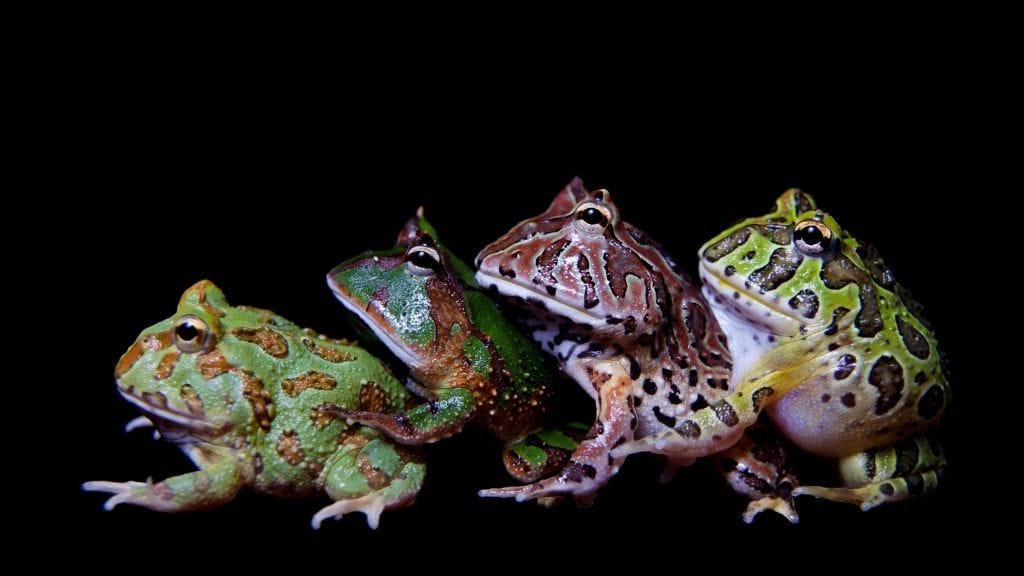
So you got yourself a Pacman frog. Maybe from a pet store. Maybe from a breeder at an expo. Maybe your roommate moved out and left it behind (no judgment).
And now you’re staring at this round, grumpy potato of a frog thinking, “How old are you, exactly?”
Here’s the bad news right up front. There is no foolproof way to determine the exact age of a Pacman frog. Not without knowing when it hatched.
But don’t close this tab yet. There are several solid clues that can help you estimate your frog’s age pretty accurately. Let’s go through every single one of them.
Why Knowing Your Pacman Frog’s Age Even Matters
This isn’t just trivia to impress people at parties (though it might).
Your frog’s age directly affects its diet, tank setup, health risks, and overall care routine. A baby Pacman frog needs to eat every single day. An adult? Two or three times a week.
Feed a baby like an adult, and you’ll stunt its growth. Feed an adult like a baby, and you’ll end up with an obese blob that can barely breathe.
Age also determines tank size. Babies do fine in a 1 to 5 gallon setup. Adults need 15 to 20 gallons minimum.
So yeah, knowing the age matters. A lot.
Quick Reference: Age Clues At A Glance
| Clue | What It Tells You |
|---|---|
| Under 1 inch, only eats tiny prey | Likely under 2 months old |
| 1-3 inches, growing fast | Probably 2-6 months old |
| Male starts croaking | At least 4-6 months old |
| 4+ inches, growth slowing | Likely 6-12 months old |
| Male has dark chest/nuptial pads | At least 1 year old |
| Full adult size, no growth | Over 12 months |
| Breeding behavior observed | At least 2-3 years old |
| Colors fading, horns prominent | Mature adult, 2+ years |
Method 1: Use Body Size (The Most Common Approach)
This is the go-to method for most Pacman frog owners. And while it’s not perfect, it gives you a reasonable ballpark.
Most Pacman frogs reach their full adult size within 10 to 12 months with proper care. Some fast growers can hit adult size in as little as 6 months.
Here’s a rough size-by-age breakdown to work with.
Pacman Frog Growth Chart By Age
| Age | Approximate Size |
|---|---|
| 0-1 month (hatchling) | Less than 1 inch |
| 1-3 months | 1-2 inches |
| 3-6 months | 2-4 inches |
| 6-12 months | 3-5 inches |
| 12+ months (adult female) | 4-7 inches |
| 12+ months (adult male) | 2.5-4 inches |
Now, a few important caveats before you grab a ruler.
Species Matters (A Lot)
There are eight species of Pacman frogs, and they don’t all grow to the same size.
Pacific Horned frogs max out at about 2 to 2.5 inches. Meanwhile, Brazilian Horned frogs can get as big as 10 inches. That’s a massive difference.
So if your frog is 3 inches, that could mean a fully grown Pacific or a juvenile Brazilian. You need to know what species you have first.
The most common pet species are the Cranwell’s Horned Frog, the Argentine (Ornate) Horned Frog, and the Fantasy Pacman (which is a hybrid).
Gender Matters Too
Female Pacman frogs are significantly larger than males. A fully grown female can reach 4 to 7 inches, while a male typically tops out at around 4 inches.
The catch? You usually can’t reliably tell male from female until they’re at least 6 to 7 months old.
Diet And Environment Change Everything
Here’s the thing that makes size-based aging so tricky.
A Pacman frog kept at lower temperatures or fed a sparse diet will grow much slower than one kept in ideal conditions. Experienced keepers on forums constantly point out that growth rate depends heavily on how warm the frog is kept and how often it eats.
A stunted 2-inch frog could be 3 months old or 8 months old. You just can’t tell from size alone if the husbandry has been inconsistent.
This is especially common with frogs bought from big box pet stores. Those frogs often sit in suboptimal conditions for months before anyone takes them home.
Method 2: Track Growth Over Time (The Smartest Approach)
If you just got your frog, start measuring right now.
Grab a ruler or a kitchen scale. Measure your frog’s body length from snout to vent (that’s the opening between the hind legs, not the tail — frogs don’t have tails). Write it down.
Do this every two weeks for the first six months. Then once a month after that.
Here’s the logic. A healthy Pacman frog grows about half an inch per month during its first year. Some sources say up to a full inch per month in peak growth periods.
If your frog is still growing, it’s almost certainly under 12 months old. If growth has completely stopped, it’s probably over a year old.
This is the most reliable DIY method. You’re not guessing from a snapshot — you’re watching the trend.
Pro Tip: Work Backwards
If you’ve been tracking and your frog recently stopped growing, you can work backwards.
Most Pacman frogs stop growing between 6 and 12 months. If your frog plateaued at a size consistent with its species and gender, count back from the current date and you’ll have a solid age estimate.
Method 3: Listen For Croaking
Male Pacman frogs start croaking at around 4 to 6 months old.
If your male frog is croaking, it’s at least that old. If it hasn’t croaked yet and you’re sure it’s male, it’s probably younger than 4 months.
A couple of things to keep in mind here.
Females don’t croak. So silence doesn’t necessarily mean “young.” It might just mean “female.”
Males tend to croak more during rainy weather or when triggered by certain sounds. Vacuum cleaners, blow dryers, and even dog barking have been known to set them off.
So if you run the vacuum and your frog starts screaming at you, congratulations. It’s a male and it’s at least 4 to 6 months old.
Method 4: Check For Mating Behaviors And Physical Changes
Pacman frogs hit sexual maturity at around 2 to 3 years old. So any sign of breeding behavior tells you your frog is at least that age.
Here’s what to look for.
In Males
Males develop dark spots or nuptial pads on their “fingers” at about one year old. These are rough patches on their front toes that help them grip females during mating.
Their chests also darken over time. A male with a dark, spotted chest is almost certainly at least a year old, probably older.
During mating season, males will make a sound similar to a cicada. Much louder and more persistent than regular croaking.
In Females
Females are harder to age by reproductive signs. But a female that appears visibly swollen or “egg-bound” is definitely at least 2 years old.
Females also tend to stay lighter in color compared to males, often remaining tan or pale on the chest area throughout their lives.
Method 5: Look At Dietary Preferences
This one is subtle but useful for very young frogs.
Pacman frogs under about 4 months old eat tiny prey. We’re talking wingless fruit flies, pinhead crickets, springtails, and small worms.
Once they pass the 6-month mark, they start eating basically everything. Crickets, dubia roaches, earthworms, and eventually even pinky mice.
If your frog refuses large prey and only goes for tiny insects, it’s very likely a baby under 4 months. If it’s lunging at full-sized crickets and nightcrawlers without hesitation, it’s probably past the 6-month mark.
Method 6: Observe Skin And Color Changes
Pacman frogs do change in appearance as they age. It’s not dramatic, but it’s noticeable if you know what to look for.
Young Pacman frogs tend to have brighter, more vivid coloring. As they age, many species — especially Cranwell’s — will fade toward duller browns and darker tones.
The “horns” above their eyes (which are actually just skin folds) also become more pronounced with age. Baby Pacman frogs have barely visible bumps. Adults have clear, defined horn-like projections.
The One Method That Actually Works (But You Can’t Do At Home)
In scientific research, biologists use a technique called skeletochronology to determine the exact age of frogs.
Here’s how it works. They take a small bone sample (usually a toe bone) and examine thin cross-sections under a microscope. Just like tree rings, frog bones develop lines of arrested growth (LAGs) — one ring for each period of dormancy or seasonal slowdown.
Count the rings, count the years. It’s the most accurate method available for aging any frog species.
But obviously, you’re not going to slice your pet’s toe under a microscope. So this is really only useful for researchers and wildlife biologists.
For the rest of us, the practical methods above are what we’ve got.
What If You Bought Your Frog From A Pet Store?
Here’s the most honest advice anyone can give you.
Ask the breeder or the store when the frog hatched. If they can give you a hatch date, write it down and never lose it.
Most reputable breeders know exactly when their frogs hatched. Chain pet stores? Not so much. You might get a vague “a few months old” at best.
If you can’t get a date, use the size chart above combined with the behavioral clues. You won’t get an exact birthday, but you can get close enough for proper care decisions.
How Long Do Pacman Frogs Actually Live?
Since we’re talking about age, let’s cover lifespan too.
In captivity, Pacman frogs live an average of 7 to 15 years with good care. Some have reportedly lived over 20 years.
In the wild, it’s a different story. Wild Pacman frogs typically only live 1 to 4 years due to predators, disease, and environmental pressures.
There are even anecdotal reports from long-time keepers of Pacman frogs reaching their early 20s. One owner on a reptile forum claimed their frog “AncientOne” celebrated a 23rd birthday. Another keeper referenced a horned frog at the Manchester Museum that was reportedly 30 years old.
Whether those numbers are fully verified is debatable. But the point is clear — with proper care, these guys can stick around for a seriously long time.
The Bottom Line
Figuring out your Pacman frog’s age is part detective work, part educated guessing, and part just accepting that you’ll never know for sure.
The best thing you can do? Start tracking size and behavior from the moment you bring your frog home. That gives you a reference point for everything going forward.
And honestly, whether your frog is 6 months old or 6 years old, the care principles stay the same. Keep the tank warm, the humidity high, the substrate moist, and the food coming. Do that, and your round little buddy could be with you for the next decade or more.
Now go measure your frog. And maybe apologize for staring at it so hard while reading this article.

About Author
Hello, I’m Muntaseer Rahman, the owner of AcuarioPets.com. I’m passionate about aquarium pets like shrimps, snails, crabs, and crayfish. I’ve created this website to share my expertise and help you provide better care for these amazing pets.
Disclaimer
This site is owned and operated by Muntaseer Rahman. AcuarioPets.com is a participant in the Amazon Services LLC Associates Program, an affiliate advertising program designed to provide a means for sites to earn advertising fees by advertising and linking to Amazon.com. This site also participates in other affiliate programs and is compensated for referring traffic and business to these companies.