This post was created with help from AI tools and carefully reviewed by a human (Muntaseer Rahman) . For more on how we use AI on this site, check out our Editorial Policy.
Check Out These FREE Tools We Made JUST For You!
Can A Frog Bite You? What Actually Happens (And Which Frogs Do It)
Somebody on a forum will tell you frogs are harmless, soft little things with no teeth. Somebody else will post a photo of a bleeding finger and a very smug Pacman frog.
Both of them are right, which is the confusing part.
Yes, a frog can bite you. Most species either cannot manage it or will never bother, but a handful of popular pet frogs bite hard enough to break skin, and one group of them bites hard enough that the science had to be measured with a force transducer.
The short version is that it depends almost entirely on which frog is sitting in your tank. So here is that, first.
| Your frog | Will it bite? | How bad |
|---|---|---|
| Pacman frog (Ceratophrys) | Often, especially at feeding time | Genuinely hurts, can draw blood on an adult |
| Budgett’s frog (Lepidobatrachus) | Often, and it screams first | Sharp, cuts skin, the worst reputation per gram |
| African bullfrog (Pyxicephalus) | Yes, when provoked | The hardest bite of any common pet frog |
| African clawed frog | Rarely, mostly feeding mistakes | A pinch, no teeth on the lower jaw to speak of |
| Amazon milk frog, White’s tree frog | Almost never | You would barely register it |
| African dwarf frog | No | Physically cannot |
| Dart frogs | No | Tiny mouth, tinier interest in you |
If your frog is on the bottom half of that table, you can relax. If it is on the top half, keep reading, because the way you feed it matters more than anything else you do.
Do Frogs Actually Have Teeth?
Yes, and the arrangement is stranger than you would guess.
Most frogs have maxillary teeth, a row of small cone-shaped teeth along the upper jaw, plus vomerine teeth, a second cluster sitting on the roof of the mouth.
Neither set is for chewing. They are grip hardware. A frog swallows prey whole, so the teeth exist to stop a struggling cricket from backing out while the tongue and throat do the work.
The lower jaw is where it gets interesting. Almost no frog on earth has true teeth on its lower jaw. For a long time the only known exception was Guenther’s marsupial frog, Gastrotheca guentheri, which had a full row of real bottom teeth and became a minor celebrity in evolutionary biology because of it.
So what are the “fangs” people photograph inside a Pacman or Budgett’s frog mouth?
Those are odontoids. They are bony projections growing straight up off the jawbone, shaped like teeth and doing the job of teeth, but they are not teeth. They have no enamel, they are not pedicellate like real frog teeth, and unlike real frog teeth they grow once and never get replaced.
Which is worth knowing for a practical reason. Real frog teeth are constantly shed and regrown, so they are small and blunt. Odontoids are permanent, solid bone, and considerably more capable of opening a finger.
That is the actual anatomy behind “some frogs bite and some don’t.”
The Two Reasons A Frog Bites, And Only One Of Them Is Anger
Almost every frog bite falls into one of two categories, and people consistently blame the wrong one.
1. The feeding response. This is the overwhelming majority of bites. An ambush predator like a Pacman frog does not deliberate. Something warm moves within range, the mouth fires, and identification happens afterward.
Your finger wiggling near the substrate looks exactly like a worm. The frog is not attacking you. It genuinely thinks you are dinner and is going to be as surprised as you are.
2. Defense. Much rarer. This is the frog that has been grabbed, cornered, held too long, or startled by a hand descending from above like a bird.
Defensive bites usually come with a warning first. Budgett’s frogs in particular inflate their bodies, rise up on their legs, open their mouth wide and let out a genuine scream. You are being told, clearly, to back off.
The practical difference matters. You cannot train away a feeding response, you can only stop triggering it. Defensive bites, on the other hand, mostly disappear once you handle the frog less and approach it from the side rather than overhead.
Does A Frog Bite Actually Hurt?
For most frogs, no. It feels like being pinched by a wet clothespin, and you will spend more time laughing than treating it.
For horned frogs, the answer changed in 2017, and most articles on the internet still have the old number.
Researchers led by Kristopher Lappin measured bite force in Cranwell’s horned frog and published it in Scientific Reports. A small frog with a head about 4.5 cm wide bit with roughly 30 newtons of force.
That 30 N figure is the one you see quoted everywhere, usually presented as the bite force of horned frogs generally. It is not. It is the bite force of a small one.
The team then worked out how bite force scales with head size, and the result is the part worth knowing. A large horned frog with a head around 10 cm wide, which is an ordinary size for an adult Ceratophrys aurita, projects to a bite force approaching 500 newtons.
That puts a big horned frog in the same range as some medium to large mammals. Lappin described the sensation as roughly like balancing 50 litres of water on your fingertip.
So the honest answer is that a juvenile Pacman frog bite is a startling pinch, and a large adult Pacman or African bullfrog bite is a real injury that can bleed and will be sore the next day.
About Pacman frogs specifically
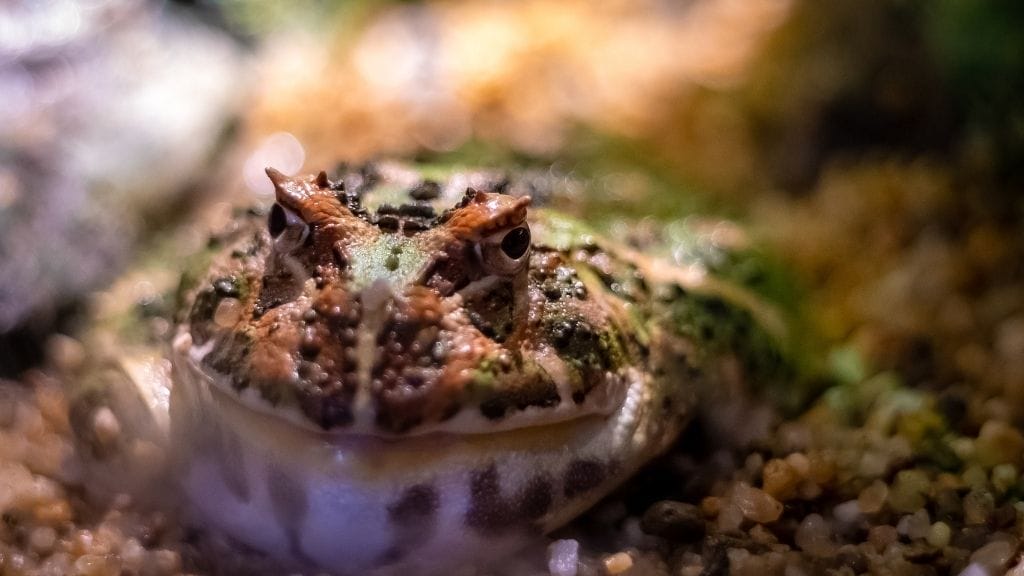
Pacman frogs bite more than any other common pet frog, and it is almost always feeding-related rather than aggressive.
They are effectively a mouth with a frog attached. In the wild they sit buried with only their eyes exposed and strike at anything that passes, which is a fantastic survival strategy and a terrible personality trait in a pet.
The fix is boring and completely effective: feed with long tongs, every single time, from day one. Never hand feed, not even once, because the association forms fast and does not fade.
We have a full walkthrough on handling a Pacman frog without getting bitten if you need the step-by-step version.
About Budgett’s frogs
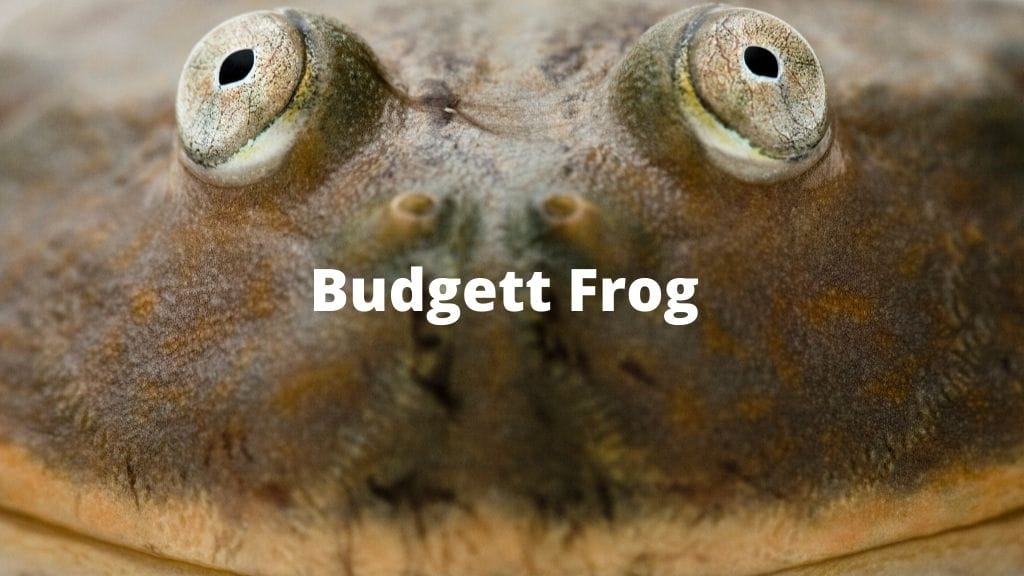
Budgett’s frogs have the worst bite reputation relative to their size, and they earn it.
They carry pronounced odontoids on the lower jaw, and unlike the ambush-style horned frogs, a Budgett’s frog will actively lunge. The bite tends to cut rather than crush.
The upside is that they telegraph everything. The inflating, the rearing up, the scream. A Budgett’s frog that is about to bite you has already told you twice.
About African bullfrogs
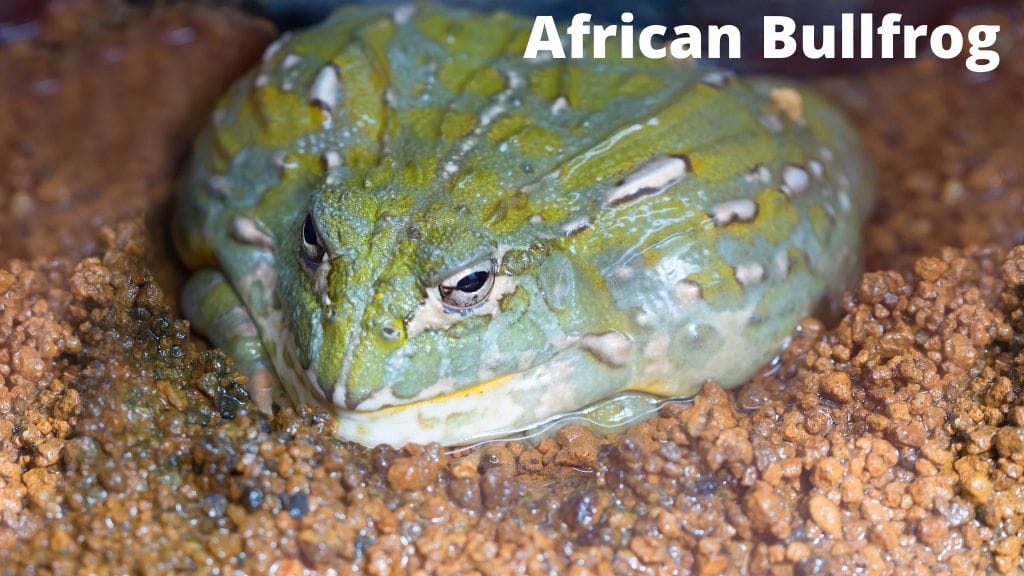
This is where a lot of older articles, including the previous version of this one, got it flatly wrong.
You will read that African bullfrogs have jaw spikes but cannot bite hard enough to draw blood. That is not true. A full-grown Pyxicephalus adspersus is one of the largest frogs kept in captivity, with a massive head, powerful jaw muscles and prominent odontoids.
An adult African bullfrog can absolutely break skin and cause a wound that needs proper cleaning. They are also territorial in a way most frogs are not, and males in particular will defend space.
Treat them like the large predator they are. Tongs, no hand feeding, minimal handling.
Frog Bite & What To Do: Infographic

Want to get a printable version of this infographic? Click here. Please link back to this source if you use the infographic on your website.
What To Do The Moment A Frog Bites You
Most people’s instinct is to yank, which is the one thing you should not do.
- Do not pull. A frog that has latched on is gripping with jaw muscles and bony odontoids. Pulling against that tears your skin on the way out and can genuinely injure the frog’s jaw.
- Stay still and wait. Nearly every frog lets go within a few seconds once it works out you are not food.
- If it does not let go, use water. Lower your hand, frog attached, into shallow lukewarm water. This almost always prompts a release without a struggle.
- Put the frog down properly. Back into the enclosure, gently, before you deal with yourself. A dropped frog is a much bigger problem than a cut finger.
- Wash for a full 20 seconds with soap and warm water. This is the step that actually matters, for reasons in the next section.
- Treat it like any puncture wound. Antiseptic, keep it clean, watch it for a couple of days. Bite punctures seal over at the surface while bacteria stay underneath, so redness, swelling, heat or spreading pain after a day or two means see a doctor.
If the wound bleeds heavily or will not stop, or if you have not had a tetanus shot in ten years, get it looked at rather than guessing.
Can A Frog Bite Make You Sick?
The bite itself is not the risk. What was on the frog is.
Frogs and other amphibians routinely carry Salmonella in their gut and on their skin, including frogs that look completely healthy. There is no such thing as a Salmonella-free pet frog, and no way to clean one into being safe.
This is not theoretical. In 2011 the CDC traced a nationwide Salmonella outbreak to pet African dwarf frogs. 241 people were infected, and 69 percent of them were children under 10.
Actual Salmonella symptoms, since a lot of pages get this list wrong:
- Diarrhea, often severe
- Stomach cramps
- Fever
- Nausea and vomiting
Symptoms usually start 6 hours to 6 days after exposure. Choking is not a Salmonella symptom, despite what you may have read, including on this page before it was rewritten.
The CDC’s guidance is more cautious than most frog owners realize. Children under 5 should not handle amphibians at all, and families with a child that age are advised against keeping them as pets. Adults over 65 and anyone immunocompromised are in the same higher-risk group.
None of this makes frogs dangerous pets. It makes hand washing a non-negotiable habit rather than a suggestion. Wash after handling the frog, after touching the tank, after changing the water, before you eat, every time.
While we are correcting myths, the other one worth putting down is that frog pee causes warts. It does not, and never did.
Can A Frog Bite Be Venomous Or Poisonous?
This one needs the distinction spelled out, because the two words get used interchangeably and they mean genuinely different things.
Poisonous means it hurts you if you eat it or absorb it. Venomous means it has a delivery system that injects something into you.
Almost every “dangerous” frog you have heard of is poisonous, not venomous. Poison dart frogs carry potent alkaloids in their skin. They cannot bite you meaningfully, they have no venom, and they only pose a threat if the toxin reaches your mouth, eyes or an open cut.
And here is the part that matters if you actually keep one: captive-bred dart frogs are essentially non-toxic. Their poison is built from a wild diet of specific ants, mites and beetles. Take that diet away and there is nothing left to build it from. A dart frog raised on fruit flies in a vivarium is not a poisonous animal.
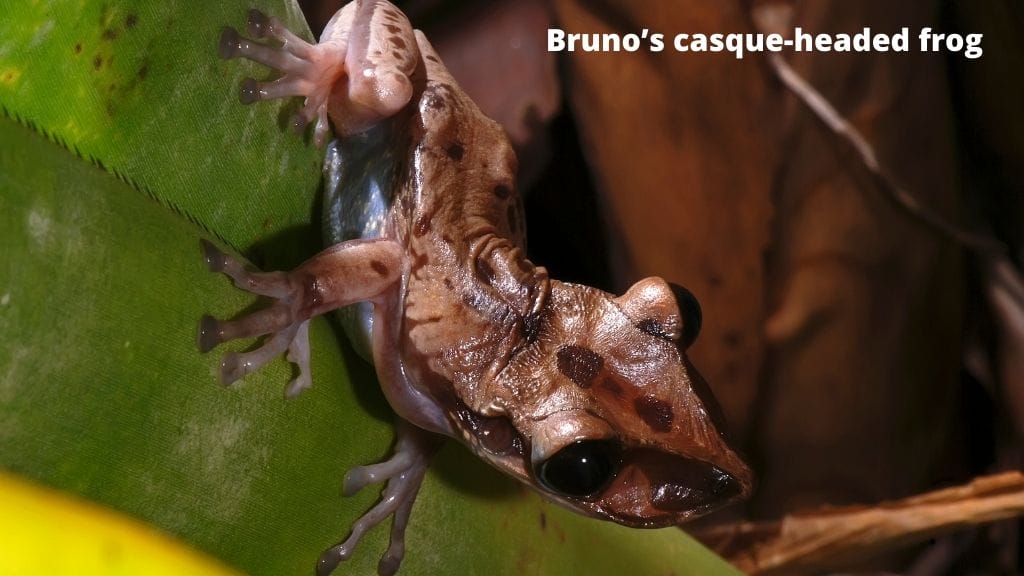
Genuinely venomous frogs do exist, and they were only confirmed in 2015. Two Brazilian species, Greening’s frog (Corythomantis greeningi) and Bruno’s casque-headed frog (Aparasphenodon brunoi), have bony spines on the skull that push through skin loaded with venom glands.
The potency is not a joke. Greening’s frog secretion measured roughly twice as lethal as pit viper venom, and Bruno’s casque-headed frog around 25 times as lethal.
But look at the delivery mechanism. These frogs headbutt. The spines are on the skull, not in the mouth. Even the world’s only venomous frogs do not envenomate you by biting.
So no, a frog bite does not inject venom. The one real caveat is that if a poisonous frog’s skin secretion happens to be on your hands and you then have an open bite wound, you have handed the toxin a route in. Which is another argument for washing immediately.
How To Never Get Bitten In The First Place
Bite prevention with frogs is almost entirely about feeding technique. Handling comes second.
- Use tongs, always. Long ones. This single habit prevents most frog bites that ever happen.
- Never hand feed, not once. The association between fingers and food is formed quickly and is basically permanent.
- Stop wiggling your fingers near the tank. To an ambush predator that movement is indistinguishable from a worm.
- Approach from the side, not overhead. A hand coming down from above reads as a bird.
- Know when your frog last ate. A hungry Pacman frog on feeding day is a different animal from one that ate yesterday.
- Wear lightly damp, powder-free gloves when you do need to handle. They protect you and protect the frog’s permeable skin from oils and soap residue.
- Handle less. Almost no frog enjoys it. Our guide to handling pet frogs safely covers the situations where it is genuinely necessary.
If you are still choosing a species and would rather avoid the whole issue, the best pet frogs for handling list skews heavily toward frogs that will never bite you.
Do Frogs Bite Each Other?
Yes, and it is a far more common problem than frogs biting people.
Larger frogs eat smaller frogs. That is not aggression, that is diet. Any frog small enough to fit in another frog’s mouth eventually will, which is why most bite injuries in home enclosures happen between tank mates rather than to owners.
Size mismatch is the main cause. Competition over food and space is the second. Housing two horned frogs together is a well-known way to end up with one horned frog.
If you are planning a mixed enclosure, read up on which frogs can actually live together before you buy the second one.
Frequently Asked Questions
Can a wild frog bite you?
Most native wild frogs and toads either cannot bite hard enough to matter or will simply flee. The bigger issue with wild frogs is Salmonella and skin secretions, plus the fact that keeping wild frogs as pets is a bad idea for the frog.
Do African clawed frogs bite?
Rarely and not seriously. They hunt by feel and will occasionally clamp onto a finger during feeding, but they have no meaningful lower-jaw dentition. It is startling rather than painful. African clawed frog care covers their feeding behaviour in more depth.
Do African dwarf frogs bite?
No. They physically cannot. They are entirely toothless and their mouths are far too small.
Do frog bites need stitches?
Almost never. Frog bites are punctures and crush injuries rather than lacerations, so there is usually nothing to stitch. Deep bleeding that will not stop is a doctor visit, not a stitch question.
Can a frog bite through a glove?
A large horned frog or African bullfrog can bite through a thin nitrile glove. It will still take most of the force out of it, and gloves are worn mainly to protect the frog’s skin from you, not the other way round.
Does a frog bite carry rabies?
No. Rabies is a mammal disease. Amphibians do not carry or transmit it.
Which frog has the strongest bite?
Among frogs kept as pets, large Ceratophrys horned frogs and African bullfrogs. The scaling data from the 2017 bite force study projects up to roughly 500 N for the largest horned frogs, which is remarkable for an animal that size.
The Bottom Line
A frog can bite you, and if you keep a Pacman, a Budgett’s or an African bullfrog, one eventually will.
It will almost certainly be a feeding mistake rather than aggression, it will hurt more than you expected, and it will be entirely your fault for not using tongs.
Do not pull. Wait, use lukewarm water if you need to, put the frog back, wash your hands properly and keep an eye on the wound.
The realistic risk from a frog is not the bite. It is the Salmonella you pick up from routine daily contact and never think about. Get the hand washing right and frog keeping is one of the lower-risk hobbies there is.

About Author
Hello, I’m Muntaseer Rahman, the owner of AcuarioPets.com. I’m passionate about aquarium pets like shrimps, snails, crabs, and crayfish. I’ve created this website to share my expertise and help you provide better care for these amazing pets.
Disclaimer
This site is owned and operated by Muntaseer Rahman. AcuarioPets.com is a participant in the Amazon Services LLC Associates Program, an affiliate advertising program designed to provide a means for sites to earn advertising fees by advertising and linking to Amazon.com. This site also participates in other affiliate programs and is compensated for referring traffic and business to these companies.