This post was created with help from AI tools and carefully reviewed by a human (Muntaseer Rahman) . For more on how we use AI on this site, check out our Editorial Policy.
Check Out These FREE Tools We Made JUST For You!
How to Set Up a Shrimp Tank: A Step-by-Step Guide for Beginners

Setting up a shrimp tank is not hard. But almost every beginner gets the order wrong, adds shrimp too early, and watches half the colony die in the first week.
That part is avoidable. Shrimp are some of the hardiest pets in the hobby once the tank is ready for them. The trick is building the tank in the right sequence and waiting through one boring step that most people skip.
This is the step-by-step build. If you came looking for aquascaping inspiration instead, that lives in our shrimp tank setup ideas post. This one is the actual setup, gear first, shrimp last.
Let me walk you through exactly how I do it.

What You Actually Need For A Shrimp Tank
You do not need much. Half the “essentials” lists online pad the gear out with stuff a freshwater shrimp tank never uses.
Here is the honest list, split into what you must have and what is optional.
| Must have | Optional / nice to have |
|---|---|
| A 5 to 10 gallon tank | Aquarium light (mainly for plants) |
| Sponge filter + air pump | Heater (depends on your room) |
| Substrate (sand or active soil) | Air stone / bubbler |
| Water conditioner | Décor and hides |
| Live plants | Tank lid |
| API freshwater test kit (the kit I use to check ammonia and nitrites every week) | TDS pen and GH/KH tester |
Notice what is not on the must-have list. No protein skimmer, that is a saltwater reef item and has no business in a shrimp tank. No UV sterilizer either, that is an advanced add-on, not a beginner requirement.
Keep it simple. A tank, a sponge filter, substrate, plants, a test kit, and patience. That is the real starter kit.
Video: My Shrimp Tank Setup Process
Step 1: Choose The Right Tank
Shrimp are tiny, so people assume they need a tiny tank. That logic backfires fast.
Small water volumes swing in temperature and chemistry quickly, and shrimp hate sudden swings. A bigger tank is more stable, which means more forgiving for a beginner.
Go with a minimum of 5 gallons, but 10 gallons is the easier starting point. The extra water buffers your mistakes while you learn.
How Many Shrimp Can I Keep In A 5 Gallon Tank?
More than you would think. Shrimp have a tiny bioload, so they are not the ones polluting the water.
A 5 gallon tank (the nano kit I keep recommending for aquascapes) can comfortably hold 15 to 20 cherry shrimp to start, and they will breed up from there. Neocaridina colonies happily self-regulate in a planted tank.
If you are keeping larger species like Amano shrimp, drop that to 5 to 8 in a 5 gallon. Size matters more than headcount.
How Many Shrimp Should I Start With?
Start with a colony, not a pair. A group of 10 to 15 shrimp gives you enough genetic diversity to breed a stable colony and enough numbers that the survivors do not feel exposed.
One or two shrimp will just hide and stress. Buy the small crowd.
Step 2: Pick The Right Spot
Before you add a drop of water, decide where the tank lives. Moving a full tank is a nightmare you only make once.
Keep it out of direct sunlight. A sunny windowsill cooks the water temperature up and down through the day and triggers algae blooms you did not ask for.
Pick a sturdy, level surface away from radiators, AC vents, and busy doorways. Stable and quiet is what shrimp want.
Step 3: Add Your Substrate
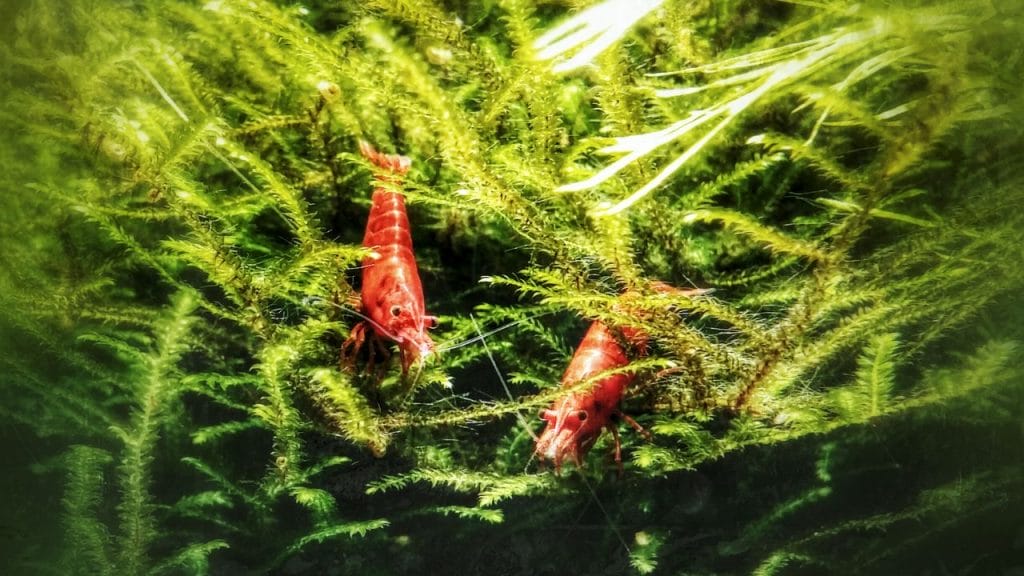
Substrate is not just decoration. It grows the biofilm your shrimp graze on all day, and it gives them a surface to forage across.
You have two real choices, and the right one depends on your shrimp.
| Substrate type | Best for | What it does |
|---|---|---|
| Inert (sand, fine gravel) | Neocaridina (cherry, blue) | Cheap, stable, holds neutral pH |
| Active soil (buffering aquasoil) | Caridina (crystal, bee) | Lowers pH and softens water |
For your first ever shrimp tank, keep it simple with cherry shrimp on inert sand. Caridina shrimp need soft, acidic water and an active soil, which is a fussier setup better saved for round two.
Aim for 1 to 2 inches of substrate. Deep enough to plant in, shallow enough to stay clean.
Step 4: Sort Out The Lighting
Here is a thing nobody tells beginners. The light is for your plants, not your shrimp.
Shrimp do not need bright light. They will happily live in a dim tank. But if you are running live plants, and you should be, the plants need a decent LED light running 6 to 8 hours a day.
Skip the old advice about colored lights speeding up shrimp growth. There is no solid evidence for it. Light grows your plants and your biofilm, and the biofilm is what actually feeds the colony.
Put the light on a cheap timer so it stays consistent. Consistency beats intensity every time.
Step 5: Install The Filter
This is the single most important piece of gear, so get it right.
Every living thing in the tank produces ammonia, and ammonia is poison. The filter grows the beneficial bacteria that convert that ammonia into harmless nitrate. No filter, no safe water.
For shrimp, a sponge filter is the gold standard. Here is why it wins:
- It cannot suck up baby shrimp, which a power filter absolutely will
- It gives gentle flow that does not blast tiny shrimp around
- The sponge surface itself grows biofilm the shrimp eat
- It provides both mechanical and biological filtration with zero moving parts
A sponge filter runs off an air pump. Air pushes up through the tube, pulls water through the sponge, and that is your whole filtration system. Cheap, quiet, and shrimp-proof.
Do Shrimp Tanks Need Water Changes?
Yes, but gently. Change around 20 to 30 percent of the water once a week using a gravel vacuum (the gravel vacuum I use for shrimp water changes) to pull out waste.
Never do a full water change. A huge swing in parameters can shock and kill the colony faster than dirty water ever would. Small and steady.
Step 6: Add Plants, Hides, And Décor
Now the fun part. This is where the tank stops looking like a science project and starts looking alive.
Plants are not optional in my book. They suck up nitrates, grow biofilm, give shrimp cover, and turn the tank into a low-maintenance ecosystem.
The best beginner shrimp plants are nearly unkillable:
- Java moss (shrimp love grazing it and breeding in it)
- Java fern
- Anubias
- Floating species, covered in our guide to the best floating plants for a shrimp tank
For hides and décor, shrimp are not picky. Cholla wood, driftwood, rock caves, a terracotta pot, even a clean PVC offcut all work. They want shaded nooks to molt and hide in safely.
A handful of dried leaf litter like Indian almond or oak leaves is the secret weapon. It breaks down slowly and grows the biofilm shrimp graze on for weeks.
Step 7: Add An Air Pump (You Probably Already Have One)
If you went with a sponge filter, congratulations, you already own this step. The same air pump that drives your sponge filter is doing your aeration.
Shrimp need well-oxygenated water, and a sponge filter agitating the surface handles that nicely. You do not need a separate bubbler on top.
If for some reason you skipped the sponge filter, then yes, add an air stone. Just keep the bubble flow gentle. Shrimp like calm water, not a jacuzzi.
Step 8: Decide On A Heater
This one is genuinely optional, and it depends on your room.
Neocaridina shrimp thrive at roughly 68 to 78°F, which is normal room temperature in most homes. If your room stays in that range year round, you can skip the heater entirely.
Add a small adjustable heater (the adjustable heater I trust to hold a shrimp tank steady) if your room gets cold in winter, or if you want faster, more consistent breeding. Stable temperature matters more to shrimp than the exact number.
If you want the full breakdown by species, here is our guide on the ideal temperature to keep shrimp.
Step 9: Fill The Tank With Water
Gear is in, now add water. But not straight from the tap.
Tap water has chlorine and chloramine that wipe out beneficial bacteria and stress shrimp. Always treat tap water with a water conditioner first, or use remineralized RO water if your tap is rough.
Pour slowly onto a plate or your hand so you do not blast craters into the substrate. Get your parameters into the right zone before moving on.
| Parameter | Neocaridina (beginner) target |
|---|---|
| Temperature | 68 to 78°F |
| pH | 6.8 to 7.5 |
| GH | 6 to 12 |
| KH | 2 to 8 |
| TDS | 150 to 250 |
GH matters more than beginners realize. Shrimp need that mineral content to molt their shells properly, so do not chase ultra-soft water for cherries.
Step 10: Cycle The Tank (Do Not Skip This)
This is the step that kills more shrimp than anything else, because beginners skip it. So I am going to be blunt.
Do not add a single shrimp until your tank is fully cycled. Cycling means growing enough beneficial bacteria to instantly neutralize ammonia and nitrite before they can hurt anything.
The cleanest way is a fishless cycle:
- Add a source of ammonia (pure ammonia (the pure ammonia I dose for fishless cycles), or a pinch of fish food left to rot)
- The bacteria convert ammonia into nitrite, then nitrite into nitrate
- Test the water every few days with your API freshwater test kit
- The cycle is done when ammonia and nitrite both read zero and you only see nitrate
A full fishless cycle usually takes 4 to 6 weeks. You can speed it up by seeding the tank with filter media or substrate from an established tank, or by dosing bottled bacteria (the bottled bacteria I use to jump-start a cycle).
For the complete walkthrough, read our dedicated guide on how to cycle a shrimp tank. It is worth the read before you buy any shrimp.
One bonus tip: even after the cycle finishes, let the tank “mature” for a few more weeks so biofilm builds up. Shrimp added to a mature, biofilm-rich tank survive far better than shrimp dumped into a freshly cycled one.
Step 11: Acclimate And Add The Shrimp
Finally. The tank is cycled, matured, and stable. Now you can add shrimp, but slowly.
Shrimp are extremely sensitive to changes in water parameters, especially TDS. Dumping them straight from the bag will shock them.
Use drip acclimation. Float the bag to match temperature, then slowly drip tank water into a container holding the shrimp over an hour or two. This lets them adjust gradually instead of all at once.
Then gently scoop them in. Never pour the store water into your tank.
Step 12: Choose Safe Tank Mates
Shrimp live happily in a colony on their own. But if you want company in the tank, choose peaceful, small species that will not treat your shrimp as snacks.
Good shrimp tank mates include:
- Small rasboras (chili, harlequin)
- Pygmy corydoras
- Otocinclus catfish
- Freshwater snails (nerite, ramshorn)
Avoid anything big or aggressive. Most cichlids, larger fish, and anything with a mouth wide enough to eat a shrimp will do exactly that.
Can Shrimp Live With Betta?
Sometimes, but it is a gamble. A betta might ignore your shrimp completely, or it might hunt them one by one. It comes down to the individual betta’s temperament.
If you want to try it, a heavily planted tank and a well-fed betta improve your odds. We break down the full risk in can bettas live with shrimp.
Step 13: Add A Lid
Last step, and an easy one to forget. Put a lid on the tank.
Shrimp can and do climb. A shrimp that crawls up the filter tube or escapes a gap in the rim ends up a crispy casualty on your floor.
A lid also keeps curious cats and dogs out, and slows evaporation that would otherwise spike your TDS. A simple glass or mesh lid does the job.
Why Did My Shrimp Crawl Out Of The Tank?
If shrimp are trying to escape, treat it as an alarm. Healthy shrimp in good water have no reason to leave.
It almost always means a water parameter problem, an ammonia spike, a TDS swing, or leftover toxins. Test the water immediately. The shrimp are telling you something is wrong before they start dying. Watch for the early signs of stress in shrimp too.
Expert Tip On Getting It Right
As Abhisek Mallick, a respected shrimp keeper from Kolkata, puts it:
We prefer smaller tanks for experienced keepers, but a 2x1x1 tank is ideal for caridina and neocaridina shrimp. The choice of substrate, filter, and light is crucial, with preferences like ADA Amazonia soil, sponge filters with good aeration, and LED lighting to avoid temperature increases. For plants, floating species, mosses, and ferns are recommended while avoiding stem plants to prevent soil disturbance.
His point about precise water parameters, TDS, GH, pH, and temperature, is exactly why the cycling and testing steps matter so much. You can read his full beginner’s guide to keeping shrimp interview for more.
Which Shrimp Should A Beginner Start With?
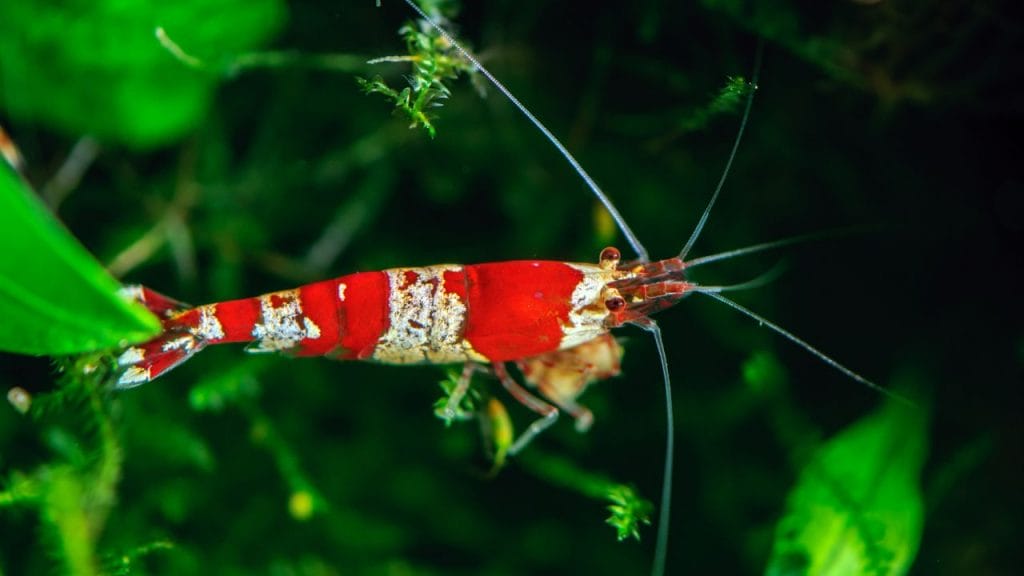
Easy answer: cherry shrimp (Neocaridina). They are hardy, colorful, breed readily, and forgive the rookie mistakes that would kill fussier species.
Start there, get a colony thriving, then graduate to crystal or bee shrimp once you trust your routine. Our cherry shrimp care guide and our roundup of the easiest, hardiest shrimp for beginners will point you to the right first pick.
Final Words
Setting up a shrimp tank really is easy, as long as you respect the order. Build the tank, plant it, cycle it fully, let it mature, then add your shrimp slowly.
Rush the cycle and you will be replacing shrimp every week. Take your time and you will have a self-sustaining little colony that practically runs itself.
Once it is up and running, keep up the weekly maintenance and the occasional check on the tank’s cleanliness. Your shrimp will reward you by breeding up into a tank full of color.
About Author
Hello, I’m Muntaseer Rahman, the owner of AcuarioPets.com. I’m passionate about aquarium pets like shrimps, snails, crabs, and crayfish. I’ve created this website to share my expertise and help you provide better care for these amazing pets.
Disclaimer
This site is owned and operated by Muntaseer Rahman. AcuarioPets.com is a participant in the Amazon Services LLC Associates Program, an affiliate advertising program designed to provide a means for sites to earn advertising fees by advertising and linking to Amazon.com. This site also participates in other affiliate programs and is compensated for referring traffic and business to these companies.