This post was created with help from AI tools and carefully reviewed by a human (Muntaseer Rahman) . For more on how we use AI on this site, check out our Editorial Policy.
Check Out These FREE Tools We Made JUST For You!
Freshwater Shrimp & Fish Compatibility Chart [Illustrated]
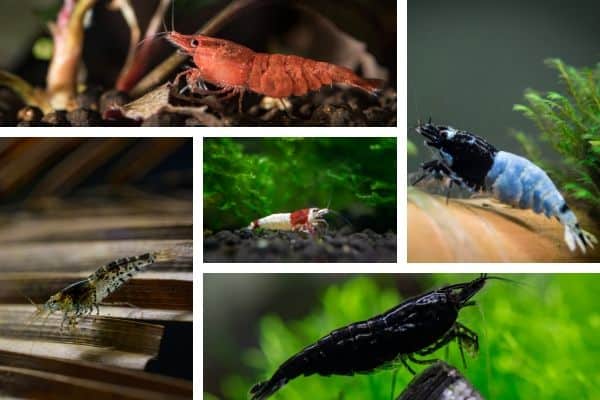
Not all freshwater shrimp can live with all fish. Some shrimp species are peaceful pellet-eaters that hide in the moss. Others are aggressive predators that will hunt your tetras.
And on the flip side, plenty of “community” fish will happily snack on your shrimp the second the lights go out.
This guide gives you the full freshwater shrimp and fish compatibility chart, plus a species-by-species breakdown of who pairs with what. I have also added the fish you should never mix with shrimp, the fish that almost always work, and the setup tweaks that improve survival odds.
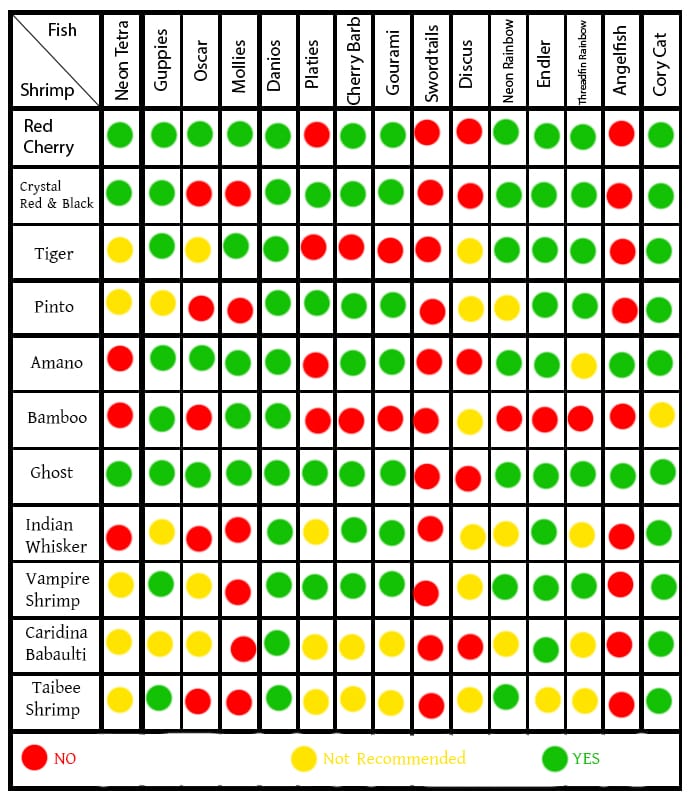
Quick Compatibility Chart
Use this table to scan combinations at a glance. The species-by-species sections below explain the “why” behind each row.
| Shrimp Species | Best Fish Mates | Risky Pairings | Avoid Completely |
|---|---|---|---|
| Cherry Shrimp (Neocaridina) | Endlers, chili rasboras, pygmy cory, otocinclus | Harlequin rasboras, neon tetras, peaceful bettas | Angelfish, cichlids, goldfish, gouramis |
| Crystal Red / Black (Caridina) | Ember tetras, otocinclus, pygmy cory | Sparkling gourami, small rasboras | Most community fish, anything over 2 inches |
| Tiger Shrimp | Otocinclus, pygmy cory, snails | Chili rasboras, dwarf rasboras | Tetras, bettas, gouramis |
| Pinto Shrimp | Otocinclus, snails only | Pygmy cory | Almost all fish, keep in species tank |
| Amano Shrimp | Tetras, rasboras, danios, peaceful gouramis | Larger bettas | Cichlids, angelfish, goldfish, loaches |
| Bamboo Shrimp | Tetras, rasboras, danios, corydoras | Bettas, gouramis | Cichlids, angelfish, large barbs |
| Ghost Shrimp | Tetras, danios, rasboras | Bettas, dwarf gouramis | Goldfish, cichlids, angelfish |
| Whisker Shrimp | None reliably safe | Other large shrimp | All small fish, all dwarf shrimp |
| Vampire Shrimp | Tetras, rasboras, danios, peaceful corys | Bettas | Cichlids, large barbs, goldfish |
| Caridina babaulti | Otocinclus, snails, pygmy cory | Small rasboras | Most fish, prefer species tank |
| Taibee Shrimp | Otocinclus, pygmy cory | Sparkling gourami | Bettas, tetras, anything aggressive |
| Mischling Shrimp | Otocinclus, snails | Pygmy cory | Almost all fish, species tank preferred |
Want a printable version for your fish room wall? Save the chart image below.
The 4 Golden Rules of Shrimp + Fish Compatibility
Before you go species-by-species, know the four rules that decide every pairing.
1. Size matters more than temperament
If your shrimp fits in a fish’s mouth, it is food. Even “peaceful” fish like tetras will take baby shrimp.
Adult amano and vampire shrimp are usually too big to swallow. Cherry shrimp fry are bite-sized for almost everything.
2. Hiding spots buy survival time
A bare tank with two shrimp and one fish ends one way. Dense plants and crevices change the math completely.
Stuff your tank with java fern, anubias, and a marimo ball. Add some driftwood with caves underneath. You can also throw in jackfruit leaves or oak leaf litter for biofilm and cover.
3. Water parameters must overlap
Caridina shrimp want soft, acidic water around 70 to 74°F and pH 6.0 to 6.8. Neocaridina prefer harder water at 72 to 78°F and pH 6.5 to 7.5.
If you want shrimp to breed, the fish in the tank need to tolerate those exact parameters. A solid aquarium heater (my pick: hygger 50W Submersible Aquarium Heater) keeps things stable, and a freshwater test kit (my pick: API Freshwater Master Test Kit) catches creep before it kills.
4. Predatory drive is non-negotiable
Some fish hunt instinctively even when stuffed with pellets. Cichlids, angelfish, and most loaches fall in this category.
You can’t train it out of them. Don’t try.
Shrimp Species, One by One
Here is the breakdown for every common freshwater shrimp species, including who they get along with and who eats them.
Cherry Shrimp (Neocaridina)
The most popular freshwater shrimp, and for good reason. They are hardy, colorful, peaceful, and breed easily.
Cherry shrimp themselves never bother fish. The danger flows one way only, the fish eats them.
Best tank mates: Endlers, chili rasboras, pygmy corydoras, otocinclus, sparkling gourami
Risky: Harlequin rasboras, neon tetras, peaceful single bettas in heavily planted tanks
Avoid: Angelfish, cichlids, goldfish, dwarf gouramis, loaches
For a full deep-dive, see my list of ideal tank mates for cherry shrimp with a per-fish risk rating.
Crystal Red and Crystal Black Shrimp (Caridina)
These are beautiful, slow-moving, and fragile. They need pristine soft acidic water and forgive nothing.
Most fish that thrive in their water (small tetras, otos) will still eat shrimplets. Keep them in a species tank if you want a breeding colony.
Best tank mates: Ember tetras, otocinclus, pygmy corydoras
Risky: Sparkling gourami, dwarf rasboras
Avoid: Most community fish, anything over 2 inches
For the full species breakdown of Caridina varieties, check out my Caridina shrimp care guide.
Tiger Shrimp
A Caridina variety that tolerates slightly more variation than crystal reds. Still sensitive, still tiny, still snack-sized for most fish.
Best tank mates: Otocinclus, pygmy corydoras, nerite snails
Risky: Chili rasboras, dwarf rasboras
Avoid: Tetras, bettas, gouramis, anything with a mouth bigger than 1cm
Pinto Shrimp
Expensive, sensitive, and absolutely not built for community life. They are the show-tank specimens of the shrimp world.
Keep them in a dedicated, low-traffic shrimp tank with no fish at all.
Best tank mates: Otocinclus, snails
Risky: Pygmy corydoras
Avoid: All fish if you want a breeding colony
Amano Shrimp
The algae-eating workhorse. Bigger than cherry shrimp at 2 inches, which makes them too big for most fish to swallow whole.
Worth noting, they are not actually aggressive. They are scavengers, not hunters. The old “hostile” reputation comes from their habit of fighting each other over food.
Best tank mates: Most peaceful community fish including tetras, rasboras, danios, corydoras, peaceful gouramis
Risky: Larger bettas, larger barbs
Avoid: Cichlids, angelfish, goldfish, loaches, puffers
Adult amanos are one of the few shrimp safe in a standard community tank. They will not breed in freshwater, though, the larvae need brackish water to survive.
Bamboo Shrimp
These are filter feeders. They sit in the current waving fan-like appendages to catch food particles.
Because they need flow, they tolerate larger tanks with bigger fish well. Adults reach 3 to 4 inches.
Best tank mates: Tetras, rasboras, danios, corydoras, peaceful gouramis
Risky: Bettas, gouramis with aggressive temperament
Avoid: Cichlids, angelfish, large barbs
Read my bamboo shrimp care guide for the flow and feeding setup they actually need.
Ghost Shrimp
Sold cheap as feeders, which means they get culled hard before they reach your tank. Survivors are tough and adaptable.
Adults reach 1.5 to 2 inches. Smaller than amanos, so more fish can eat them, but the price means most keepers treat losses as expected.
Best tank mates: Tetras, danios, rasboras, small corydoras
Risky: Bettas, dwarf gouramis (they will pick at antennae)
Avoid: Goldfish, cichlids, angelfish, large barbs
Whisker Shrimp (Macrobrachium lanchesteri)
Read this section carefully. Whisker shrimp look almost identical to ghost shrimp at the pet store, but they are aggressive predators.
They will hunt and kill small fish, fry, and other shrimp. Pet stores routinely mislabel them.
Best tank mates: None reliably safe, keep them solo
Risky: Other large shrimp species
Avoid: All small fish, all dwarf shrimp, anything bite-sized
For full ID help and behavior notes, see my whisker shrimp care guide.
Vampire Shrimp
Like bamboo shrimp, these are filter feeders. They reach 3 to 4 inches and are mostly nocturnal.
The name is intimidating, the behavior is not. They are gentle giants that spend daylight hours hidden.
Best tank mates: Tetras, rasboras, danios, corydoras, peaceful gouramis
Risky: Bettas
Avoid: Cichlids, large barbs, goldfish, angelfish
Caridina babaulti
A peaceful, shy Caridina variety that comes in green, brown, and red color forms. They are nervous around active fish.
Best tank mates: Otocinclus, nerite snails, pygmy corydoras
Risky: Small rasboras
Avoid: Most community fish, prefer a species tank
Taibee Shrimp
A Tiger x Taiwan Bee crossbreed. Inherits the sensitivity of both parent lines, so treat them like crystal reds.
Best tank mates: Otocinclus, pygmy corydoras
Risky: Sparkling gourami
Avoid: Bettas, tetras, anything aggressive
Mischling Shrimp
A Taiwan Bee x Crystal Red cross, mostly bred for genetics rather than display. Same care needs as crystal reds.
Best tank mates: Otocinclus, nerite snails
Risky: Pygmy corydoras
Avoid: Almost all fish, species tank preferred
Fish to Always Avoid With Any Shrimp
Some fish will eat shrimp every single time, no matter how much you plant the tank.
- Cichlids of any kind including angelfish, oscars, discus, kribs, apistos
- Goldfish at any size, they treat shrimp as treats
- Loaches including yoyo, clown, and zebra, they are designed to dig in crevices for invertebrates
- Large gouramis like blue, opaline, pearl
- Pufferfish of every species, do not even try
- Large tetras like serpae, congo, bleeding heart
- Plecos larger than 4 inches, especially common pleco
Fish That Are Generally Shrimp-Safe
This is the short list of fish that work in a shrimp colony tank without significantly hitting the breeding population.
- Otocinclus are the gold standard, they only eat algae
- Pygmy corydoras stay under 1 inch and only sift sand
- Endlers are too small to eat adult cherries
- Chili rasboras are micro-fish, focused on micro-pellets
- Celestial pearl danios are peaceful and small
- Sparkling gouramis are tiny labyrinth fish that ignore shrimp
- Nerite snails (not a fish, but the safest tank cleaner)
Even these will eat shrimplets occasionally. You will lose some, but the colony will still grow.
Setup Tips That Improve Survival
A few setup choices double or triple your shrimp survival rate in a community tank.
Plant heavily before adding fish. Java fern, anubias, marimo balls, and a carpet of moss give shrimplets nowhere-to-everywhere cover. Bare-bottom tanks are death sentences.
Use a sponge filter, not a power filter. Power filter intakes pull baby shrimp through and grind them. A sponge filter passes water through fine pores that protect even week-old shrimplets.
Add jackfruit leaves and driftwood. Leaf litter grows biofilm, which is shrimp food (my pick: Hikari Crab Cuisine). Driftwood creates dark caves where shrimp molt safely.
Cycle properly and test weekly. Shrimp die fast from ammonia and copper. A freshwater test kit catches issues before you lose the colony.
Keep parameters stable with a quality heater. Sudden temperature shifts trigger bad molts. An adjustable aquarium heater rated for your tank size prevents that.
Feed the fish, not the shrimp. Well-fed fish are less motivated to hunt. Shrimp will scavenge the rest.
For the full beginner setup, read my shrimp tank setup guide and the best beginner shrimp species list.
Frequently Asked Questions
Can cherry shrimp live with bettas?
Sometimes. It depends entirely on the individual betta’s personality.
Some bettas ignore shrimp completely, others hunt them on sight. A heavily planted 10-gallon tank gives shrimp a fighting chance. For the full breakdown, see can bettas live with shrimp.
Will amano shrimp eat fish?
No. Amanos are scavengers. They will pick at dead or dying fish, but they do not hunt live ones.
Are ghost shrimp aggressive?
True ghost shrimp (Palaemonetes paludosus) are mostly peaceful. The problem is that pet stores often sell whisker shrimp as ghost shrimp by mistake, and whiskers are aggressive predators.
Check the body proportions before buying. Whisker shrimp have noticeably longer claws (chelipeds) than true ghost shrimp.
What fish definitely won’t eat adult shrimp?
Otocinclus, pygmy corydoras, and nerite snails are the safest options. They lack the mouth size or the predatory instinct to take adult shrimp.
Do shrimp need to be in a species-only tank to breed?
Not always. Cherry shrimp breed in community tanks if you give them dense plant cover and avoid fry-hunting fish like tetras.
Caridina and high-grade shrimp (pintos, taibees, mischlings) really do need species tanks to maintain colony numbers.
Can shrimp survive with angelfish?
No, not reliably. Angelfish are slow but persistent ambush predators, and shrimp are exactly the right size for them.
Even adult amanos get picked off in angelfish tanks.
How many shrimp can I keep in a 10-gallon tank?
A 10-gallon nano tank (my pick: Fluval Spec V) holds about 20 to 30 adult cherry shrimp comfortably. Bigger shrimp like amanos or bamboos need more room, around 6 to 10 per 10 gallons.
Final Thoughts
The whole game comes down to three things: size, hiding spots, and the predatory drive of the fish you pick.
Pick shrimp that are too big to swallow. Plant the tank densely. Skip every fish on the avoid list.
Do those three things and your shrimp colony will not just survive, it will breed faster than the fish can find them.
About Author
Hello, I’m Muntaseer Rahman, the owner of AcuarioPets.com. I’m passionate about aquarium pets like shrimps, snails, crabs, and crayfish. I’ve created this website to share my expertise and help you provide better care for these amazing pets.
Disclaimer
This site is owned and operated by Muntaseer Rahman. AcuarioPets.com is a participant in the Amazon Services LLC Associates Program, an affiliate advertising program designed to provide a means for sites to earn advertising fees by advertising and linking to Amazon.com. This site also participates in other affiliate programs and is compensated for referring traffic and business to these companies.