This post was created with help from AI tools and carefully reviewed by a human (Muntaseer Rahman) . For more on how we use AI on this site, check out our Editorial Policy.
Check Out These FREE Tools We Made JUST For You!
Bamboo Shrimp Care: Feeding, Lifespan & Tank Setup Guide
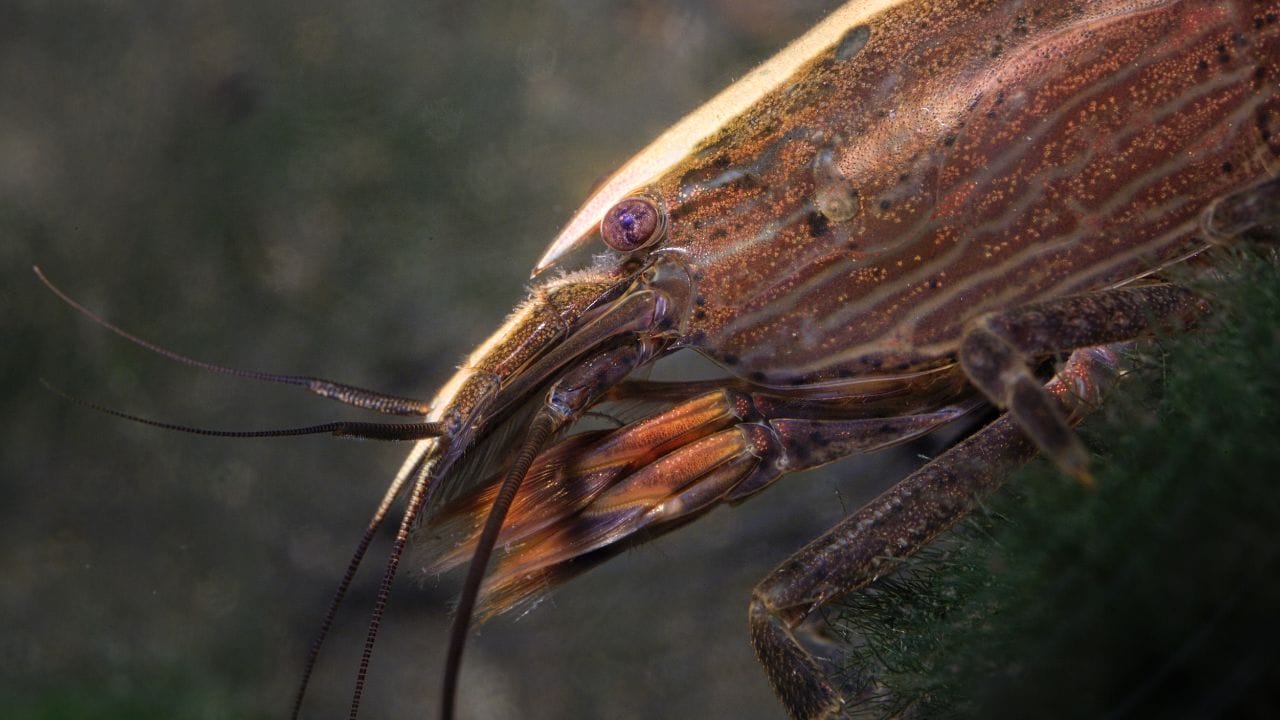
Most shrimp pick food off the ground like tiny vacuum cleaners.
Bamboo shrimp? They’re out here catching their dinner mid-air like some kind of underwater acrobat.
These filter-feeding shrimp (Atyopsis moluccensis) use fan-like appendages to snatch microscopic food particles right out of the water current. It’s honestly mesmerizing to watch. They’ll perch on a rock, hold up their little “baseball mitts,” and just… wait for the buffet to come to them.
But here’s the catch — that unique feeding style makes them trickier to keep than your average shrimp.
Get the setup wrong, and they’ll starve. Even in a tank full of fish food.
Let me show you how to keep these gentle giants happy and well-fed.

What Is A Bamboo Shrimp?
Bamboo shrimp are large freshwater shrimp native to Southeast Asia — specifically Indonesia, Sri Lanka, Thailand, Malaysia, and the Philippines.
In the wild, they cling to rocks in fast-flowing streams and rivers, filtering food particles from the rushing water. They literally plant themselves in the strongest currents they can find.
They go by a bunch of names: wood shrimp, flower shrimp, fan shrimp, Singapore shrimp, Asian filter-feeding shrimp. All the same animal.
Quick Stats:
| Attribute | Details |
|---|---|
| Scientific Name | Atyopsis moluccensis |
| Size | 2-4 inches (can reach 4+ inches) |
| Lifespan | 1-2 years (up to 6 years with excellent care) |
| Temperament | Peaceful |
| Care Level | Moderate |
| Diet | Filter feeder |
| Minimum Tank Size | 20 gallons |
Appearance: The “Fans” Are The Whole Point
Bamboo shrimp look pretty much like what you’d expect — a shrimp-shaped body with a slight hump.
Their coloration ranges from reddish-brown to tan, sometimes with hints of orange, green, or even blue. A distinctive white or cream stripe runs along their back when they’re healthy and happy.
But the real showstoppers are their front appendages.
Instead of claws, bamboo shrimp have evolved four pairs of feathery, fan-like structures. These “fans” work like tiny nets, catching microscopic food particles as water flows through them.
Every few seconds, they’ll bring a fan to their mouth, eat whatever they caught, then put it back up. It’s like watching someone eat popcorn one kernel at a time — except way cooler.

Color Changes Are Normal
Don’t freak out if your bamboo shrimp changes color.
They can shift from brown to reddish to greenish depending on their mood, environment, and diet. Some even turn a striking blue when they’re comfortable.
Pale coloration usually means one of two things: they just molted, or they’re stressed. Post-molt paleness is temporary and will resolve in a few days as their new shell hardens.
Tank Setup: Current Is Everything
Here’s where bamboo shrimp care gets interesting.
These aren’t “throw them in any tank” shrimp. Their specialized feeding method means the tank setup actually matters.
Tank Size
Minimum 20 gallons — and honestly, bigger is better.
Why so large for a shrimp? Two reasons:
- They need enough water volume to support adequate food particles
- They need space for proper water flow
A longer tank is better than a taller one. A 20-gallon long beats a 20-gallon high because it creates better horizontal current for feeding.
One bamboo shrimp per 20 gallons is a good rule of thumb.
Water Parameters
| Parameter | Ideal Range |
|---|---|
| Temperature | 72-82°F (22-28°C) |
| pH | 6.5 – 7.5 |
| GH | 6 – 12 |
| KH | 3 – 10 |
| Ammonia | 0 ppm |
| Nitrite | 0 ppm |
| Nitrate | Below 20 ppm |
Bamboo shrimp are sensitive to water parameter swings. Stability matters more than hitting exact numbers.
And like all shrimp — copper is deadly. Check any medications, fertilizers, or additives for copper content before adding them to the tank.

The Flow Situation
This is the make-or-break factor.
Bamboo shrimp need strong water current to feed properly. In the wild, they position themselves in the harshest currents of fast-moving streams — literally clinging to rocks in torrential water.
Your standard aquarium filter probably won’t cut it.
Consider adding:
- A powerhead aimed across the tank
- A canister filter rated for double your tank size
- A wavemaker
Position rocks, driftwood, or tall plants near the water flow so your shrimp have a perch. They’ll climb up, face the current, and start filtering.
Watching them find their “spot” is half the fun.
Substrate and Decor
Substrate type doesn’t matter much — sand, gravel, aquarium soil (the planted-tank substrate I rebuy every time), whatever you prefer.
What DOES matter:
- Perching spots near the current — driftwood, rocks, sturdy plants
- Hiding places — they need somewhere to retreat, especially when molting
- Plants — live plants provide hiding spots and naturally produce food particles
Don’t over-plant the tank though. You need open areas for water flow. Too many plants can create dead zones where current stagnates.
The Tank MUST Be Mature
Here’s a mistake that kills a lot of bamboo shrimp.
People buy them, drop them in a new tank, and wonder why they die.
Bamboo shrimp need an established, mature tank — at least several months old with a healthy ecosystem. New tanks are simply too “clean.” There’s not enough biofilm, microorganisms, or detritus floating around for them to filter.
If your tank is brand new and sparkling clean, it might as well be a desert for a bamboo shrimp.
Wait until your tank has some age on it. A little bit of “dirty” is actually good for these guys.
Feeding: The Tricky Part
This is where most people go wrong with bamboo shrimp.
You can’t just drop in pellets or flakes and expect them to eat. They’re not bottom feeders. They’re not algae scrapers. They ONLY eat what they can filter from the water column.
What They Eat
In nature, bamboo shrimp filter:
- Microalgae
- Bacteria
- Tiny organic particles
- Detritus
- Microscopic organisms
In your tank, you need to replicate this with powdered foods that stay suspended in the water.
Good options include:
- Spirulina powder
- Crushed fish flakes (grind them to dust)
- Powdered algae wafers
- Baby shrimp food (the food my cherry shrimp actually swarm) (like Shrimp King Baby or Shrimp King Atyopsis)
- Hikari First Bites
- Golden Pearls (5-50 micron size)
- Frozen baby brine shrimp
How To Feed
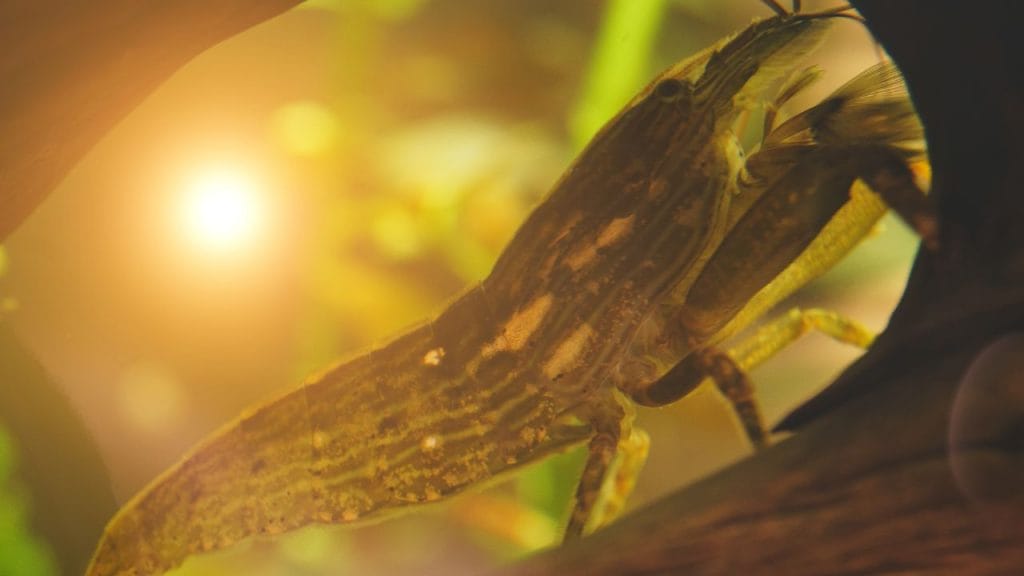
Method 1: Release into the current
Sprinkle powdered food upstream from where your shrimp is perching. The current will carry it right into their fans.
Method 2: Target feeding with a syringe or pipette
Mix powdered food with tank water in a small cup. Use a syringe or turkey baster to squirt the mixture directly at your shrimp.
Method 3: Squeeze your filter sponge
This is a fan favorite. Take your filter sponge or media and give it a squeeze in the tank water. It releases a cloud of microorganisms and particles that bamboo shrimp go crazy for.
Method 4: Stir up the substrate
Gently disturb the gravel or sand. It kicks up settled particles that your shrimp can filter. They often get noticeably more active when you do this.
The Starvation Warning Sign
Here’s the most important thing you need to know:
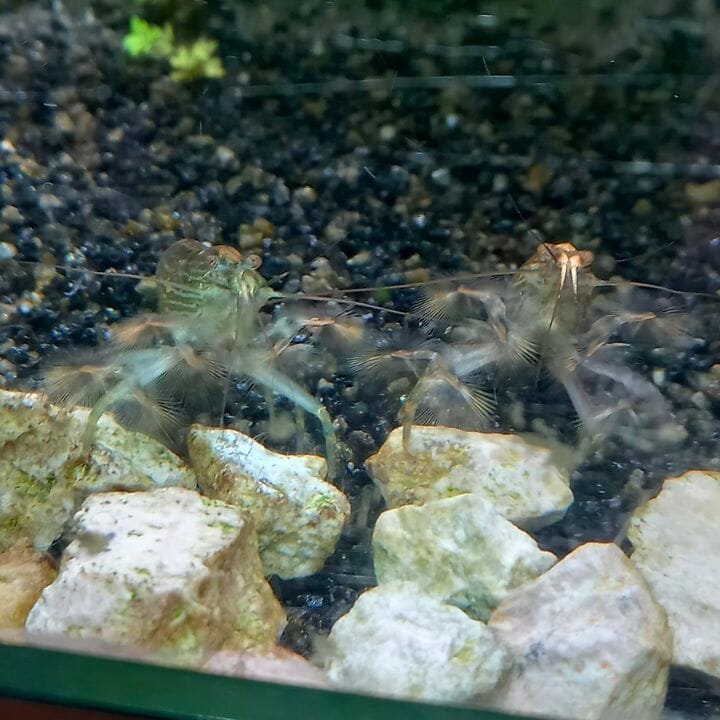
If your bamboo shrimp is scraping the substrate with its fans, it’s starving.
A healthy bamboo shrimp should be perched in the current, fans extended, filtering water. That’s normal behavior.
When they start using their delicate fans to pick through gravel and substrate, they’re desperately searching for food because there’s nothing in the water column. This is a red alert.
If you see this happening:
- Increase feedings immediately
- Add a powerhead if flow is weak
- Check that your tank is mature enough
Scraping the substrate can also damage their fans. If that happens, they won’t recover until they molt — which could take weeks.
Tank Mates: Easy Mode
Good news: bamboo shrimp are completely peaceful.
They have no claws, no pincers, no way to attack anything. They’re basically living pool filters.
This makes tank mate selection pretty straightforward.
Good Tank Mates
- Small to medium community fish (tetras, rasboras, danios, guppies)
- Other peaceful shrimp (Neocaridina, Caridina, Amano)
- Snails (nerites, mystery snails, ramshorn)
- Corydoras catfish
- Otocinclus
- Kuhli loaches
- Other bamboo shrimp (they actually enjoy company)
Pro tip: Amano shrimp make excellent tank mates. The females regularly release planktonic larvae that can’t survive in freshwater — but they make a perfect snack for your bamboo shrimp as they float by.
Bad Tank Mates
- Goldfish (will eat them)
- Cichlids (aggressive, will eat them)
- Oscars (definitely will eat them)
- Large aggressive fish
- Crayfish (will attack them)
- Pufferfish (will attack them)
Basically, if it’s big enough or aggressive enough to see your shrimp as food, keep it away.

Molting: Don’t Panic
Like all shrimp, bamboo shrimp molt regularly to grow.
They shed their old exoskeleton and form a new, larger one underneath. Right after molting, they’re soft and vulnerable.
What To Expect
- They’ll hide for 1-3 days before molting
- After molting, they may hide for several more days while their new shell hardens
- Their color will be pale/washed out post-molt
- You might find an empty shell that looks exactly like a dead shrimp (it’s not — it’s just the molt)
Provide plenty of hiding spots so they feel secure during this vulnerable time.
Failed Molts
The biggest killer of bamboo shrimp (besides starvation) is failed molts.
Signs of molting problems:
- White ring around the body (between head and tail)
- Shrimp stuck halfway out of old shell
- Lethargy
Prevention:
- Maintain stable water parameters
- Ensure adequate calcium (cuttlebone, mineral supplements, or calcium-rich foods)
- Add Indian almond leaves — they release tannins that help with molting
Lifespan: The Honest Truth
Here’s the reality check.
Most sources say bamboo shrimp live 1-2 years. Some keepers have gotten them to 3+ years with excellent care. There are even reports of 6-year-old bamboo shrimp in ideal conditions.
But here’s the uncomfortable truth: many bamboo shrimp die within weeks or months of purchase.
Why? Usually one of these reasons:
- They were already starving at the store. Pet stores often don’t know how to feed filter feeders. If you see bamboo shrimp scraping the floor at the store, they’re already in trouble.
- Stress from transport and new tank. The shift in water parameters can be fatal.
- The new tank is too clean. Not enough food particles to filter.
- Inadequate water flow. Can’t feed properly without current.
When buying bamboo shrimp, look for individuals that are:
- Actively fanning in the water (not scraping substrate)
- Good coloration (not pale or washed out)
- Alert and responsive
Avoid any that are lethargic, hiding with fans clamped, or desperately picking at the ground.
Breeding: Basically Impossible At Home
Can you breed bamboo shrimp?
Technically, yes. Practically, almost no one succeeds.
Here’s the problem: bamboo shrimp are “lower-order” shrimp. Their babies don’t hatch as tiny shrimp — they hatch as microscopic larvae that require brackish water to survive.
The breeding process would go like this:
- Adults mate in freshwater
- Female carries eggs for about a month
- Larvae hatch and need to be transferred to brackish water (around 33-34 grams of salt per liter)
- Larvae develop over several weeks
- Juveniles return to freshwater
The larvae are impossibly small, extremely delicate, and die if anything goes wrong — which it usually does.
Most hobbyists don’t even attempt breeding. All bamboo shrimp in the hobby are wild-caught, which is one reason they can be stressed and fragile when you get them.
Common Problems And Solutions
Problem: Shrimp is scraping the substrate
Cause: Not enough food in the water column Solution: Increase powdered food feedings, add more flow, stir up substrate
Problem: Shrimp is hiding constantly
Cause: Could be pre-molt behavior, stress, or inadequate hiding spots Solution: Check water parameters, provide more cover, wait a few days
Problem: Shrimp turned pale
Cause: Recent molt OR stress Solution: If post-molt, it’s normal — color returns in a few days. If stressed, check parameters.
Problem: Shrimp died shortly after adding to tank
Cause: Likely already weak/starving at store, or parameter shock Solution: Acclimate slowly (drip method), buy only active specimens
Problem: Shrimp climbed out of tank
Cause: Bamboo shrimp are escape artists, especially males looking for new territory Solution: Use a tight-fitting lid with no gaps
Tips For Success
After all that, here’s your cheat sheet:
1. Mature tank only. Wait until your tank is at least a few months old with established biofilm.
2. Flow, flow, flow. Get a powerhead or strong filter. They need current to feed.
3. Provide perches. Put driftwood or rocks in the path of the current so they have somewhere to sit and filter.
4. Feed powdered foods. Regular fish food won’t work. Grind it to dust or buy specialized filter-feeder food.
5. Watch for substrate scraping. If you see it, feed more immediately.
6. Keep the tank “a little dirty.” Don’t vacuum the substrate too aggressively. They need those particles.
7. Buy healthy specimens. Active fanning = good. Substrate scraping at the store = pass.
8. Lid the tank. They climb and will escape.
Final Thoughts
Bamboo shrimp aren’t for everyone.
They require more thought than just dumping in some food and forgetting about them. You need the right flow, the right food, the right tank maturity.
But if you set things up correctly?
You get to watch one of the most unique feeding behaviors in the freshwater hobby. A shrimp that just… sits there, waving its little fans, catching dinner from thin water.
It’s weirdly hypnotic.
And when you see your bamboo shrimp perched happily in the current, fans extended, actively filtering away — you’ll know you got it right.
That’s a good feeling.
About Author
Hello, I’m Muntaseer Rahman, the owner of AcuarioPets.com. I’m passionate about aquarium pets like shrimps, snails, crabs, and crayfish. I’ve created this website to share my expertise and help you provide better care for these amazing pets.
Disclaimer
This site is owned and operated by Muntaseer Rahman. AcuarioPets.com is a participant in the Amazon Services LLC Associates Program, an affiliate advertising program designed to provide a means for sites to earn advertising fees by advertising and linking to Amazon.com. This site also participates in other affiliate programs and is compensated for referring traffic and business to these companies.