This post was created with help from AI tools and carefully reviewed by a human (Muntaseer Rahman) . For more on how we use AI on this site, check out our Editorial Policy.
Check Out These FREE Tools We Made JUST For You!
10 Things Pet Stores Get Dangerously Wrong About Chameleon Care
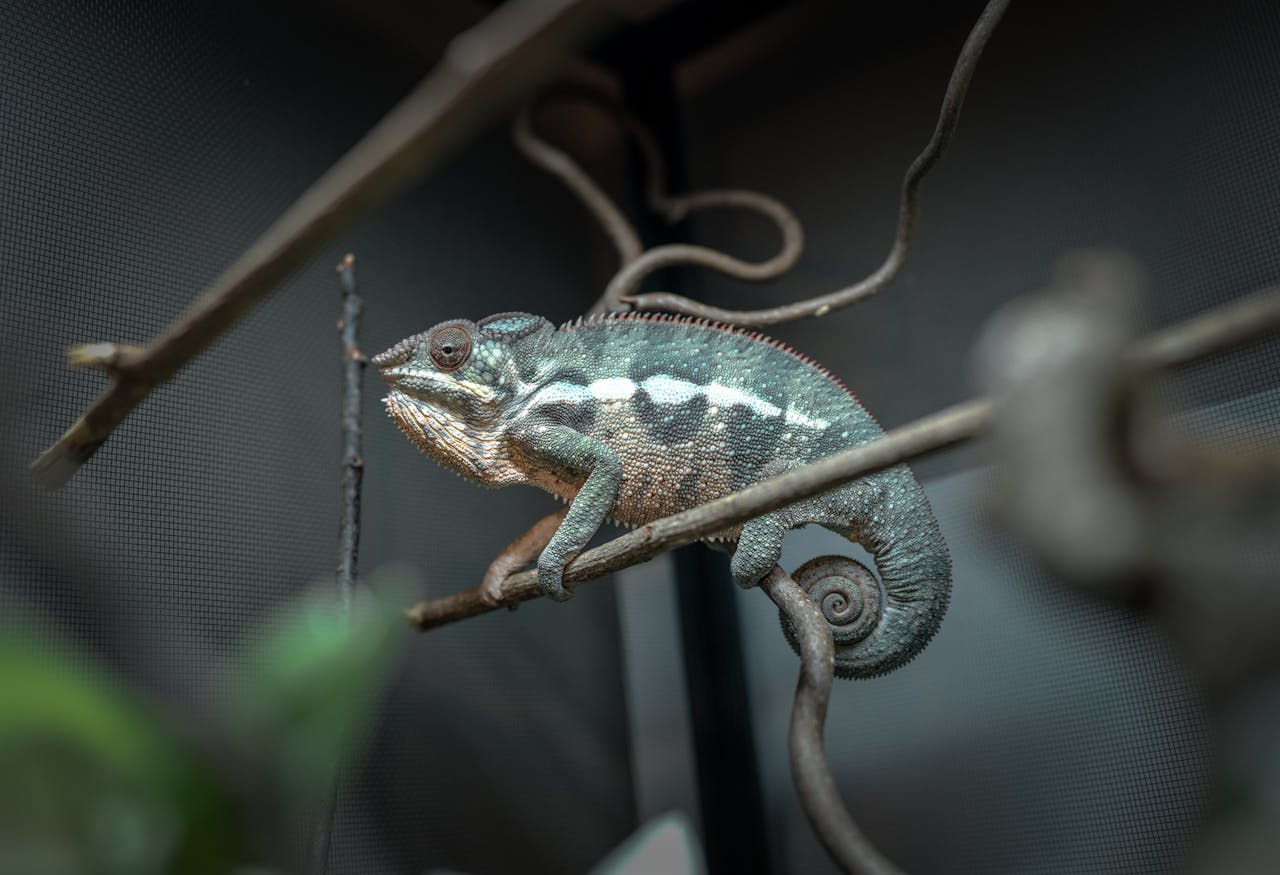
You walked into a big-box pet store, saw a tiny color-changing dragon, and the teenager in the green vest told you it’d live happily in a 12-inch glass box.
That advice is going to get your chameleon killed.
I’m not being dramatic. Chameleons are one of the most commonly mis-sold reptiles in the US, and most of the bad info comes straight from the people who put them in your hands.
Pet store chains write care sheets at the corporate level, train staff in 30 minutes, and sell whatever the supplier ships them. The result is a buffet of wrong advice that quietly kills lizards every single year.
Here are the 10 things they get the most wrong, why each one is dangerous, and what you should actually do instead.
1. They Sell You a Cage That’s Way Too Small
The starter kits at most pet stores top out at around 16 x 16 x 30 inches. They put a sticker on the box that says “chameleon kit” and hope you don’t ask questions.
A baby chameleon will live there for maybe four months. Then it grows, and the cage becomes a stress chamber.
Adult veiled and panther chameleons need at least 24 x 24 x 48 inches, and bigger is always better. They’re arboreal, which means they want vertical space, not floor space.
I cover the full sizing breakdown by species in How Big Should a Chameleon Cage Be?, but the short version is this: if the box says “starter kit,” it’s probably a finisher kit too.
2. They Push Glass Tanks Like It’s a Reptile

This one is the silent killer.
Glass enclosures look pretty on the shelf, hold humidity, and feel like a “real” terrarium. Pet store staff love selling them because the margins are higher than screen cages (the cage I actually love).
The problem is airflow. Chameleons need moving air, and stagnant glass tanks are mold and bacteria factories.
Stuff like respiratory infections, eye crust, and weird fungal stuff loves a stale glass box. I broke down the early warning signs in Chameleon Respiratory Infections and trust me, you don’t want to learn them the hard way.
For most species, especially veileds, panthers, and jacksons, a screen cage is the default. Glass can work for high-humidity species in dry climates, but only if you really know what you’re doing.
3. They Recommend Coil UVB Bulbs
This is the one that fries baby chameleons in slow motion.
Pet store starter kits almost always include a small compact fluorescent or coil-style UVB bulb (this is the bulb chameleon keepers actually use). They’re cheap, they screw into a regular dome, and they’re nowhere near strong enough.
Coil UVB bulbs barely penetrate the cage. The chameleon basks two feet away from a weak source and gets a fraction of the UV it needs.
Without enough UVB, your chameleon can’t synthesize vitamin D3. Without D3, it can’t absorb calcium. Without calcium, it gets Metabolic Bone Disease (MBD), which is exactly as horrific as it sounds.
The fix is a linear T5 HO UVB bulb running the length of the cage, mounted right on top. I wrote a whole UVB explainer at Ultimate Guide to Chameleon UVB Lighting because this is the one thing you cannot wing.
4. They Stick a Water Bowl in the Cage

You’ll see chameleons sitting next to a little water dish in pet store displays, and the staff will tell you that’s how they drink.
It is not how they drink.
Chameleons do not recognize standing water as a drink source. In the wild, they sip droplets off leaves after rainfall. A bowl of still water might as well be a decorative pebble to them.
Worse, the bowl becomes a bacterial swamp within hours. Crickets drown in it, dust settles in it, and your chameleon ignores it.
What actually works is misting and a slow dripper (simple but it gets them drinking) that runs water onto leaves where the chameleon can see and lick. The full breakdown is at How to Keep Chameleons Hydrated, and the gear that actually works is in Best Chameleon Misting Systems.
5. They Sell You the Wrong Substrate (or Any Substrate)
Pet stores love substrate. Bark chips, coco coir, calci-sand, reptile carpet, the whole shelf.
For chameleons, the floor of the cage should basically be empty. Paper towels or a bare bottom is the standard.
Why? Two reasons:
- Chameleons live in the canopy, not on the floor.
- Loose substrate gets eaten with crickets, gets stuck in mouths, and causes impaction.
If you ever see a pet store recommending bark chips for a chameleon enclosure, walk away. The only exception is a bioactive setup with proper drainage and live cleanup crew, which is not what a starter kit is.
6. They Sell Heat Rocks and Under-Tank Heaters
I cannot believe I still have to write this in 2026, but pet stores still sell heat rocks for arboreal lizards.
Heat rocks are a burn hazard, full stop. They get unevenly hot, the chameleon doesn’t know to step off, and you end up with belly burns that take months to heal.
Under-tank heating mats are also wrong for chameleons. These guys thermoregulate from above, the way the sun works in the wild. They climb up to bask and climb down to cool off.
The right setup is a basking bulb (this one is dependable, choose the correct watt) mounted above the screen top, with a temperature gradient between the basking spot and the bottom of the cage. I covered the exact numbers per species at Creating Proper Temperature Gradients in Chameleon Enclosures.
7. They Get Supplements Completely Backwards
This is the one where bad pet store advice quietly produces dead chameleons six months later.
Most stores will hand you one bottle of “calcium with D3” and tell you to dust everything in it. That’s the opposite of correct.
Here’s what an actual supplement schedule looks like:
| Supplement | Frequency |
|---|---|
| Calcium without D3 | Almost every feeding |
| Calcium with D3 | Twice a month |
| Multivitamin | Twice a month |
If you give D3 every day on top of UVB, you can overdose your chameleon and cause hypervitaminosis. If you skip the plain calcium and only use the D3 version once a week, you trigger MBD.
The full schedule, including how it changes for hatchlings, juveniles, and gravid females, is at Chameleon Supplement Schedule.
8. They Skip the Gut-Loading Talk Entirely

Walk into a pet store, ask for crickets, get a bag of crickets, walk out. Done, right?
Wrong. Those crickets have been living on cardboard egg crate for a week, and they are nutritional dust.
Gut-loading means feeding your feeder insects a real diet for 24 to 48 hours before they get fed to the chameleon. Greens, squash, sweet potato, gut-load powder, all of that.
Skip this step and your chameleon eats hundreds of empty crickets a month. The calcium powder (my daily dusting pick) helps, but it can’t make up for protein and vitamins the bug never had.
I walked through the whole process at How to Gut-Load Feeder Insects for Chameleons. It takes five minutes a week and changes everything.
9. They Tell You Chameleons Are Beginner Pets
This is the lie that starts most chameleon disasters.
Chameleons are advanced-level reptiles. They have specific lighting needs, specific humidity needs, hate handling, get stressed by visual contact with other animals, and hide illness until they’re almost dead.
The pet store will pitch them like a gateway lizard because they’re cute and they sell. The reality is that the average pet store chameleon dies within the first year because the owner was told it was “easy.”
Before you buy, read What Are the Biggest Mistakes New Chameleon Owners Make? and How Much Does It Cost to Own a Chameleon?. The cost section alone makes most casual buyers reconsider, which is the point.
10. They Tell You Two Chameleons Will Be “Friends”
I have seen pet store displays with two or three chameleons in a single enclosure, sharing a branch like roommates.
That display is a slow-motion fight. Chameleons are aggressively solitary. Even seeing another chameleon through glass causes chronic stress, weight loss, and color changes that signal “I am dying inside.”
Never house two chameleons together. Never. I went deeper into the science at Can Chameleons Live Together? and the short version is: nope, not even briefly, not even for “breeding,” not even if “they seem fine.”
If a pet store tells you it’s okay, that store has lost the plot.
Bonus: They Sell Sick or Underage Chameleons
The animals at chain pet stores are often wild-caught, freshly imported, or way too young to sell.
Signs of trouble:
- Sunken eyes or eyes that stay closed
- Visible ribs or hip bones
- Limp grip on branches
- Black stress coloration that doesn’t fade
- Sitting on the floor of the enclosure
The early signs of trouble are covered in Is Your Chameleon Sick?, but the simpler answer is to skip the chain store entirely.
Buy from a reputable breeder. You’ll get a captive-bred animal, accurate age, lineage records, and a real human to text when something looks off. Yes, it costs more upfront. It also saves you a vet bill that could be 10x the lizard.
Why Pet Stores Get So Much Wrong
It’s not (always) malice. Most pet store employees are kids working a summer job, handed a corporate care sheet, and asked to push the kit on the shelf.
Corporate writes the care sheets to make the kit profitable, not to keep the lizard alive. The starter kit is the cheapest legal version of “everything you need,” which is why the bulb is weak, the cage is small, and the bowl is wrong.
The actual chameleon community lives on forums, breeder Discords, and small subreddits. That’s where you learn that 80% of pet store chameleon advice is outdated, wrong, or quietly dangerous.
What to Do Instead
Here’s the cheat sheet, all in one place:
- Get a screen cage at minimum 24 x 24 x 48 inches for adults
- Use a T5 HO UVB bulb running the length of the cage
- Heat from above with a basking bulb, never from below
- Skip the water bowl, run a misting system (the only one I trust for chameleons) and a dripper instead
- Floor stays empty or paper towels, not loose substrate
- Calcium without D3 at almost every feeding, D3 and multivitamin (I suggest this one) twice a month
- Gut-load your feeders 24 to 48 hours before feeding
- One chameleon per enclosure, always
- Buy from a breeder, not a chain pet store
Save this, print it, tape it to your fridge. Then go through it the next time someone in a green vest tries to sell you a kit.
Your chameleon will live longer because of it.

About Author
Hello, I’m Muntaseer Rahman, the owner of AcuarioPets.com. I’m passionate about aquarium pets like shrimps, snails, crabs, and crayfish. I’ve created this website to share my expertise and help you provide better care for these amazing pets.
Disclaimer
This site is owned and operated by Muntaseer Rahman. AcuarioPets.com is a participant in the Amazon Services LLC Associates Program, an affiliate advertising program designed to provide a means for sites to earn advertising fees by advertising and linking to Amazon.com. This site also participates in other affiliate programs and is compensated for referring traffic and business to these companies.