
This post was created with help from AI tools and carefully reviewed by a human (Muntaseer Rahman) . For more on how we use AI on this site, check out our Editorial Policy.
Check Out These FREE Tools We Made JUST For You!
5 Best Chameleon Misting Systems: What Actually Works

Look, I get it.
You bought a chameleon thinking you’d have this cool, color-changing roommate who mostly keeps to himself.
Then reality hit: these little guys need water. Lots of it. And they won’t drink from a bowl like a normal pet because, well, chameleons gonna chameleon.
Instead, they drink droplets off leaves like tiny forest royalty.
Which means you need to mist their enclosure. Multiple times a day. Every single day.
Unless you get an automatic misting system (the only one I trust for chameleons).
I’ve spent way too much time researching this topic, talking to chameleon keepers, and reading forum posts from people who’ve been doing this for decades. Here’s the honest truth about which misting systems are actually worth your money.
Why Your Chameleon Desperately Needs Proper Misting
Chameleons are not low-maintenance pets.
There, I said it.
Most species need humidity levels between 50-70% during the day and even higher at night. Veiled chameleons can handle 40-60%, while panther and Jackson’s chameleons prefer 50-80%.
Drop below these levels and you’re looking at dehydration, shedding problems, and potentially respiratory issues.
Here’s the thing though: chameleons don’t recognize standing water.
In the wild, they drink morning dew and rain droplets. So a water bowl? Useless. They’ll probably just poop in it.
They need moving water droplets on leaves. That’s where misting comes in.
The Problem with Hand Misting
Sure, you can stand there with a spray bottle 2-4 times a day for several minutes each session.
Your arm will hate you.
Your chameleon will associate you with “the terrifying spray bottle monster” and hide every time you walk by.
And what happens when you’re sick? Working late? On vacation? Want to sleep in on a Saturday?
Your chameleon goes thirsty. That’s what happens.
One keeper put it perfectly: “Buying my first MistKing was life-changing. I don’t know what I would do without automated misting.”

Mister vs. Fogger: What’s the Difference?
Before we dive in, let’s clear up some confusion.
Misters spray a fine mist of water that creates droplets on leaves for your chameleon to drink. They run 2-4 times daily and are primarily for hydration.
Foggers create a dense fog that raises humidity but doesn’t create drinking droplets. They’re mainly for nighttime humidity boosts.
You probably need a mister. Foggers are a nice addition, not a replacement.
The Best Automatic Misting Systems Ranked
Quick Comparison Table
| System | Price Range | Max Nozzles | Best For | Reliability |
|---|---|---|---|---|
| MistKing Starter | $150-200 | 10 | Single enclosure | Excellent |
| MistKing Ultimate | $250-300 | 20 | Multiple enclosures | Excellent |
| CliMist | $100-180 | 10+ | Budget-conscious quality | Excellent |
| Reptizoo | $60-90 | 20 | Beginners on a budget | Good |
| Exo Terra Monsoon | $80-130 | 6-8 | Glass terrariums only | Hit or miss |
| Zoo Med ReptiRain | $60-80 | 3 | Nobody, honestly | Poor |
1. MistKing Starter System (Best Overall)
Price: Around $150-200
There’s a reason chameleon keepers have called this system “the king” for over 15 years.

The MistKing Starter v5.0 is the gold standard. Major zoos use it. Professional breeders use it. And once you set it up, you’ll understand why.
What makes it so good:
The mist is incredibly fine, around 50 microns in droplet size. That’s way gentler than any hand sprayer. Your chameleon won’t freak out and run for cover.
The pump is dead quiet and practically bulletproof. It can run up to 10 nozzles and even survive running dry without damage.
The digital timer lets you program up to 10 different misting sessions per day, down to the second. Want a 90-second mist at 7am, a 2-minute mist at noon, and a quick 45-second spritz at 6pm? Done.
The downside:
It doesn’t come with a water reservoir. You need to buy a bucket separately and drill a hole for the bulkhead fitting.
Setup takes about 30 minutes if you’re handy, longer if you’re not.
Community consensus: This is what experienced keepers recommend to newbies, and what newbies wish they’d bought after wasting money on cheaper options.
2. MistKing Ultimate System (Best for Multiple Enclosures)
Price: Around $250-300
Same excellent quality as the Starter, but beefier.
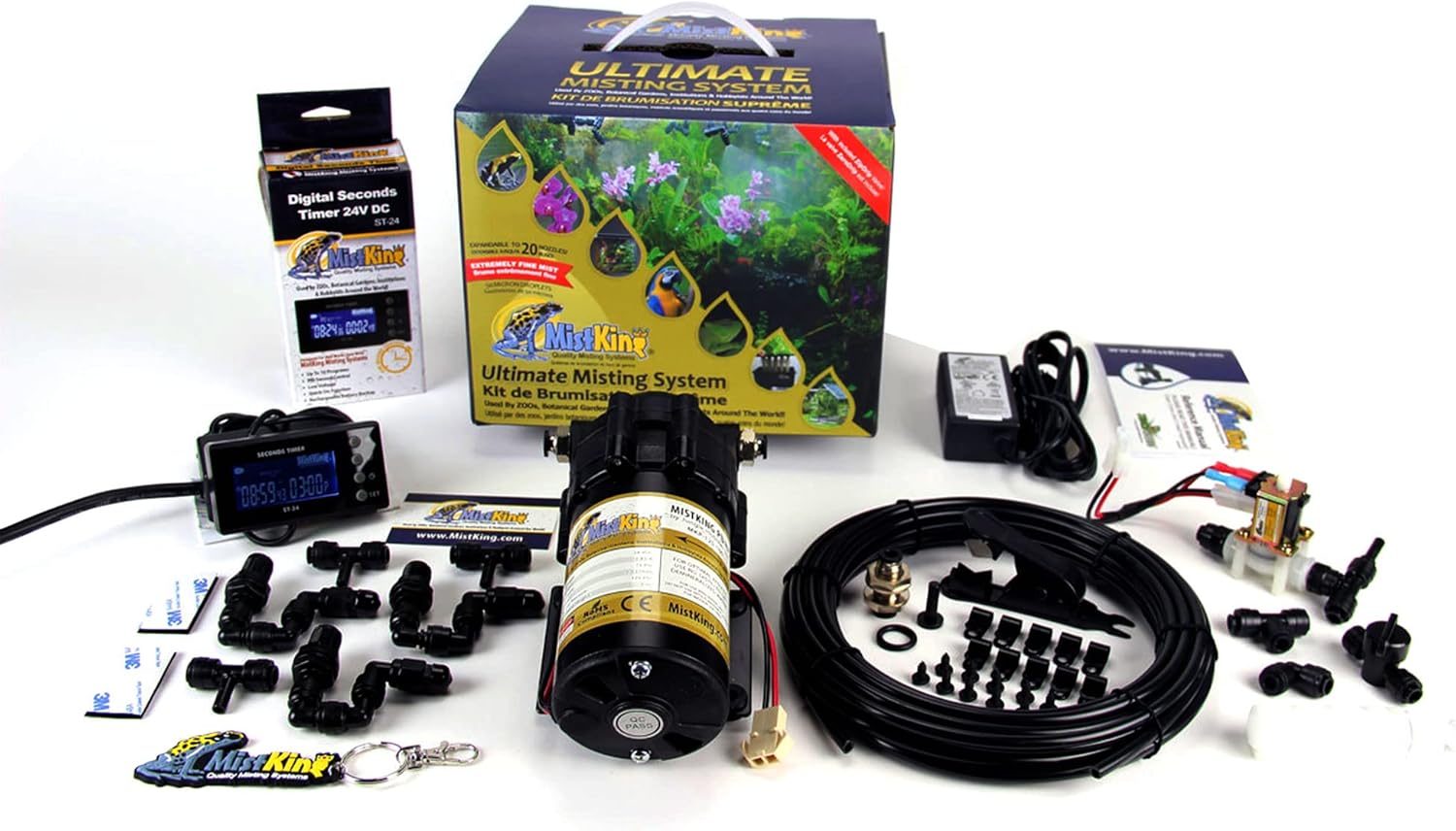
The Ultimate can run up to 20 nozzles, comes with 3 misting heads instead of 1, includes a ZipDrip valve that eliminates post-mist dripping, and has a tubing cutter and extra accessories.
If you have multiple chameleons or plan to expand your collection, this saves money in the long run.
3. CliMist Systems (Best MistKing Alternative)
Price: $100-180 depending on model
CliMist is essentially the same technology as MistKing at a slightly lower price point.
The community consensus? “CliMist is the exact same thing as MistKing but cheaper.”
They produce the same superfine mist, use compatible parts, and have comparable reliability. If you’re budget-conscious but want professional-grade quality, this is your pick.
4. Reptizoo Misting System (Best Budget Option)
Price: Around $60-90
This one has flown under the radar but gained serious popularity recently.

The Reptizoo can support up to 20 nozzles on one system, which is more than most competitors at this price point. The 360-degree adjustable nozzles give good coverage, and the back-watering technology cuts water flow instantly when the timer stops.
It’s not quite MistKing quality, but it’s solid for beginners or anyone watching their budget.
The catch: The built-in reservoir is smaller, so you’ll refill more often with a single chameleon setup.
5. Exo Terra Monsoon (Proceed with Caution)
Price: Around $80-130
I have to be honest with you about this one.
The Monsoon looks appealing. It’s readily available at pet stores, has a nice built-in reservoir, and seems easy to set up.

But the reviews from chameleon keepers are… mixed. Very mixed.
Some people run them for years without issues. Others report timer failures within months, pumps dying, and water leaking everywhere.
The timer only goes up to 2-minute misting sessions (some chameleons need longer), and it doesn’t distinguish between AM and PM. Set it to mist every 3 hours and it’ll happily spray your sleeping chameleon at 3am.
If you buy one: Use an external timer to control it, and keep your receipt.
6. Zoo Med ReptiRain (Skip It)
Price: Around $60-80
I wanted to like this one because Zoo Med makes good products.

But the ReptiRain has a reputation for leaking, weak spray pressure, and questionable durability. Multiple keepers report it dying within a few months.
One reviewer summed it up: “This is what happens when you try to be cheap. You get cheap quality.”
Save your money for something better.

How to Set Up Your Misting System Right
Getting the system is half the battle. Here’s how to actually use it.
Nozzle Placement
For a standard 24x24x48 enclosure, 1-2 nozzles is usually plenty.
Mount them in the upper corners, angled to spray across and down into the foliage. You want the mist to land on leaves, not blast directly at your chameleon’s favorite basking spot.
Pro tip: Never aim nozzles at your heat lamp. Water + hot bulb = shattered glass and a very bad day.
Misting Schedule
Here’s a solid starting schedule:
- Morning: 2-3 minutes before lights come on
- Midday: 1-2 minutes
- Evening: 2-3 minutes about an hour before lights off
Adjust based on your humidity readings. If your enclosure dries out fast, add another session or extend the times.
Important: Let the enclosure dry between mistings. Constant dampness leads to mold, bacteria, and respiratory infections.
Water Quality
Use filtered or dechlorinated water.
Tap water is fine if it’s safe for you to drink, but the chlorine can irritate sensitive chameleons over time. A simple dechlorinator or letting water sit out overnight works.
Distilled water is debated in the community. Some swear by it, others argue it lacks beneficial minerals. Your call.
Drainage
Here’s what nobody tells you until it’s too late: all that mist water has to go somewhere.
Without drainage, you’ll have a swampy mess at the bottom of your enclosure within a week.
Options include:
- A substrate-free floor with a drain pan underneath
- A bioactive setup with proper drainage layers
- Simply elevating your enclosure over a collection tray
Whatever you choose, plan for drainage before you start misting gallons of water into the enclosure.
Common Mistakes to Avoid
Buying cheap Amazon misters – Those $30 “reptile misting systems” with hundreds of reviews? Most die within months. The chameleon community has tested them so you don’t have to.
Not using a seconds timer – Cycle timers that only let you set “every X hours” are frustrating. You want precise control. MistKing and CliMist systems include proper digital timers.
Over-misting – More isn’t always better. You want humidity spikes followed by drying periods, not a constant swamp.
Forgetting to clean nozzles – Mineral buildup clogs nozzles over time. A quick vinegar soak every few months keeps things flowing smoothly.
Skipping the reservoir filter – Debris in your water = clogged nozzles. Use the filter that comes with your system.
The Bottom Line
If you can swing the budget, get a MistKing Starter or CliMist system. Yes, it costs more upfront. But you’ll buy it once and forget about it for years.
The cheap systems often cost more in the long run when you factor in replacements, dead chameleons from dehydration during failures, and the stress of unreliable equipment.
One keeper said it best after switching from a budget mister to MistKing: “My cham’s health got much better too, even though I thought I was doing a great job before. The difference was noticeable.”
Your chameleon depends on you for water. An automatic misting system makes sure they get it, whether you’re home or not, awake or not, having a good day or not.
That peace of mind? Worth every penny.
Frequently Asked Questions
How often should I mist my chameleon?
Most keepers mist 2-4 times daily for 1-3 minutes per session. The goal is humidity spikes that allow drinking, followed by drying periods.
Can I use a misting system with a screen cage?
Absolutely. Most systems come with screen wedges for mounting nozzles. MistKing and CliMist are specifically popular with screen cage (the cage I actually love) setups.
Do I still need to hand mist if I have an automatic system?
Not really, but some keepers do occasional hand misting to bond with their chameleon or ensure they see it drinking.
How long do these systems typically last?
MistKing and CliMist systems routinely last 5-10+ years with basic maintenance. Budget systems often fail within 6-18 months.
Can one pump run multiple enclosures?
Yes! MistKing Starter handles up to 10 nozzles, the Ultimate up to 20. You just need additional tubing and nozzles.

About Author
Hello, I’m Muntaseer Rahman, the owner of AcuarioPets.com. I’m passionate about aquarium pets like shrimps, snails, crabs, and crayfish. I’ve created this website to share my expertise and help you provide better care for these amazing pets.
Disclaimer
This site is owned and operated by Muntaseer Rahman. AcuarioPets.com is a participant in the Amazon Services LLC Associates Program, an affiliate advertising program designed to provide a means for sites to earn advertising fees by advertising and linking to Amazon.com. This site also participates in other affiliate programs and is compensated for referring traffic and business to these companies.