This post was created with help from AI tools and carefully reviewed by a human (Muntaseer Rahman) . For more on how we use AI on this site, check out our Editorial Policy.
Check Out These FREE Tools We Made JUST For You!
Pet Frog Lifespan: How Long Each Species Really Lives
Every frog lifespan chart on the internet is copied from another frog lifespan chart, and somewhere near the start of that chain somebody mixed up three different things.
They mixed the wild lifespan with the captive lifespan. They mixed the typical lifespan with the single oldest animal ever recorded. And then everyone downstream repeated it.
That is how you end up reading that White’s tree frogs live 40 years. They do not. The oldest one on record was 21.
So here is the version with those three things kept separate.
Most pet frogs live somewhere between 5 and 15 years with good care. A few species genuinely reach 20 or 30. And the single biggest factor is not the species you pick, it is whether the frog survives its first year with you.
That last part is the bit nobody puts in the chart, and it matters more than everything else on this page.
Pet Frog Lifespan By Species
Two columns, deliberately. The first is what you should actually plan for. The second is the exceptional case, the record, the one animal in a zoo somewhere.
Do not buy a frog expecting the second column.
| Species | Typical with good care | Recorded maximum |
|---|---|---|
| African bullfrog (pixie frog) | 20 to 35 years | 45 years |
| African clawed frog | 10 to 15 years | 30 years |
| Budgett’s frog | 10 to 15 years | 20 years |
| Pacman frog (horned frog) | 7 to 15 years | 20+ years, reports of 23 |
| White’s tree frog | 10 to 16 years | 21 years |
| Amazon milk frog | 8 to 12 years | 15 years |
| Dart frogs (most species) | 10 to 15 years | 20 to 25 years |
| Red-eyed tree frog | 5 to 10 years | 12 years |
| Oriental fire-bellied toad | 10 to 15 years | 20 to 30 years |
| Tomato frog | 6 to 10 years | 12 years |
| Vietnamese mossy frog | 8 to 12 years | 15 years |
| Burmese chubby frog | 8 to 10 years | 12 years |
| American green tree frog | 5 to 6 years | 9 years |
| Gray tree frog | 7 to 9 years | 15 years |
| African dwarf frog | 5 years | 10 to 20 years |
A few notes on that table, because the honest version needs them.
The ranges are genuinely uncertain. Reputable sources disagree by a factor of two on several of these species. Red-eyed tree frogs get quoted anywhere from 4 to 12 years. Amazon milk frog captive longevity is openly described as unknown in the literature and estimated from related species. Anyone giving you a single confident number for these is guessing and not telling you.
African dwarf frogs are the one people get most wrong. You will see 20 years quoted constantly. Five years is the realistic average, and the long-lived exceptions are exactly that. We go into why in how long African dwarf frogs live.
Colour morphs do not have different lifespans. Apricot, strawberry and sunburst Pacman frogs are the same species in different colours. Any chart giving them separate lifespans is inventing data.
Goliath frogs are not on this list on purpose. They appear on almost every “pet frog lifespan” chart, and they are not pets. They are a near-threatened species that does badly in captivity and is not legally or practically keepable.
The Wild Number Is Not The Pet Number
You will often see something like “frogs live up to 18 years in the wild.” Treat that with suspicion.
For most species, the wild reality is brutal. The overwhelming majority of frogs die in their first year, eaten or dried out or frozen. The handful that survive to breeding age can then live a surprisingly long time, and those are the animals that end up in the “maximum wild lifespan” figures.
So the wild number is measured on survivors. It is not an average of frogs, it is an average of the ones that made it.
Captivity flips this completely. Remove the predators, the drought and the winter, and you remove almost everything that kills wild frogs. That is why a well-kept captive frog routinely outlives its wild counterparts by a wide margin.
Which brings us to the thing the charts leave out.
Most Pet Frogs Die Young, And Not Of Old Age

This is the part that actually determines how long your frog lives.
A White’s tree frog that dies at three did not have a short lifespan. It had a normal lifespan and something killed it. The gap between 3 years and 16 years is almost entirely husbandry.
The common killers, roughly in order of how often they take a frog in a home enclosure:
Wrong humidity. Frogs breathe partly through their skin, and that skin has to stay moist to work. Chronically dry air is a slow suffocation. It is the single most common thing that shortens a pet frog’s life, and it is invisible until the frog is already declining.
Impaction from substrate. A burrowing frog that strikes at food on loose gravel, bark chips or small pebbles swallows the substrate with it. It packs into the gut, the frog stops passing waste, and without intervention that is fatal. This kills a lot of young Pacman frogs specifically.
Metabolic bone disease. No UVB, or feeder insects that were never dusted with calcium, and the frog slowly demineralises its own skeleton. By the time you can see it in the jaw or the legs, a lot of damage is done.
Bad water. For aquatic species, ammonia is the one. African dwarf and African clawed frogs sit in their water and absorb through the skin, so an uncycled tank poisons them continuously. Chlorinated tap water does the same thing faster.
Temperature swings. A heat source with no thermostat cooks a frog overnight. It happens more than anyone admits.
Infection. Chytrid fungus and bacterial infections, usually arriving with a new animal that was never quarantined.
Look at that list and notice that every single item is a setup problem, not a species problem. That is the actual answer to “how do I make my frog live longer.”
If you have already lost one, why did my frog die walks through how to work out which of these it was.
What Actually Changes A Frog’s Lifespan
Species, by a wide margin
This is the one factor you choose once and then cannot change. An African bullfrog is a two-to-three-decade commitment. An American green tree frog is a five-year one.
Both are fine choices. They are just very different promises, and you make that promise at the pet shop before you know anything.
Body size, sort of
Bigger frogs do tend to live longer, and the pattern holds across the table above. The African bullfrog is the largest common pet frog and the longest lived; the tiny dwarf frog sits at the bottom.
The usual explanation is metabolic rate, and it gets mangled constantly. You will read that larger animals have slower metabolisms and that they burn more energy, in the same paragraph, as if both explain longevity.
Here is the actual version. A larger animal has a higher total energy use but a lower metabolic rate per gram of body tissue. That lower per-gram rate is the part correlated with longer life across species.
It is a real pattern and a genuinely useful rule of thumb. It is also just a correlation, not a mechanism you can act on. You cannot make your frog live longer by making it bigger, and an overweight frog lives shorter, not longer.
Sex, barely
You will read that female frogs live 3 to 5 years longer than males. That is stated far more confidently than the evidence supports.
There is a real signal. Most frogs use XY sex determination, and across vertebrates the homogametic sex tends to live slightly longer, which predicts females. Field studies on common frogs have found breeding females older on average than breeding males.
But that is wild breeding-age structure, not captive lifespan, and the picture across amphibians is genuinely mixed rather than a rule. In a home enclosure the effect is small enough to disappear entirely behind husbandry.
Practical version: do not pick your frog’s sex hoping for extra years. It will not decide anything.
The first few months
New frogs die disproportionately in their first weeks with you, and it skews every lifespan average downward.
A frog arriving in your home is dealing with transport stress, a new temperature, new humidity, new water and often an infection it picked up in the supply chain. Some are already sick when you buy them.
Quarantine any new frog away from existing animals for a few weeks. Leave it alone to settle rather than handling it. Get the enclosure fully set up and stable before the frog arrives, not while it is sitting in a deli cup on your counter.
Survive the first three months and the odds change enormously.
Handling
Most frogs do not benefit from being held, and frequent handling shortens lives. Their skin is permeable, so soap residue, lotion, and hand oils all cross it.
Handle when you need to, not when you want to. The best pet frogs for handling covers the species that tolerate it best if this matters to you.
Related, and worth knowing before you reach in: some frogs bite, and it is almost always a feeding-response mistake rather than aggression.
Tank mates
Most frogs should be kept alone or with their own species, and mixed enclosures are a common way to shorten a lifespan.
The rule is unromantic: anything small enough to fit in a frog’s mouth eventually goes in it, and anything large enough to eat the frog eventually will. Housing two horned frogs together reliably produces one horned frog.
The Oldest Pet Frogs On Record
Since the record numbers are what people actually want to know, here they are, kept separate from the expectations above.
- African bullfrog: 45 years in the longevity databases, which makes it the longest-lived frog commonly kept as a pet by a wide margin.
- African clawed frog: just over 30 years, mostly from laboratory colonies where these animals have been kept and tracked for decades. Notably, they show few obvious signs of ageing.
- Common toad: roughly 40 years for a famous captive individual. Not really a pet species, but it is where the “40 years” number in circulation originally comes from.
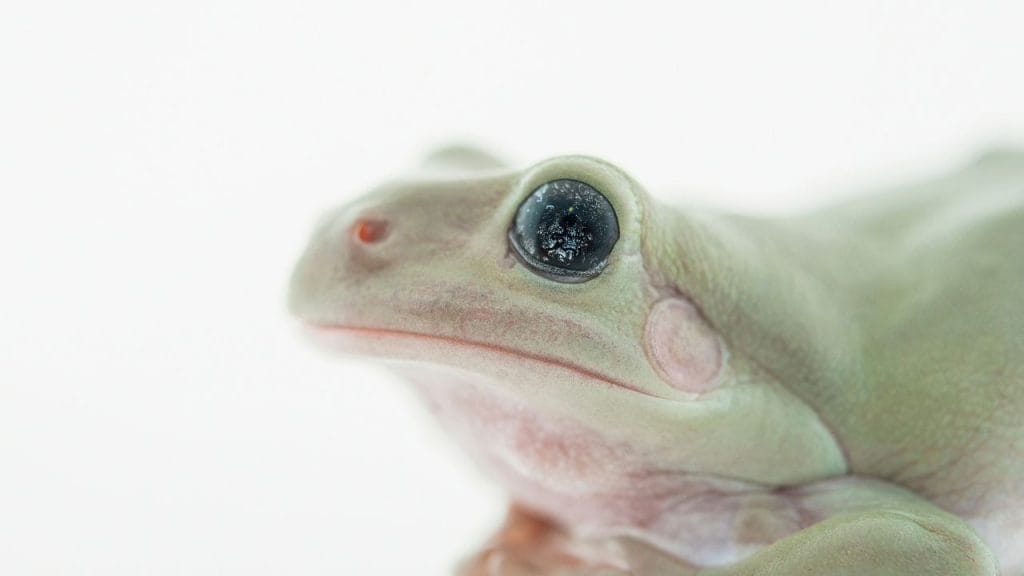
- White’s tree frog: 21 years for the oldest reported individual, with about 20 in the longevity databases.
- Pacman frog: keeper reports in the low 20s, and a much-repeated claim of a museum specimen reaching 30 that has never been properly verified.
Note how often the widely circulated numbers turn out to be a record attached to the wrong species, or an unverified anecdote that hardened into a fact through repetition. The 40-year White’s tree frog is almost certainly the common toad record wearing a different name.
How Long Does It Take A Frog To Reach Adulthood?

Different question from lifespan, and people conflate them.
The life cycle runs egg, tadpole, froglet, adult. Timings vary enormously by species, but for most:
- Egg to tadpole: a few days to about three weeks. Not the 6 to 12 weeks you will see quoted.
- Tadpole to froglet: anywhere from 6 weeks to several months, and in some species over a year.
- Froglet to breeding adult: commonly 1 to 3 years.
Pacman frogs are fast, reaching adult size in well under a year. Larger species take considerably longer.
If you have a frog of unknown age, how to tell the age of your Pacman frog covers the methods that work and the ones that do not.
How Long Can A Frog Survive Without Water Or Food?
These come up constantly, usually from someone facing a real situation, so here is the honest version.
Without water: far less time than most charts suggest. Frogs do not drink, they absorb water through a patch of skin on their underside, so “no water” means dehydration starts immediately.
Fully aquatic frogs like African dwarf and African clawed frogs are in serious trouble within hours out of water. Tree frogs and terrestrial frogs last longer in humid conditions but decline fast in dry air.
You will see claims that terrestrial frogs manage up to four weeks without water. Ignore that. Certain desert species can aestivate for long periods, sealed in a cocoon underground with a specialised physiology, and that is not a thing your pet frog in a dry tank is doing. Treat any period without moisture as an emergency.
Without food: more forgiving. A healthy, well-fed adult frog can go weeks without eating, and many species naturally fast for extended periods when cool. Pacman frogs in particular can refuse food for a month with no ill effect.
Froglets and juveniles are the exception. They are growing fast with minimal reserves and need consistent feeding.
An adult frog refusing food is usually telling you something about temperature, humidity or health rather than being hungry-but-fussy. Check the enclosure before you worry about the food.
Frequently Asked Questions
What is the longest living pet frog?
The African bullfrog, comfortably. Typical captive lifespan is 20 to 35 years with a recorded maximum of 45. If you want a frog that outlives your car, that is the one.
What is the shortest living pet frog?
Among commonly kept species, African dwarf frogs at around 5 years on average, and American green tree frogs at 5 to 6.
Do frogs live longer in captivity than in the wild?
Yes, usually by a lot, provided the husbandry is right. Captivity removes predation, drought and winter, which is most of what kills wild frogs. Bad captivity is worse than the wild.
How long do pet frogs live on average?
Across commonly kept species, roughly 5 to 15 years. Treat that as a planning number rather than a fact about your individual frog.
Does tank size affect lifespan?
Indirectly but genuinely. Cramped enclosures make stable humidity and temperature harder to hold and concentrate waste faster, and those are what actually shorten lives.
Can a pet frog die of old age?
Yes, though most do not get the chance. An old frog typically slows down, eats less, loses muscle tone and becomes less responsive over months rather than declining suddenly. A sudden decline is illness, not age.
Do frogs get more fragile as they age?
Somewhat, though less predictably than mammals. African clawed frogs are noted in the longevity literature for showing few obvious signs of ageing at all.
The Bottom Line
Pick your species for the commitment you actually want to make. Five years and twenty-five years are both reasonable, but they are different decisions and you make them at the shop.
Then stop thinking about the number. Once the species is chosen, nearly all the remaining variance is humidity, substrate, calcium, water quality and stable temperature.
The frogs that hit their species maximum are not lucky. They just got a keeper who set the enclosure up properly, quarantined the animal, left it alone, and did not change anything for fifteen years.

About Author
Hello, I’m Muntaseer Rahman, the owner of AcuarioPets.com. I’m passionate about aquarium pets like shrimps, snails, crabs, and crayfish. I’ve created this website to share my expertise and help you provide better care for these amazing pets.
Disclaimer
This site is owned and operated by Muntaseer Rahman. AcuarioPets.com is a participant in the Amazon Services LLC Associates Program, an affiliate advertising program designed to provide a means for sites to earn advertising fees by advertising and linking to Amazon.com. This site also participates in other affiliate programs and is compensated for referring traffic and business to these companies.