
This post was created with help from AI tools and carefully reviewed by a human (Muntaseer Rahman) . For more on how we use AI on this site, check out our Editorial Policy.
Check Out These FREE Tools We Made JUST For You!
Ideal Temperature for Shrimp by Species (Full Care Chart)

Keeping shrimp is easy, but only if the water stays in the right temperature range.
Get it wrong and your shrimp stop breeding, struggle to molt, or slowly fade away. Get it right and they thrive, color up, and multiply on their own.
The tricky part is that the ideal temperature is not the same for every shrimp. A cherry shrimp and a crystal red shrimp want very different things.
For most pet freshwater shrimp, the ideal temperature is 68 to 78 degrees Fahrenheit (20 to 26 degrees Celsius), with around 72 degrees Fahrenheit (22 degrees Celsius) being the safe sweet spot. Hardy Neocaridina shrimp handle the warmer end, while sensitive Caridina shrimp prefer the cooler end at 68 to 74 degrees Fahrenheit (20 to 23 degrees Celsius).
Below you will find the ideal temperature for 34 popular shrimp species, the cold and hot limits, breeding temperatures, and how to keep your tank stable.
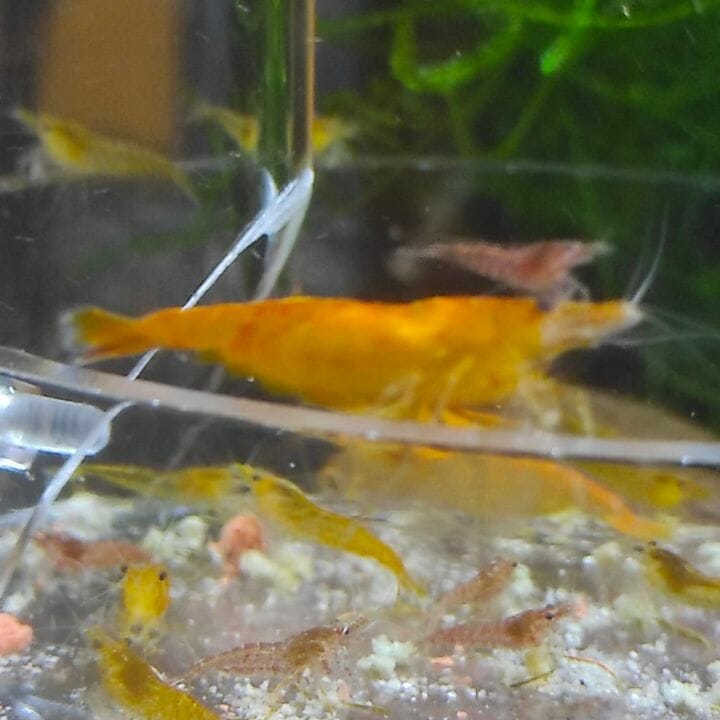
What Temperature Do Shrimp Need?
Most freshwater aquarium shrimp come from two groups, and they have different comfort zones.
Neocaridina shrimp, like cherry shrimp, are hardy and forgiving. They do well anywhere from 65 to 78 degrees Fahrenheit (18 to 26 degrees Celsius).
Caridina shrimp, like crystal reds and bee shrimp, are fussier. They prefer cooler, stable water around 68 to 74 degrees Fahrenheit (20 to 23 degrees Celsius).
If you want one number that keeps almost any dwarf shrimp happy, aim for 72 degrees Fahrenheit (22 degrees Celsius).
Stability matters more than hitting an exact number. A tank that holds steady at 74 degrees is far safer than one that swings between 70 and 78 every day.
Ideal Temperature For 34 Shrimp Species
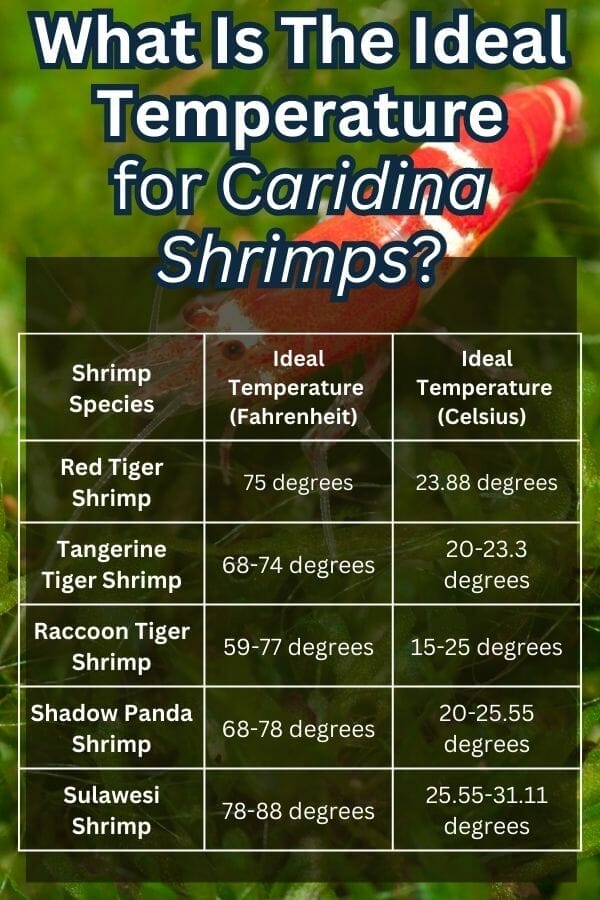
Here is a quick-reference chart of the ideal temperature for the most popular aquarium shrimp, grouped by species and genus.
| Shrimp Species | Genus | Ideal Temperature (Fahrenheit) | Ideal Temperature (Celsius) |
|---|---|---|---|
| Red Cherry Shrimp | Neocaridina | 68-78 degrees | 20-26 degrees |
| Fire Red Cherry Shrimp | Neocaridina | 68-78 degrees | 20-26 degrees |
| Bloody Mary Shrimp | Neocaridina | 68-78 degrees | 20-26 degrees |
| Blue Dream Shrimp | Neocaridina | 68-78 degrees | 20-26 degrees |
| Blue Velvet Shrimp | Neocaridina | 68-78 degrees | 20-26 degrees |
| Blue Diamond Shrimp | Neocaridina | 68-78 degrees | 20-26 degrees |
| Green Jade Shrimp | Neocaridina | 68-78 degrees | 20-26 degrees |
| Chocolate (Black Rose) Shrimp | Neocaridina | 68-78 degrees | 20-26 degrees |
| Snowball Shrimp | Neocaridina | 68-78 degrees | 20-26 degrees |
| Yellow Goldenback Shrimp | Neocaridina | 68-78 degrees | 20-26 degrees |
| Sunkist Orange Shrimp | Neocaridina | 68-78 degrees | 20-26 degrees |
| Red Sakura Shrimp | Neocaridina | 68-78 degrees | 20-26 degrees |
| Carbon Rili Shrimp | Neocaridina | 68-78 degrees | 20-26 degrees |
| Red Rili Shrimp | Neocaridina | 68-78 degrees | 20-26 degrees |
| Crystal Red Shrimp | Caridina | 68-74 degrees | 20-23 degrees |
| Black King Kong Shrimp | Caridina | 68-74 degrees | 20-23 degrees |
| Blue Bolt Shrimp | Caridina | 68-74 degrees | 20-23 degrees |
| Wine Red Shrimp | Caridina | 68-74 degrees | 20-23 degrees |
| Shadow Panda Shrimp | Caridina | 68-74 degrees | 20-23 degrees |
| Red Pinto Shrimp | Caridina | 68-74 degrees | 20-23 degrees |
| Pinto Shrimp | Caridina | 68-74 degrees | 20-23 degrees |
| Bee Shrimp | Caridina | 68-75 degrees | 20-24 degrees |
| Golden Bee Shrimp | Caridina | 68-75 degrees | 20-24 degrees |
| Red Tiger Shrimp | Caridina | 68-75 degrees | 20-24 degrees |
| Tangerine Tiger Shrimp | Caridina | 68-75 degrees | 20-24 degrees |
| Raccoon Tiger Shrimp | Caridina | 62-75 degrees | 17-24 degrees |
| Babaulti Shrimp | Caridina | 72-82 degrees | 22-28 degrees |
| Amano Shrimp | Caridina | 65-80 degrees | 18-27 degrees |
| Sulawesi Shrimp | Caridina | 78-86 degrees | 26-30 degrees |
| Bamboo Shrimp | Atyopsis | 75-81 degrees | 24-27 degrees |
| Vampire Shrimp | Atya | 75-84 degrees | 24-29 degrees |
| Ghost Shrimp | Palaemonetes | 65-82 degrees | 18-28 degrees |
| Glass Shrimp | Palaemonetes | 62-77 degrees | 17-25 degrees |
| Indian Whisker Shrimp | Macrobrachium | 72-82 degrees | 22-28 degrees |
A few notes on the outliers. Sulawesi shrimp are the warm-water exception and need 78 to 86 degrees Fahrenheit. Bamboo and vampire shrimp, the filter feeders, also like it a little warmer.
Neocaridina Vs Caridina: Why The Difference Matters
This is the single most useful thing to understand about shrimp temperature.
Neocaridina shrimp evolved in a wide range of conditions and shrug off temperature changes. They breed easily and tolerate water from the mid 60s into the upper 70s.

Caridina shrimp come from cooler, soft-water streams. They are far more sensitive, and warm water stresses them quickly.
If you keep Caridina shrimp, never let the tank climb past 76 degrees Fahrenheit (24 degrees Celsius) for long. Cooler is safer for them.
So when someone asks “what temperature do shrimp need,” the honest answer is: it depends on whether they are Neocaridina or Caridina.
How Cold Is Too Cold For Shrimp?
Shrimp are more cold-tolerant than most people expect.
Hardy Neocaridina shrimp can survive brief dips toward the low 50s Fahrenheit (around 10 to 12 degrees Celsius). They will not die from a cool night.
But cold water is not the same as good water. Below about 60 degrees Fahrenheit (16 degrees Celsius), their metabolism slows, they eat less, growth stalls, and breeding stops entirely.
As a hard floor, do not let your shrimp tank drop below 50 degrees Fahrenheit (10 degrees Celsius). That is too cold for long-term survival.
How Warm Is Too Warm For Shrimp?
Heat is far more dangerous to shrimp than cold.
Warm water holds less oxygen and speeds up the shrimp’s metabolism. They become active and breed faster, but they also age faster and live shorter lives.
Above 80 degrees Fahrenheit (27 degrees Celsius), most dwarf shrimp start to struggle. You may see failed molts, stress, and sudden deaths.
The hard ceiling for most species is 86 degrees Fahrenheit (30 degrees Celsius). Sulawesi shrimp are the only common exception, since they are built for warm lakes.
In a summer heatwave, a small clip-on fan blowing across the water surface can drop the temperature a few degrees through evaporation.
Are Shrimp Sensitive To Temperature Swings?
A slow, gentle change is fine. Most shrimp easily handle the natural few-degree drop between day and night.
What kills shrimp is a sudden swing. A fast change of more than a few degrees can trigger stress molts, where the shrimp molts before it is ready and dies stuck in its old shell.
This is why a cheap heater that overshoots, or a tank sitting in direct sunlight, is so risky. The danger is the swing, not the exact number.
Keep your tank away from windows, heating vents, and exterior doors to avoid those swings.
How To Add Shrimp Without Temperature Shock
Bringing new shrimp home is the most common moment for temperature shock. Dumping them straight into a tank that is even a few degrees different can kill them.
Always drip acclimate new shrimp:
- Float the sealed bag in your tank for 15 to 20 minutes so the temperatures match.
- Pour the shrimp and bag water into a small container.
- Use airline tubing to slowly drip tank water into the container, one or two drips per second.
- After 45 to 60 minutes, when the volume has roughly tripled, gently net the shrimp into the tank.
This slow process protects them from both temperature and water-parameter shock at the same time.
How Temperature Affects Shrimp Breeding
Temperature is one of the biggest triggers for shrimp breeding.
Warmer water speeds up sexual maturity, shortens egg incubation time, and encourages females to carry eggs. Most Neocaridina shrimp breed readily in the mid 70s Fahrenheit.
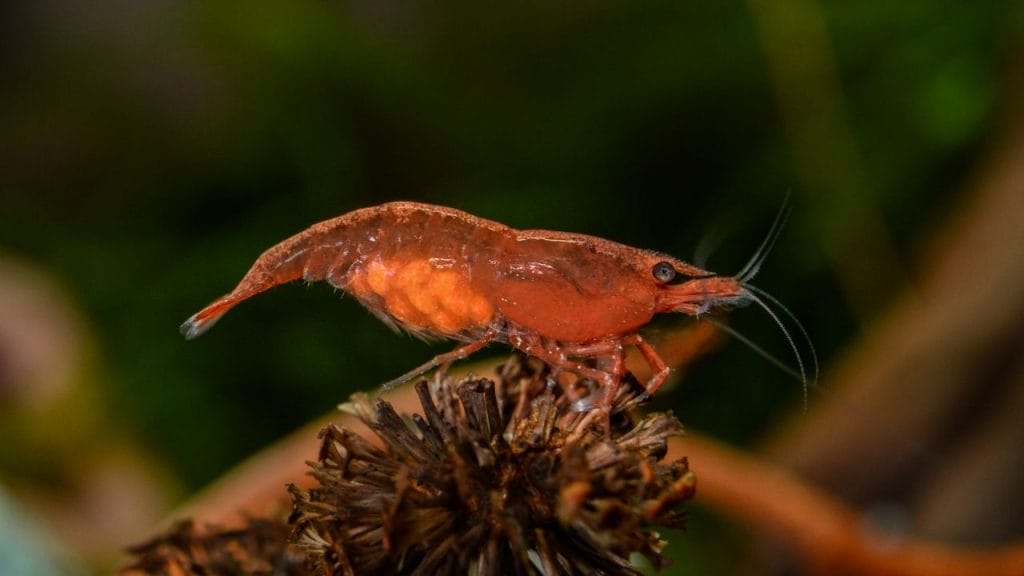
For a higher reproduction rate with cherry shrimp, many keepers nudge the temperature up to around 78 to 81 degrees Fahrenheit (25 to 27 degrees Celsius). Just remember that warmer water also shortens their lifespan.
Caridina shrimp are the opposite. They breed best in cooler water, around 70 to 74 degrees Fahrenheit.
Two rules apply to every species. Keep the temperature constant, because swings stop breeding cold. And never push past about 84 degrees Fahrenheit (29 degrees Celsius), where eggs can be lost.
You can read more in our guide on whether aquarium shrimp lay eggs, and if you want to scale up, see making money breeding shrimp.
What Is The Best Temperature For Cherry Shrimp?
Cherry shrimp are the most popular beginner shrimp, so this question comes up constantly.
The best temperature for cherry shrimp is 70 to 78 degrees Fahrenheit (21 to 26 degrees Celsius), with 72 degrees Fahrenheit being the ideal target.
Yes, cherry shrimp can live in 70 degree water without any problem. They can even survive cooler, though growth and breeding slow down below the high 60s.
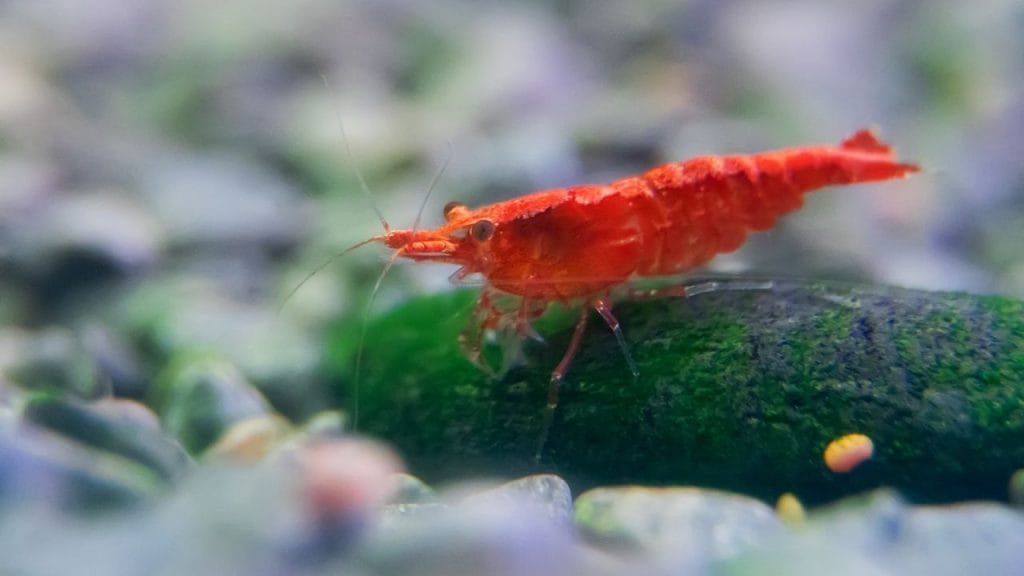
For more detail, see our full cherry shrimp care guide and our dedicated post on the best temperature for cherry shrimp.
What Is The Best Temperature For Crystal Red And Caridina Shrimp?
Crystal red shrimp and other Caridina need cooler water than cherry shrimp.
The best temperature for crystal red shrimp is 68 to 74 degrees Fahrenheit (20 to 23 degrees Celsius).
Do not let Caridina shrimp sit above 76 degrees Fahrenheit (24 degrees Celsius) for long. They handle heat poorly, and warm water is the most common reason Caridina tanks crash.
In a warm home, Caridina shrimp often do better in an unheated tank than a heated one.
What Is The Best Temperature For Amano Shrimp?
Amano shrimp are tough, cooler-water Caridina that make great algae eaters.
They thrive between 65 and 80 degrees Fahrenheit (18 to 27 degrees Celsius), so most room-temperature tanks suit them fine.
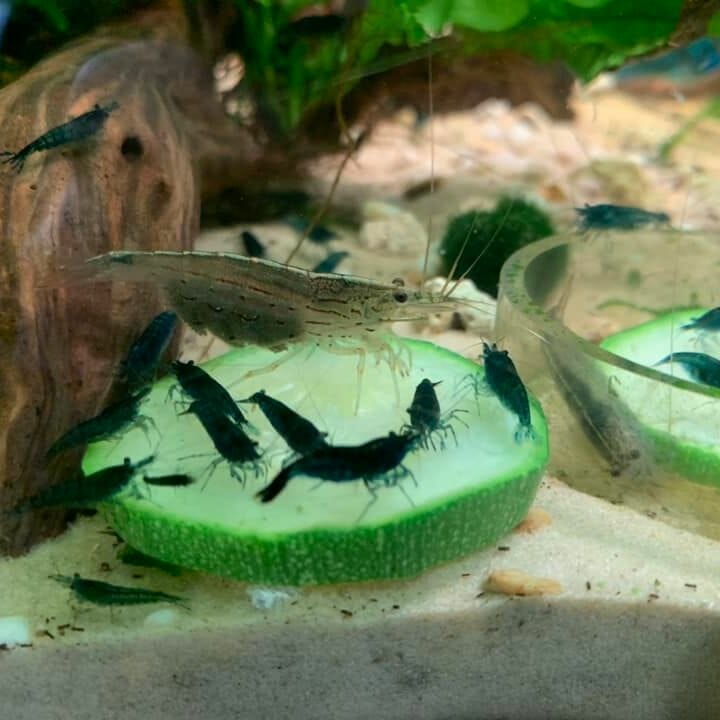
You can keep Amano shrimp in 80 degree water, but try not to push higher. For breeding, the bigger challenge is not temperature but the fact that Amano larvae need brackish water to survive. See our Amano shrimp breeding guide for the full process.
Does A Shrimp Tank Need A Heater?
It depends on your room.
If your home stays steadily within the shrimp’s ideal range, you may not need a heater at all. Hardy Neocaridina shrimp are often kept at room temperature.
You probably do need a submersible heater if any of these are true:
- Your room temperature drops below the high 60s, especially at night or in winter.
- The temperature swings a lot between day and night.
- You want to breed shrimp and need stable, slightly warmer water.

A good adjustable heater (the adjustable heater I trust to hold a shrimp tank steady) is cheap insurance against the temperature swings that kill shrimp.

Pros Of Using A Heater
- Holds a stable, constant water temperature
- Smooths out day-to-night temperature swings
- Lets you raise the temperature to trigger breeding
- Keeps metabolism and activity steady year round
Cons Of Using A Heater
- A failed heater can overheat or stop working without warning
- Takes up space in small nano tanks (the nano kit I keep recommending for aquascapes)
- Adds a little to your electricity bill
- Can be an eyesore in a clean aquascape
What Size Heater Does A Shrimp Tank Need?
Use a simple rule of roughly 5 watts per gallon of water.
That means a 5 gallon shrimp tank needs about a 25 watt heater, and a 10 gallon tank does well with a 50 watt heater.
Always choose an adjustable submersible heater with a thermostat, not a cheap preset one. Preset heaters often lock to 78 degrees, which is too warm for Caridina shrimp.
Skip under-tank heat mats. Those are made for reptile terrariums, not aquariums, and they will not reliably or safely heat a shrimp tank.
Why You Need An Aquarium Thermometer Too
Never trust a heater’s dial alone. Heater thermostats drift, and a stuck heater is a tank killer.
Always keep a separate aquarium thermometer (the thermometer I keep on the opposite side of the tank) on the opposite side of the tank from the heater. That way you see the real water temperature, not what the heater thinks it is.
Glass shrimp tanks heat unevenly, so checking the far corner gives you the most honest reading.
Different Shrimps & Their Ideal Water Parameters
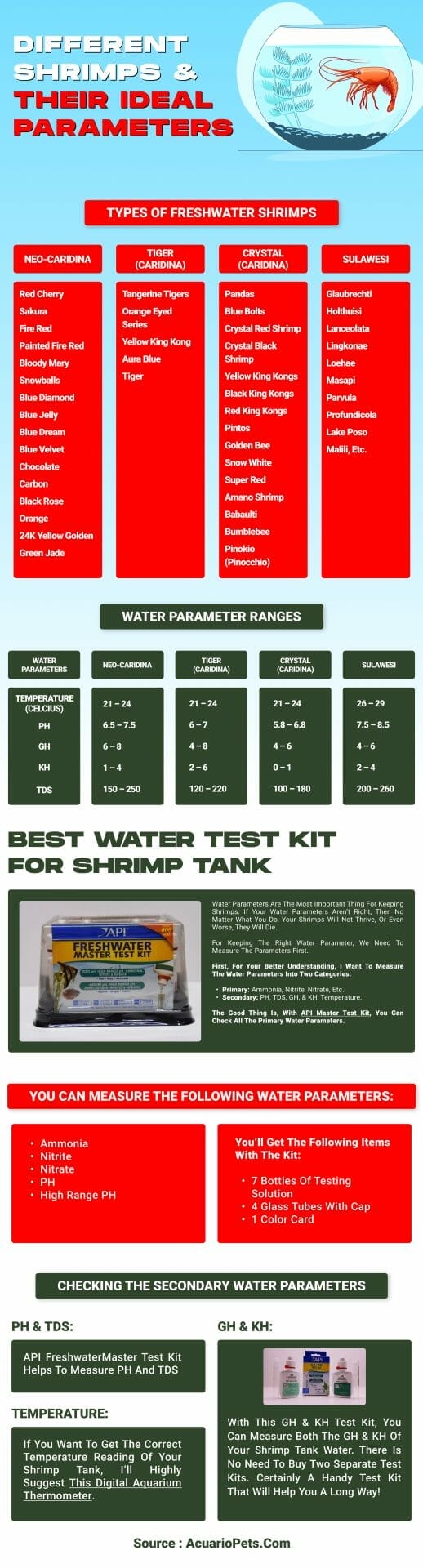
Want to get a printable version of this infographic? Click here! [If you want to use this infographic on your website, please link back to this post as the source!]
Final Thoughts
For almost any pet shrimp, keep the water steady around 68 to 78 degrees Fahrenheit (20 to 26 degrees Celsius), and aim for 72 degrees if you want one safe target.
Remember the genus split. Neocaridina shrimp handle the warm end, Caridina shrimp want the cool end, and Sulawesi shrimp are the warm-water exception.
Above all, keep the temperature stable. With shrimp, a steady tank beats a perfect number every single time.

About Author
Hello, I’m Muntaseer Rahman, the owner of AcuarioPets.com. I’m passionate about aquarium pets like shrimps, snails, crabs, and crayfish. I’ve created this website to share my expertise and help you provide better care for these amazing pets.
Disclaimer
This site is owned and operated by Muntaseer Rahman. AcuarioPets.com is a participant in the Amazon Services LLC Associates Program, an affiliate advertising program designed to provide a means for sites to earn advertising fees by advertising and linking to Amazon.com. This site also participates in other affiliate programs and is compensated for referring traffic and business to these companies.