This post was created with help from AI tools and carefully reviewed by a human (Muntaseer Rahman) . For more on how we use AI on this site, check out our Editorial Policy.
Check Out These FREE Tools We Made JUST For You!
African Dwarf Frog Bloated: Dropsy or Overfeeding?

Your African dwarf frog looks like a tiny balloon, and you’re freaking out. Here’s the truth: if your frog is bloated, it’s most likely dropsy, not just overeating. Dropsy is fluid buildup caused by bacterial infection or organ failure, and it’s serious. Overfeeding can cause a full belly, but it won’t make your frog’s entire body swell up like a water balloon.
The difference matters because dropsy can be fatal without treatment, while overfeeding just needs a feeding break. Dropsy happens when something’s wrong internally, and your frog’s body can’t regulate fluids anymore.
In this guide, you’ll learn how to tell the difference, what causes bloating, emergency steps to take right now, and when you need to get to a vet ASAP.
Quick Answer: Dropsy vs. Overfeeding at a Glance
- Dropsy signs: Whole body swollen (not just belly), floating or sinking, lethargic, not eating, skin looks stretched
- Overfeeding signs: Just the belly looks full, still active and swimming, goes down after a day or two without food
- Emergency: Frog floating at the surface and can’t swim down = see a vet NOW
- First step: Stop feeding immediately, do a 25% water change, test water quality
- Don’t: Use regular aquarium salt (use Epsom salt instead if needed), keep feeding thinking they’re just chubby
What Does Dropsy Actually Look Like?
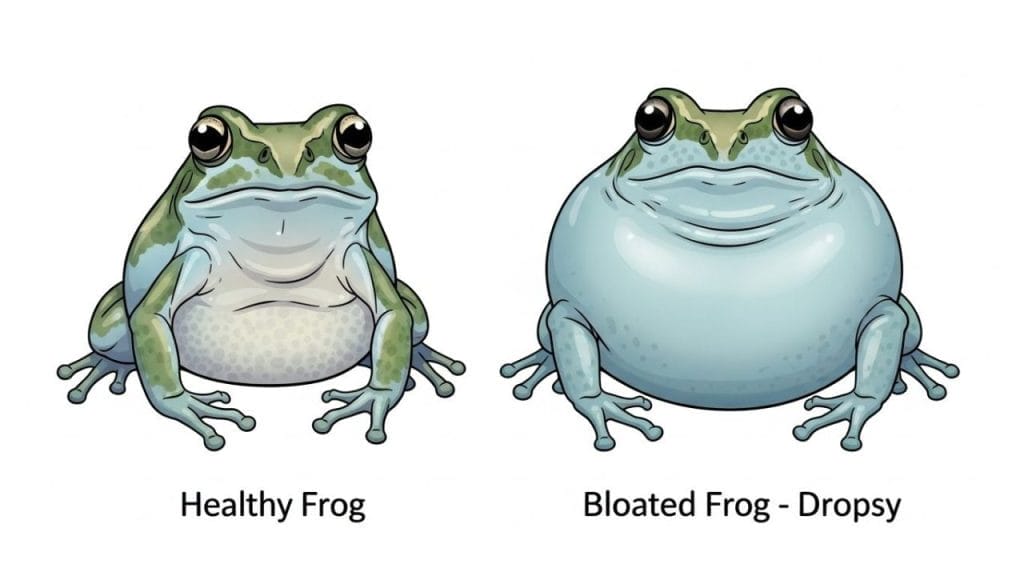
Dropsy makes your frog look like someone inflated them with a bike pump.
Their whole body swells up, not just the stomach. You’ll see puffiness in the legs, abdomen, and sometimes even the face. The skin looks tight and stretched, almost shiny.
Here’s what separates dropsy from just being chunky: location and behavior. A fat frog has a round belly but normal-sized limbs. A frog with dropsy? Everything’s puffy.
They also act sick. Dropsy frogs are lethargic, hide more than usual, and often float at the surface because the fluid makes them too buoyant. Some sink to the bottom and struggle to swim up for air.
If your frog is still zooming around the tank chasing food, it’s probably not dropsy.
Overfeeding: When Your Frog Is Just Food-Motivated
African dwarf frogs are basically tiny vacuum cleaners with legs.
They’ll eat until they look like they swallowed a marble. But this is different from dropsy in one key way: it’s temporary and localized to the belly.
An overfed frog has a noticeably round stomach, but their legs and body look normal. They’re still active, still interested in food (these guys have no self-control), and the swelling goes down within 24-48 hours if you stop feeding.
The bloating happens fast after a big meal, especially with foods that expand in water like freeze-dried bloodworms. These expand in their stomach and make them look pregnant.
Skip feeding for 2-3 days. If the belly goes back to normal, you just had an overeating situation.
What Causes Dropsy in African Dwarf Frogs?
Dropsy isn’t a disease itself. It’s a symptom of something going very wrong inside your frog.
The main culprits:
Bacterial infections are the number one cause. Poor water quality breeds bacteria that attack your frog’s organs. Even small ammonia spikes can trigger this.
Organ failure is common in older frogs. The kidneys or liver stop working properly, and fluid builds up because the frog can’t regulate it anymore. This is often irreversible.
Water quality issues stress frogs out and weaken their immune system. High ammonia, nitrites, or sudden pH changes create the perfect storm for infections.
Bad genetics or stress can predispose some frogs to dropsy. Frogs from big chain pet stores often have weaker immune systems from overcrowded breeding conditions.
Here’s the thing people don’t tell you: African dwarf frogs are sensitive. One keeper said they “swear to God that a strong breeze gives these things dropsy.” They’re not wrong. These frogs require pristine water conditions.
How to Tell the Difference: A Quick Comparison
Let me make this simple with a side-by-side:
| Sign | Dropsy | Overfeeding |
|---|---|---|
| Where’s the swelling? | Whole body (belly, legs, face) | Just the belly |
| How fast did it happen? | Over days/weeks | Within hours after eating |
| Behavior | Lethargic, hiding, not eating | Active, still wants food |
| Floating/sinking? | Yes, struggles to stay underwater | No buoyancy issues |
| Goes away with fasting? | No, gets worse | Yes, within 1-2 days |
| Skin appearance | Stretched, shiny, tight | Normal skin texture |
If you’re reading this table and your frog matches the dropsy column, act fast.
Emergency Steps: What to Do Right Now
Stop feeding immediately. Your frog doesn’t need food right now, it needs help.
Do a 25% water change with dechlorinated water. Bad water quality is often the trigger, so clean it up ASAP.
Test your water parameters. You need to know:
- Ammonia: should be 0 ppm
- Nitrites: should be 0 ppm
- Nitrates: under 20 ppm is ideal
- pH: 6.8-8.0 range
If ammonia or nitrites are above zero, do daily water changes until they hit zero. Use a water conditioner like Seachem Prime to neutralize ammonia temporarily.
Isolate the sick frog if you have multiple frogs. Bacterial dropsy can spread to tankmates.
Add an airstone if you don’t have one. Extra oxygen helps stressed frogs.
These steps won’t cure dropsy, but they give your frog the best chance while you figure out next steps.
Treatment Options (The Honest Truth)
Let’s be real: dropsy is hard to treat at home, and many frogs don’t survive.
But you can try some things, especially if you catch it early.
For bacterial infections, antibiotics are your best bet. Vets can prescribe proper antibiotics. If you can’t get to a vet, aquarium antibiotics like erythromycin or tetracycline are considered frog-safe. Follow package directions for dosing.
Epsom salt baths can help reduce fluid buildup temporarily. Use 1 teaspoon of Epsom salt (NOT aquarium salt) per gallon of water. Give your frog a daily soak for 1 hour in this solution for 7-10 days.
Do NOT use regular aquarium salt. It makes water retention worse.
A vet can drain the fluid manually with a syringe, which gives immediate relief. This is risky to do at home unless you know what you’re doing. You can puncture internal organs if you’re not careful.
Some experienced keepers perform aspiration at home, but honestly? If you’re reading this article, you probably shouldn’t attempt it. One wrong move and you’ll hurt your frog more.
The hard truth is that once dropsy symptoms appear, internal organ damage is often permanent. Even if you stop the infection, the kidneys or liver might be too damaged to recover.
What NOT to Do (Common Mistakes)
Don’t keep feeding your frog hoping it’s just chunky. Stop food immediately.
Don’t use distilled water thinking it’s “pure.” Distilled water is too soft and can actually trigger dropsy in frogs adapted to harder water.
Don’t use regular aquarium salt for dropsy. Use Epsom salt or nothing at all.
Don’t wait weeks to take action. Dropsy progresses fast. What starts as mild bloating can become life-threatening within days.
Don’t assume it’ll fix itself. These frogs don’t “tough it out” like some hardier species.
Don’t blame yourself too much if you lose your frog. Even with perfect care, some frogs develop dropsy from genetics or age. It happens.
When to See a Vet (Don’t Wait for This)
You need a vet if:
Your frog is floating at the surface and can’t stay underwater. This means they’re retaining so much fluid they’ve lost control.
The bloating appeared suddenly overnight and is severe. Sudden bacterial dropsy needs immediate treatment.
Your frog stops eating for more than 3 days. This signals serious illness.
You see additional symptoms like red/raw skin patches, white fungus, or gasping for air.
The bloating doesn’t improve after a week of home treatment.
Finding an exotic vet who treats frogs is tough. Many regular vets won’t see amphibians. Search for “exotic vet” or “amphibian vet” in your area. Call ahead and confirm they treat frogs specifically.
If you can’t find a vet, do the best you can with clean water and antibiotics, but understand the odds aren’t great.
Preventing Bloating: Keep Your Frog Healthy
Prevention is way easier than treatment.
- Water quality is everything. Test weekly. Do 25-30% water changes every week. Use a good filter. Zero ammonia and nitrites at all times.
- Don’t overfeed. Feed your frog 3-4 times per week, not daily. They only need a few pellets or bloodworms per feeding. If their belly looks round, you fed too much.
- Soak freeze-dried foods before feeding. Freeze-dried bloodworms expand like sponges in water. If your frog eats them dry, they’ll expand in the stomach and cause bloating.
- Avoid bloodworms as a staple. Lots of experienced keepers say bloodworms caused dropsy in their frogs. Use high-quality frog pellets as the main diet, with bloodworms as an occasional treat.
- Quarantine new frogs for 4-6 weeks before adding them to your main tank. New frogs can carry diseases.
- Don’t stress your frog. Sudden temperature changes, aggressive tankmates, or too much handling weakens their immune system.
Tank size matters too. Give your first frog at least 5 gallons, then add 2-3 gallons per additional frog. Overcrowding leads to poor water quality.
Can Frogs Recover from Dropsy?
Sometimes, if you catch it early and it’s bacterial.
If the dropsy is from organ failure or the frog is old, recovery is unlikely. Once the kidneys are damaged, fluid regulation is permanently broken.
Some frogs live with mild dropsy for months or even years, especially if it’s diet-related rather than infectious. But they’re not truly healthy, just managing symptoms.
I’ve read about a 16-year-old African dwarf frog with chronic dropsy that lived for months with treatment. But that frog was also ancient by frog standards (they typically live 5-8 years).
Most cases of severe, sudden dropsy are fatal within weeks without aggressive vet treatment.
The key is catching it when you first notice mild swelling, before it becomes a full-body balloon situation.
Frequently Asked Questions
How long can a frog live with dropsy?
It depends on the cause. Bacterial dropsy can kill within days to weeks without treatment. Diet-related or mild dropsy from organ issues can persist for months, but quality of life decreases over time. Some frogs live 3-6 months with treatment, but severe cases are usually fatal.
Will my frog’s bloating go away on its own?
If it’s from overfeeding, yes, within 1-2 days of fasting. If it’s dropsy, no. Dropsy requires intervention and usually gets worse without treatment. Don’t wait to see if it improves on its own.
Can I pop my frog’s bloated belly?
Absolutely not. You’re not popping a balloon, you’re dealing with fluid buildup from organ failure or infection. You’ll hurt your frog badly or kill them. Only vets or very experienced keepers should attempt fluid drainage.
Are African dwarf frogs hard to keep?
They’re sensitive to water quality, which makes them intermediate-level pets, not beginner-friendly. Perfect water conditions are mandatory. Even small ammonia spikes can trigger dropsy. If you maintain pristine water and don’t overfeed, they do fine.
What’s the difference between a fat frog and a dropsy frog?
A fat frog has a round belly but normal legs and skin. They’re active and eating. A dropsy frog is swollen all over (belly, legs, sometimes face), acts lethargic, and has buoyancy issues. Dropsy looks like your frog absorbed too much water, not just ate too much.
Wrapping This Up
If your African dwarf frog is bloated, you need to act fast.
Check if it’s the whole body or just the belly. Whole body = dropsy, which is serious. Just the belly = probably overeating.
Stop feeding, clean the water, test your parameters, and watch for other symptoms. If it’s dropsy, get to a vet if possible or try Epsom salt baths and antibiotics.
The honest truth? Dropsy is tough, and not all frogs make it. But clean water and quick action give your frog the best shot at recovery.
About Author
Hello, I’m Muntaseer Rahman, the owner of AcuarioPets.com. I’m passionate about aquarium pets like shrimps, snails, crabs, and crayfish. I’ve created this website to share my expertise and help you provide better care for these amazing pets.
Disclaimer
This site is owned and operated by Muntaseer Rahman. AcuarioPets.com is a participant in the Amazon Services LLC Associates Program, an affiliate advertising program designed to provide a means for sites to earn advertising fees by advertising and linking to Amazon.com. This site also participates in other affiliate programs and is compensated for referring traffic and business to these companies.