This post was created with help from AI tools and carefully reviewed by a human (Muntaseer Rahman) . For more on how we use AI on this site, check out our Editorial Policy.
Check Out These FREE Tools We Made JUST For You!
Tree Frog Not Eating: 7 Reasons + How to Fix It Fast

Your tree frog not eating is usually down to three things: stress, the wrong temperature or humidity, or illness.
A healthy adult tree frog can go 2 to 3 weeks without food and be totally fine. But if it has skipped meals for two weeks straight and looks skinny or sluggish, that is your signal to step in now.
Here is the scary part. Tree frogs hide sickness incredibly well.
By the time your frog is obviously struggling, it has usually been unwell for a while. So a frog that quietly stops eating is worth paying attention to before it turns into an emergency.
In this guide you will learn the 7 real reasons tree frogs stop eating, how to fix each one at home, and the exact point where you need a vet instead of a Google search.
Quick Diagnosis: Match the Symptom to the Cause
Short on time? Use this table to jump straight to the likely culprit, then read the full section below.
| What you’re seeing | Most likely cause | First thing to do |
|---|---|---|
| Sits in the water dish a lot, skin looks dry | Low humidity | Mist twice daily, check the hygrometer (the combo gauge I keep on the screen) |
| Sluggish, hides, tank feels cool | Temperature too low | Check temps, add a heat bulb |
| Recently moved, rearranged, or handled | Stress | Cover the tank, stop handling for a week |
| Skin looks dull, then peels | Normal shedding | Wait it out, keep humidity up |
| Ignores one feeder type | Boredom or wrong prey size | Rotate feeders, shrink the prey |
| Weak grip, tremors, sits on the floor | Calcium deficiency (MBD) | Dust with calcium + D3, check UVB |
| Bloated, sores, skinny, cloudy eyes | Illness or parasites | See an exotic vet now |
First, Is This Even a Problem?
Before you panic, let me talk you off the ledge.
Tree frogs do not eat on a human schedule. They are not sitting there watching the clock waiting for dinner.
Adult tree frogs naturally eat every 2 to 3 days. Juveniles eat daily because they are growing fast. So one or two missed meals is not a crisis, it is a Tuesday.
There are also a few times when a healthy frog eats less on purpose:
- After a big meal. A frog that just crushed a fat cricket might coast for a couple of days.
- During a seasonal slowdown. In cooler months, some tree frogs naturally go quiet and eat less as their body responds to the temperature drop. This is a mild version of brumation, the amphibian version of winding down for winter.
- Right around a shed. More on this below, because it is one of the most missed reasons on this whole list.
So when should you actually worry?
Worry when the fast goes past two weeks AND your frog looks thin, sits at the bottom of the tank, or acts lethargic. That combination is the real red flag, not the empty food dish by itself.
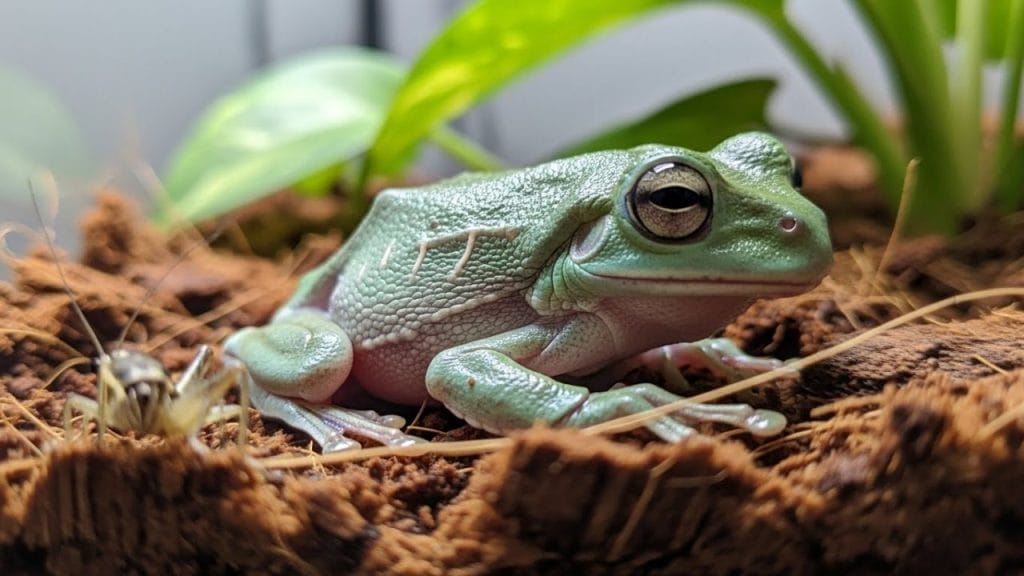
Why Is My Tree Frog Not Eating? The 7 Reasons
1. The Temperature Is Wrong (The Most Common Cause)
This is the number one reason tree frogs stop eating, and most owners never even suspect it.
Tree frogs are cold-blooded. When the tank is too cold, their metabolism grinds down and they literally cannot digest food, so their body switches off the hunger signal.
Here is what most species need:
| Time | Temperature |
|---|---|
| Daytime | 75 to 85°F |
| Nighttime | 65 to 75°F |
| Basking spot | 82 to 84°F |
Too hot is just as bad as too cold. Above 85°F, your frog gets heat-stressed and its appetite vanishes fast.
How to fix it: Get a digital thermometer with a probe. Those cheap stick-on dial ones are basically decorative and lie constantly.
If the tank runs cold, add a low-wattage heat bulb. If it runs hot, move the lamp back or drop to a lower wattage. Fix the temperature first, because it solves a huge chunk of feeding problems on its own.
2. The Humidity Is Off
Dry air makes a tree frog miserable. Their skin has to stay moist so they can breathe through it, and when the air dries out, everything suffers, including appetite.
If humidity drops below 50%, your frog gets stressed and stops eating. You might also notice it parked in its water dish constantly, trying to stay hydrated.
Different species want different humidity:
| Species | Humidity |
|---|---|
| White’s Tree Frog | 50 to 70% |
| Green Tree Frog | 60 to 80% |
| Red-Eyed Tree Frog | 70 to 90% |
If you keep a fussier species like the red-eye, dialing in humidity is half the battle. Our red-eyed tree frog care guide walks through the exact setup for those humidity divas.

Quick fix: Mist the tank morning and night with dechlorinated water. Add live plants. Cover part of the mesh lid with plastic wrap or a glass panel to hold moisture in, and get a digital hygrometer so you actually know your numbers instead of guessing.
3. Stress From Recent Changes
Tree frogs are shockingly sensitive. Stuff that seems trivial to you can rattle them for days.
New tank? Stressed. New decorations? Stressed. You moved the tank to a sunnier room? Yep, stressed and now on a hunger strike.
Common stress triggers include:
- A recent move to your home (settling in takes 1 to 2 weeks)
- Rearranged tank decor
- Too much handling
- Loud noises or vibrations near the tank
- Other pets staring in through the glass
- Lights running at the wrong times
Frogs are also not really a “hold me” pet, and constant handling is a fast track to a stressed, food-refusing frog. If you like a frog you can interact with more, our list of the best pet frogs for handling is worth a look.
How to fix it: Give your frog space. Cover three sides of the tank with dark paper for a week so it feels hidden and safe, and stop handling completely for at least 7 to 10 days.
Just brought your frog home? A brand-new frog that will not eat for the first week or two is almost always just acclimating, not sick. Give it 10 to 14 days of quiet before you worry, and resist the urge to check on it every hour.

4. It Is About to Shed (The One Everyone Misses)
Here is the reason that gets left off almost every other article. Frogs often stop eating around a shed.
Shedding takes energy and it feels uncomfortable, kind of like the amphibian version of an itchy sweater you cannot take off. So a lot of frogs go quiet and skip food for a day or two right before and after.
The tell is that your frog looks a bit dull or grayish, then suddenly looks bright and clean again, and often eats its own shed skin in the process. That is completely normal, do not freak out.
When to actually worry: A single skip around a shed is fine. But frequent or constant shedding paired with no appetite can point to a bacterial or fungal infection, and that one needs a vet.
How to fix it: Do nothing except keep humidity in range so the shed comes off cleanly. Once the shed is done, appetite usually comes roaring back on its own.
5. Wrong Food or Food That Is Too Big
Some frogs are just picky. Others physically cannot handle what you are offering.
If you have only ever tried one feeder, your frog might be bored stiff. Crickets work for most tree frogs, but variety keeps them interested.
Try switching to:
- Small roaches (dubia or discoid)
- Phoenix worms or black soldier fly larvae
- Small silkworms
- Houseflies or fruit flies for smaller frogs
Never feed mealworms as a staple. Their hard shell can cause impaction, and a lot of frogs instinctively refuse them anyway.
Size matters too. The insect should be no bigger than the gap between your frog’s eyes. Offer something too big and your frog will not even bother trying.

6. Calcium and Vitamin Deficiency
This one is a slow-motion problem that can take months to show up, which makes it sneaky.
Most feeder insects are low in calcium and loaded with phosphorus. Without supplements, your frog slowly slides into metabolic bone disease (MBD), and appetite loss is one of the first signs.
Early MBD symptoms:
- Loss of appetite
- Lethargy and weakness
- Trouble climbing or gripping branches
- Sitting on the tank floor instead of perching
- Slight tremors or twitching
What you need: Dust feeder insects with a calcium plus vitamin D3 powder 2 to 3 times a week. Brands like Repashy Calcium Plus or Rep-Cal are reliable.
Also run UVB lighting. Even nocturnal frogs use a little UVB to process calcium, and you should replace UVB bulbs every 6 to 9 months even if they still light up, because the UV output dies long before the glow does.
7. Illness or Parasites
If you have nailed temperature, humidity, food, and supplements, and your frog still refuses food after two weeks, illness moves to the top of the suspect list.
Signs of a sick frog:
- Skinny body with visible hip bones
- Bloated belly
- Discolored skin (brown, gray, or reddish)
- Sitting in the water dish constantly
- Cloudy or swollen eyes
- No reaction when you approach
- Excessive skin shedding
Common health problems behind a food strike include bacterial infections (like red leg disease), fungal infections, internal parasites, impaction, and organ failure.
A bloated belly deserves special mention because it can look mild but signal something serious. If your frog is puffed up like a marble, read our guide on bloat in tree frogs to figure out what you are dealing with.
You cannot fix these at home. These need an exotic vet, and the sooner the better.
How to Get Your Tree Frog Eating Again
Work through these steps in order. Do not do all of them at once or you will never know what actually worked.
Step 1: Fix the Environment First (Today)
Check temperature with a digital thermometer. Aim for 75 to 85°F by day, 65 to 75°F at night.
Check humidity with a digital hygrometer, targeting 50 to 80% depending on species.
Add more hiding spots if the tank feels exposed. Cork bark, live plants, and foam backgrounds all help your frog feel safe enough to eat.
Step 2: Leave Your Frog Alone
Stop handling. Stop staring. Stop the daily photo shoots.
Give your frog a full week of peace. This step alone fixes roughly a third of appetite problems, which is wild considering it costs nothing.
Cover three sides of the tank so your frog feels tucked away.
Step 3: Offer Live Food at Night
Tree frogs are nocturnal hunters. They want to hunt in the dark, not under a bright noon lamp.
Turn the lights off, wait about 30 minutes after sunset, then drop in 2 to 3 appropriately sized live crickets or roaches.
Do not force-feed and skip the tweezers unless your frog is severely weak. Let it hunt naturally, and pull any uneaten insects out in the morning so they do not pester your frog overnight.
Step 4: Try Different Feeders
If crickets are getting ignored, switch it up. Try small dubia roaches, phoenix worms, or a hornworm as an occasional treat.
Variety matters. Wild tree frogs eat dozens of different bugs, so a rotating menu is closer to natural than one feeder on repeat.
Step 5: Get Supplementation Right
Dust every feeder with calcium plus D3 powder.
Toss a few insects in a bag with the powder, shake gently, and feed immediately, because the coating wears off within minutes.
Also gut-load your feeders before offering them. Feed your crickets or roaches fresh veg and a quality gut-load 24 hours before they go in the tank, so your frog gets real nutrition instead of an empty bug.
Do this 2 to 3 times a week for adults and every feeding for juveniles.
Step 6: Build a Feeding Routine
Feed at the same time each night. Tree frogs genuinely learn schedules.
Most keepers feed after 8pm once it is fully dark. Pick a time and stick with it, and do not overfeed, because an obese frog is its own problem.
What NOT to Do
Do not force-feed unless a vet tells you to. Shoving food into your frog’s mouth usually makes things worse and can injure its delicate mouth and throat.
Do not use loose, swallowable substrate. Gravel, sand, and small bark chips can cause impaction. Stick to paper towels, foam, large orchid bark, or a bioactive setup with springtails and isopods.
Do not guess on supplements. Plain calcium without D3 (my daily dusting pick) is nearly useless for most frogs, but overdoing D3 is also harmful, so follow the product instructions.
Do not panic after one missed meal. A healthy adult can coast 2 to 3 weeks. Start worrying only when a long fast lines up with a thin, lethargic frog.
Do not change everything at once. Fix one variable, give it 3 to 5 days, then move to the next. Otherwise you will never learn what your frog actually needed.
When to See a Vet Immediately
Some situations cannot wait for the wait-and-see approach. Get professional help right away if you see:
- No food in 3+ weeks with rapid weight loss
- A belly bloated like a balloon (possible organ failure)
- Open sores or wounds on the skin
- Red or purple discoloration on the belly or legs
- Tremors, seizures, or trouble moving normally
- Sitting with the mouth open, gasping
- Total unresponsiveness when touched
Do not sit on these. A food strike that turns into one of these signs can go downhill quickly, and untreated illness is one of the leading reasons owners suddenly lose a frog. If you want to understand how fast things can turn, our breakdown of why tree frogs die is a sobering but useful read.
Finding a vet: Not every vet treats amphibians, so call ahead and ask specifically about tree frog experience. Look for an exotic animal specialist, and note that the Association of Reptilian and Amphibian Veterinarians (ARAV) keeps a searchable directory on its site.
How Do I Know If My Frog Is Actually Eating?
Here is a sneaky source of panic. Tree frogs hunt at night, so you might never actually catch your frog in the act.
Plenty of owners assume their frog is starving when it has quietly been eating after lights-out the whole time.
Three ways to check without staring at the tank all night:
- Count the crickets. Put in a known number at night and count what is left in the morning. Missing bugs means a happy hunter.
- Look for poop. Fresh droppings in the tank are proof food is going in and coming out. No poop at all for a couple of weeks is a real warning sign.
- Weigh your frog. A small kitchen or jewelry scale (in grams) once a week tells you the truth. Steady or rising weight means it is eating enough, even if you never see it happen.
This one habit saves more midnight worry sessions than anything else on this list.
How Long Can a Tree Frog Go Without Eating?
A healthy adult tree frog can survive 2 to 3 weeks without food, and some push closer to a month.
Juveniles burn through energy faster and need food more often, so they may only last 1 to 2 weeks before it becomes a real concern.
But surviving is not the same as thriving. A long fast stresses the body, weakens the immune system, and leaves your frog more open to illness.
So the rule of thumb is simple. If your frog has not eaten in two weeks, stop waiting and start actively fixing the problem.
Preventing Future Feeding Problems
Once your frog is eating again, keep it that way with a quick monthly routine:
- Replace UVB bulbs every 6 to 9 months
- Check every temperature with a real thermometer
- Confirm humidity stays in range
- Rotate feeder insect types for variety
- Keep supplements fresh (replace every 6 months after opening)
Keep records too. Jot down when your frog eats and how many bugs it takes. Patterns show up fast, and that log is gold if you ever end up in a vet’s office.
And do not overfeed. Obesity is a genuine problem in pet tree frogs, especially White’s tree frogs, so aim for an active, healthy frog rather than one shaped like a golf ball.
Frequently Asked Questions
How long is too long for a tree frog not to eat?
For an adult, more than 2 weeks without food is your cue to investigate and fix things. For juveniles, 1 week is already concerning. If the frog looks healthy and active with good body condition, waiting a few more days while you dial in the environment is reasonable.
Can I force-feed my tree frog?
Not unless a vet recommends it and shows you the technique. Force-feeding can injure your frog’s mouth and throat, and it does nothing about the real reason it stopped eating. Fix the environment first.
Do tree frogs need live food or can they eat dead insects?
Tree frogs are motion-triggered hunters, so they need live, moving prey to fire off their feeding response. Dead insects generally will not work unless a vet is guiding you through assist-feeding a very weak frog.
My tree frog ate one cricket but won’t eat more. Is this normal?
Completely normal. Adults do not eat daily, so one cricket today might hold them for 2 to 3 days. Do not leave extra crickets loose in the tank, because uneaten ones can bite your frog while it sleeps.
Why did my tree frog stop eating in winter?
Cooler months can trigger a natural slowdown where your frog moves less and eats less, a mild form of brumation. As long as it stays at a healthy weight and looks alert, a reduced winter appetite is usually nothing to worry about. Keep an eye on the tank temperature so it does not drop too far.
Do tree frogs stop eating before shedding?
Yes, and it catches a lot of owners off guard. Many frogs skip food for a day or two around a shed and eat the shed skin afterward. It is only a red flag if the shedding becomes frequent and comes with lethargy, which can signal infection.

The Bottom Line
Most tree frog appetite problems trace back to basic care issues you can fix at home.
Start with temperature and humidity. Get those two right and you will solve the majority of cases before you even touch food or supplements.
Layer in proper supplements, less stress, and a little patience around shedding and seasonal slowdowns, and you will handle almost everything else.
Just do not ignore the real warning signs. A frog that refuses food for 2+ weeks while looking thin, bloated, or lethargic needs an exotic vet, not another week of hoping.
Your tree frog is counting on you to notice when something is off and act on it. Now you know exactly what to look for and what to do.
About Author
Hello, I’m Muntaseer Rahman, the owner of AcuarioPets.com. I’m passionate about aquarium pets like shrimps, snails, crabs, and crayfish. I’ve created this website to share my expertise and help you provide better care for these amazing pets.
Disclaimer
This site is owned and operated by Muntaseer Rahman. AcuarioPets.com is a participant in the Amazon Services LLC Associates Program, an affiliate advertising program designed to provide a means for sites to earn advertising fees by advertising and linking to Amazon.com. This site also participates in other affiliate programs and is compensated for referring traffic and business to these companies.