
This post was created with help from AI tools and carefully reviewed by a human (Muntaseer Rahman) . For more on how we use AI on this site, check out our Editorial Policy.
Check Out These FREE Tools We Made JUST For You!
How Long Can Crayfish Live Out Of Water? (5-7 Days)
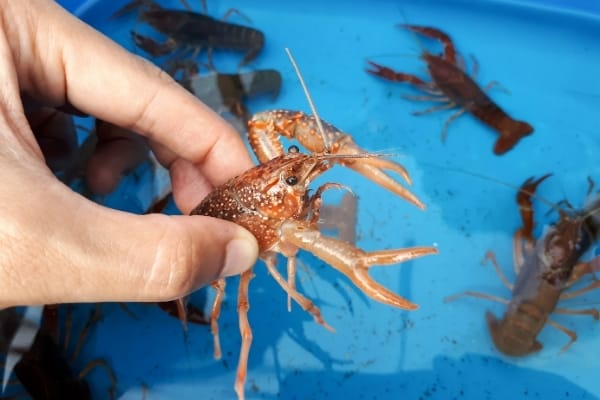
It is not uncommon to see a crayfish walking on land. You might wonder how long can a crayfish live out of water? Also, why do they get out of water? Here’s what I found:
A crayfish can live 5 to 7 days out of water in normal room conditions. In a humid, marshy environment, crayfish can survive for several months out of water as long as their gills stay moist.
The catch is “normal” doesn’t really exist. Survival time on land depends on humidity, temperature, the species, and how dehydrated the crayfish was when it left the water.
I’ll break down the realistic timeline, what’s actually happening to your crayfish hour by hour, and what to do if you find one out of the tank.
Why Crayfish Leave The Water
Crayfish leave the water when there is a lack of oxygen in the tank. In the wild, crayfish often move from one pond to another by walking across damp ground.
It is not a problem for them, especially if the area is humid and marshy. Wild crayfish do this to explore new territory, find food, or look for a better place to live.
In captivity, a crayfish will try to escape for the same reason. Low dissolved oxygen pushes them up and out.
That is why experienced keepers run an air pump 24/7 in any crayfish tank. Even a small one is enough.
If you can’t get an air pump yet, drop the water level a couple of inches and place a stone or piece of driftwood (the driftwood I use for crayfish hides) in the middle of the tank. Make sure it breaches the surface so the crayfish can climb out without being able to vault the rim.
How Long Can A Crayfish Actually Survive On Land
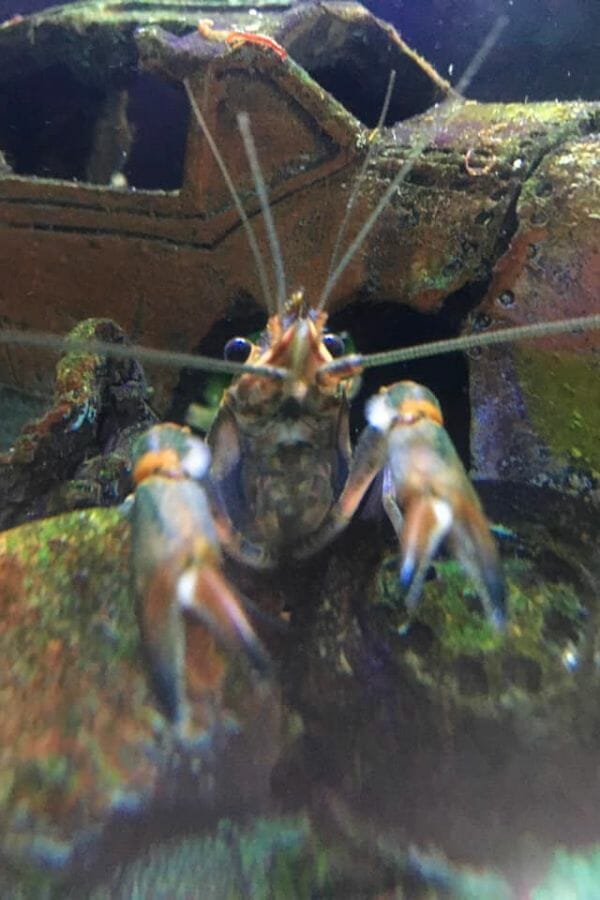
The 5 to 7 day figure is a real ceiling for a healthy adult kept somewhere humid. Most crayfish you find on the floor are nowhere near that limit, and most die from drying out long before oxygen becomes the issue.
Here’s what the timeline actually looks like in a typical house:
- First 1 to 2 hours: Fully fine. Gills are still moist. The crayfish behaves normally and will scuttle back to water if given the chance.
- 2 to 6 hours: Movement slows. The gills start drying at the edges. Reflexes still work but feel sluggish.
- 6 to 24 hours: Survival territory. The crayfish is alive but stressed. Recovery is possible if you put it back in oxygenated water immediately.
- 1 to 3 days: Survival depends almost entirely on humidity. On a damp basement floor, fine. On a heated bedroom carpet, dead.
- 5 to 7 days: Hard ceiling for a healthy crayfish in cool, humid conditions. Past this, organs start failing even if the gills are still wet.
- Weeks to months: Only happens in the wild, in marshy or boggy areas where the crayfish can periodically wet itself in puddles and damp burrows.
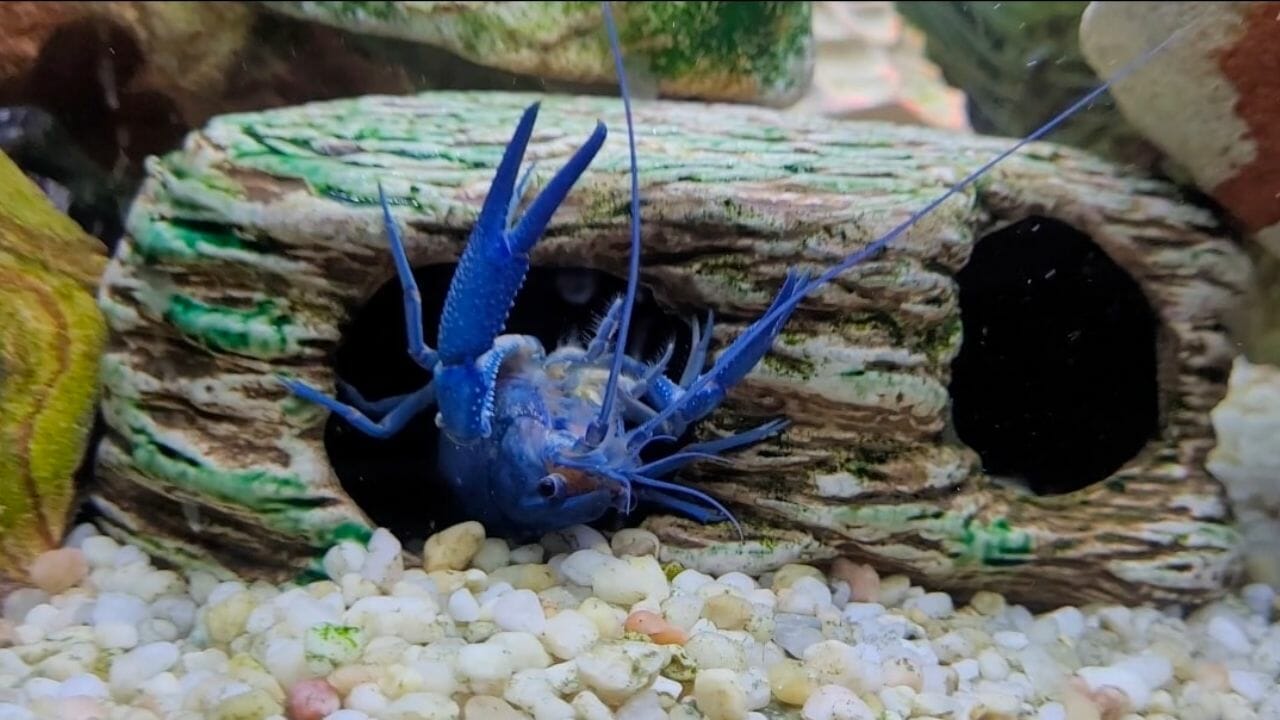
Smaller and juvenile crayfish dry out faster. So do tropical species like the electric blue or red claw, which are used to warmer, more stable humidity than a temperate room provides.
I Found My Crayfish Out Of The Tank, What Now?
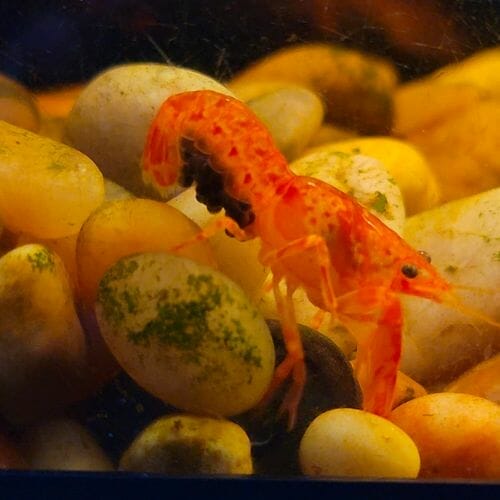
This happens to almost every crayfish keeper at least once. Don’t panic.
First, look at it. If the legs and antennae move at all, even slightly, it is alive.
Pick it up and check the gills under the carapace. If they look glossy and wet, you caught it early. If they look papery or stuck together, the crayfish is severely dehydrated.
Put it back in the tank in a spot with strong surface agitation. The air stone or filter outflow is ideal.
Don’t dump it in the middle of the tank floor. The crayfish needs oxygen-rich water moving past its gills, and right under a bubbler is the fastest way to get that.
A dehydrated crayfish may lie still for several hours before recovering. Do not assume it is dead until 24 hours have passed and there is zero movement when you nudge an antenna.
If it does survive, expect the next molt to be rough. Stress molts often follow desiccation events, and the new shell can come out soft or deformed.
How To Stop Your Crayfish From Escaping In The First Place
Two things prevent escapes. Enough oxygen in the water, and a lid the crayfish cannot push.
For the oxygen side, you have two main options.
1. Run An Air Pump
Every keeper knows how to set up an air pump. Most don’t set them up safely.
The basic setup is air pump connected to airline tubing connected to an air stone. That works, but here are the upgrades that matter:
- Use a check valve between the air stone and the air pump. The check valve stops tank water from siphoning back into the pump if the power cuts.
- Use an air flow regulator if your pump is too strong. Crayfish hate being blasted, and a regulator lets you dial the flow down.
- Place the air pump higher than the tank. Even with a check valve, gravity is a free second line of defense.
The air itself isn’t what oxygenates the water. What actually happens is the bubbles rise, hit the surface, and disturb it. That surface agitation is what lets oxygen from the room dissolve into the tank.
This is why a still tank with a deep tube blowing bubbles down low can still be low on oxygen, while a shallow tank with a strong filter outflow at the top stays well-aerated.
2. Increase Surface Agitation Without A Pump
If you don’t have an air pump, you can still oxygenate the tank. The principle is the same, you just need something else hitting the water surface.
- A powerhead aimed along the surface works. Position it so the flow skims the top instead of plowing into the substrate.
- A wave maker is overkill for most crayfish setups but works great if you already have one.
- If you use a HOB (hang on back) filter, lower the water level by an inch. The waterfall from the filter outflow will agitate the surface plenty.

I personally use a SOBO 320f internal power filter. I have removed the body and just kept the powerhead, with the spraybar attached so it directs flow along the water surface. It creates more surface agitation than any air stone I’ve used.
Lock The Lid
Even with perfect oxygen, a crayfish will try to climb out. They are escape artists by nature.
Use a tight-fitting lid with no gaps wider than a centimeter. Close every cable cutout. Crayfish can squeeze through openings that look impossibly small.
Heavy glass lids are the safest because the crayfish can’t lift them. Mesh lids work too, as long as the mesh is fine enough that claws can’t grip and pull.
How Do Crayfish Actually Breathe On Land
Crayfish breathing is what makes the whole “out of water” thing possible. Their gills are different from fish gills.
Fish gills collapse the moment they hit air. The filaments stick together, surface area drops to nothing, and the fish suffocates within minutes.
Crayfish gills are feathery and protected under the carapace, where they stay moist for much longer. As long as those gills are wet, they can absorb oxygen straight from the air.
The catch is the gills must stay wet. Once they dry out, the crayfish is on a clock measured in hours, not days.
This is why ambient humidity matters more than air temperature. A cool, damp basement gives a lost crayfish a real chance. A warm, dry living room does not.
Frequently Asked Questions
Can crayfish breathe underwater?
Crayfish breathe underwater using gills tucked under the carapace on the sides of their bodies. The gills extract dissolved oxygen as water passes over them, and they release carbon dioxide back into the water at the same time.
Do crayfish breathe air?
Crayfish can breathe air as long as their gills stay moist. Their gills pull oxygen from moisture in the air, which is what allows them to survive on land for hours to days.
Can crayfish live on land permanently?
No. Crayfish are aquatic at heart and need water for nearly every part of their life cycle, including molting, mating, and waste elimination.
They can survive on land for short stints, but they cannot live there long term. Even semi-terrestrial species need access to water to reset their gills.
Do crayfish have lungs?
Crayfish do not have lungs. They breathe entirely through gills, which work in both water and moist air.
The reason they can step onto land at all is the carapace traps moisture around the gills, essentially carrying a small humid environment with them.
Can crayfish live in tap water?
Crayfish can live in tap water as long as it is dechlorinated. Use a standard water conditioner (what I use every water change) before adding the water to the tank.
Tap water often runs low on dissolved oxygen, so pair the dechlorinator with strong surface agitation. See the full crayfish tank setup guide for the rest of the parameters.
Can crayfish drown?
Crayfish can drown if the water has too little dissolved oxygen and they cannot reach the surface. This is rare in a well-aerated tank, but it does happen in stagnant water or when a filter dies overnight.
If you ever notice your crayfish parked at the surface or trying to climb out, treat it as an oxygen alert and check your filtration immediately.

About Author
Hello, I’m Muntaseer Rahman, the owner of AcuarioPets.com. I’m passionate about aquarium pets like shrimps, snails, crabs, and crayfish. I’ve created this website to share my expertise and help you provide better care for these amazing pets.
Disclaimer
This site is owned and operated by Muntaseer Rahman. AcuarioPets.com is a participant in the Amazon Services LLC Associates Program, an affiliate advertising program designed to provide a means for sites to earn advertising fees by advertising and linking to Amazon.com. This site also participates in other affiliate programs and is compensated for referring traffic and business to these companies.