This post was created with help from AI tools and carefully reviewed by a human (Muntaseer Rahman) . For more on how we use AI on this site, check out our Editorial Policy.
Check Out These FREE Tools We Made JUST For You!
Baby Crayfish Care: A Realistic Beginner’s Guide to Raising Them

So your crayfish had babies. Now there are dozens, maybe hundreds, of tiny crayfish swimming around your tank and you are wondering what the hell to do.
Take a breath. I have been there.
This guide covers what actually matters: setting up the baby tank, feeding them, surviving the molt that kills most babies, separating them before they cannibalize each other, and figuring out what to do when you have more crayfish than you can keep.
I will not sugarcoat the survival numbers. You are not going to raise 500 babies into adulthood. Nobody does.
First, How Did You Get Here?
If you have a male and a female crayfish in the same tank with decent water and food, this was always going to happen.
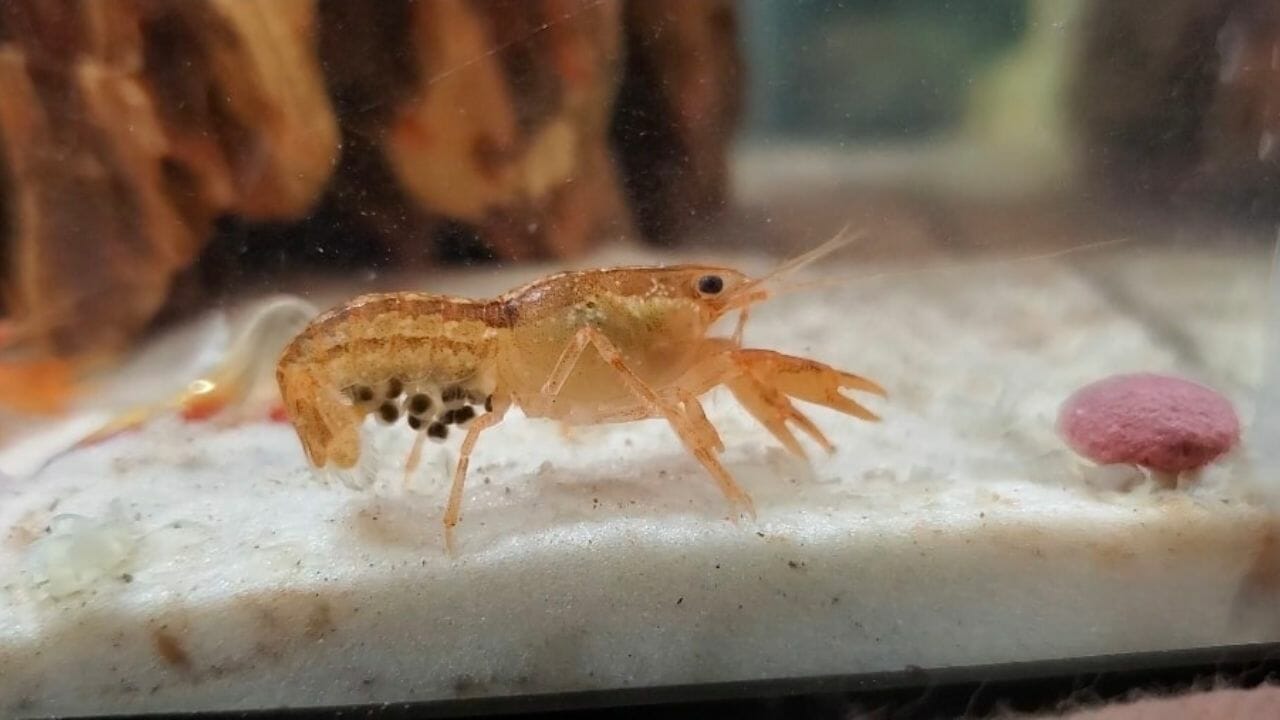
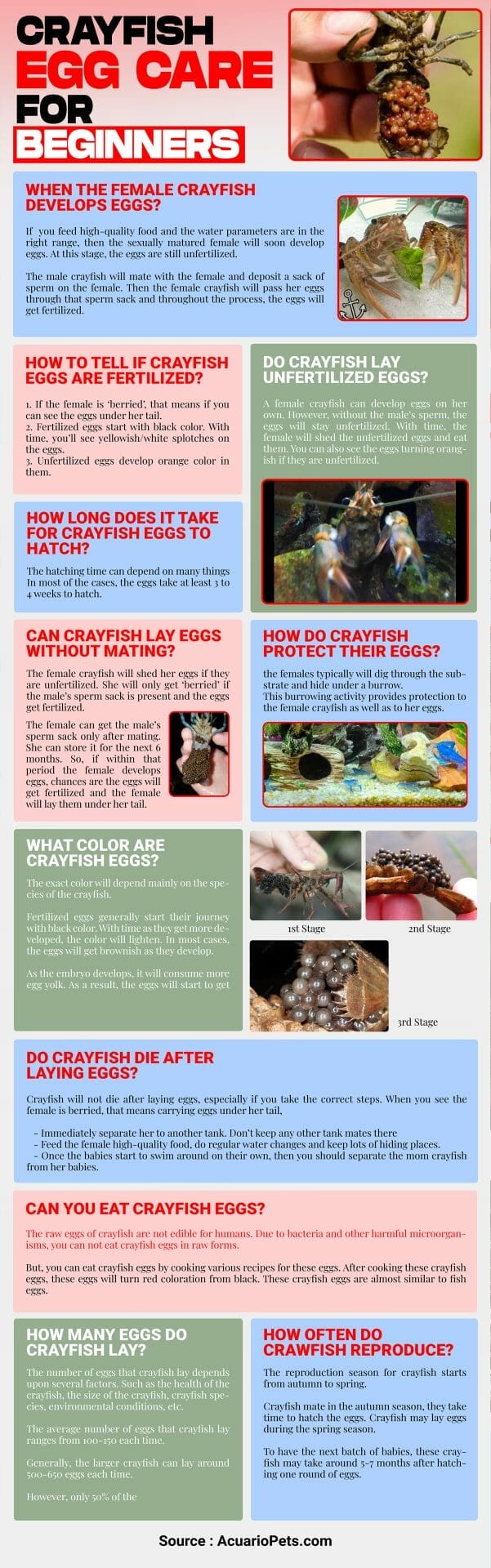
The male deposits a sperm packet under the female’s belly. She passes her eggs through it as she lays them, and the fertilized eggs stick to the swimmerets under her tail. This is the berried stage.
She carries those eggs for about 4 weeks. Warmer water speeds it up, cooler slows it down.
Then they hatch as tiny perfect copies of mom and ride around under her tail for another week or two.
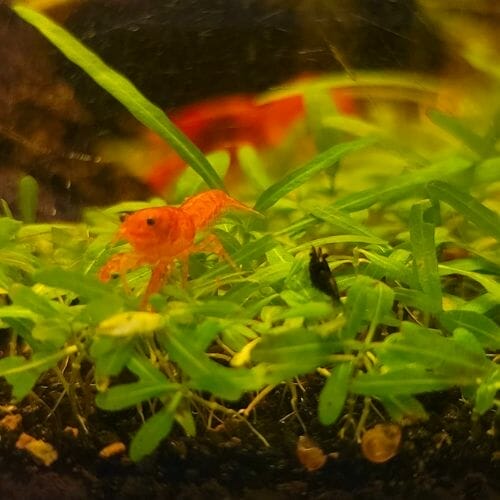
One morning you wake up and they are scattered across the tank. That is the moment this guide actually starts.
Quick note: with marbled crayfish (Marmorkrebs), you do not need a male at all. They reproduce by parthenogenesis. Whole separate situation, and we will get to it later.
The First 24 Hours: What to Do Right Now
If the babies just dropped, here is your priority list.
- Move mom to her own tank within 1 to 2 days. She tolerates them while they ride her tail. Once they leave, she starts treating them as food.
- Lower flow if you have a HOB or canister. Babies get sucked into intakes constantly.
- Cover any intake with sponge or fine mesh. A coarse pre-filter sponge stretched over the intake works.
- Skip the water change today. Stability matters more than fresh water for the first 48 hours.
- Do not feed for the first 24 hours. They still have yolk reserves and uneaten food spikes ammonia.
Do these five things and you have already saved more babies than most people who panic and overcorrect.

Setting Up the Baby Crayfish Tank
The babies need their own tank, or mom needs to move out. A 10 to 20 gallon comfortably holds a hundred or so juveniles for the first 6 weeks.
Here is what that tank needs to have, in order of importance.
1. Fine Sand Substrate
Use sand. Smooth, fine sand (the fine sand that lets crayfish actually burrow), two inches deep at minimum.
Crayfish are diggers from day one. Babies tunnel through sand and use those tunnels as hiding spots from each other. Without sand, they have nowhere to go and the cannibalism timeline accelerates.
Avoid coarse gravel. It has gaps the babies fall into and get stuck. I have a longer substrate guide for crayfish if you want specific picks.
2. Water That Is Already Cycled
If your tank is not cycled, your babies will die from ammonia. This is non-negotiable.
Easiest path: use established water and filter media from the parent tank. Squeeze a sponge filter (the gentle sponge filter I run in my crayfish tanks) into the new tank, transplant some live plants, and you are 80 percent of the way there.
Starting fresh? Cycling takes 4 to 6 weeks. You do not have that time. Read my cycling guide and use bottled bacteria to skip ahead. Same concept applies for crayfish.
Tap water needs a water conditioner (what I use every water change) before it ever touches the babies. Chlorine and chloramine kill them faster than ammonia does.
3. Sponge Filter Only
Use a sponge filter. Not a HOB. Not a canister. Sponge.
Two reasons. Babies get pulled into HOB intakes and shredded. And sponge filters double as a feeding ground because biofilm and microorganisms grow on the foam, which the babies graze on between meals.
Get a sponge rated for at least double your tank size. More surface area means more bacteria, more biofilm, cleaner water.

4. Hides, Then More Hides
You think you have enough hides? Add more.
Hiding places are the single biggest factor in baby crayfish survival. Every baby that has its own tube, leaf, or corner to hide in is a baby that will not get eaten by a sibling.
Cheap options that actually work:
- Cut PVC pipe into 2-inch segments. They love these.
- Stack flat slate or ceramic tiles to make caves.
- Pile in cheap plants like java fern (— a hardy plant that survives crayfish abuse), anubias (— another plant the cray won't kill), hornwort, and guppy grass.
- Drop in cholla wood and Indian almond leaves on the substrate.
Pack the tank. It looks ugly. It saves babies.
5. A Lid That Actually Seals
Adult crayfish are escape artists. Babies are smaller escape artists.
Any gap larger than the width of a baby crayfish, they will find. Cover heater cord cutouts, filter slots, anywhere a determined inch-long crustacean can squeeze through.
I lost three babies before I figured out they were climbing the airline tubing.
6. Steady Temperature
70 to 75°F (21 to 24°C) is the sweet spot for most species. Procambarus species tolerate up to 78°F.
What matters more than the exact number is stability. Avoid swings of more than 2 to 3 degrees in a day. Babies are not built for thermal stress.
Feeding Baby Crayfish
Baby crayfish eat anything that fits in their claws. The trick is variety, not finding the one perfect food.
What I rotate through:
- Crushed sinking pellets (— what I drop in for my cray) and algae wafers, broken into tiny pieces.
- Blanched zucchini, cucumber, pumpkin, peas (skin removed). Drop a slice and they swarm it.
- Bloodworms (frozen or freeze-dried), broken up.
- Daphnia and baby brine shrimp, especially in the first 2 weeks.
- Powdered fish food sprinkled on the substrate.
Feed small amounts twice a day for the first month. They have fast metabolisms and need protein to grow new shells.
Watch for uneaten food. Babies pollute water fast and rotting food triggers ammonia spikes that wipe out half a batch overnight.
For deeper detail on adult feeding, my crayfish feeding guide covers brand-specific picks.
The Molt: Why Most Babies Die
Nobody tells you this part. Molting is the leading cause of baby crayfish death.
Crayfish grow by shedding their shell. Babies do this constantly, sometimes every 4 to 7 days during the first month. Each molt is a vulnerable window where they are soft, slow, and exposed.
Two things kill them during molts:
- Calcium deficiency, which causes the new shell to harden incompletely or stick to the body. Add cuttlebone, crushed coral in the filter, or Indian almond leaves to keep calcium in the water.
- Other crayfish. Even siblings tear apart a soft-shelled tankmate the moment it molts. This is why hides matter so much.
If you see a “dead” baby, do not remove it for 24 hours. Half the time it is a shed shell or a baby in mid-molt. The exoskeleton is calcium-rich and other babies will eat it. Do not take that food source away.
When Cannibalism Starts and What to Do
Crayfish are bad parents and worse siblings. The cannibalism clock starts the moment babies leave mom.
Rough timeline:
- Week 1 to 2: mom tolerates them. Other crayfish do not.
- Week 3 to 4: mom starts seeing them as food. Move her out.
- Week 4 to 6: siblings start picking on each other after molts.
- Month 2 to 3: full territorial fights. Time to start separating the largest individuals.
- Month 3 and beyond: dominant juveniles claim corners, weaker ones get eaten.
By month 3 you naturally have fewer crayfish, even with hides everywhere. That is the population finding its carrying capacity.
I wrote a whole article on whether crayfish eat their babies if you want the deeper version.
Realistic Survival Rate
A female crayfish hatches anywhere from 200 to 1,000 eggs depending on species and size. You will not end up with that many adults. Not even close.
Realistic numbers from my own batches:
- 30 to 50 percent of eggs hatch successfully (some go bad, some get knocked off).
- Of those, 40 to 60 percent survive the first month (failed molts, ammonia, weak individuals).
- Of those, 30 to 50 percent reach the 3-month mark (cannibalism, fights).
- End result: maybe 10 to 20 percent of original eggs reach juvenile size.
From 500 eggs you will likely raise 50 to 100 juveniles. From 100 eggs, expect 10 to 20.
This is normal. Do not beat yourself up over deaths. Every breeder loses most of the batch.
Marbled Crayfish: The Cloning Exception
Marbled crayfish (Marmorkrebs, Procambarus virginalis) deserve their own section because everything about their breeding is different.
Every marbled crayfish on Earth is female. They do not need a male. A single female produces genetically identical clones of herself, repeatedly, throughout her life.
This is called parthenogenesis. Marbled crayfish are the only known decapod crustacean that does it.
What this means practically:
- One marbled crayfish becomes hundreds within a year.
- You cannot legally sell, give, or trade them in any EU member state. Banned across all 27 countries since 2014.
- In the US, they are illegal in Missouri, Tennessee, Idaho, Michigan, and several other states. Check your state and local law before keeping or rehoming.
- Never release them outdoors. They have established invasive populations on every continent except Antarctica.
If you have marbled crayfish babies, your responsibility is to keep them, find verified-legal homes for them, or cull them ethically. This is the part nobody likes to talk about, but it matters.
Species-Specific Notes
Different species behave differently as babies. Quick reference for the most kept varieties.
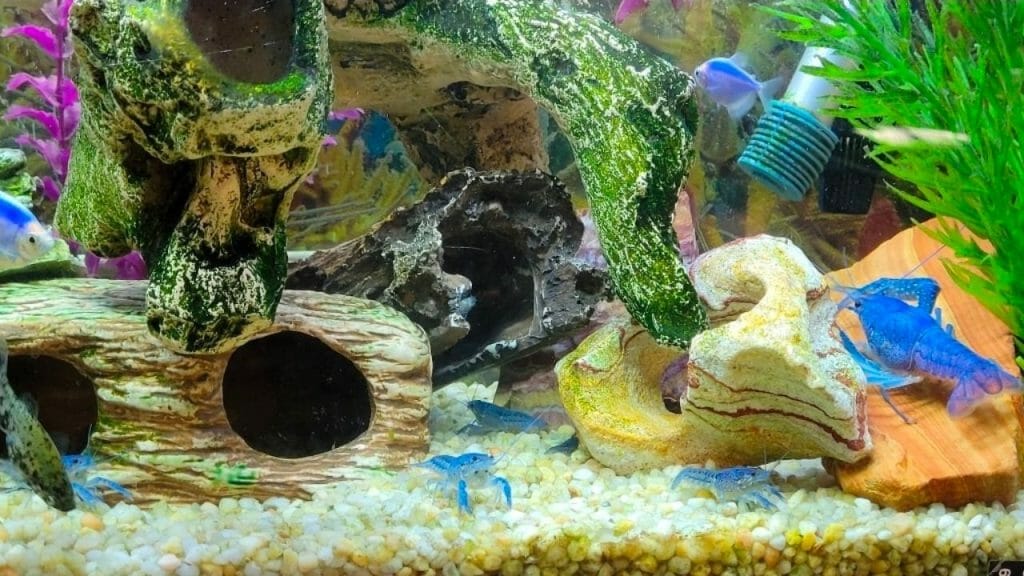
Electric Blue (Procambarus alleni)
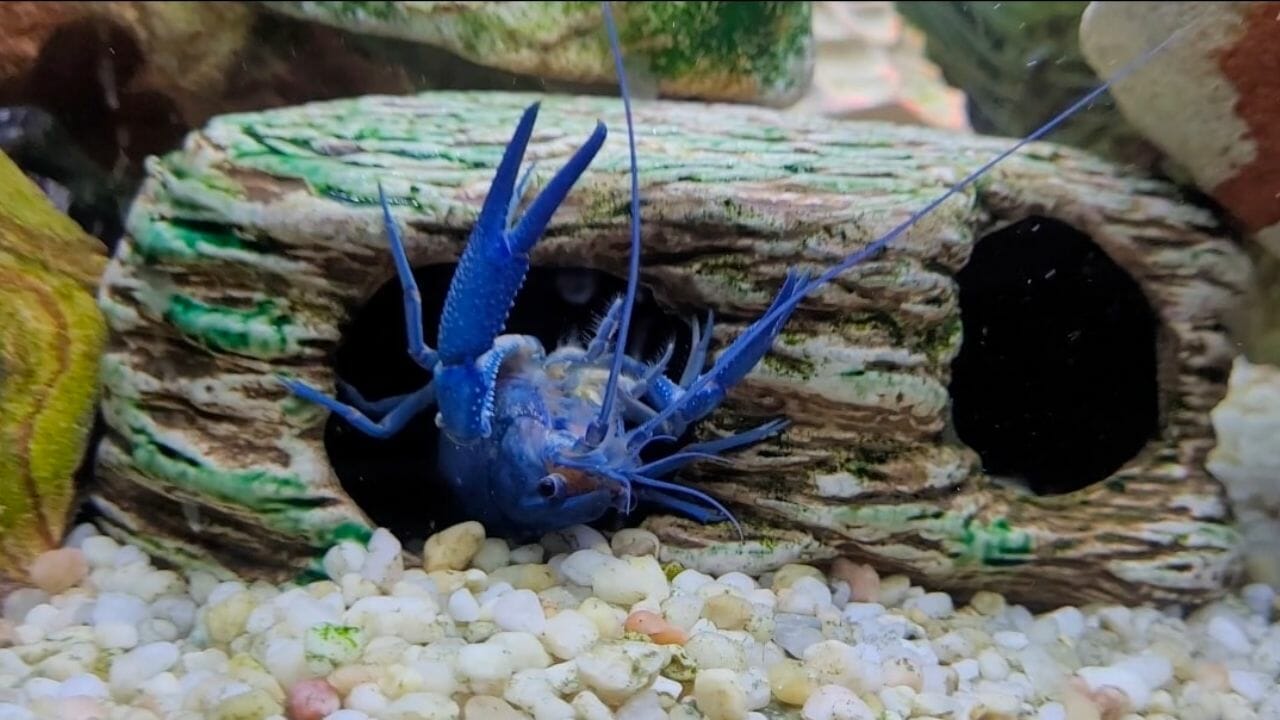
Babies hatch a translucent grey-brown. Blue color develops over 3 to 6 months as they molt. Aggressive from young. Separate early.
Dwarf Mexican / CPO (Cambarellus patzcuarensis)
The most peaceful baby crayfish you can raise. Lower cannibalism, smaller broods (30 to 60 babies), and they tolerate community tanks better than any other species. Easiest variety to raise.
Marbled (Procambarus virginalis)
Babies look like miniature mottled adults from day one. Aggressive, fast-growing, and require strict legal awareness as covered above.
White Specter / Ghost (Procambarus clarkii ghost)
Babies are nearly transparent and color develops slowly. Standard procambarus aggression. Treat exactly like a red swamp crayfish baby.
When to Upgrade or Separate
By month 2 to 3, your babies outgrow whatever tank they started in. Here is how I handle the transition.
- At 1 inch (2.5 cm): move them to a grow-out tank with more hides per crayfish.
- At 1.5 inches: dominant individuals start claiming territory. Plan separation.
- At 2 inches: most species need their own enclosure or you will lose limbs and lives.
I run a grow-out as a 20-long with PVC dividers, lots of caves, and a power sponge filter. It buys 2 to 3 more months before final separation.
Size at maturity varies by species. Dwarf species peak at 2 inches. Procambarus alleni and clarkii hit 4 to 5 inches. Plan housing accordingly.
What to Do With the Survivors
You cannot keep them all. Even 20 juveniles need 20 tanks eventually. Here are your real options.
Sell to a local fish store
Call ahead. Most stores buy juveniles at 1 to 2 inches for $1 to $3 each. Bring a healthy looking sample, not a bag of weak survivors.
Sell to local hobbyists
Aquarium clubs, Facebook groups, Craigslist, AquaBid. Cheaper than store prices but you keep more profit per crayfish.
Give them away
Free juveniles move fast. Just confirm the new keeper knows what they are getting into and is not going to release them.
Never release them outside
Pet store crayfish in wild ecosystems destroy native species. They are already invasive across most of Europe and parts of the US. If you cannot rehome them, ask a local conservation group or fish store for legal disposal options.
Frequently Asked Questions
How long are crayfish pregnant for?
Crayfish are not technically pregnant. They carry fertilized eggs externally, attached to swimmerets under the tail. The eggs hatch in 2 to 4 weeks depending on temperature.
What are baby crayfish called?
Baby crayfish are called craylings, hatchlings, or juveniles. In aquaculture they are sometimes called fry, though that term is technically more accurate for fish.
How long does it take for baby crayfish to grow?
Baby crayfish reach sexual maturity in 4 to 12 months depending on species, temperature, and food availability. Dwarf species mature fastest (3 to 4 months). Larger procambarus species take 6 to 12 months.
Do baby crayfish need their mom?
Only for the first 1 to 2 weeks while they are still attached to her swimmerets. After that, mom becomes a threat and should be moved out.
Do crayfish die after giving birth?
No. Healthy crayfish do not die from breeding or hatching. If a female dies after, it is usually unrelated stress, age, or a failed molt.
How often do you feed baby crayfish?
Twice a day for the first month, small amounts. Once daily after that. Always remove uneaten food within 30 minutes.
Why are my baby crayfish dying?
The big three killers, in order: failed molts (calcium deficiency), ammonia spikes (uncycled tank or overfeeding), and cannibalism (not enough hides). Fix those three and your survival rate jumps fast.
About Author
Hello, I’m Muntaseer Rahman, the owner of AcuarioPets.com. I’m passionate about aquarium pets like shrimps, snails, crabs, and crayfish. I’ve created this website to share my expertise and help you provide better care for these amazing pets.
Disclaimer
This site is owned and operated by Muntaseer Rahman. AcuarioPets.com is a participant in the Amazon Services LLC Associates Program, an affiliate advertising program designed to provide a means for sites to earn advertising fees by advertising and linking to Amazon.com. This site also participates in other affiliate programs and is compensated for referring traffic and business to these companies.