This post was created with help from AI tools and carefully reviewed by a human (Muntaseer Rahman) . For more on how we use AI on this site, check out our Editorial Policy.
Check Out These FREE Tools We Made JUST For You!
Do Chameleons Bite? Are They Dangerous?
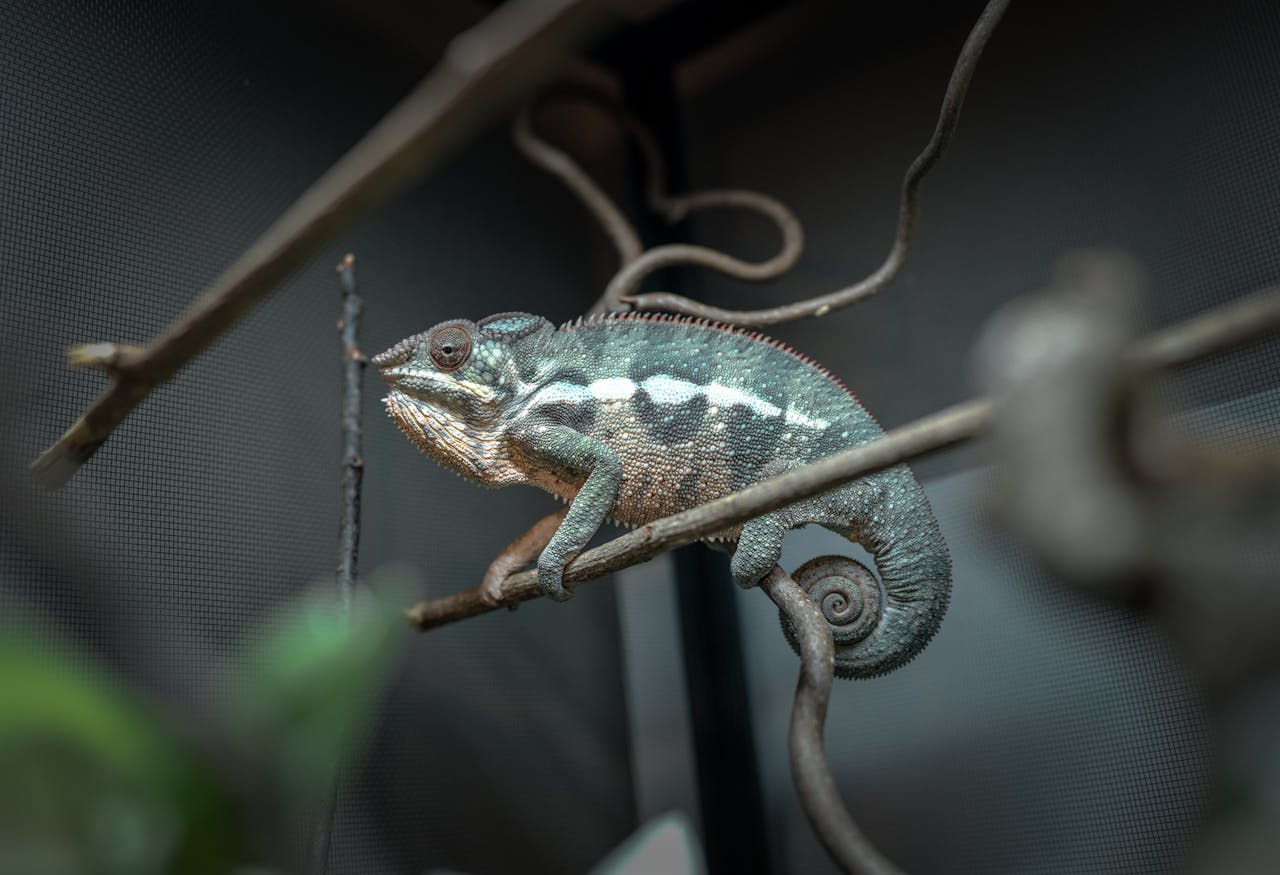
So you’re standing in front of a tank at the pet store, watching this tiny green dragon swivel one eye at you while the other one stares at a moth across the room.
And the question pops into your head: is this thing going to bite me?
Short answer: yes, chameleons can bite, and most pet species do at some point. But almost none of them are dangerous.
Let me explain what actually happens, which species are bitey little jerks, and how to handle one without leaving with a chunk of your finger missing.

Do Chameleons Actually Bite?
Yes. They have teeth. They use them.
But here’s the thing — chameleon teeth are so small they’re barely visible to the human eye. They’re built for crunching cricket exoskeletons, not hands.
Most bites from common pet species (veiled, panther, Jackson’s) feel like a sharp pinch or a deep pinprick. Some keepers compare it to a bee sting. Most of the time, the skin doesn’t even break.
Pygmy chameleons? You’d barely notice. Their bite is roughly as menacing as being attacked by a sticky note.
How Bad Does It Actually Hurt?
Depends on the species and how committed the chameleon is to ruining your day.
| Species | Bite Severity | Skin Break? |
|---|---|---|
| Pygmy chameleon | Barely noticeable | No |
| Panther chameleon | Pinch — annoying | Sometimes |
| Jackson’s chameleon | Moderate pinch | Possible |
| Veiled chameleon (especially adult males) | Genuinely painful | Yes, often |
Veiled chameleons are the bitey ones. Keepers on the chameleon forums describe getting bitten by a veiled as “piranha teeth digging in” and one guy mentioned his veiled would latch on and twist trying to rip a chunk off.
That’s a worst-case scenario. Most bites are not that dramatic. But if you’re picking your first species and you want to actually handle it sometimes, a panther is going to be way more chill than a veiled male.
Are Chameleon Bites Dangerous?
For the bite itself? No. Chameleons are not venomous. They don’t have rear fangs, they don’t inject anything, they don’t carry rabies.
The real danger isn’t the bite. It’s the bacteria in their mouth and the Salmonella on their skin.
Infection Risk From the Bite
Reptile mouths are not clean. They eat bugs and live in humid enclosures. Any bite that breaks the skin can introduce bacteria into the wound.
Most chameleon bites that don’t break skin = essentially zero infection risk.
If it does draw blood and you clean it properly, you’re almost certainly fine. Infections happen when people ignore the bite or skip basic first aid (more on that in a second).
The Salmonella Conversation Nobody Wants to Have
This is the actual public health issue with pet chameleons.
The CDC tracked a 2026 multi-state Salmonella outbreak linked specifically to pet veiled chameleons, and every single sick patient was a child under 2. That’s not a one-off — reptiles in general are a known Salmonella source, and veileds happen to be popular enough to keep showing up in outbreak data.
You don’t need to be bitten to catch it. You can get Salmonella by touching the chameleon, the cage, or anything in their environment and then touching your mouth.
This is why the CDC says reptiles are not appropriate pets for households with kids under 5, adults over 65, or anyone immunocompromised.
Wash your hands. Every time. Even if you didn’t get bitten.
Why Do Chameleons Bite in the First Place?
Chameleons don’t bite because they’re mean. They bite because they’re terrified.
Remember — in the wild, chameleons are prey animals. Snakes eat them. Birds eat them. Mongooses eat them. Pretty much anything bigger than a cricket is a potential threat.
So when a giant warm-blooded creature (you) reaches into their tree and grabs them, their tiny lizard brain isn’t thinking “this is my friend.” It’s thinking “I am about to die.“
Biting is the last resort. It’s their final “leave me alone” after everything else has failed.
The other reason? Territorial males during breeding season can get spicy. A male veiled in full hormonal mode will absolutely launch at your hand. That’s also why we don’t recommend cohabitation — read Can Chameleons Live Together? if you’re tempted.
Warning Signs — How to Know a Bite Is Coming
This is the part most new keepers miss. Chameleons telegraph their bites way in advance. If you watch the warning signs, you’ll basically never get bitten.
Here’s the escalation, in order:

1. Color Change
Suddenly dark, blotchy, or weirdly intense colors? Your chameleon is stressed. Color is their first language for “I’m not okay right now.”
We have a whole post breaking this down at Chameleon Color Changes Explained.
2. Body Compression
The chameleon flattens itself sideways and leans away from you. They’re trying to look bigger to a predator (you). They’re also putting maximum distance between themselves and your hand.
3. Throat Puffing
The throat inflates. This is “I’m bigger than I look, back off.”
4. Both Eyes Locked Forward
This one is huge. Chameleons normally swivel each eye independently. But when both eyes lock forward on your approaching hand, they’ve switched to binocular vision — the same mode they use to target a cricket they’re about to tongue-shoot.
Both eyes on you = you’re a target.
5. Tail Whipping or Rolling
The tail starts whipping side to side or curling and uncurling rapidly. That’s stress overflow.
6. Hissing
Audible hiss. This is the verbal warning. You should already be backing off by now.
7. Gaping
Mouth wide open. This is the last warning. If you keep advancing, you’re getting bit.
If your chameleon is gaping, stop, pull your hand back, and walk away. Try again tomorrow.
What to Do If a Chameleon Bites You
Don’t panic. Don’t yank your hand away (that can rip the skin worse and stress the chameleon into clamping down harder).
Immediate Steps
- Stay still and let go. Most chameleons release in a few seconds once they realize you’re not actively attacking.
- If they don’t release, gently support their body with your other hand and slowly lower them back to a branch. They’ll usually let go to climb.
- Wash the bite immediately with soap and warm water for at least 30 seconds.
- Apply antiseptic — anything with iodine or chlorhexidine works fine.
- Cold compress for 10 minutes if there’s swelling, wrapped in a cloth.
- Bandage if it’s bleeding.
- Wash again later that day. Reptile mouth bacteria don’t mess around.
When to See a Doctor
Most bites don’t need medical attention. But go get checked if:
- The bite is deep enough that you can see fat or muscle
- It’s still bleeding after 15 minutes of pressure
- You see redness, swelling, pus, or red streaks in the days after
- You feel feverish or generally unwell
- You’re immunocompromised or haven’t had a tetanus shot in 10+ years
For most healthy adults with a normal bite from a healthy chameleon, soap, water, and not freaking out is enough.
How to Avoid Getting Bitten in the First Place
The trick to never getting bitten: stop trying to handle a chameleon like it’s a guinea pig.
Chameleons are not cuddle pets. They tolerate handling at best. Most don’t even tolerate that.
Handling Rules That Actually Work
- Use a branch or stick to transfer them, not your hand. Let them climb onto it voluntarily.
- Approach from below or the side, never from above. Birds attack from above. You don’t want to look like a hawk.
- Don’t corner them. If they have nowhere to retreat, biting becomes their only option.
- Don’t handle when they’re showing stress colors or hiding at the bottom of the cage.
- Limit handling to 10-15 minutes at a time, and not every day.
- Wash hands before AND after. Before to remove smells (other pets, food, lotion). After for Salmonella.
We have a deeper breakdown at Can You Hold a Chameleon? What Actually Happens — read it before you bring one home.

Picking a Less Bitey Species
If you’re a brand-new keeper and getting bitten freaks you out, don’t start with a veiled male. Just don’t.
| Best for handling | Acceptable | Avoid for handling |
|---|---|---|
| Female panther chameleon | Female veiled | Male veiled (adult) |
| Pygmy chameleon | Jackson’s | Wild-caught anything |
Female chameleons of every species tend to be calmer than males of the same species — but females come with their own challenges, mainly egg-laying even without a mate. Read Male vs Female Chameleons for the full tradeoff.
Are Chameleons Safe Pets in General?
For most adults? Yes.
For households with kids under 5, elderly relatives, or anyone immunocompromised? No. The Salmonella risk is real, the CDC has been clear about it, and a sick toddler is a way worse outcome than skipping the cool reptile.
For everyone else, the risk profile is: a small chance of a mildly painful bite, and a manageable Salmonella risk you defeat by washing your hands.
Compare that to dog bites (which send 4.5 million Americans to the doctor every year) and chameleons are basically the safest pet in the house. Just one that occasionally puffs up and gives you a stern lecture.
The Real Danger Isn’t the Bite — It’s Bad Husbandry
I’ll close with this: way more chameleons get hurt by their owners than the other way around.
A bite leaves a tiny mark on your finger. Bad husbandry leaves a chameleon dead in 6 months.
If you’re researching bites, you’re already taking this seriously. Keep going. Read up on the biggest mistakes new chameleon owners make, get the cage setup right, and respect that this is a delicate prey animal who needs space, not snuggles.
Do that, and the bite question basically answers itself — your chameleon won’t feel the need to bite, because you’ll have built the kind of life where it never feels cornered in the first place.

About Author
Hello, I’m Muntaseer Rahman, the owner of AcuarioPets.com. I’m passionate about aquarium pets like shrimps, snails, crabs, and crayfish. I’ve created this website to share my expertise and help you provide better care for these amazing pets.
Disclaimer
This site is owned and operated by Muntaseer Rahman. AcuarioPets.com is a participant in the Amazon Services LLC Associates Program, an affiliate advertising program designed to provide a means for sites to earn advertising fees by advertising and linking to Amazon.com. This site also participates in other affiliate programs and is compensated for referring traffic and business to these companies.