This post was created with help from AI tools and carefully reviewed by a human (Muntaseer Rahman) . For more on how we use AI on this site, check out our Editorial Policy.
Check Out These FREE Tools We Made JUST For You!
Can You Hold a Chameleon? What Actually Happens

You just got a chameleon. It’s sitting there on its branch, looking like a tiny dinosaur with eyes that move in two different directions at once.
Naturally, you want to pick it up.
But the second your hand gets close, it puffs up like a balloon, opens its mouth wide, and starts hissing at you like you just insulted its entire family.
Welcome to chameleon ownership.
So can you actually hold a chameleon? Let’s get into what really happens when you try.
The Short Answer: Yes, But They Won’t Thank You For It
You can hold a chameleon. Physically, there’s nothing stopping you.
But here’s the thing — chameleons don’t enjoy being held. Not a little bit. Not at all. Zero percent enjoyment on their end.
In the wild, the only time something bigger grabs a chameleon is right before it eats them. So when your giant hand comes reaching into their enclosure, their brain goes straight to “I’m about to become lunch.”
They don’t understand love. They don’t understand cuddles. They see a massive predator closing in, and they react accordingly.
That doesn’t mean you can never touch your chameleon. It just means you need to understand what’s going on in their head before you try.
What Happens When You Try to Pick Up a Chameleon
Here’s the typical sequence of events when a chameleon sees your hand coming:
Stage 1 — Color change. Their colors shift, often getting darker or showing stress patterns. This is their first “back off” signal.
Stage 2 — Puffing up. They inflate their body to look bigger and more intimidating. It’s the chameleon version of puffing out your chest.
Stage 3 — Turning sideways. They rotate their body to face you side-on, making themselves look as large as possible. Some will flatten their bodies vertically to add to the effect.
Stage 4 — Mouth gaping. They open their mouth wide to show you they mean business. It’s a clear “I will bite you” warning.
Stage 5 — Hissing. If you’re still coming, they start hissing. This is their verbal “last chance” alert.
Stage 6 — The bite. If you ignore all of the above, they bite. And honestly? You kind of deserved it at that point.
Not every chameleon goes through all six stages. Some skip straight to hissing. Some are surprisingly calm about the whole thing. But this is the general playbook.
Does a Chameleon Bite Actually Hurt?
Let’s address the elephant in the room.
Most chameleon bites feel like a firm pinch. Their teeth are tiny — designed for crunching crickets, not tearing through human skin. A bite from a small chameleon might not even break the skin.
Larger species like veiled chameleons can deliver a more noticeable bite. It might draw a tiny bit of blood and leave a small mark. But we’re talking about a minor inconvenience, not a trip to the emergency room.
Chameleon bites are not venomous. They don’t carry any known transmittable diseases either. So the worst case scenario is a small pinch and some wounded pride.
The real damage from a bite isn’t physical — it’s the trust you just destroyed with your chameleon. That’s the part that actually hurts.
Which Chameleon Species Handle Handling Best?
Not all chameleons are created equal when it comes to tolerating your hands.
| Species | Handleability | Temperament |
|---|---|---|
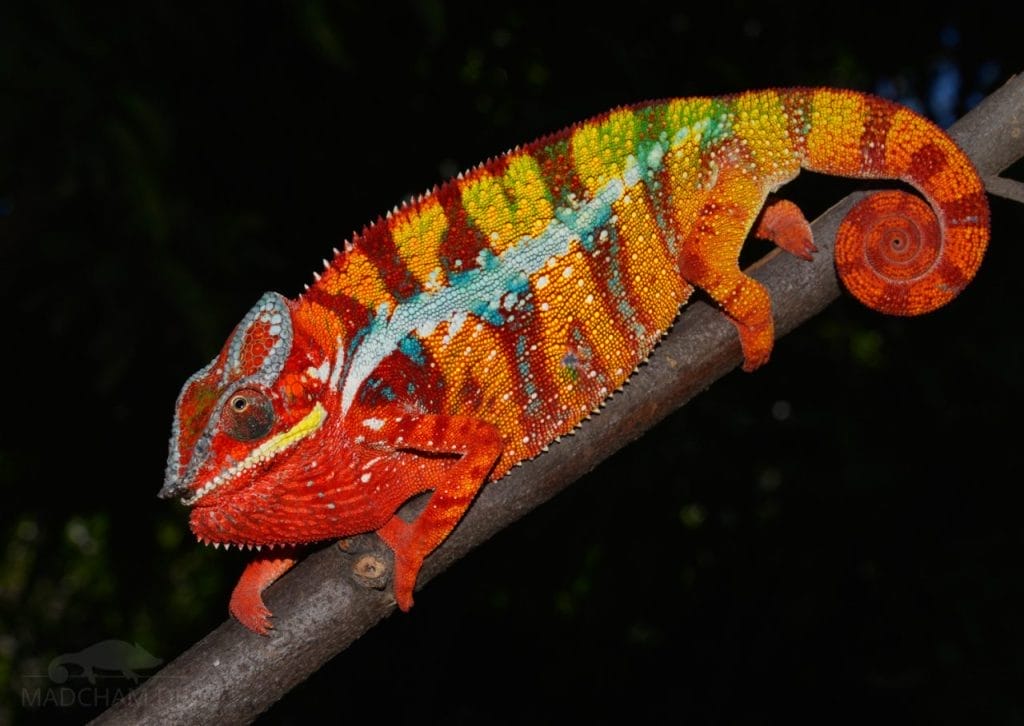
| Panther Chameleon | Most tolerant | Curious and relatively calm. Often the best choice if handling matters to you |
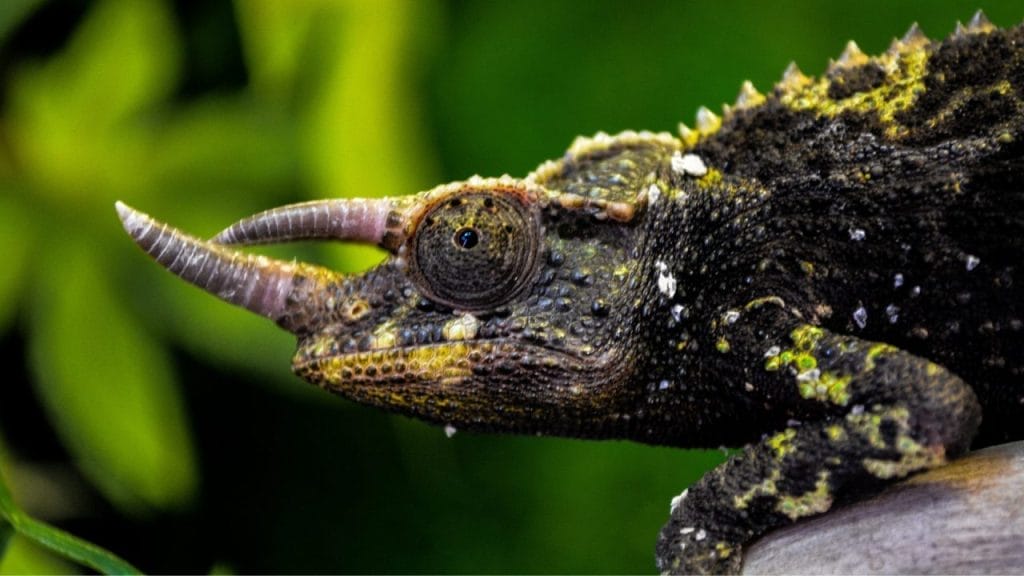
| Jackson’s Chameleon | Moderately tolerant | Laid-back personality. Generally more chill than veiled chameleons |
| Veiled Chameleon | Least tolerant | Most common pet chameleon but also the most aggressive. Known for hissing and biting |
Panther chameleons tend to be the most handleable of the popular pet species. They’re naturally more curious and less defensive. Many panther owners report that their chameleons will voluntarily walk onto their hands once trust is built.
Jackson’s chameleons fall in the middle. They’re generally mellow and less likely to go full defense mode compared to veiled chameleons.
Veiled chameleons are the most popular pet chameleon species, but ironically, they’re also the most likely to hiss, gape, and bite when you try to handle them. They have a stronger grip too, so those little claws really dig in when they’re climbing on you.
That said, individual personality matters more than species. You can get a laid-back veiled chameleon or an aggressive panther. Each one is different.
How to Actually Pick Up a Chameleon (The Right Way)
If you need to handle your chameleon — for cage cleaning, vet visits, or health checks — here’s how to do it without causing a meltdown.
Never Grab From Above
This is rule number one. Predators attack from above. Hawks, eagles, snakes — they all come from overhead. If your hand descends from the top, you’re triggering every survival instinct your chameleon has.
Always approach from the front and below, where they can see you coming.
Let Them Walk Onto You
Place your hand flat in front of your chameleon, slightly below the branch they’re sitting on. Use your other hand to gently nudge them from behind — not grabbing, just encouraging them to move forward onto your waiting hand.
The goal is to make your hand feel like just another branch. A stable surface to walk onto, not a predator swooping in.
Don’t Pull Them Off Branches
Chameleons have five gripping points — four feet and one prehensile tail. All five are designed to lock onto branches with serious force.
If you try to yank a chameleon off its branch, you can easily break their toes or tail. Their grip is stronger than you’d expect for an animal that size. Never force it.
If they don’t want to let go, wait. Or offer a more appealing branch for them to grab onto first.
Support Their Body
When your chameleon is on your hand, let them grip your fingers naturally. Don’t squeeze, don’t cup them, don’t hold them like a hamster.
Think of yourself as a walking tree branch. You’re there for support, not restriction.
Keep Sessions Short
5 to 10 minutes max. Even a chameleon that tolerates handling will get stressed if you keep them out for too long.
Watch for stress signs — darkening colors, closed eyes, puffing up, trying to escape. The moment you see any of these, put them back.
How to Build Trust With Your Chameleon

You’re not going to pick up a chameleon on day one and have it sit happily on your shoulder. This is a slow game.
Week 1-2: Just Exist Near Them
Don’t try to handle your chameleon at all during the first couple of weeks. Just be present near the enclosure. Talk softly. Move slowly. Let them get used to the giant creature that keeps appearing on the other side of the glass.
Week 3-4: Hand Feeding
This is the game changer. Start offering food from your hand — crickets, worms, whatever they love most.
Hold the insect between your fingers and let the chameleon shoot it with their tongue. This teaches them that your hand means food, not danger.
Some chameleons take to hand feeding within days. Others might take weeks. Don’t rush it.
Week 5+: Open Door Policy
Once hand feeding is going well, start leaving the enclosure door open and placing your hand inside — flat, palm up, not moving.
Don’t reach for them. Just let your hand sit there like a boring branch.
Eventually, some chameleons will start walking onto your hand on their own. And that’s the goal. You want handling to be their choice, not yours.
The Treat Reward System
Reserve your chameleon’s absolute favorite food — usually hornworms or silkworms — exclusively for handling sessions.
They start associating your hand with the best snacks in existence. Suddenly being held doesn’t seem so bad when there’s a hornworm waiting at the end.
When You Should Never Handle Your Chameleon
There are times when you need to leave your chameleon completely alone, no matter how tame they usually are.
During shedding. Chameleons feel vulnerable when they’re shedding. Their skin is sensitive and they’re more irritable than usual. Give them space.
Right after eating. Wait at least 24 hours after a meal before handling. Stress from handling can cause them to regurgitate their food, which is dangerous.
When they’re showing stress colors. Dark colors, stress patterns, closed eyes during the day — these all mean your chameleon is already stressed. Adding handling on top of that is just cruel.
When they’re new to your home. Give them at least two full weeks to settle in before you even think about handling. They need time to feel safe in their environment first.
If they’re sick. A sick chameleon needs rest, not human interaction. The only exception is if you need to handle them for medication or a vet visit.
Will My Chameleon Ever Actually Like Being Held?
Let’s be real about this.
No chameleon will ever “like” being held the way a dog likes being petted. That’s just not how their brains work. They’re solitary animals in the wild. They don’t seek physical contact with other living things — not even other chameleons outside of mating.
But can they learn to tolerate it? Absolutely.
Some chameleons reach a point where they voluntarily walk onto their owner’s hand, sit on their shoulder while they walk around the house, and show no signs of stress during handling. That’s about as good as it gets, and honestly, it’s pretty cool when it happens.
The key word is “tolerate,” not “enjoy.” Your chameleon isn’t cuddling you because it loves you. It’s sitting on you because it’s decided you’re a warm, stable branch that occasionally produces hornworms. And you know what? That’s good enough.
The Bottom Line
Can you hold a chameleon? Yes.
Should you expect them to enjoy it? No.
Can you build up to a point where handling is stress-free for both of you? With patience, the right technique, and a lot of hornworms — absolutely.
Just remember that you chose a pet that was specifically designed by evolution to not be touched. Respect that. Go slow. Let them set the pace.
And if your chameleon hisses at you on day three, don’t take it personally. That’s not hate. That’s just a chameleon being a chameleon.
About Author
Hello, I’m Muntaseer Rahman, the owner of AcuarioPets.com. I’m passionate about aquarium pets like shrimps, snails, crabs, and crayfish. I’ve created this website to share my expertise and help you provide better care for these amazing pets.
Disclaimer
This site is owned and operated by Muntaseer Rahman. AcuarioPets.com is a participant in the Amazon Services LLC Associates Program, an affiliate advertising program designed to provide a means for sites to earn advertising fees by advertising and linking to Amazon.com. This site also participates in other affiliate programs and is compensated for referring traffic and business to these companies.