This post was created with help from AI tools and carefully reviewed by a human (Muntaseer Rahman) . For more on how we use AI on this site, check out our Editorial Policy.
Check Out These FREE Tools We Made JUST For You!
Best Beginner Shrimp: 14 Hardy Species You Can’t Kill
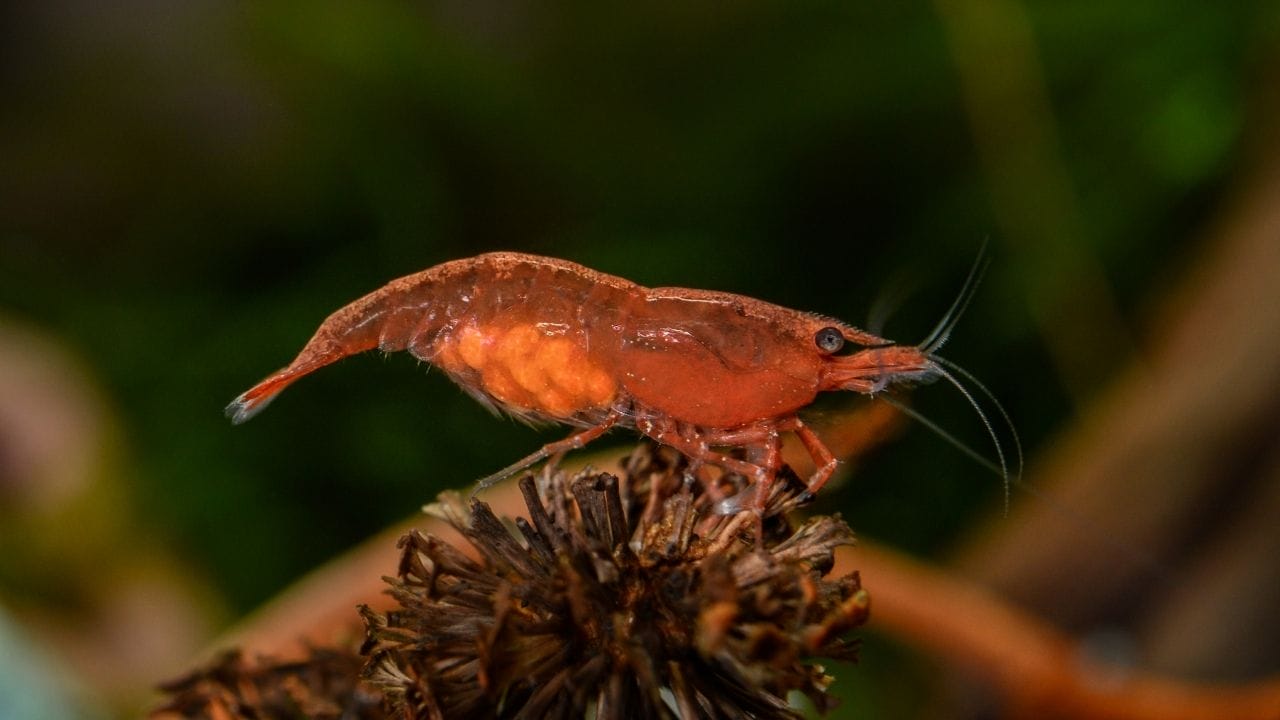
So you want to keep shrimp?
Smart move. These tiny cleaners are like having a maintenance crew that never asks for a raise and actually looks good doing their job.
But here’s the thing – walk into any aquarium store and you’ll see shrimp ranging from $0.50 to $30+ each. Some will survive a nuclear winter, others will keel over if you sneeze near their tank.
As someone who’s kept everything from ghost shrimp to fancy-pants caridinas, let me save you some heartbreak (and cash).
This guide covers the 19 easiest shrimp species that won’t punish you for being new to this whole shrimp-keeping thing.
Why You Should Actually Care About Shrimp
Look, I get it. You probably came here for fish.
But shrimp are genuinely useful. They eat algae, clean up leftover food, and don’t create much waste. It’s like having tiny janitors that work for free.
Plus, watching them scuttle around plants is way more entertaining than you’d think.
The best part? Most beginner shrimp breed like crazy. Buy 10, end up with 100. That’s not a threat, that’s a promise.
The Two Main Types You Need to Know
Before we dive in, here’s the crash course:
Neocaridina shrimp are the hardy ones. They don’t care much about your water parameters as long as you’re not actively trying to poison them. Think pH anywhere from 6.5-8.0, temperatures from 65-78°F. They’re the golden retrievers of the shrimp world.
Caridina shrimp are the picky eaters. They want soft, acidic water and they’ll let you know if something’s off by dying. Not great for beginners, but we’ll cover a few easy ones.
There are also some oddball species that don’t fit either category, but we’ll get to those.
The Copper Situation (This Will Save Your Shrimp’s Lives)
Here’s something nobody tells beginners until it’s too late: copper will murder your shrimp.
Not the trace amounts in shrimp food – that’s actually necessary for their blood (weird, I know). I’m talking about copper in medications and some fertilizers.
Fish have ich? Great, dose that copper medication. Congratulations, you just killed every shrimp in your tank.
The safe copper level for shrimp is below 0.02-0.03 ppm. Most ich medications? They’re pushing 0.15-0.20 ppm. Do the math.
Always check labels. If you see copper sulfate in anything going in your tank, quarantine your fish and treat them separately. Your shrimp will thank you by not floating upside down.
Also, don’t use copper-based algae killers. Just don’t. Get more shrimp instead – they’ll eat your algae for free.
Your Tank Needs to Be Cycled (No Exceptions)
I don’t care how excited you are about your new shrimp. If your tank isn’t cycled, they’re going to die.
Wait 4-6 weeks minimum before adding shrimp. Your beneficial bacteria need time to establish, or ammonia and nitrite will spike and kill everything.
Ammonia and nitrite should be 0 ppm. Nitrates under 20 ppm (10 ppm is better). Test your water. Actually test it – don’t guess.
Most Popular Neocaridina Shrimps As Pets: Infographic

Want to get a printable version of this infographic? Click here! [If you want to use this infographic on your website, please link back to this post as the source!]
The Easiest Shrimp for Beginners (Actually Easy, Not Marketing Easy)
Red Cherry Shrimp
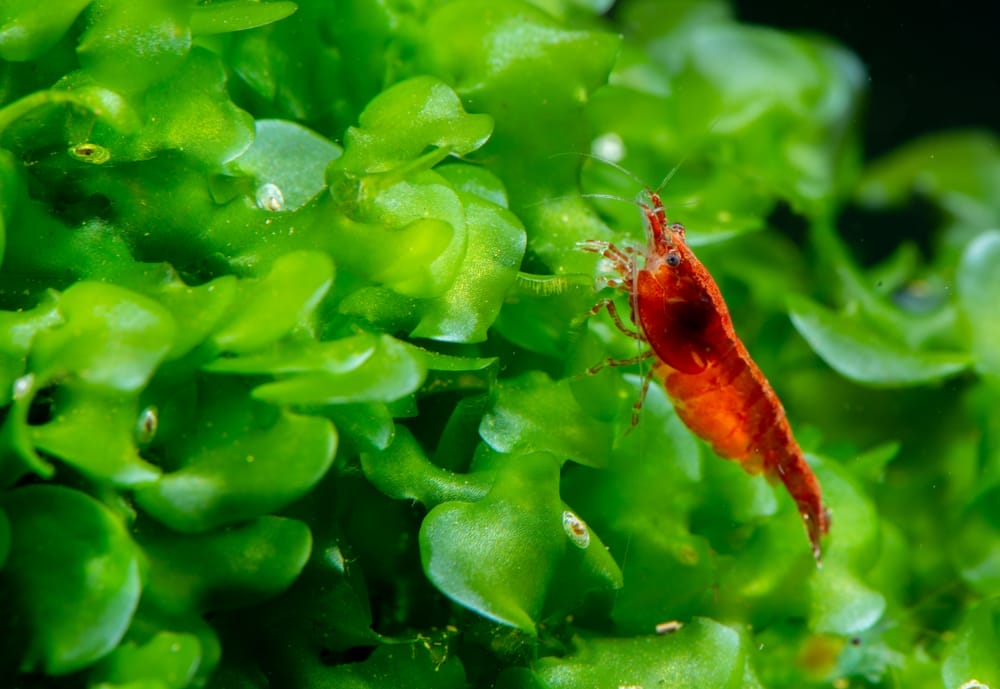
The absolute best starter shrimp, period.
These little red guys are native to Taiwan and they genuinely do not care about your water parameters. pH 6.5-8.0? Fine. Temperature anywhere from 65-85°F? They’ll manage.
Size: 1-1.5 inches
Cost: $3-$9 each (higher grades cost more)
Lifespan: 1-2 years
Difficulty: Easy mode activated
They come in different grades based on how red they are. Lower grades look kinda translucent pink. Fire Red or Painted Fire Red grades are solid opaque red and cost $8-$9 each.
Females are bigger and redder. Males are smaller and patchier. If you want babies (and you will have babies), make sure you get both.
Feed them every other day. They’ll survive on algae and biofilm, but throw in some shrimp pellets to keep them happy. Overfeeding kills more shrimp than underfeeding.
Pro tip: Start with at least 10 shrimp. They’re social and will hide constantly if there’s only 2-3 of them. You’ll think you wasted your money because you never see them.
Ghost Shrimp
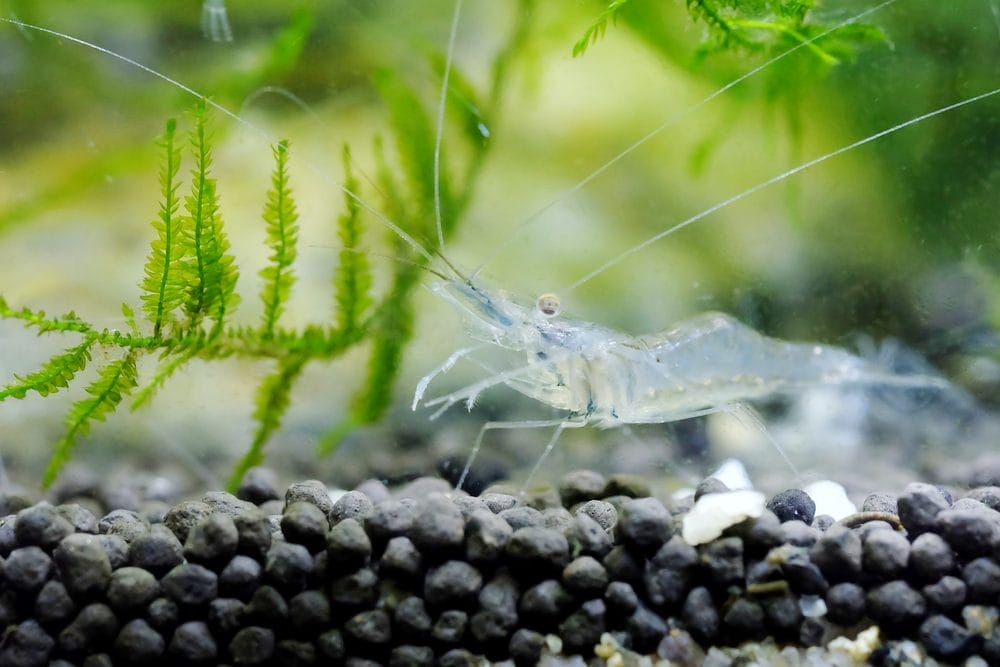
The cheapest option at around $0.50-$3 each.
These guys are completely transparent – you can literally see their organs. It’s cool in a weird biology-class kind of way.
Size: 1.5 inches
Cost: $0.50-$3
Lifespan: 1 year
Difficulty: Easy
Ghost shrimp are often sold as feeder shrimp, which means they’re cheap but the quality varies wildly. Sometimes you get whisker shrimp or even tiny prawns labeled as “ghost shrimp.” It’s a mess.
They’re omnivores and will eat basically anything. Keep the water neutral pH around 7.0-8.0 and they’ll be fine.
Here’s the catch: they’re almost impossible to breed in home aquariums. The larvae need brackish water and specific conditions. So don’t buy ghosts expecting babies.
Also, some ghost shrimp are little jerks who’ll eat smaller shrimp or nip sleeping fish fins. Most are peaceful, but there’s always that one guy.
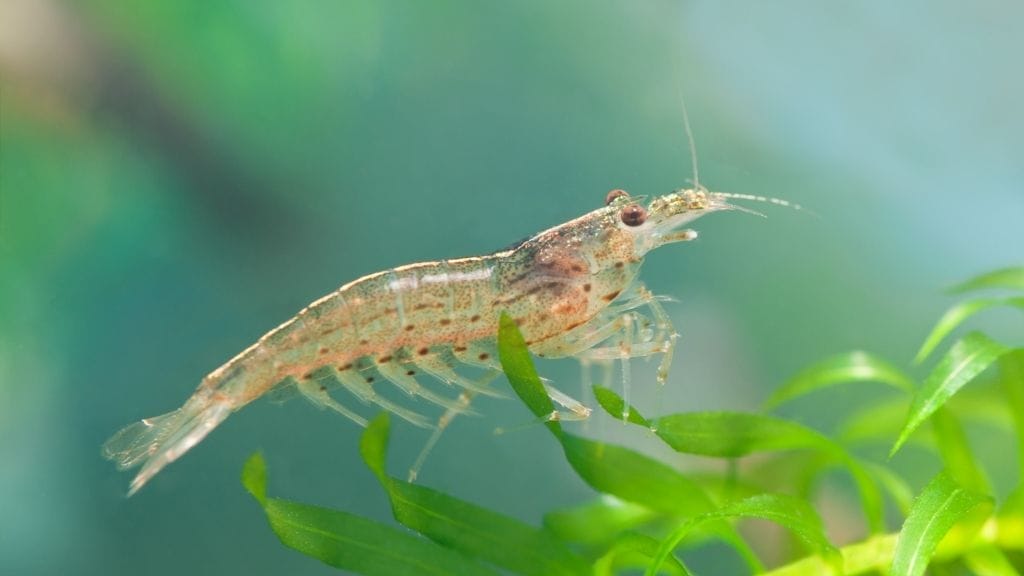
Amano Shrimp
Named after the legendary aquascaper Takashi Amano, these are the best algae eaters in the shrimp world.
Size: Up to 2 inches
Cost: $5-$8 each
Lifespan: 2-3 years
Difficulty: Easy
Amanos are larger than most dwarf shrimp and they’re eating machines. Hair algae? Black beard algae? They’ll tackle it when other shrimp give up.
They’re translucent gray-green with dots or dashes along their sides. Not the prettiest, but they work hard.
Water parameters: pH 6.5-8.0, temperature 65-80°F. They’re hardy and peaceful.
The downside? Super hard to breed. The larvae need brackish water like ghost shrimp. Unless you’re really committed, just enjoy the ones you buy and don’t expect shrimplets.
Keep a tight lid on your tank – Amanos are escape artists who’ll jump if they get the chance.

Blue Dream Shrimp
Basically a blue version of cherry shrimp. Same care, different color.
Size: 1-1.5 inches
Cost: $5-$9 each
Lifespan: 1-2 years
Difficulty: Easy
These guys are deep sapphire blue and they pop against green plants like crazy. Super pretty.
They’re Neocaridina davidi just like cherry shrimp, so all the same care applies. Hardy, easy to breed, tolerant of various water conditions.
You can keep them with other peaceful fish as long as the fish won’t eat them. Small tetras, rasboras, and corydoras work great.
Don’t mix blue dreams with other neocaridina colors (reds, yellows, oranges) unless you want brown wild-type babies. They’ll crossbreed and the offspring lose their fancy colors.
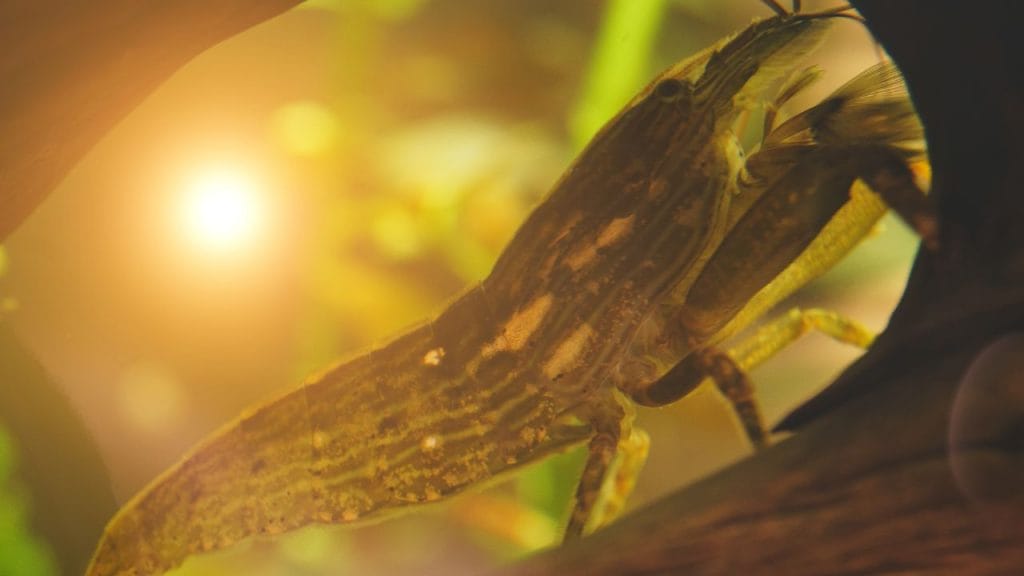
Bamboo Shrimp (Filter Feeders)
These are the gentle giants of the shrimp world at 2-3 inches.
Size: 2-3 inches
Cost: $8-$9
Lifespan: 1-2 years
Difficulty: Easy but different
Bamboo shrimp have “fan hands” that they hold up in the current to catch tiny food particles. It’s adorable.
They’re peaceful, they don’t eat algae like other shrimp (they’re filter feeders), and they need moderate current to thrive.
Water: pH 6.5-8.0, temperature 70-78°F.
Feeding is the tricky part. In a well-established tank with good water flow, they’ll catch enough food naturally. You can also target-feed them powdered foods like baby fish food using a pipette.
Don’t try breeding them. It won’t work in captivity.

Bloody Mary Shrimp
Like cherry shrimp but even redder – completely opaque blood-red.
Size: 1-1.5 inches
Cost: $8-$9 each
Lifespan: 1-2 years
Difficulty: Easy
These are Neocaridina davidi variants, so care is identical to cherry shrimp. They’re just selectively bred for that intense red color.
Peaceful, easy to breed, and they’ll clean your tank like champions. Can live in tanks as small as 5 gallons.
Temperature 65-80°F works fine. They’re not picky.
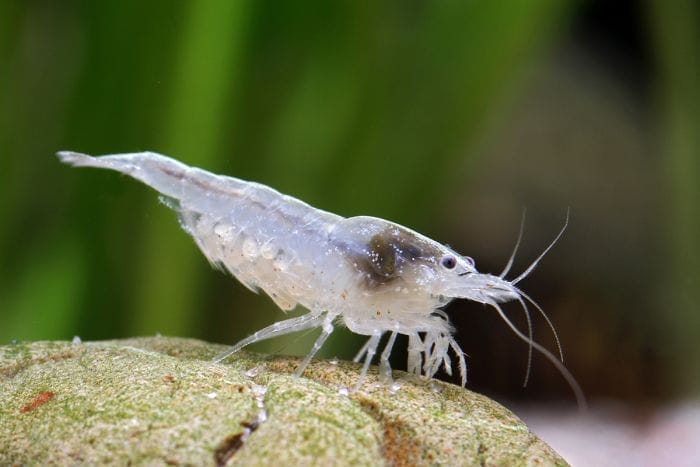
Snowball Shrimp
Pure white shrimp with a slight blue tint. They’re stunning.
Size: 1-1.5 inches
Cost: $5
Lifespan: 1-2 years
Difficulty: Easy
Another Neocaridina species, so you know the drill by now. Hardy, adaptable, breeds easily.
A dark substrate makes them pop visually – black sand or soil makes white shrimp look incredible.
They’re scavengers so they’ll clean up leftover food and algae. A mature planted tank is basically an all-you-can-eat buffet for them.

Orange Pumpkin Shrimp
Bright orange shrimp that look great in planted tanks.
Size: 1-1.5 inches
Cost: $5-$6
Lifespan: 1-2 years
Difficulty: Easy
Guess what – another Neocaridina. Orange variety this time.
Same care as cherry shrimp. They’re affordable, breed quickly, and add a nice pop of color without being difficult.
Remember: don’t mix different neocaridina colors unless you want wild-type brown babies.
Intermediate Shrimp (Still Beginner-Friendly But Need Attention)

Rili Shrimp
These have a transparent mid-section with colored head and tail. Super cool looking.
Size: 1-1.5 inches
Cost: $6-$10
Lifespan: Up to 2 years
Difficulty: Easy
Rilis are Neocaridina variants, so they’re hardy. The transparent section is what makes them “rili” – it’s not a defect, it’s the whole point.
They tolerate a huge temperature range (59-86°F) but do best around 72-78°F. KH 1-8, GH 4-10.
Easy breeders, peaceful, good for community tanks.

Green Jade Shrimp
Lime green to deep emerald depending on the individual.
Size: 1-1.5 inches
Cost: $5-$7
Lifespan: 1-2 years
Difficulty: Easy
More Neocaridina davidi. Notice a pattern here?
They look amazing in tanks with lots of red plants – the color contrast is chef’s kiss.
Hardy, easy to care for, breed readily. Standard neocaridina care applies.
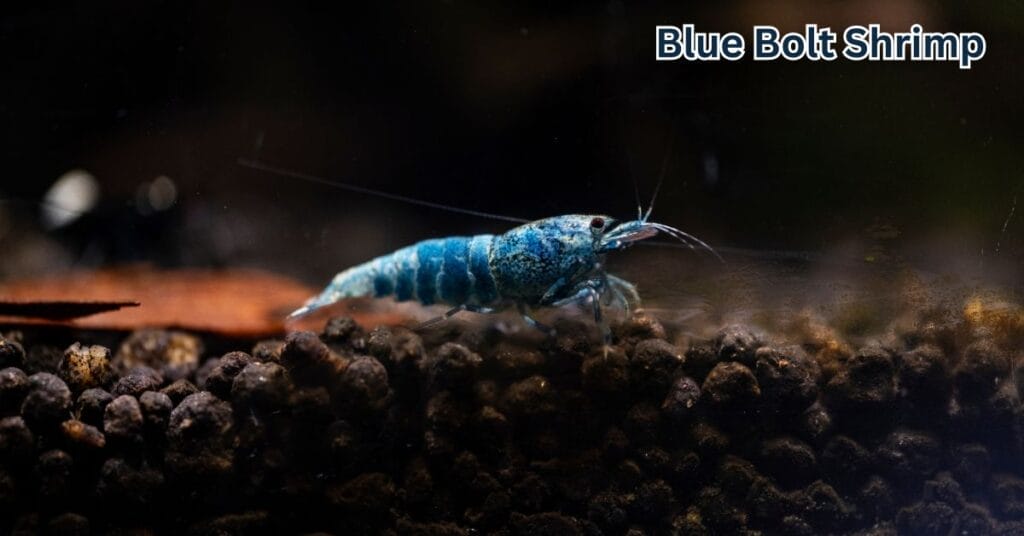
Blue Bolt Shrimp
Now we’re getting into Caridina territory. These need more care.
Size: 1-1.25 inches
Cost: $16+ each
Lifespan: 1-2 years
Difficulty: Medium
Blue bolts are beautiful – blue and white coloration with no two looking the same.
But they’re sensitive to water changes. You need pH around 5.5-6.5, KH 0-1, soft water. That means RO water and remineralizing salts for most people.
If those numbers scare you, stick with neocaridinas for now.
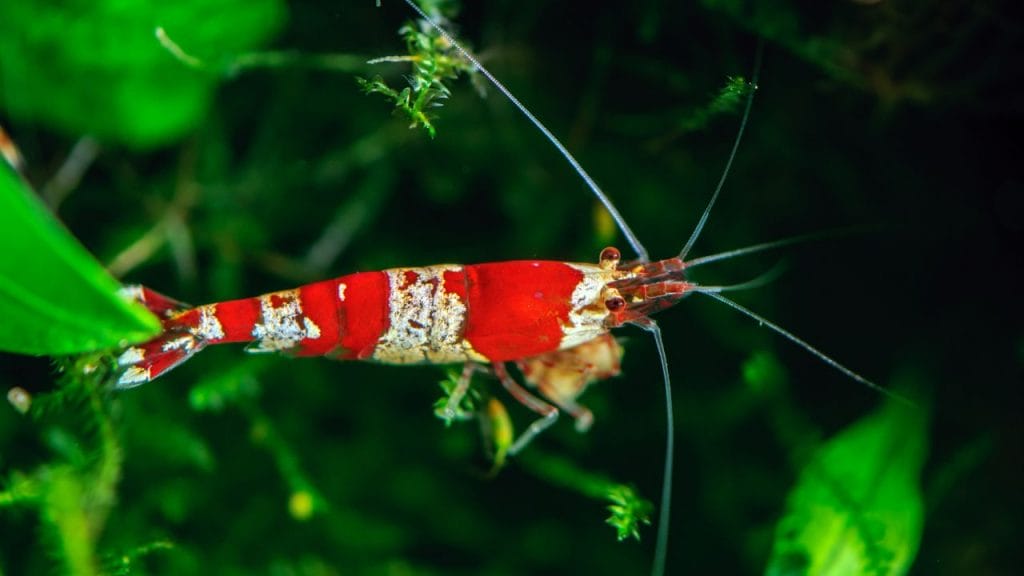
Crystal Red Shrimp
Red and white striped shrimp that are absolutely gorgeous.
Size: 1-1.5 inches
Cost: $8-$40+ depending on grade
Lifespan: 18-24 months
Difficulty: Medium-Hard
These are not beginner shrimp despite what some sellers say. They need soft, acidic water (pH 6.0-6.8, GH 4-6, KH 0-2).
You’ll need RO water, active buffering substrate, and consistent parameters. Any ammonia spike will kill them.
High-grade crystals with perfect banding patterns cost serious money. Lower grades are cheaper but still picky about water quality.
If you nail the parameters, they breed well. But “nailing the parameters” is the hard part.
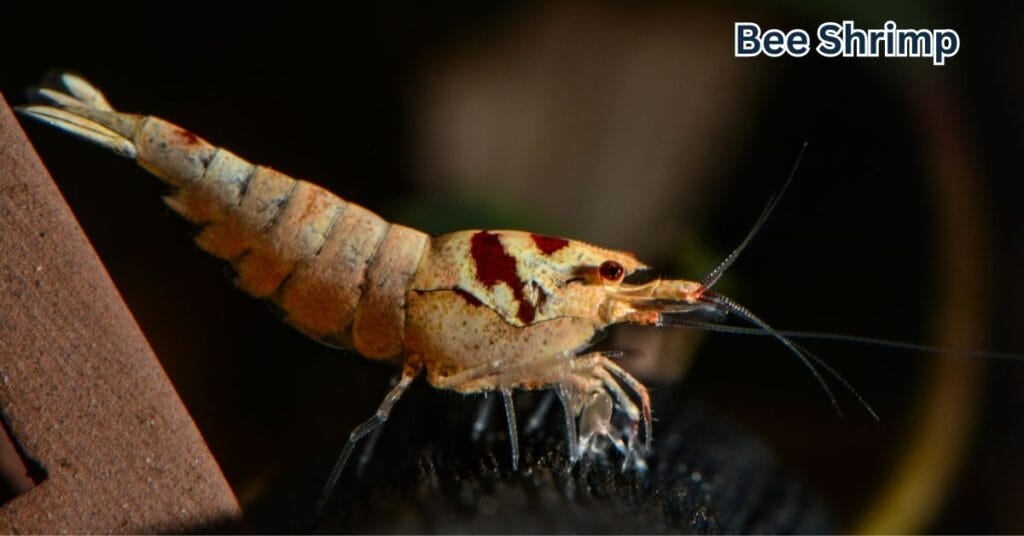
Bee Shrimp
These come in brown/white, red/white, or black/white patterns.
Size: 1.5 inches
Cost: $9
Lifespan: 18-24 months
Difficulty: Easy-Medium
Bee shrimp can’t live in hard water. Keep KH 0-2 or they’ll struggle to molt and die.
They’re peaceful scavengers who’ll clean up algae and leftovers. Easy to breed once you’ve got the water right.
Not the hardest caridina to keep, but harder than any neocaridina.
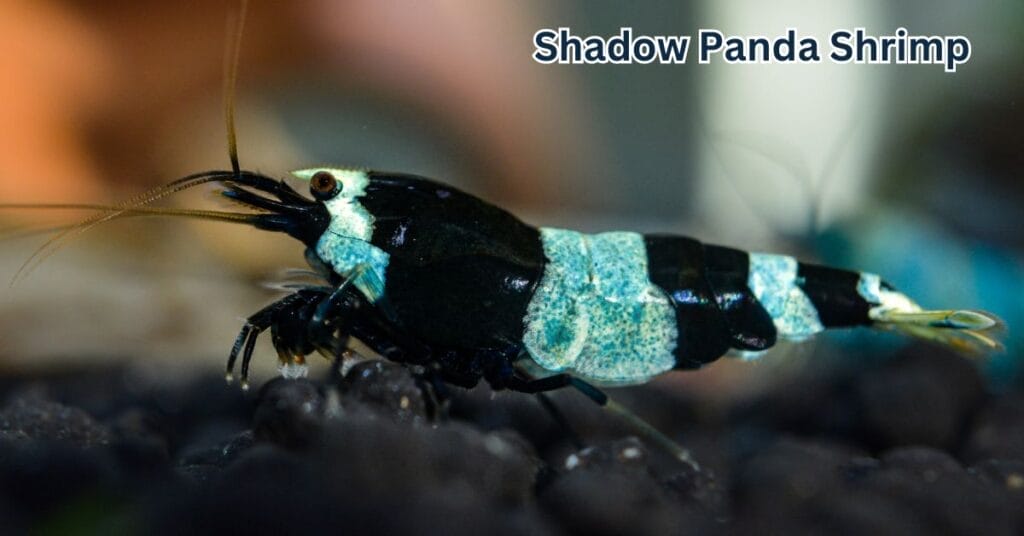
Panda Shrimp
Black and white striped like a tiny panda bear.
Size: 0.25-0.5 inches
Cost: $7
Lifespan: 18-24 months
Difficulty: Medium
These are bee shrimp variants, so same care requirements. Soft acidic water, stable parameters.
They’re tiny – like really small. Keep them with other shrimp only, no fish. Anything bigger will eat them.
pH 5.5-7.0, GH 3-6, KH 0-2, temperature 68-72°F (cooler than most shrimp).
Shrimp to Avoid as a Beginner
Sulawesi Shrimp need very specific hard, alkaline water (pH 7.8-8.2) and warm temperatures (78-84°F). They’re beautiful but sensitive.
Bumblebee Shrimp are saltwater shrimp that need completely different care. Not for freshwater tanks.
Cardinal Sulawesi and other Sulawesi variants are new to the hobby, expensive, and hard to find. Pass for now.
Any shrimp labeled “Taiwan Bee,” “King Kong,” or with fancy-sounding names usually means expensive and difficult. Start simple.
Tank Setup Basics
Size
Minimum 5 gallons for dwarf shrimp. 10 gallons is better because it’s more stable.
Larger shrimp like bamboo need 20+ gallons.
More water = more stable parameters = happier shrimp.
Filtration
Sponge filters are your friend. They provide gentle filtration and won’t suck up baby shrimp.
If you use HOB or canister filters, put a sponge pre-filter over the intake. Otherwise you’ll find shrimp and shrimplets getting vacuumed up.
Low flow is key. Shrimp don’t like being blasted around the tank.
Substrate
Dark substrate makes colored shrimp pop. Black sand, black gravel, or dark aqua soil all work.
For neocaridinas, use inert substrate (sand, gravel). They don’t need buffering soil.
For caridinas, use active substrate like ADA Amazonia or SL-Aqua that buffers pH down and softens water.
Plants
Load your tank with plants. Java moss, Anubias, Java fern, Marimo moss balls – all great.
Plants provide hiding spots, surfaces for biofilm (shrimp food), and help stabilize water parameters.
Heavily planted = happy shrimp.
Water Parameters You Actually Need to Monitor
| Parameter | Neocaridina | Caridina |
|---|---|---|
| Temperature | 68-78°F | 68-74°F |
| pH | 6.5-8.0 | 5.5-6.8 |
| GH | 6-12 dGH | 4-6 dGH |
| KH | 1-8 dKH | 0-2 dKH |
| Ammonia | 0 ppm | 0 ppm |
| Nitrite | 0 ppm | 0 ppm |
| Nitrate | Under 20 ppm | Under 10 ppm |
Neocaridinas tolerate a wide range. Caridinas want specific numbers.
Test your water weekly when you’re new. Once your tank is stable, bi-weekly is fine.
Feeding Your Shrimp
Shrimp are scavengers. In a planted tank with algae, they’ll find plenty to eat.
Feed 2-3 times per week in small amounts. I’m talking a dime-sized portion for 10 shrimp.
Good foods:
- Shrimp pellets (Hikari Shrimp Cuisine, Fluval Shrimp Granules)
- Blanched vegetables (zucchini, spinach, cucumber)
- Algae wafers
- Biofilm (grows naturally on plants and hardscape)
Remove uneaten food after a few hours. Overfeeding crashes water quality faster than anything.
Some people feed once a day. I think that’s overkill and leads to nitrate spikes. Shrimp are tiny – they don’t need much.
Breeding (It’s Going to Happen Whether You Want It To)
Neocaridinas breed like rabbits on steroids.
You need:
- At least one male and one female (buy 10 to guarantee both)
- Stable water parameters
- Good food
- That’s literally it
Females get “berried” – you’ll see eggs under their tail. After about 30 days, tiny shrimplets appear.
They’re born as miniature adults, no larval stage. They eat the same food as parents.
Don’t panic when shrimp molt and leave their old shell. Leave the shell in the tank – other shrimp eat it for calcium.
If you want to maximize survival:
- Lots of moss for babies to hide in
- No fish that’ll eat shrimplets
- Well-established tank with biofilm
Common Beginner Mistakes
Buying only 2-3 shrimp – They’ll hide constantly. Get 10 minimum.
Not cycling the tank – Ammonia spikes = dead shrimp. Wait the full 4-6 weeks.
Rapid water changes – Shrimp freak out when parameters shift suddenly. Do 10-20% weekly changes max, match temperature and pH.
Choosing all females – Females are prettier and more colorful, so beginners grab all females. Then wonder why there’s no babies. Get males too (they’re smaller and less colorful).
Overfeeding – More food = more waste = nitrate spike = dead shrimp. Feed less than you think.
Using copper-based medications – Check labels. Copper kills invertebrates.
Inadequate hiding spots – Shrimp feel vulnerable in bare tanks. Add plants, rocks, driftwood.
Mixing neocaridina colors – They’ll breed and give you brown wild-type offspring. Keep colors separate.
Tank Mates That Won’t Murder Your Shrimp
Good choices:
- Small rasboras (Chili, Lambchop, Harlequin)
- Small tetras (Ember, Neon, Cardinal)
- Corydoras catfish
- Otocinclus catfish
- Small peaceful snails (Nerite, Mystery)
- Other shrimp of compatible species
Bad choices:
- Bettas (some work, most eat shrimp)
- Angelfish
- Cichlids (any kind)
- Large barbs
- Goldfish
- Anything with a mouth big enough to eat a shrimp
When in doubt, assume the fish will eat your shrimp. They usually do.
The safest bet? Shrimp-only tanks. No worrying about predators, more babies survive, you can actually watch them without fish stealing food.
What You Actually Need to Get Started
Shopping list for a basic 10-gallon shrimp tank:
- 10-gallon tank ($20)
- Sponge filter ($10)
- Small air pump ($15)
- Heater if your room isn’t 70-75°F ($20)
- Substrate – sand or gravel ($15)
- Plants – start with java moss ($10)
- Water test kit (API Master Kit, $30)
- Water conditioner ($10)
- 10+ shrimp (prices vary, budget $50-90)
Total: Around $180-200 to get started properly.
You can go cheaper with smaller tanks or more expensive with better equipment. This is the realistic middle ground.
Final Thoughts: Just Start With Cherry Shrimp
Look, I’ve given you 19 options. You’re probably overwhelmed.
Here’s my actual advice: Buy 10 red cherry shrimp and a 10-gallon planted tank.
They’re cheap, they’re hardy, they breed easily, and they’ll teach you everything about shrimp keeping without punishing you for mistakes.
Once you’ve kept cherries alive for 6 months and you’re swimming in babies, then try fancier species.
But seriously, start simple. The aquarium hobby is full of people who jumped into expensive livestock too fast and burned out when things died.
Cherry shrimp are the training wheels. Use them.
Now go cycle a tank and don’t add shrimp until it’s ready. Your future self will thank you.
About Author
Hello, I’m Muntaseer Rahman, the owner of AcuarioPets.com. I’m passionate about aquarium pets like shrimps, snails, crabs, and crayfish. I’ve created this website to share my expertise and help you provide better care for these amazing pets.
Disclaimer
This site is owned and operated by Muntaseer Rahman. AcuarioPets.com is a participant in the Amazon Services LLC Associates Program, an affiliate advertising program designed to provide a means for sites to earn advertising fees by advertising and linking to Amazon.com. This site also participates in other affiliate programs and is compensated for referring traffic and business to these companies.