This post was created with help from AI tools and carefully reviewed by a human (Muntaseer Rahman) . For more on how we use AI on this site, check out our Editorial Policy.
Check Out These FREE Tools We Made JUST For You!
Bacter AE Dosage: How Much Per Gallon (Without Killing Your Shrimp)
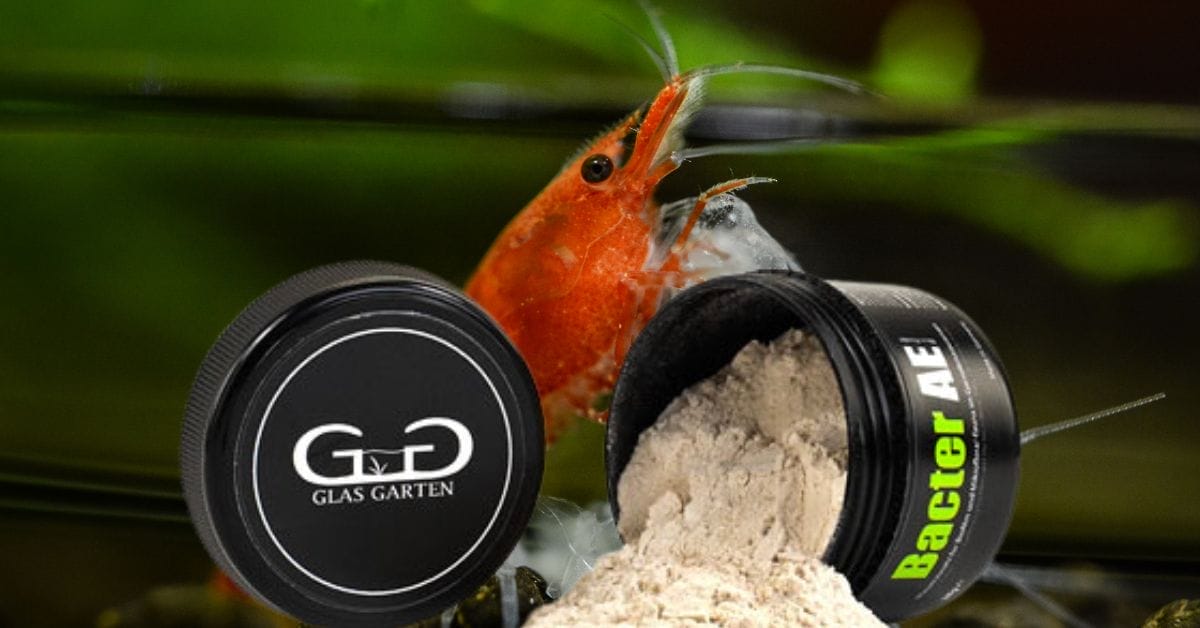
You bought Bacter AE (the GlasGarten supplement I dose my shrimp tanks with) because someone in a shrimp group swore it doubled their baby survival rate.
Then you read three other comments calling it “the silent killer.” Cool. Very reassuring.
Here is the truth nobody puts in the headline. Bacter AE does not kill shrimp. Overdosing Bacter AE kills shrimp. The powder is fine. Your scoop is the problem.
So before we get into what it is and why it has a scary reputation, let’s answer the thing you actually came here for. How much do you use, and how often.
Bacter AE Dosage Per Gallon (The Quick Answer)
Forget the official chart for a second. Here is what experienced shrimp keepers actually dose, based on how packed your tank is.
| Stocking level | Shrimp per gallon | Dose | How often |
|---|---|---|---|
| Lightly stocked | 1-4 | 1/8 scoop | 1-2 times a week |
| Normally stocked | 5+ | 1/4 scoop | 1-2 times a week |
| Heavily stocked | 10+ | up to 1/2 scoop | 1-2 times a week |
The measuring spoon in the box holds about 0.5 grams when level. So a 1/8 scoop is roughly a pinch. We are talking tiny amounts here.
If you prefer to think in grams per tank, here is the same idea by tank size for a single application.
| Tank size | Per application |
|---|---|
| 5 gallon | 0.09 g |
| 10 gallon | 0.19 g |
| 15 gallon | 0.27 g |
| 20 gallon | 0.37 g |
| 25 gallon | 0.45 g |
Notice these numbers are small. That is on purpose. You can always add more next time. You cannot un-dose a tank.
How Often Should You Use Bacter AE?
Short version: 1 to 2 times a week is plenty for most tanks.
Bacter AE is not a daily food. Its whole job is to kickstart biofilm and bacteria. Once that colony gets going, it keeps going on its own.
Dosing it every single day is how people crash their water. The bacteria bloom, they eat oxygen, and your shrimp pay for it.
If your tank is brand new and you are trying to build up biofilm fast, you can dose a little more often for the first couple of weeks. After that, back off.
Start At Half Dose For The First Week
Here is the rule that saves shrimp.
Whatever dose you land on, cut it in half for the first week.
Your tank needs time to adjust to the new bacterial load. Slamming a mature dose into a tank that has never seen Bacter AE is asking for an ammonia spike.
Go slow, watch your shrimp, then ramp up. Boring advice. Also the advice that keeps your colony alive.
What The Official GlasGarten Dosage Says
GlasGarten, the company that makes Bacter AE, gives its own chart. It is built for 120 liters, or about 25 gallons.
Here is the starter dose for your first week.
| Stocking level | Recommended dose |
|---|---|
| Heavily stocked | 1/2 scoop, twice a day |
| Normally stocked | 1 scoop, once a day |
| Lightly stocked | 1/4 scoop, once a day |
And here is what they bump it up to after the first week.
| Stocking level | Recommended dose |
|---|---|
| Heavily stocked | 1 scoop, twice a day |
| Normally stocked | 1 scoop, once a day |
| Lightly stocked | 1 scoop, once a day |
Look at those numbers, then look back at the breeder chart up top.
The official dose is way heavier. Most long-time shrimp keepers think GlasGarten’s recommendation is too much, and they dose a fraction of it. That gap is exactly where the “silent killer” reputation comes from.
Why Overdosing Bacter AE Kills Shrimp
This is the part that earned it the scary nickname. So let’s actually explain the mechanism instead of just repeating the fear.
Bacter AE’s main job is to grow biofilm and bacteria. That is the point of it.
When you overdose, you get a biofilm bloom. All that bacteria explodes at once.
Bacteria breathe. A giant bacterial bloom sucks the dissolved oxygen right out of your water.
Low oxygen is what kills the shrimp. Not poison, not toxins, just suffocation while you weren’t looking.
On top of that, when oxygen crashes, your beneficial nitrifying bacteria struggle too. That is why people see an ammonia or nitrite spike a day or two after a heavy dose.
So nothing in the bottle is dangerous. The danger is dumping in too much fuel and starving the tank of oxygen.
Warning Signs You Overdosed
Catch it early and you can save the tank. Here is what to watch for after dosing.
- Cloudy or hazy water that shows up within a day
- Shrimp gathering near the surface or the filter outflow, gasping for oxygen
- A bacterial film or slick on the water surface
- Sudden shrimp deaths with no other obvious cause
- An ammonia or nitrite reading where there was none before
If you see any of this, act fast. We’ll cover the fix next.
What To Do If You Overdose
Do not panic and do not do nothing. Do this.
1. Do a water change right away. A 30 to 50 percent change with dechlorinated, temperature-matched water dilutes the load fast.
2. Crank up the aeration. Add an air stone or bump your sponge filter. You are racing to get oxygen back in.
3. Stop dosing. Obvious, but worth saying. Give the tank a week to settle before you even think about Bacter AE again.
4. Test your water. Check ammonia and nitrite so you know whether the bloom is messing with your cycle.
A quick water change is the single best thing you can do here. It is the shrimp keeper’s reset button.
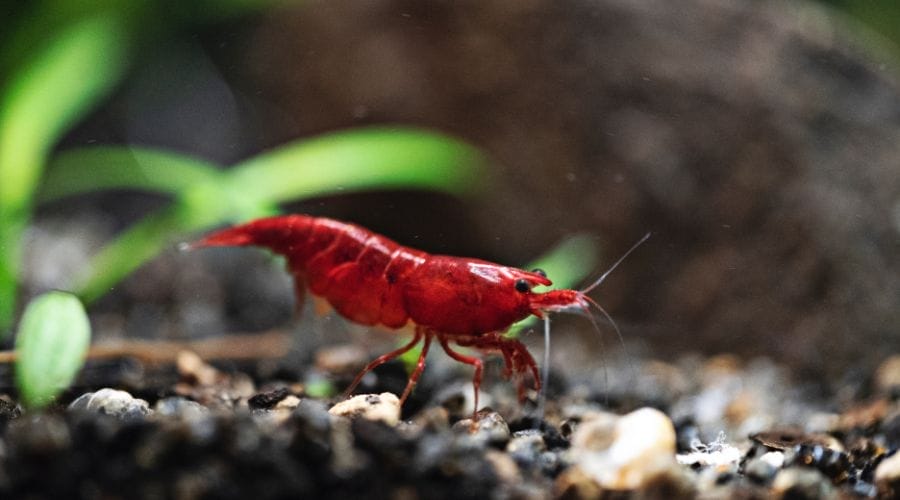
What Is Bacter AE, Anyway?
Now that you know how to dose it safely, here is the background.
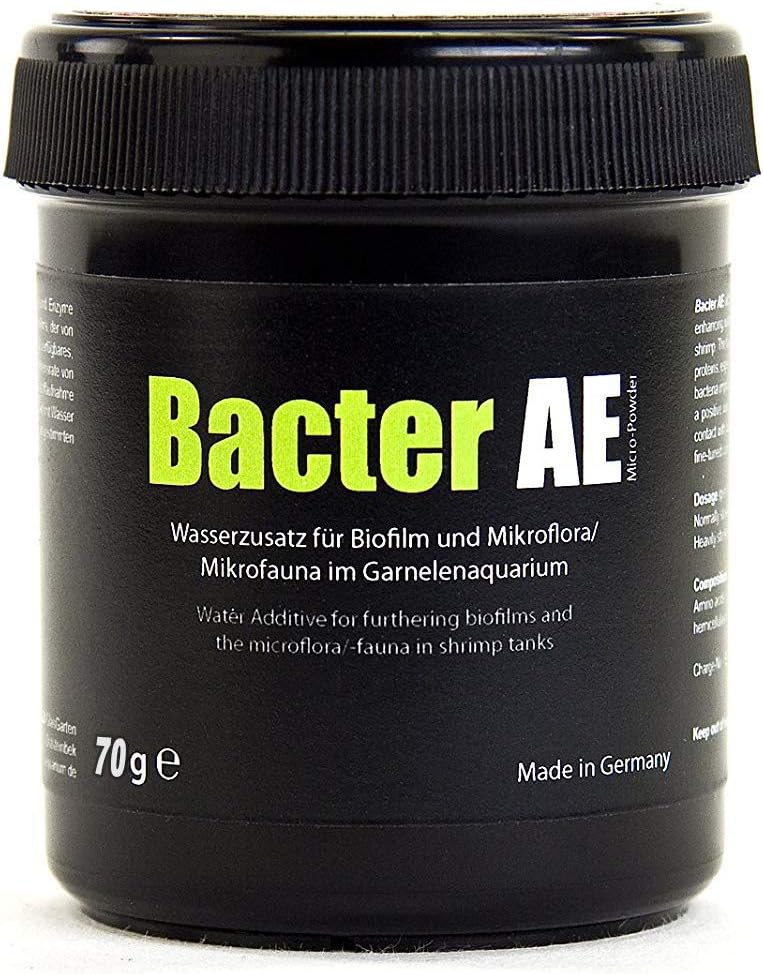
Bacter AE is a white powder water additive made for shrimp tanks. It is mostly dried biofilm and microorganisms.
You sprinkle a tiny bit in, and it feeds and grows the bacterial colony your shrimp graze on all day.
It is packed with freeze-dried microbes, probiotic bacteria, enzymes, and amino acids. Every box comes with a little measuring spoon that holds about 500 mg.
Think of it as fertilizer for the microscopic stuff shrimp actually eat. It is a supplement, not a staple food. Your shrimp still need real food and a balanced diet.
What’s Actually In Bacter AE?
People ask if the ingredients are dangerous. They aren’t. Here is the rundown.
- Amino acids dissolve fast and help shrimp digestion.
- Polysaccharides feed beneficial bacteria and support the immune system.
- Amylase, protease, glucanase, xylanase, hemicellulase are all enzymes that aid digestion and break down nutrients.
- Lactobacillus is a probiotic that boosts digestive power, great for baby shrimp.
- Bacillus subtilis grows beneficial bacteria and helps water quality.
None of these hurt shrimp. Every problem with Bacter AE comes from the amount you add, not what is in it.
Is Bacter AE Good For Shrimp?
When you dose it right, yes. It genuinely earns the hype.
- It improves water quality over time
- It grows biofilm, which is your shrimp’s favorite natural snack
- It supports digestion and overall health
- It boosts the survival rate of baby shrimp, which is the main reason breeders swear by it
That last one is the big deal. Shrimplets that have steady biofilm to graze on are far more likely to make it to adulthood.
A Few Extra Tips To Keep It Safe
Small habits that keep Bacter AE on the helpful side of the line.
- Never use expired powder. If you see mold or discoloration, toss it.
- Store the container at room temperature, sealed tight.
- Always run decent aeration when you dose.
- Add a few alder cones or some leaf litter to your tank. They give biofilm more surface to grow on, so the bacteria spread out instead of blooming all at once.
So, Is Bacter AE The Silent Killer?
No. The silent killer is the heavy hand holding the scoop.
Dose small, dose once or twice a week, start at half for the first week, and keep your tank aerated. Do that and Bacter AE is one of the best things you can add to a shrimp tank.
Overdose it and yeah, it’ll quietly wipe out your colony while you wonder what went wrong.
Now that your supplement game is sorted, make sure the rest of the diet is too. Here’s our guide to the best shrimp foods for proper growth and breeding.
About Author
Hello, I’m Muntaseer Rahman, the owner of AcuarioPets.com. I’m passionate about aquarium pets like shrimps, snails, crabs, and crayfish. I’ve created this website to share my expertise and help you provide better care for these amazing pets.
Disclaimer
This site is owned and operated by Muntaseer Rahman. AcuarioPets.com is a participant in the Amazon Services LLC Associates Program, an affiliate advertising program designed to provide a means for sites to earn advertising fees by advertising and linking to Amazon.com. This site also participates in other affiliate programs and is compensated for referring traffic and business to these companies.