This post was created with help from AI tools and carefully reviewed by a human (Muntaseer Rahman) . For more on how we use AI on this site, check out our Editorial Policy.
Check Out These FREE Tools We Made JUST For You!
Crayfish Tank Mates: Will Your Crayfish Eat Your Fish? (Probably Yes)

Look, I’m just going to say it upfront: keeping crayfish with other fish is like inviting a bear to a buffet and expecting it to stick to the salad bar.
But I get it. A tank with just one crayfish can feel pretty empty. So let’s talk about how to make this work—if you’re willing to accept some risk.
The Brutal Truth About Crayfish Behavior
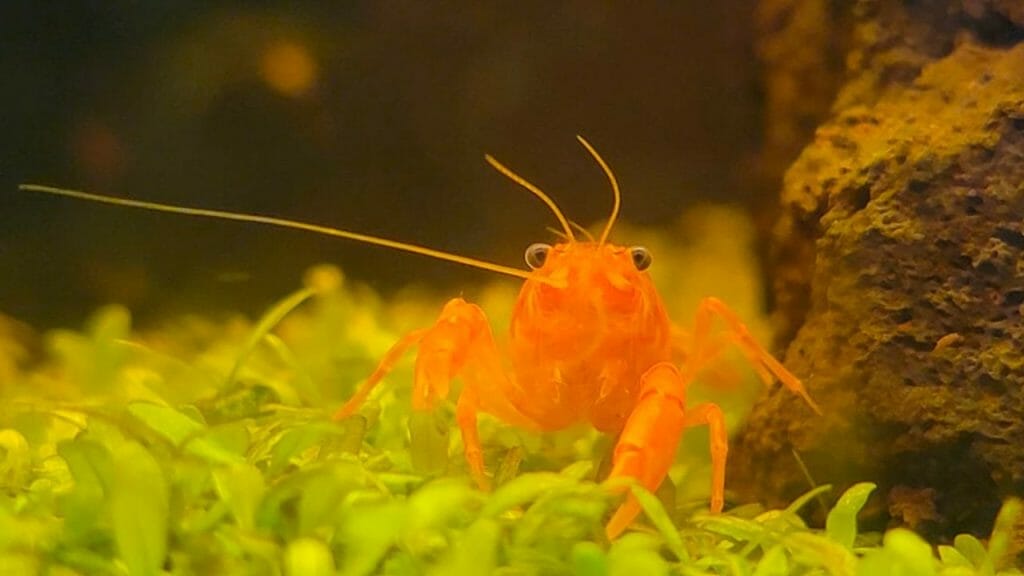
Here’s what nobody tells you at the pet store: crayfish are opportunistic predators.
If they can catch it, they will absolutely eat it. That’s not because your crayfish is mean—it’s because that’s literally what they’re programmed to do. They’re basically tiny armored tanks with claws, and they see everything that moves as either a threat or dinner.
And here’s the kicker: crayfish are nocturnal hunters. While your pretty fish are sleeping peacefully on the bottom at night, your crayfish is wide awake, prowling around with those claws ready.
One forum user said it perfectly: “I will never forget the horror of seeing HALF a panda cory swimming when I kept my first crayfish in a community setup.”
Yeah. That’s the reality we’re dealing with here.
Standard Crayfish vs Dwarf Crayfish: It Actually Matters

Before we go any further, you need to know which type of crayfish you’re dealing with.
Standard crayfish (like the blue crayfish, cherry lobster, or Australian red claw) can grow up to 8-9 inches long. These guys are basically aquarium bullies. They’ll eat anything, destroy your plants, and reorganize your substrate like they’re on an HGTV renovation show.
Dwarf crayfish (Cambarellus species, especially the orange Mexican dwarf crayfish or CPO) max out at about 2 inches. They’re way less aggressive—though don’t be fooled into thinking they’re angels. They’ll still pinch, fight over food, and occasionally snack on a slow shrimp.
The difference is huge. Dwarf crayfish can actually work in community tanks. Standard crayfish? That’s way harder.
The Golden Rules for Crayfish Tank Mates
If you’re determined to keep tank mates with your crayfish, here are the non-negotiables:
Rule 1: Fast Swimmers Only
Your fish needs to be quick enough to dart away from those claws.
Slow-moving fish like bettas, angelfish, or fancy goldfish are basically crayfish snacks waiting to happen.
Rule 2: Surface Dwellers Are Safer
Crayfish are bottom dwellers and rarely swim to the surface.
Fish that hang out at the top of the tank have a much better chance of survival. Think hatchetfish, killifish, or surface-level swimmers.
Rule 3: Never Bottom Dwellers
This should be obvious, but I’ll say it anyway: no bottom-dwelling fish.
Corydoras, plecos, loaches, and other substrate fish are living in the crayfish’s territory. They’re sitting ducks—especially when they sleep.
Rule 4: No Fancy Fins
Those beautiful flowing fins on fancy guppies? The crayfish sees them as grab handles.
Stick with regular, streamlined fish that don’t have long, dragging tails.
Rule 5: Similar Water Parameters
Your tank mates need to thrive in the same conditions as your crayfish.
Most crayfish like cooler water (65-75°F), neutral to slightly alkaline pH (6.5-8.0), and moderate hardness.
Best Tank Mates for Standard Crayfish
Alright, here’s the reality: there are no “safe” tank mates for standard crayfish. But these have the best survival odds:
Top Tier Choices
Hatchetfish – These guys literally live at the surface and never come down. Their weird, flat bodies make them hard to catch. Just make sure you have a tight lid because they’re jumpers.
Giant Danios – Fast, mid-to-upper swimmers that rarely venture to the bottom. They can grow up to 6 inches, which makes them harder targets.
Golden Wonder Killifish – Surface dwellers with attitude. They’re large enough (4 inches) that the crayfish won’t mess with them.
Red Tail Shark – Here’s the wild card. They’re bottom dwellers BUT they’re aggressive enough to defend themselves. Only works if the shark is larger than the crayfish.
Middle Tier (Higher Risk)
Rainbowfish – Fast swimmers that stay near the top, but they sometimes venture down where trouble lives.
Barbs – Quick and active, but some species like tiger barbs can be nippy themselves. Cherry barbs work better.
White Cloud Mountain Minnows – Great for unheated tanks, but they’re small (1.5 inches) and sometimes go to the bottom when looking for cooler water.
The Livebearer Strategy
Here’s the sneaky approach some keepers use: livebearers like guppies, mollies, and platies.
They reproduce so fast that the crayfish can’t keep up with the population. Every 30 days, your guppies can pop out 20-50 babies. So yeah, the crayfish might grab a few, but you’ll still have a growing population.
Important: Don’t get fancy guppies with those huge, flowing tails. Get the plain, fast ones.
Best Tank Mates for Dwarf Crayfish
Dwarf crayfish are way more forgiving. Here’s what actually works:
Neon Tetras – Small, fast, mid-level swimmers. Many keepers report zero issues.
Ember Tetras – Even smaller than neons, but they school together which provides safety in numbers.
Chili Rasboras – Tiny, peaceful, and stay in the middle-to-upper levels.
Sparkling Gouramis – Beautiful, peaceful, and they hang out near the surface.
Harlequin Rasboras – Hardy, peaceful, and fast enough to avoid trouble.
Amano Shrimp – Here’s the surprise: many dwarf crayfish keepers report success with larger shrimp. Amanos are big enough and fast enough to avoid becoming snacks.
Nerite Snails – They seem to work fine with dwarf crayfish. The crays mostly ignore them.
One keeper said it best: “I have 3 dwarf crayfish with red cherry shrimp and haven’t had problems. The shrimp are too fast.”
Fish That Will NEVER Work
Let’s save you some heartbreak. These fish are guaranteed disasters:
| Fish Type | Why It Won’t Work |
|---|---|
| Bettas | Slow swimmers with fancy fins = easy targets |
| Shrimp (with standard crayfish) | It’s like putting a chicken nugget in the tank |
| Corydoras | Bottom dwellers that sleep on the substrate = midnight snacks |
| Plecos | Also bottom dwellers, plus they’re slow |
| Any Bottom Feeder | They’re literally living in the crayfish’s hunting ground |
| Snails (with standard crayfish) | Crunchy treats |
| Slow Goldfish | Way too slow, often sleep near bottom |
What About Monster Fish?
Plot twist: sometimes the crayfish becomes the meal.
If you keep crayfish with Oscars, cichlids, Arowanas, or other large aggressive fish, your crayfish will disappear. Especially during molting when they’re vulnerable and soft.
One keeper put 24 feeder minnows in with a 5-inch crayfish overnight. By morning, only 4 were left. Then they tried it the other way and put the crayfish with aggressive cichlids. The crayfish lasted two days.
Can You Keep Two Crayfish Together?
Short answer: not recommended.
Crayfish are territorial and aggressive toward each other. They will fight to the death.
If you absolutely must try it, you need at least a 40-gallon tank, multiple hiding spots (5-6 caves minimum), and visual barriers everywhere. Even then, fights can still happen.
Dwarf crayfish are slightly more tolerant of each other, but males will still fight. One keeper noted: “Dwarf crayfish babies are also very aggressive. Especially larger ones to smaller ones.”
The Molting Problem Nobody Talks About
Here’s something critical: when crayfish molt, they’re completely vulnerable.
They shed their old shell and spend days without protection while the new one hardens. During this time, even peaceful fish might pick on them — a leading cause of post-molt mortality.
This works both ways. Your crayfish can become prey when molting, but they’re also extra stressed and might be MORE aggressive before and after.
You need multiple hiding spots where your crayfish can molt in peace.
How to Increase Tank Mate Survival (Practical Tips)
If you’re going ahead with this, here’s how to maximize success:
Tank Setup Matters
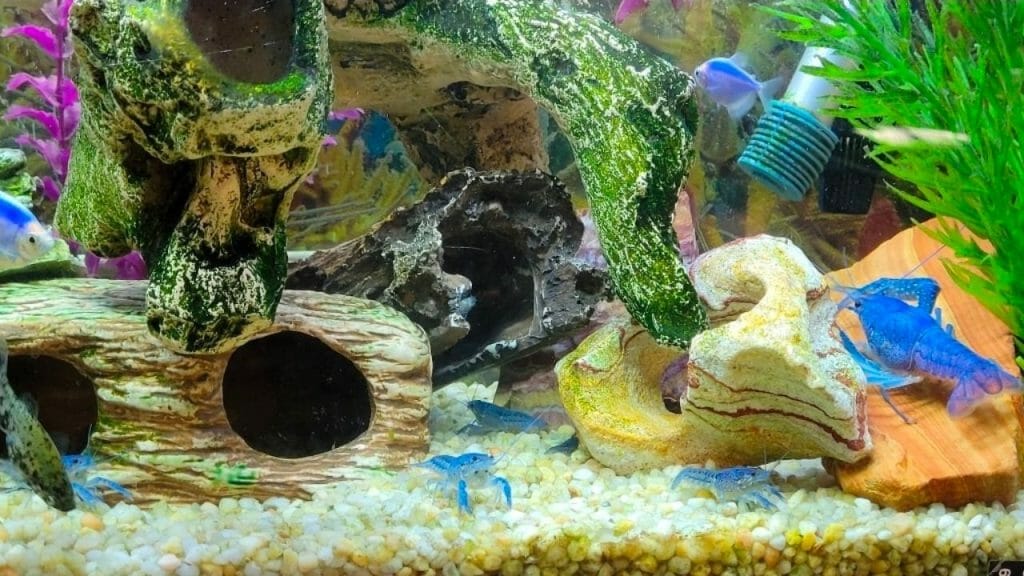
Minimum 20 gallons for a crayfish plus tank mates. Bigger is always better. More space = easier to escape.
Deep substrate (3-4 inches) at the back. Crayfish love to dig and feel secure. A secure crayfish is a less aggressive crayfish.
Multiple hiding spots – PVC pipes, rocks, driftwood (the driftwood I use for crayfish hides), caves. Aim for 3-5 hiding places minimum.
Visual barriers – Break up the sightlines with decorations. If the crayfish can’t see the fish, it’s less likely to hunt them.
Plants (if you dare) – Crayfish will destroy most plants, but hardy ones like Java fern, Anubias, or Vallisneria might survive. Plants create more hiding spots for fish.
Feeding Strategy
Feed your crayfish well. A hungry crayfish is a hunting crayfish. Feed them sinking pellets (my pick: Hikari Crab Cuisine Sinking Wafers), blanched vegetables, and occasional protein.
Feed at night – Since crayfish are nocturnal, drop their food in during the evening. This keeps them busy during their active hours.
Use feeding dishes – Put food in a specific spot so the crayfish learns to wait there instead of hunting.
Observation
Watch closely for the first few weeks. See if your crayfish is actively hunting or mostly ignoring the fish.
Count your fish daily. Yeah, it’s morbid, but you need to know if tank mates are disappearing.
Have a backup plan. Keep a separate tank ready in case things go south.
The Stress Factor (Often Ignored)
Here’s something most articles skip: even if your crayfish doesn’t catch the fish, the fish are still stressed.
Fish can sense predators. They know there’s a hunter in the tank. This constant stress can weaken their immune systems and shorten their lifespan.
So even “successful” crayfish community tanks might not be as great for the fish as you think.
Species-Specific Notes
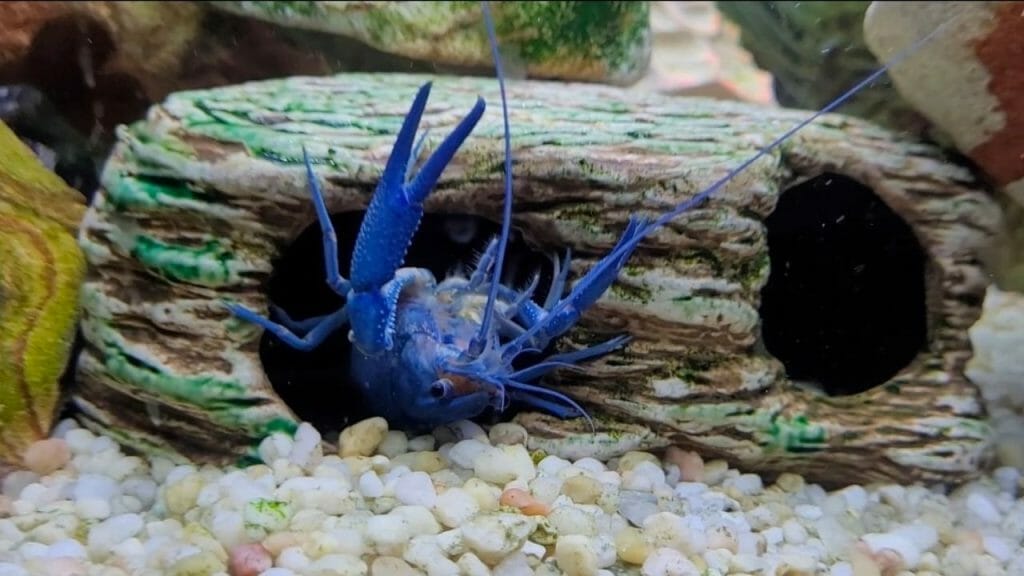
Electric Blue Crayfish (Procambarus alleni) – One of the larger species (up to 6 inches). Very aggressive. Only pair with large, fast fish.
Cherry Lobster/Red Crayfish – Similar to electric blue. Bottom line: aggressive.
Australian Red Claw (Cherax quadricarinatus) – Can reach 8 inches. Highly aggressive. Really shouldn’t have tank mates.
Mexican Dwarf Crayfish (CPO) – Max 2 inches. Your best bet for community tanks. Still pinchy but less deadly.
Blue Brazos Dwarf – Similar to CPO, just blue. Same peaceful-ish temperament.
Legal Issues You Need to Know About
Before you buy a crayfish, check what’s actually legal where you live.
Several crayfish species are restricted or banned outright in parts of the US and across the EU. The reason is invasive risk — escaped or released crayfish wreck native ecosystems and spread crayfish plague (Aphanomyces astaci), a fungal pathogen that wipes out native species.
Species That Are Frequently Restricted
- Marbled Crayfish (Procambarus virginalis) — All-female, parthenogenetic (clones itself). Banned in the entire EU and several US states because one escaped female can start a population. Avoid buying or selling these unless you’re certain it’s legal in your state.
- Red Swamp Crayfish (Procambarus clarkii) — Restricted or banned in Michigan, Ohio, Illinois, Missouri, and others. Sold widely as feeders, but illegal to keep in many jurisdictions.
- Australian Red Claw (Cherax quadricarinatus) — Restricted in parts of Australia and several US states.
- Rusty Crayfish (Orconectes rusticus) — Banned across most of the US Midwest as an invasive nuisance.
Always check your state’s Department of Natural Resources or Fish & Wildlife page before buying. The law is enforced — fines can reach four figures per animal in some states.
Never Release a Crayfish
Whatever you do, never dump a tank pet into a local stream, pond, or storm drain. That’s how crayfish plague spreads. If you can’t keep your crayfish anymore, find a local fish-keeping group or contact your local aquarium society.
My Honest Recommendation
Look, you came here for advice, so here it is:
For standard crayfish: Keep them alone. I know it seems boring, but watch your crayfish for a while. They’re actually fascinating—digging, exploring, rearranging things, climbing. They’re like little aquatic engineers.
For dwarf crayfish: You can try a community tank with the right fish. Stick to small, fast, peaceful species that stay in the middle-to-upper water column.
If you absolutely must have tank mates with a standard crayfish: Go with the livebearer strategy (guppies, mollies, platies). Accept that some will get eaten, but the population will sustain itself.
The truth is, no tank mate is 100% safe with a crayfish. If they can catch it, they will eat it. That’s not a bug in their programming—it’s a feature.
Real Stories from Real Keepers
“My crayfish wiped out 6 neons, 6 bloodfin tetras, and 6 glowlight tetras in one week. Oh yeah, 4 albino corys, but he didn’t leave any evidence. Cleaned the tank for sure.”
“I once got the bright idea of combining the crayfish tank and the feeder fish tank. Put 2 dozen+ feeder minnows in with the crayfish. Next morning there were 4 left.”
“I have 3 dwarf crayfish with neons, gourami, rasboras, cory cats, and amano shrimp. I’ve seen them latch onto the cory cats and go for a ride. They steal pellets. But surprisingly, no casualties.”
“My current crayfish has grown from the size of a nickel to over 9 inches long and living by itself. You’ll find it walking about your living room, covered in dust and lint [if you don’t have a tight lid].”
Frequently Asked Questions
Will my crayfish eat my betta?
Probably yes — eventually. Bettas are slow swimmers with long, draggy fins, and they sleep at the bottom or in plants at night. That’s prime crayfish hunting territory.
Even if the crayfish doesn’t kill the betta outright, the betta will get its fins shredded.
Can I keep crayfish with goldfish?
Bad idea both ways. Most goldfish are slow and have flowing fins — easy targets. And big goldfish (like fancies) can flip a small crayfish over and pick at it during a molt.
Plus the bioload combo is a nightmare for filtration — both species foul tanks fast.
Will a crayfish eat shrimp?
Standard crayfish? Yes, every time. Cherry shrimp, ghost shrimp, even amanos will become snacks.
Dwarf crayfish are different — many keepers report success keeping them with cherry shrimp or amanos because the size difference isn’t dramatic enough for predation.
Are nerite snails safe with crayfish?
With dwarf crayfish, usually yes — the hard shell deters them and the cray can’t easily crack it.
With standard crayfish, snails are crunchy treats. Mystery snails and thin-shelled species get eaten regularly.
Can crayfish live with plecos or corydoras?
No. Both are bottom dwellers in the crayfish’s territory. Corys sleep on the substrate at night and become easy targets. Plecos are slow and large enough to be a target during their resting hours.
This is the most common community-tank disaster — don’t do it.
How big a tank do I need for crayfish tank mates?
20 gallons absolute minimum for a single crayfish with a small school of fast surface dwellers. 30+ gallons is much safer.
The more space, the more places fish can escape and the lower the encounter rate at night.
The Bottom Line
Choosing crayfish tank mates is basically risk management.
You’re not eliminating risk—you’re just reducing it. Fast, surface-dwelling fish have better odds than slow, bottom-dwelling ones. Dwarf crayfish are safer than standard crayfish. Bigger tanks are better than small ones.
But at the end of the day, you’re putting prey animals in with a predator and hoping for the best.
If you go ahead with it, make sure you:
- Have the right tank size (minimum 20 gallons)
- Choose fast, surface-dwelling fish
- Provide tons of hiding spots
- Keep the crayfish well-fed
- Monitor daily for casualties
- Have a backup plan
And please, for the love of all that is aquatic, don’t put slow bottom-dwellers in with a crayfish. That’s just setting up a tragedy.
Your crayfish isn’t evil. It’s just being a crayfish. If you want a peaceful community tank, maybe skip the clawed armored tank and get some peaceful shrimp instead.
But if you’re set on having a crayfish, embrace what they are: fascinating, destructive, opportunistic little crustaceans that are way more interesting on their own than most people realize.
About Author
Hello, I’m Muntaseer Rahman, the owner of AcuarioPets.com. I’m passionate about aquarium pets like shrimps, snails, crabs, and crayfish. I’ve created this website to share my expertise and help you provide better care for these amazing pets.
Disclaimer
This site is owned and operated by Muntaseer Rahman. AcuarioPets.com is a participant in the Amazon Services LLC Associates Program, an affiliate advertising program designed to provide a means for sites to earn advertising fees by advertising and linking to Amazon.com. This site also participates in other affiliate programs and is compensated for referring traffic and business to these companies.