This post was created with help from AI tools and carefully reviewed by a human (Muntaseer Rahman) . For more on how we use AI on this site, check out our Editorial Policy.
Check Out These FREE Tools We Made JUST For You!
How to Feed Betta Fish: Complete Schedule, Portions & Food Chart
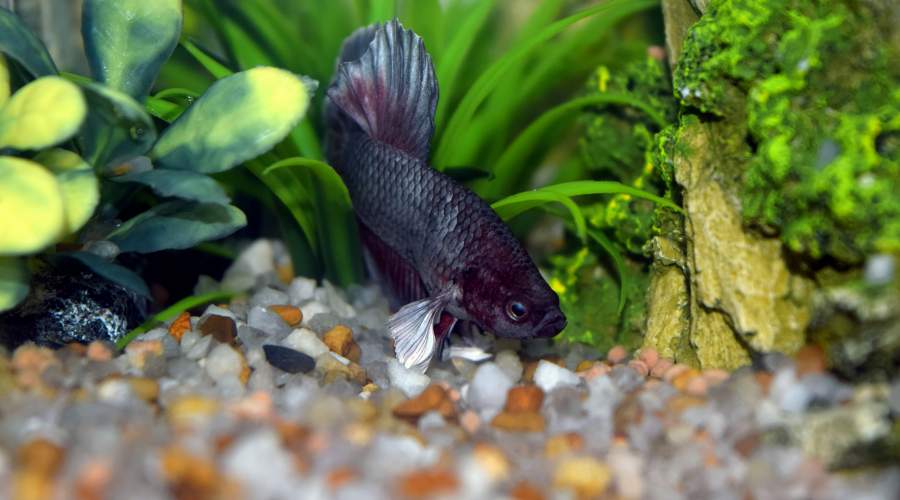
Feed adult bettas 2-4 pellets twice daily (morning and evening), with one fasting day per week. The best foods are high-quality betta pellets (my pick: Hikari Betta Bio-Gold) (NorthFin, Fluval Bug Bites) with frozen treats like bloodworms (my pick: Hikari Bio-Pure Frozen Bloodworms) 2-3 times per week.
The most common mistakes are overfeeding (bettas’ stomachs are the size of their eyeball), using flake food, and not soaking pellets before feeding. These cause bloating, swim bladder issues, and poor water quality.
This guide covers the best pellet brands, exact portions by size, a printable feeding schedule, and what to do when your betta stops eating. Whether you’re a new owner or fixing past mistakes, you’ll know exactly what and how much to feed.
Quick Betta Feeding Guide:
- How much: 2-4 pellets, twice daily
- When: Morning + evening (consistent times)
- Fasting: One day per week (aids digestion)
- Best foods: Betta pellets, bloodworms, brine shrimp
- Never feed: Flakes, goldfish food, human food
- Pro tip: Soak pellets 15-30 seconds before feeding
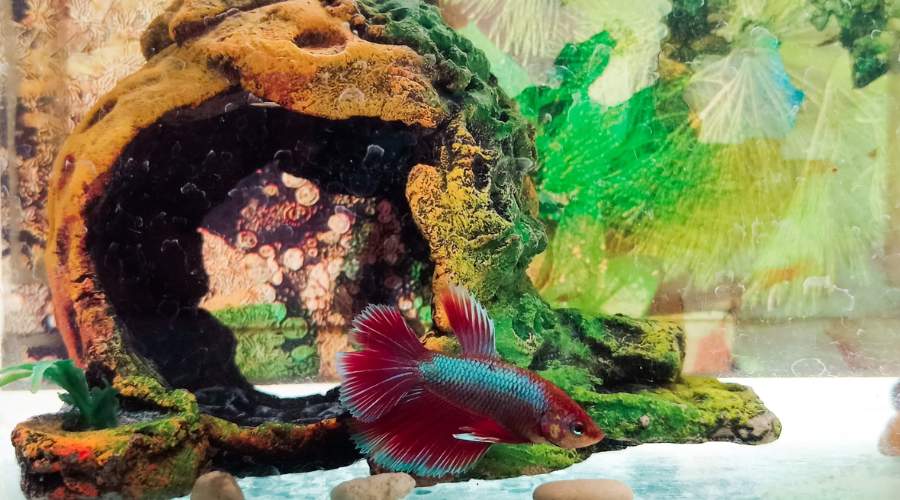
What to Feed a Betta Fish
Not all fish food is made equal—especially when it comes to bettas. These little guys aren’t goldfish.
They’re carnivores, and they’ve got high standards. If you feed junk, you’ll get problems like bloating, poor color, and even organ damage over time.
Let’s break down what actually works.
| Food Type | Examples | How Often | Notes |
|---|---|---|---|
| High-Quality Pellets | NorthFin Betta Bits, Fluval Bug Bites, Hikari Bio-Gold | Daily (main food) | Look for whole fish/insect protein as first ingredient. Avoid fillers. |
| Frozen Foods | Bloodworms, brine shrimp, daphnia (what I reach for when a betta is backed up), mysis shrimp | 2–3 times per week | Thaw before feeding. Use as treats, not daily meals. |
| Live Foods | Mosquito larvae, daphnia, fruit flies, blackworms | 1–2 times per week | Only use clean, safe sources. Adds stimulation and enrichment. |
| Occasional Extras | Spirulina, nori (seaweed) | Once a week (optional) | Not essential. Some bettas ignore it. |
| Foods to Avoid | Flakes, goldfish food, plant-based fillers, random human food | Never | Can cause bloating, poor health, and dirty water. |
High-Quality Betta Pellets
Start with a good pellet made just for bettas. Don’t grab the generic flakes or random tropical fish food.
Here’s what to look for:
- Protein should be the first ingredient, ideally from whole fish or insects.
- Avoid fillers like wheat, soy, and anything ending in “meal.”
- Small pellet size is key—bettas have tiny mouths and short digestive tracts.
Some pellets even float to mimic bugs on the water, which makes it more natural for your fish to eat.
Here are some of the brands I’ll recommend:
1. NorthFin Betta Bits

Check latest price on amazon
- First ingredient: whole krill
- No fillers, no junk
- Small, easy-to-digest size
- Slightly pricey, but worth it
2. Fluval Bug Bites (Betta Formula)

Check latest price on amazon
- Made with black soldier fly larvae
- Great protein source
- Also has salmon and essential vitamins
- Good choice if you want variety in one jar
3. Hikari Betta Bio-Gold

Check latest price on amazon
- Widely available and affordable
- Decent quality, but does have some fillers
- Still better than generic brands
- Use with occasional variety for balance
4. Omega One Betta Buffet Pellets

Check latest price on amazon
- Whole salmon and shrimp up top
- No fish meal
- Boosts color and fin growth
- Tends to sink fast—some bettas ignore it
Frozen or Live Foods
Want to level up their diet and keep them excited? Mix in frozen or live treats a few times a week.
Good options include:
- Bloodworms
- Brine shrimp
- Daphnia
- Mosquito larvae
- Mysis shrimp
- Fruit flies (yes, really)
These are packed with protein and give your betta something to chase. If you’re squeamish about live bugs, go with frozen—they’re easier to portion and store.
But don’t feed this stuff daily. Use it like a treat, not the main meal.
What About Veggies?
Some people throw in spirulina or tiny bits of nori (dried seaweed). It won’t hurt, but bettas don’t need plant food.
If you want to try it, offer a tiny amount once a week, and see if your betta even touches it. Most don’t care.
What to Avoid
Here’s the junk list:
- Flake food
- Anything made for goldfish or general “tropical fish”
- Pellets with mostly grain or soy
- Human food (yes, people try this)
Feeding the wrong stuff doesn’t just affect health—it makes your tank messier too.
Bottom line?
Stick to betta-specific pellets as your main food, and use frozen or live treats for variety. That’s all your fish really needs to stay healthy and active.

How Much to Feed a Betta
There’s no one-size-fits-all number here—but there is a simple rule: don’t feed with your eyes, feed with your fish.
Bettas have small stomachs—about the size of their eyeball. It’s easy to overdo it, especially with pellets.
General Feeding Amount
- 2 to 4 pellets per meal, once or twice a day is the safe range for most adult bettas.
- For king or giant bettas, you can bump it up to 4 to 6 pellets, but only if they’re active and not showing signs of bloating.
Always check the pellet size. Some brands pack more food into each pellet. If they’re large, go with fewer.
For Frozen or Live Food
Frozen bloodworms, brine shrimp, or daphnia? The rule changes a bit.
Feed what your betta can eat in under 2 minutes, or until you see a slight belly curve—not a round ball.
If they’re gulping and then spitting out food, you’ve gone overboard.
Watch the Belly, Not the Clock
Your best guide? The betta’s body.
A healthy feeding will leave a gentle curve in the belly—not a bulge. If the belly looks flat, increase slightly. If it looks swollen, cut back fast.
Bonus Tip: Soak Your Pellets
Dry pellets can expand inside the stomach, causing bloating or even swim bladder issues.
Soak them in tank water for 15–30 seconds before feeding. It makes digestion easier and lowers the risk of constipation.

How Often to Feed (Feeding Schedule)
Bettas don’t graze like goldfish. They need structure. If you keep it consistent, they stay healthy, active, and less prone to digestive issues.
Once or Twice a Day Works Best
- Once a day is fine if you’re using high-quality pellets and your fish isn’t too active.
- Twice a day (morning and evening) gives better energy balance and mimics natural feeding.
Example schedule:
- Morning: 2–3 pellets or a small frozen portion
- Evening: 2 pellets or a tiny treat (like a bloodworm)
Keep portions small. Don’t double up just because you feed twice.
Add a Fasting Day
Give your betta one day off from food every week. No, it’s not cruel—it actually helps.
It clears out the gut, lowers bloating risk, and resets appetite. Pick a day and stick to it.
Adjust for Tank Temperature
If your tank runs cool (below 76°F), your betta’s metabolism slows down. Feed less and possibly only once a day.
If it’s warm (78–80°F), digestion speeds up. Twice-a-day feeding makes more sense.
Don’t Fall for the “Begging”
Bettas act hungry even when they’re full. They’ll come to the glass and beg like they haven’t eaten in days.
Stick to your schedule. You’re the brain here—they’re just fish.
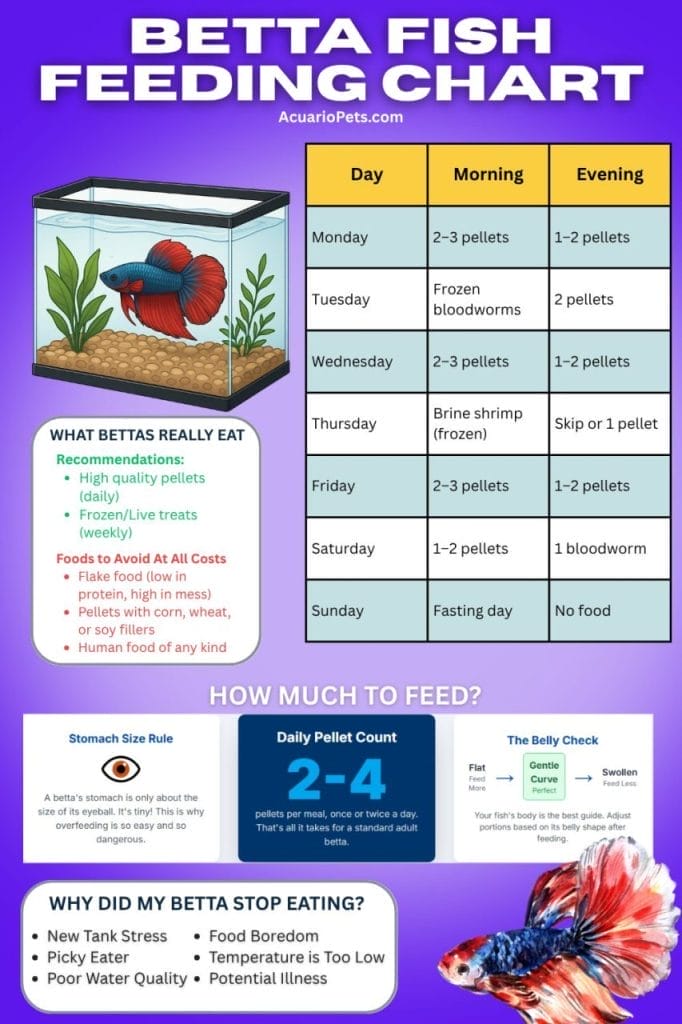
Printable Betta Fish Feeding Chart
| Day | Morning | Evening | Notes |
|---|---|---|---|
| Monday | 2–3 pellets | 1–2 pellets | Observe belly size after feeding |
| Tuesday | Frozen bloodworms | 2 pellets | Treat day—don’t overdo it |
| Wednesday | 2–3 pellets | 1–2 pellets | Soak pellets before feeding |
| Thursday | Brine shrimp (frozen) | Skip or 1 pellet | Light feeding day |
| Friday | 2–3 pellets | 1–2 pellets | Check water quality too |
| Saturday | 1–2 pellets | 1 bloodworm (optional) | Watch for bloating signs |
| Sunday | Fasting day | No food | Rest day for digestion |
- Adjust pellet count based on your betta’s size and activity
- Switch up the frozen foods (bloodworms, brine shrimp, daphnia)
- Use Sunday as a consistent no-feed day
Why Betta Fish Stop Eating
Your betta skipping a meal isn’t always a red flag—but if it drags on, you need to step in. Let’s go through the usual suspects.
1. New Tank = No Appetite
If you just brought your betta home or changed tanks, don’t panic. Many bettas refuse food for a few days while they settle in. It’s normal.
Just keep offering small amounts and give it time.
2. They’re Just Picky
Some bettas turn their nose up at certain pellet brands or food textures. Try:
- Smaller pellets
- Soaking pellets
- Switching to frozen foods for a few days
If they’re eating bloodworms but not pellets, you’ve got a spoiled little prince on your hands.
3. The Food Is Too Big or Too Hard
This is more common than you’d think. Bettas will often take a pellet, chew it, and spit it back out if it’s too hard or oversized.
Soak pellets in tank water before feeding. Or crush them up a bit.
4. They’re Bored of the Same Food
Yes, even fish get bored. If you’ve been feeding the same thing for weeks, they might just be over it.
Alternate pellets with frozen treats like brine shrimp or daphnia once or twice a week.
5. The Water Is Trash
Poor water quality = zero appetite.
Check for:
- Ammonia or nitrite spikes
- High nitrate levels
- Low temperature (below 76°F makes them sluggish)
Fix the water first. Don’t force food while they’re stressed.
6. They’re Actually Sick
If your betta’s also acting weird—like clamped fins, no swimming, or lying at the bottom—this isn’t just about food anymore.
Lack of appetite + weird behavior = possible illness (like parasites, bacterial infection, or swim bladder trouble). Time to isolate, test water, and start researching symptoms.
Pro Feeding Tips From Betta Owners
You can follow every label on the jar and still mess up. These tips come from people who’ve been through it and figured out what works.
1. Watch the Belly, Not the Clock
- Don’t just feed based on time. Look at your betta’s body.
- Slight curve = fed just right.
- Round belly = too much.
- Sunken belly = needs a bit more.
2. Soak Dry Pellets
Always soak pellets in tank water for 15–30 seconds before feeding.
Dry ones expand in the stomach and can cause bloating or swim bladder issues.
3. Rotate the Food
One day pellets. Another day frozen brine shrimp.
Change it up to keep your betta interested and healthy. Same food every day = boredom and possible refusal.
4. Don’t Feed from the Jar
Use a spoon, tweezers, or a separate dish. Feeding straight from the container usually ends in overfeeding.
5. Stick to a Schedule, Then Break It (on Purpose)
Feed at the same times every day—but don’t forget the weekly fasting day. It keeps digestion smooth and helps prevent health problems.
6. Clean Up Leftovers Fast
Uneaten food rots fast and messes up water quality. If your betta ignores food for more than 5 minutes, pull it out.
Why Flakes Are a Bad Staple for Bettas
Flakes show up on the “never feed” list above, and it is worth knowing exactly why, because flakes are cheap, convenient, and sitting at eye level in every pet store.
The protein problem
Bettas are carnivorous predators that eat insects, larvae, and small invertebrates in the wild, and they have very short digestive tracts built for that fuel. Diets around 45-50% protein are optimal for growth and reproduction, and your betta needs at least 30-40% crude protein to do well. Most flake foods fall well short.
Fillers your betta cannot use
Read the ingredients on a typical flake tub and you get ground brown rice, torula dried yeast, wheat gluten, dried potato products, and dehulled soybean meal. A betta gets no nutritional benefit from any of it and passes it through as waste, which is where the bloating and constipation come from.
They leak nutrition into the water
Flakes start dissolving the moment they hit the surface, so a chunk of the nutrition never reaches your fish. Smaller fragments drift past and get ignored, then rot. Flakes also break apart as a betta grabs them, which encourages gulping air at the surface, and swallowed air is a straight line to swim bladder trouble.
Portion control becomes guesswork
You can count pellets. You cannot count flakes. Since bettas keep eating whether or not they are hungry, an uncountable food turns every meal into a coin flip on overfeeding.
What long-term flake feeding looks like
The damage is slow rather than dramatic. Nutrient deficiency shows up as weight loss, slow growth, loss of pigmentation, infertility, and a weaker immune response. Lower-quality food can dull a betta’s colors and leave them lethargic within a month. “But my betta eats them” is not evidence they are fine, since a betta will eat when it is not hungry as a matter of instinct.
Flakes as an occasional filler in an emergency will not kill your fish. As the daily staple, they cost you color, energy, and years. Ranked best to worst, betta food goes live, frozen, freeze-dried, pellets, then flakes, and a good pellet costs only a few dollars more than a bad one.
What to Do If You’ve Overfed Your Betta
Everyone does it at least once. If the belly has gone from a gentle curve to a visible bulge, or your betta is suddenly lying on the bottom or struggling to stay level, work through these steps in order.
Step 1: Stop feeding
Fast them for two to three days. It feels harsh and it is not. A healthy betta handles a week without food comfortably, and the fast gives the gut time to clear what is already in there.
Step 2: The pea treatment
Boil a frozen pea for a few minutes, slip the skin off, and feed a piece roughly the size of your betta’s eyeball. The fiber works as a mild natural laxative.
Step 3: Epsom salt bath
For stubborn bloating, mix one teaspoon of Epsom salt (plain magnesium sulfate, no added scent) per gallon of conditioned water and give your betta a 10-15 minute soak. Epsom salt, not aquarium salt, and never poured straight into the display tank.
Step 4: Check the water
Leftover food rots and spikes ammonia, so the overfeeding that hurt your betta is now working on the water too. Test your parameters, siphon out what is sitting on the substrate, and do a water change if the numbers have moved.
Left unaddressed, repeated overfeeding leads to chronic constipation, swim bladder disorder, and fatty liver disease. It is always safer to slightly underfeed than to overfeed.
How Much Protein Does a Betta Actually Need?
Research in the Journal of Fish Biology puts optimal betta growth and reproduction at 45-50% dietary protein. That is worth knowing before you read a label, because most quality betta pellets land at 36-42%, and generic tropical flakes are nowhere near it.
Against the brands in the pellet section above: Hikari Betta Bio-Gold runs about 38% with fish meal leading the ingredients, and Fluval Bug Bites reaches roughly 40% from black soldier fly larvae. Neither hits 50% on its own, which is exactly why the frozen and live rotation matters rather than being a nice extra.
What each frozen food is actually for
Bloodworms are the highest-value treat and the one bettas react to most, but they are rich enough to cause digestive trouble if overdone, so once or twice a week is the ceiling.
Brine shrimp carry carotenoids, the pigments that push red, yellow, and orange tones, alongside antioxidant benefit. If you want color, this is the food that does it.
Daphnia are the roughage of the list. High fiber content makes them the food to reach for when a betta is constipated, which is why they show up again in the overfeeding steps further down.
The live food caveat
Live blackworms give a betta hours of genuine hunting enrichment, and bettas visibly switch into predator mode for them. The tradeoff is parasite risk. Buy live food only from a reputable store that keeps it refrigerated in clean, odorless water, and never from a tank that smells off.
Should You Soak Betta Pellets Before Feeding?
Experienced keepers are genuinely split on this one, and both camps have a point.
The case for soaking: dry pellets swell in water, and many expand to more than twice their size. If that happens inside a stomach the size of an eyeball, you get bloating. This matters most with fish that inhale food the instant it lands.
The case against: water-soluble vitamins and minerals start leaching out in as little as 60 to 90 seconds, so a long soak washes nutrition into the tank. A betta’s gastric acid also breaks pellets down rather than letting them swell the way plain water does, so the stomach handles dry food better than the popcorn-kernel metaphor suggests. Plenty of keepers have fed dry for years without a single bloating episode, and some fish refuse pellets once they have gone mushy.
The 30-second answer
Thirty seconds in tank water is the sweet spot: long enough to take the edge off, short enough that you keep most of the nutrition. Soak when your betta is a speed eater, when they keep taking pellets and spitting them back out, or when the pellets are simply too large for a small fish. Skip it otherwise. And note the quiet truth underneath the whole debate: if you are feeding two or three pellets at a time as you should be, expansion is rarely a problem either way. Most manufacturers do not mention soaking in the feeding instructions at all.
Why the Weekly Fasting Day Works
The schedule above includes one fasting day a week. Here is what it is actually doing.
A betta takes roughly six hours to digest a meal, and a fast day gives the gut time to finish and clear out rather than always working on the next load. That matters more than it would for a wild fish, because commercial pellets contain wheat and similar ingredients that a betta’s short digestive tract never evolved to process. Fasting every 7 to 10 days is the range most keepers settle on, and skipping it is the most common cause of the constipation and bloating that fills betta forums.
If you are worried about the fish going hungry: bettas can survive 10 to 14 days without food. One day is not a hardship, and owners who forget a feed entirely report no ill effects.
Signs your betta needs to fast more often
- A belly that goes balloon-round after eating rather than gently curved
- Stringy white waste trailing from the vent, the classic constipation sign
- Sluggishness after meals, when a healthy betta should stay active
Any of those and you move to fasting every five to seven days until the belly and waste normalize. It is worth saying that not everyone agrees fasting is mandatory. If your portions are genuinely correct, some keepers argue it is unnecessary. The counterargument is that most people’s portions are not correct, and a weekly fast is a cheap insurance policy against that.
Frequently Asked Questions
Can I skip a feeding if I’m busy?
Yes. Skipping one meal won’t hurt your betta. Just don’t make it a habit.
Should I feed my betta at night?
Not ideal. Bettas are more active during the day. Stick to mornings and early evenings.
Can I feed both pellets and frozen food in the same day?
Absolutely. Just keep the portions small. Don’t double the total amount.
How long can a betta go without food?
A healthy adult betta can survive up to 10–14 days without food, but it’s not recommended. Missing a day or two is fine. Beyond that, it’s a problem.
Can I give my betta human food?
Nope. Don’t do it. Their digestive system isn’t built for it, and you could make them sick.
My betta begs for food all day. Should I give in?
No. Bettas are great actors. Stick to your schedule—they’re not starving, just dramatic.

About Author
Hello, I’m Muntaseer Rahman, the owner of AcuarioPets.com. I’m passionate about aquarium pets like shrimps, snails, crabs, and crayfish. I’ve created this website to share my expertise and help you provide better care for these amazing pets.
Disclaimer
This site is owned and operated by Muntaseer Rahman. AcuarioPets.com is a participant in the Amazon Services LLC Associates Program, an affiliate advertising program designed to provide a means for sites to earn advertising fees by advertising and linking to Amazon.com. This site also participates in other affiliate programs and is compensated for referring traffic and business to these companies.