This post was created with help from AI tools and carefully reviewed by a human (Muntaseer Rahman) . For more on how we use AI on this site, check out our Editorial Policy.
Check Out These FREE Tools We Made JUST For You!
Why Is My Betta Fish Not Eating? (7 Reasons + Fixes)
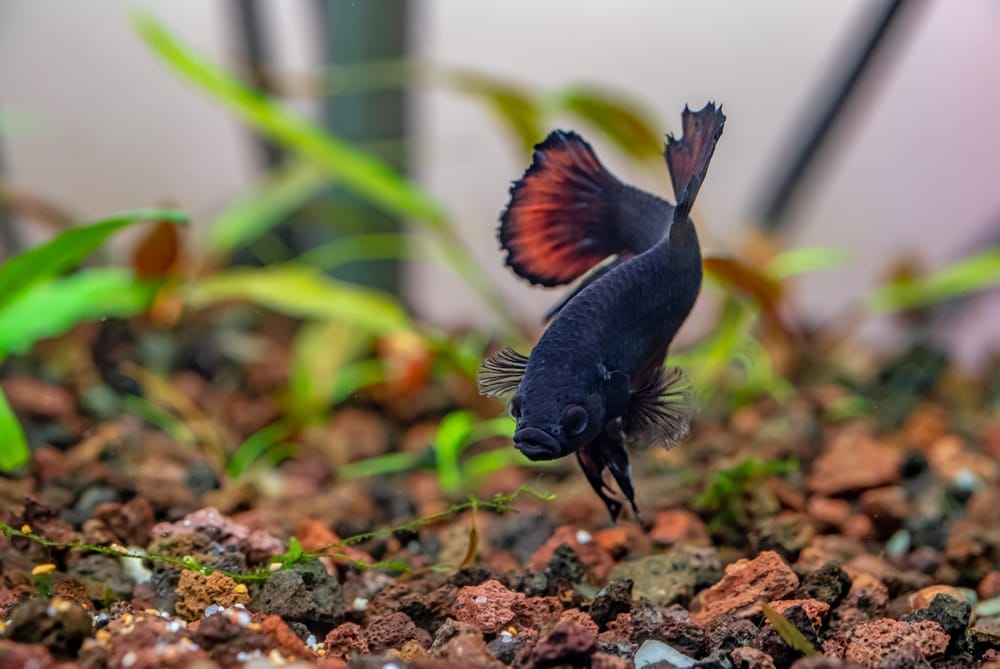
Your betta hasn’t touched his food in two days and you’re freaking out. I get it—when your fish suddenly stops eating, your mind goes straight to the worst-case scenario.
Here’s the thing: most of the time, a betta not eating isn’t a death sentence. It’s usually something simple like water temperature, stress, or just being a picky eater.
In this guide, I’ll walk you through the seven most common reasons why bettas stop eating and exactly what to do about each one. Plus, you’ll learn when it’s time to actually worry and call a vet.
Quick Answer: What’s Going On?
- Most common cause: Overfeeding or constipation (yep, your betta might just be too full)
- Second most likely: Water temperature too cold (bettas need 75-82°F)
- Quick fix: Stop feeding for 2-3 days, check water temp, test water quality
- Still swimming normally? You almost certainly have time to work through this calmly
- See a vet if: Your betta hasn’t eaten in 5-7 days, shows bloating with pinecone scales, or can’t swim properly
First, check this: is he active or lethargic?

Before you work through the seven reasons, spend sixty seconds watching your betta. This one observation splits the problem in half and tells you how fast you need to move.
Not eating but still active
He’s patrolling the tank, flaring at you, fins spread, coming up to the glass when you walk past. He just ignores the food or spits it out.
This is the good version. It points at constipation, a food he doesn’t like, or water that’s slightly too cool. Nothing here is an emergency, and you have days to work through it methodically.
Start with Reason #1, then #5, then #2.
Not eating and lethargic
He’s sitting on the substrate, wedged behind the filter, or hanging at the surface barely moving. Fins clamped tight against his body. No reaction when you approach the glass.
This version is more urgent. Lethargy plus appetite loss usually means water quality, temperature, or illness—the three things that actually kill bettas.
Test your water first (Reason #3), check the temperature (Reason #2), then look for disease symptoms (Reason #6). Don’t spend three days experimenting with different foods while a lethargic betta sits in ammonia.
How long can a betta go without eating?
Before we panic, let’s get one thing straight.
A healthy adult betta can survive roughly 10-14 days without food. That’s survival, not health—he’ll lose condition the whole time.
The point isn’t that skipping meals is fine. The point is that you have breathing room. You don’t need to force-feed anything or panic-buy medication on day two.
That said, if your betta hasn’t eaten in 5-7 days, it’s time to stop troubleshooting casually and start working through this list properly.
Reason #1: Your betta is constipated (seriously)
This is the number one reason bettas stop eating, and most beginners don’t even think about it.
A betta’s stomach is tiny—roughly the size of his eye. When you overfeed him, food backs up in his digestive system and he simply has no room for more.
How to tell if constipation is the problem
Look for these signs:
- Bloated, swollen belly (looks bigger than normal from the side)
- Stringy white poop hanging from his body
- Swimming around less than usual
- Spitting out food or ignoring it completely
If the belly swelling is dramatic and the scales are starting to lift, that’s a different problem. Our guide to telling constipation apart from dropsy and overfeeding walks through how to distinguish them.
How to fix it
Step 1: Stop feeding immediately. Give your betta 2-3 days with no food at all.
This gives his digestive system time to clear out. Don’t worry—he won’t starve.
Step 2: After fasting, offer a small amount of daphnia (what I reach for when a betta is backed up).
Daphnia has a hard shell that acts like fibre and gets things moving. It’s also something a carnivore will actually eat, which matters more than people think.
You’ll see the blanched pea trick recommended everywhere. It does work for some keepers, but bettas are carnivores with a short gut, and plenty of them refuse peas outright. Try daphnia first and treat the pea as a backup, not the standard cure.
Step 3: If the bloating persists after fasting, try an Epsom salt (plain magnesium sulfate, no added scent) bath.
Epsom salt (magnesium sulfate, not aquarium salt and not table salt) draws fluid out and relaxes the digestive tract. Dissolve about one teaspoon per gallon in a separate container of dechlorinated tank-temperature water, and let your betta sit in it for 10-15 minutes. Do this once a day for up to three days.
Never dump Epsom salt straight into the display tank, and always dissolve it fully before the fish goes in.
Step 4: Going forward, feed less. Like, way less.
Most betta owners feed too much. Your betta only needs 2-3 pellets twice a day. That’s it.
Our complete betta feeding schedule and portion guide covers exactly how much to give, why the weekly fasting day works, and what to do if you’ve already overfed.
Also, soak dry pellets in tank water for about 30 seconds before feeding. Dry pellets expand once swallowed, which is a quiet cause of bloating.
Reason #2: The water is too cold

Bettas are tropical fish from Southeast Asia. They need warm water.
When the temperature drops below 75°F, your betta’s metabolism slows down. His digestive system basically goes into low power mode, and he stops feeling hungry.
How to tell if temperature is the problem
Check your aquarium thermometer (the thermometer I keep opposite the heater). If it reads below 75°F, that’s your answer.
You might also notice your betta is less active, hanging out at the bottom of the tank, or has clamped fins (fins held close to his body).
Don’t trust the stick-on strip thermometers that come with starter kits. They read the glass, not the water, and they’re often several degrees off.
How to fix it
Get an aquarium heater (my pick: hygger 50W Submersible Aquarium Heater). Not optional—mandatory.
Set it to 78-80°F and keep it there. Once the water warms up, your betta should start eating again within a day or two.
Don’t do sudden temperature changes though. If your tank is cold, warm it up gradually over a few hours to avoid shocking your fish.
If you’re not sure your tank is set up to hold a stable temperature in the first place, our betta tank setup guide covers heater sizing and placement.
Reason #3: Poor water quality is making him sick
Dirty water is fish poison. Period.
When ammonia, nitrite, or nitrate levels get too high, your betta feels awful. Think about how you feel when you’re stuck in a stuffy, smelly room—you don’t want to eat either.
How to tell if water quality is the problem
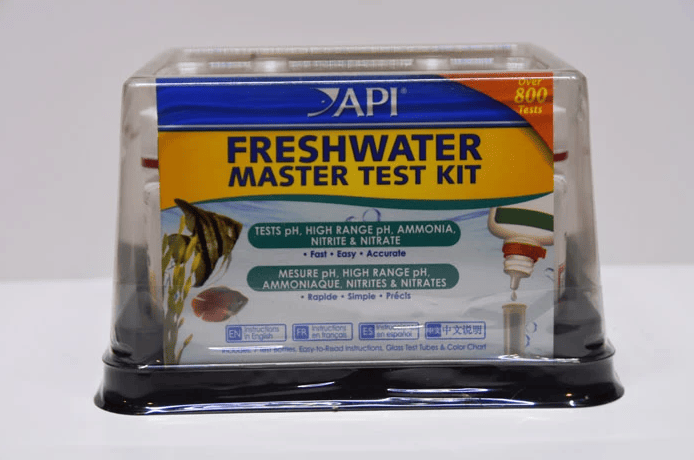
Test your water with a liquid API test kit (my pick: API Freshwater Master Test Kit). Skip the paper strips—they’re notoriously inaccurate on ammonia, which is the exact number you need to be right.
Here’s what you’re looking for:
- Ammonia: Should be 0 ppm
- Nitrite: Should be 0 ppm
- Nitrate: Should be under 20 ppm
- pH: 6.5-7.5 is ideal, and stability matters more than the exact number
If any of these are off, especially ammonia or nitrite, your water is toxic. Our full breakdown of ideal water parameters for bettas explains what each number does and how to bring it back in line.
How to fix it
Immediate fix: Do a 50% water change right now. Use a water conditioner (my pick: Seachem Prime) to remove chlorine.
Long-term fix: Do 25% water changes every week. Get a filter if you don’t have one.
Also, stop overfeeding. Uneaten food rots and creates ammonia, which poisons your betta.
Reason #4: He’s stressed out
Bettas are way more sensitive than people think.
Stress kills their appetite fast. And there are tons of things that can stress out a betta.
Common stress triggers
- New tank or recently moved
- Aggressive tank mates
- Too much light (they need darkness at night)
- Tank is too small (5 gallons minimum)
- No hiding spots or plants
- Constant loud noises or vibrations
If you just brought him home
A brand new betta refusing food is close to normal, and it’s the single most common version of this question.
He’s been shipped, sat in a cup under store lighting, and then dropped into water with a different temperature, pH and hardness than anything he’s known. Give him 3-5 days before you treat it as a problem, and up to a week before you start worrying.
In the meantime: keep the lights low, leave him alone, don’t add tank mates, and remove any food he doesn’t eat within a few minutes. Offer a couple of pellets once a day rather than dumping food in repeatedly.
If it started right after a water change or a treatment
Timing is a huge clue people skip past. If he was eating on Tuesday and stopped on Wednesday, ask what you changed on Tuesday.
A large water change with water that was several degrees colder, a new dechlorinator, a course of medication, a new decoration, or a tank move will all suppress appetite for a couple of days. Most of these resolve on their own once conditions are stable again.
Match your replacement water to tank temperature before it goes in, and make water changes smaller and more frequent rather than large and occasional.
How to fix it
First, identify what’s causing the stress.
Are there other fish picking on him? Remove the bullies or give your betta more hiding spots with live or silk plants.
Is the light on 24/7? Turn it off at night. Bettas need a day/night cycle.
Bottom line: make your betta feel safe and he’ll start eating again.
Reason #5: He doesn’t like the food

Bettas can be picky little jerks.
If you switched foods recently, he might just refuse to eat because it tastes different or doesn’t look like food to him.
How to tell if food is the problem
Did you recently change brands or food types? That’s probably it.
Bettas are carnivores. They want meaty food that wiggles and looks alive. Boring pellets that sink to the bottom don’t always cut it.
How to fix it
Option 1: Mix in some high-value treats.
Try frozen or live bloodworms (my pick: Hikari Bio-Pure Frozen Bloodworms), brine shrimp, or daphnia. These are betta candy. Feed these a few times, then slowly mix in the pellets.
Option 2: Try a different pellet brand.
Some pellets are just bland or stale. Look for high-quality brands like Hikari Bio-Gold or Fluval Bug Bites. Make sure fish, shrimp or insect meal is one of the first ingredients.
Option 3: Check if your food is old.
Fish food degrades once opened. If your pellets are more than about six months old, the fats have likely gone rancid and the vitamins have broken down. Toss them and buy a small fresh container.
One more thing: generic tropical flakes make a poor staple for a betta. It’s not that he can’t digest them—it’s that they’re built around a plant-heavy profile for omnivores, and a carnivore fed on them long-term ends up underfed on protein. Betta-specific pellets or flakes are a much better base.
Reason #6: He’s sick
If nothing else is working, illness might be the culprit.
Loss of appetite is one of the first signs that something is seriously wrong with your betta.
Common betta diseases that cause appetite loss
Swim bladder disorder: Your betta can’t swim upright, floats to the top, or sinks to the bottom. Often caused by constipation or injury.
Ich (white spot disease): Tiny white spots on fins and body, rubbing against objects. Treatable with medication.
Velvet: Gold or rusty dust on body, red streaks on fins. Needs copper-based medication.
Fin rot: Fins look ragged or melting. Usually from poor water quality.
Internal parasites: He eats but keeps losing weight, or passes long stringy white poop. Needs a dedicated antiparasitic food or treatment.
Dropsy: Belly swells up, scales stick out like a pinecone. This is an emergency.
How to fix it
For mild issues like swim bladder disorder from constipation, fasting and an Epsom salt bath will often sort it out.
For parasites and infections, you’ll need medication. Treat in a separate hospital container where you can dose accurately, rather than medicating a planted display tank and killing your filter bacteria along with the pathogen.
If you see pinecone scales (dropsy), get help immediately. This is usually fatal unless caught super early.
It’s also worth knowing which symptoms mean you’re near the end. Our guide to the most common betta fish signs before they die covers what to look for.
Reason #7: Lack of oxygen in the water
This one doesn’t get talked about enough, but it matters.
Bettas have a labyrinth organ that lets them breathe air from the surface. But they still need dissolved oxygen in the water to stay healthy.
How to tell if oxygen is the problem
If your filter stopped working or you don’t have one, oxygen levels can drop.
You’ll notice your betta hanging at the surface constantly, gasping for air more than normal. Warm water holds less oxygen than cold, so this gets worse in a summer heatwave.
How to fix it
Get a filter. Even a gentle sponge filter (my pick: AQUANEAT Mini Aquarium Sponge Filter) helps circulate water and add oxygen.
Don’t put your betta in a tank with super fast water flow though—they hate strong currents.
If your filter stopped working, fix or replace it ASAP.
One more possibility: he’s simply getting old
Nobody wants to hear this one, but it belongs on the list.
Most pet store bettas are already 6-12 months old when you buy them, and they typically live 2-4 years in good conditions. A betta in his final months eats less, sleeps more, rests on plant leaves, and gradually loses colour and fin structure.
The tell is the pattern. Age-related appetite loss comes on slowly over weeks or months, in a fish whose water tests clean and whose temperature is correct, and it usually arrives alongside a general fading rather than a single dramatic symptom. A sudden refusal in a two-year-old fish is far more likely to be one of the seven reasons above.
You can’t reverse it, but you can make it easier. Keep the water pristine and warm, drop the flow right down, add resting spots near the surface so he doesn’t have to swim far to breathe, and switch to softer food he can manage.
What NOT to do when your betta isn’t eating
Let’s talk about the mistakes that make things worse.
Don’t keep adding food hoping he’ll eat it. Uneaten food rots and creates ammonia. You’re poisoning your own fish.
Don’t immediately dump medications in the tank. Figure out the actual problem first. Random medications can stress your betta more and wipe out your filter bacteria.
Don’t put him in a tiny cup or bowl. Small containers have no stable temperature or water quality. Keep him in his main tank.
Be cautious with Bettafix and Melafix. These are tea tree oil based, and a lot of experienced keepers avoid them with labyrinth fish over concerns about the oily film they leave on the surface. They’re also weak treatments for anything serious. If your betta has a real infection, use a proper medication instead.
Don’t panic and change everything at once. Make one change at a time so you can tell what actually worked.
When to see a vet (yes, fish vets exist)
Most of the time, you can fix a non-eating betta at home.
But sometimes you need professional help.
See a vet if:
- Your betta hasn’t eaten in 5-7 days despite trying fixes
- He has severe bloating with pinecone scales
- He’s lying on his side or can’t swim properly
- There are white spots, gold dust, or weird growths on his body
- He’s gasping constantly even with good water
- He’s getting visibly thinner
Look for a vet who specializes in fish or exotic pets. Yes, it might cost money, but it’s better than watching your betta suffer.
How to prevent this from happening again
Once your betta is eating normally, keep it that way.
Feed the right amount: 2-3 pellets twice a day. That’s all he needs.
Fast once a week: Give your betta one day per week with no food. This prevents constipation and gives his digestive system a break.
Keep water pristine: Test weekly, do 25% water changes weekly, vacuum the gravel.
Maintain 78-80°F: Get a reliable heater and a separate aquarium thermometer to check it.
Feed variety: Mix up pellets, frozen bloodworms, brine shrimp, and daphnia. Keeps him interested and healthy.
Reduce stress: Provide hiding spots, keep the light cycle consistent, avoid aggressive tank mates.
Use a quarantine tank: When adding new fish or plants, quarantine them first to avoid introducing diseases.
Frequently asked questions
My betta spits out his food—is this normal?
Yes, sometimes. Bettas often grab food, spit it out, and grab it again.
But if he’s spitting out all his food and not eating any of it, the food might be too big or taste bad. Try smaller pellets or switch brands.
Check our in-depth guide on it: Why Your Betta Fish Spits Out Food (And How to Fix It)
My betta isn’t eating but seems totally fine otherwise—should I worry?
Not yet. An active, alert betta that’s simply ignoring food is the mildest version of this problem.
Fast him for two days, check your temperature and water parameters, then offer a different food. If he’s still refusing after a week, or he starts getting lethargic, escalate.
Can bettas get bored of the same food?
Absolutely. They’re not robots.
If your betta suddenly stops eating pellets he used to love, try switching things up with treats like bloodworms or brine shrimp for a few days.
Should I use frozen or live food?
Both work great. Frozen is easier and safer (less risk of parasites). Live food is more exciting for bettas but harder to find.
Just avoid freeze-dried bloodworms as a staple—they can cause constipation. Soak them first if you do feed them.
My betta only eats bloodworms now—is that okay?
No. Bloodworms are treats, not a complete diet.
They’re like betta candy—high in protein but missing other nutrients. Feed them 2-3 times per week max, not every day.
How do I know if my betta is too thin?
Look at him from above. He should have a torpedo shape.
If he looks pinched behind the head or his belly is sunken in, he’s too thin and needs to eat more.
Final thoughts
A betta not eating is scary, but it’s usually fixable.
Start with the easy stuff—watch whether he’s still active, check the temperature, test your water, and try fasting for 2-3 days if you think he’s constipated. Most of the time, that solves it.
If nothing works after a week, don’t mess around. Get professional help.
Your betta depends on you to figure this out. With a little patience and the right fixes, he’ll be back to his hungry, feisty self in no time.
About Author
Hello, I’m Muntaseer Rahman, the owner of AcuarioPets.com. I’m passionate about aquarium pets like shrimps, snails, crabs, and crayfish. I’ve created this website to share my expertise and help you provide better care for these amazing pets.
Disclaimer
This site is owned and operated by Muntaseer Rahman. AcuarioPets.com is a participant in the Amazon Services LLC Associates Program, an affiliate advertising program designed to provide a means for sites to earn advertising fees by advertising and linking to Amazon.com. This site also participates in other affiliate programs and is compensated for referring traffic and business to these companies.