
This post was created with help from AI tools and carefully reviewed by a human (Muntaseer Rahman) . For more on how we use AI on this site, check out our Editorial Policy.
Check Out These FREE Tools We Made JUST For You!
How To Breed Tree Frogs? [Beginner Friendly Way]

Let me be straight with you before we start.
Breeding tree frogs is one of those projects that looks simple on paper and turns into a science experiment in real life.
You can absolutely do it at home. People do it every year in spare bedrooms and garages.
But anyone who tells you it’s “easy” has either never tried it or got lucky once and called themselves an expert.
Here’s the honest version of how it actually works, what gear you need, and the timeline you should expect.

So, Are Tree Frogs Easy To Breed?
Short answer: not really, but they’re not impossible either.
Tree frogs won’t breed just because you put a male and a female in the same tank. They breed when their bodies think the seasons are changing, which means you have to fake an entire weather pattern for them.
That usually involves a cool, dry rest period followed by a warm, wet “rainy season” inside a rain chamber.
Get that cycle right and the frogs do the rest themselves.
Get it wrong and you’ll just have two frogs awkwardly ignoring each other.
So the difficulty isn’t the frogs. It’s the setup.
Quick Reality Check: Should You Breed For Money?
A lot of people get into this thinking they’ll sell tadpoles and make a profit.
I’d pump the brakes on that.
Common pet species like White’s tree frogs and American green tree frogs are cheap and widely captive-bred already.
By the time you factor in the rain chamber, the electricity, the live food for dozens of growing froglets, and your time, the math rarely works out.
Breed them because it’s genuinely fascinating to watch the whole life cycle happen.
Treat any frogs you rehome as a bonus, not a business plan.
Step 1: Start With Healthy, Mature Adults
You can’t breed frogs that aren’t ready, and you can’t tell them to hurry up.
You’ll want a small group with more males than females, somewhere around two males per female. A little competition gets the males calling, and calling is what kicks off the whole process.
Both sexes need to be fully grown and in good weight. Most tree frogs are breeding age around 1.5 to 2 years old.
Skinny, stressed, or recently sick frogs should not be bred. Full stop.
If you’re not sure who’s male and who’s female, males are usually smaller, call loudly, and develop dark nuptial pads on their thumbs in breeding condition. Females get noticeably round when they’re carrying eggs.

Step 2: Condition Them With Heavy Feeding
About a month before you plan to breed, start fattening everyone up.
Bump their food up by roughly 25% for several weeks so the females can build up eggs.
Gut-load your feeder insects first. Feed the crickets and roaches carrots, sweet potato, and leafy greens for a day or two before they go to your frogs.
Then dust those insects with a calcium and vitamin supplement.
Healthy, well-fed females produce more and better eggs. A solid tree frog diet matters more here than people realize.
Step 3: Give Them A Cool, Dry Rest
This is the step most beginners skip, and it’s often why their frogs never breed.
In the wild, breeding follows a seasonal change. So you have to give your frogs a fake “off season” first.
For about 6 to 8 weeks, drop the night temperature a little (low 70s, even upper 60s°F overnight for hardy species), cut back your misting, and shorten the light cycle.
Keep them eating, just less often.
Think of it as a reset button. The dry, cool spell tells their bodies that the rainy season is coming next, and that’s the trigger you’re about to pull.
Step 4: Build The Rain Chamber
The rain chamber is the star of the show. It recreates a warm tropical downpour, which is exactly what tells the frogs it’s go time.
Here’s the gear list:
- Large glass or plastic tank (around 20 gallons works for a small group)
- Dechlorinated water
- Submersible water pump
- PVC pipe and a couple of 90-degree elbows
- A drill or something to make small holes in the pipe
- Aquarium heater
- Thermostat
- Electrical timer
- Broad-leaved plants (live or sturdy artificial)
- Sphagnum moss
- Driftwood or branches that stick up out of the water
- A lid or screen top
The idea is simple. The pump pushes water up through the perforated PVC “rain bar” near the top, and it sprinkles back down like rain.
How To Set It Up
Step 1: Add a few inches of dechlorinated water to the tank, enough to cover the pump and heater.
Step 2: Drop in the submersible pump and the heater. Set the water temperature to around 78 to 82°F.
Step 3: Build the rain bar. Cut your PVC, join it with the elbows, drill a row of small holes along the bottom, and connect it to the pump’s outflow up top.
Step 4: Add your plants, moss, and branches so the frogs have leaves to sit under and perches above the waterline.
Step 5: Plug the pump into a timer. Most breeders run the “rain” mostly at night, in cycles, with breaks rather than 24/7.
Step 6: Run the whole thing empty for a few days first. Make sure it rains evenly, the temperature holds, and nothing leaks before any frog goes in.

Step 5: Trigger The Breeding
Once the chamber is running smoothly, move your conditioned frogs in.
Now you reverse the dry season. Warm it up, keep the humidity high, and let it “rain.”
When the conditions feel right, the males start their breeding calls and the females respond. You honestly can’t force this part, you can only set the stage.
A few things to keep in mind once they’re in there:
- Frogs often eat very little during breeding, so don’t stress if they ignore food.
- Keep the water clean. Change it out regularly because dirty water will tank their health fast.
- Watch them daily, but don’t hover and handle them.
- If nothing happens after a couple of weeks, take them out, rest and feed them again, and retry the cycle later.
When a female lays her eggs, gently move the adults back to their regular tank.
The grown frogs are done now. The next phase is all about the eggs.

Step 6: Hatching The Eggs
Tree frog eggs hatch fast, much faster than the old “couple of weeks” myth you’ll see floating around.
White’s tree frog eggs usually hatch in about 1 to 3 days. American green tree frog eggs take roughly 5 to 7 days. Warmer water on the higher end of the safe range speeds things up.
Keep the water for the eggs in the same warm range as the chamber, around 75 to 80°F, not cold. Cold water stalls or kills the eggs.
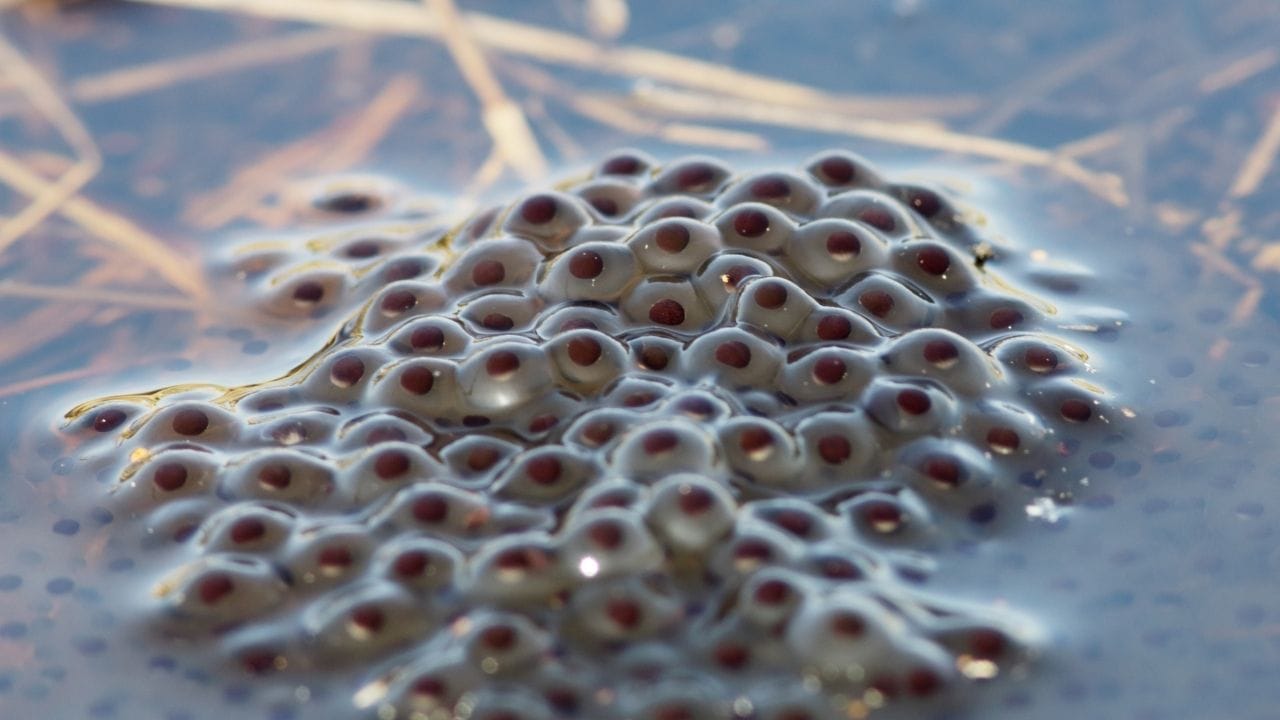
Not every egg will be fertile. The good ones look clear with a tidy dark center, while the bad ones go cloudy or fuzzy with fungus.
Scoop out the bad eggs as you spot them so mold doesn’t spread to the healthy ones.

Step 7: Raising The Tadpoles
Once they hatch, you’ve got tadpoles, and tadpoles are hungry little machines.
Here’s what you’ll want on hand:
- A plastic or glass tank (the glass terrarium I set up for them)
- Dechlorinated water (always)
- A gentle heater
- Algae, boiled and cooled leafy greens, and crushed fish flakes
- Some rocks or sponges for filtration
Keep the tadpole water warm, around 75 to 80°F, and don’t overcrowd them. Crowded tanks mean dirty water and stunted growth.
Feed small amounts a few times a day, and remove any leftover food the same day so it doesn’t foul the water.
Water quality is the number one thing that kills tadpoles. Stay on top of it and you’ve already won half the battle.

As they grow, they sprout back legs first, then front legs, while the tail slowly shrinks and gets reabsorbed.
How Long Until They Become Frogs?
This is where the old guides get it really wrong, so listen up.
Most pet tree frog tadpoles complete metamorphosis in about 6 to 12 weeks, not over a year. White’s tend to be on the faster end, around 6 weeks in good conditions.
A few stragglers in a clutch might take longer, but if you read somewhere that it takes “12 to 16 months,” that’s just flat wrong for common species.

Step 8: Caring For The Froglets
Once the front legs pop out and the tail starts shrinking, the babies are about to leave the water.
Add a screen lid and some branches or rocks that break the surface so they can climb out.
A froglet that can’t get out of the water can drown, so this step is not optional.
Stop feeding them as tadpoles once the tail is mostly gone. They live off that tail as it’s absorbed.
When they’re ready for solid food, offer tiny prey like fruit flies, pinhead crickets, and small worms.
From here you raise them like any young tree frog, and yes, you can keep some as pets or rehome them.
The Egg-From-Eggs Shortcut
Don’t want to deal with the whole rain chamber dance? There’s a simpler path.
You can skip straight to hatching eggs if you can get a fertile egg cluster, either from your own frogs or a reputable breeder.
Set up a clean tank with dechlorinated water, warm temps, and gentle filtration, then add the eggs. Our full frog egg care guide walks through the details.
From there it’s the same routine: hatch, raise tadpoles, manage water quality, and grow them out.
It’s a great way to learn the back half of the process without engineering a fake monsoon first.
When Do Tree Frogs Actually Breed In The Wild?
In nature, tree frogs breed during the warm, wet stretch of the year, not early spring.
For most North American species, that’s late spring through summer, roughly May into September, kicked off by warm rains. Tropical species like White’s breed during their warm wet season.
That’s exactly why the rain chamber works. You’re copying that warm, rainy window on demand.
If you’ve ever heard frogs going absolutely wild after a summer rainstorm, you’ve heard breeding season in action.
How Many Eggs Do They Lay?
A lot, but not the absurd numbers some sites throw around.
A single female tree frog typically lays a few hundred to around 1,000 eggs in a breeding effort, often spread across smaller clusters rather than one giant blob.
Plenty of those eggs won’t make it, which is exactly why frogs lay so many in the first place.
So even a “successful” breeding doesn’t mean a thousand frogs hopping around. Most don’t survive to adulthood, even with your help.

Do Tree Frogs Breed In Water?
Yes, water is central to the whole thing.
Tree frogs need moisture to breed, and their eggs and tadpoles develop in water. That’s why wild ones gather around ponds, swamps, puddles, and flooded plants when it’s time.
Some species lay right in the water. Others lay on leaves overhanging water so the hatching tadpoles drop straight in.
Either way, no water means no tadpoles. It’s non-negotiable.
Frequently Asked Questions
What are the easiest frogs to breed?
White’s tree frogs and American green tree frogs are among the more beginner-friendly tree frogs. African dwarf frogs and fire-bellied toads are also commonly bred. Each still has its own specific triggers, so “easier” doesn’t mean “automatic.”
How long does it take a tree frog tadpole to turn into a frog?
Usually 6 to 12 weeks for common pet species, depending on temperature, food, and water quality. Warmer, stable conditions push them toward the faster end.
What do you feed tree frog tadpoles?
Algae, boiled and cooled leafy greens like spinach or lettuce, and finely crushed fish flakes. Once they grow legs and become froglets, switch to tiny live insects like fruit flies and pinhead crickets.
Why won’t my tree frogs breed?
The most common reason is skipping the cool, dry rest period before the rain. Frogs read seasonal change as the cue to breed. No fake “off season,” no breeding, no matter how nice your tank is.
Final Thoughts
Breeding tree frogs is part biology, part weather forecasting, and part patience.
Condition them, give them a rest, fake a rainy season, then get out of the way and let nature do its thing.
Watching a clutch of eggs turn into wriggling tadpoles and then tiny, perfect froglets is genuinely one of the coolest things you can witness as a frog keeper.
Take your time, keep that water clean, and enjoy the ride.

About Author
Hello, I’m Muntaseer Rahman, the owner of AcuarioPets.com. I’m passionate about aquarium pets like shrimps, snails, crabs, and crayfish. I’ve created this website to share my expertise and help you provide better care for these amazing pets.
Disclaimer
This site is owned and operated by Muntaseer Rahman. AcuarioPets.com is a participant in the Amazon Services LLC Associates Program, an affiliate advertising program designed to provide a means for sites to earn advertising fees by advertising and linking to Amazon.com. This site also participates in other affiliate programs and is compensated for referring traffic and business to these companies.