This post was created with help from AI tools and carefully reviewed by a human (Muntaseer Rahman) . For more on how we use AI on this site, check out our Editorial Policy.
Check Out These FREE Tools We Made JUST For You!
Can Two African Dwarf Frogs Live Together?
So you just got an African dwarf frog and you’re already thinking, “Should I get another one?”
Maybe you’re worried they’ll fight. Maybe you’re worried they’ll eat each other. Or maybe you just don’t want your little frog sitting in the corner of the tank looking depressed.
Here’s the short answer: Yes, two African dwarf frogs can absolutely live together. In fact, they should live together.
These tiny frogs are social animals that thrive in groups. Keeping one alone is like making someone live in solitary confinement. They won’t fight, they won’t eat each other, and honestly, they’ll be way happier with a friend around.
But there’s more to it than just dropping two frogs in a tank and calling it a day. Let me break it all down.

Why African Dwarf Frogs Need Companions
In the wild, African dwarf frogs (Hymenochirus boettgeri) hang out in groups in shallow rivers, ponds, and flooded forest floors across Central Africa, from Nigeria down through the Congo River Basin.
They’re not loners by any stretch.
When you keep an African dwarf frog alone in captivity, it tends to get stressed, eat less, and hide more. A lonely frog is a sad frog, and a sad frog is an unhealthy frog.
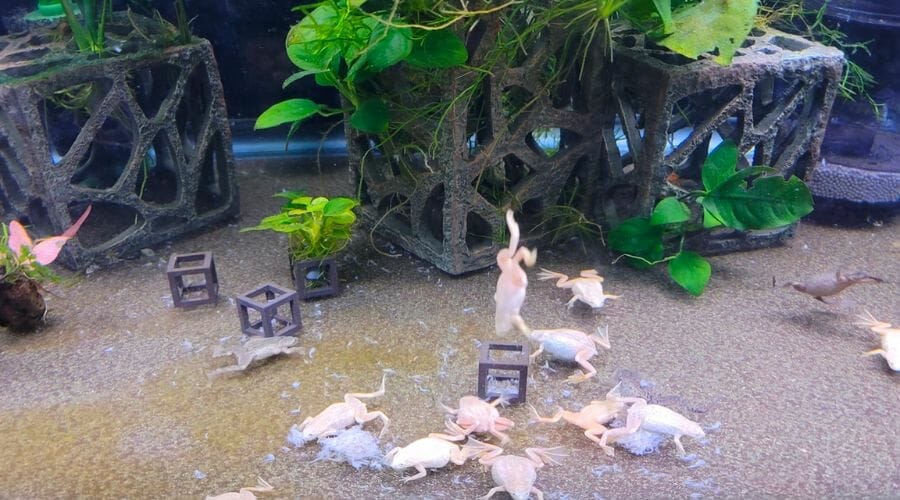
Most experts recommend keeping them in groups of at least 2 to 4 frogs. They show more natural behaviors like swimming, exploring, and foraging when they’ve got company.
And here’s a fun little detail. These frogs actually sleep piled on top of each other sometimes. They’ll cuddle up in a corner like a stack of tiny pancakes. If that doesn’t convince you to get more than one, I don’t know what will.

Do African Dwarf Frogs Fight Each Other?
This is probably the biggest concern for beginners, so let me put it to rest.
African dwarf frogs do not fight. Period.
They don’t have teeth. They don’t have claws (despite originally being called “dwarf clawed frogs”). They have zero aggression toward each other.
Two males? Fine together. Two females? Totally fine. One of each? Also fine, but you might end up with eggs.
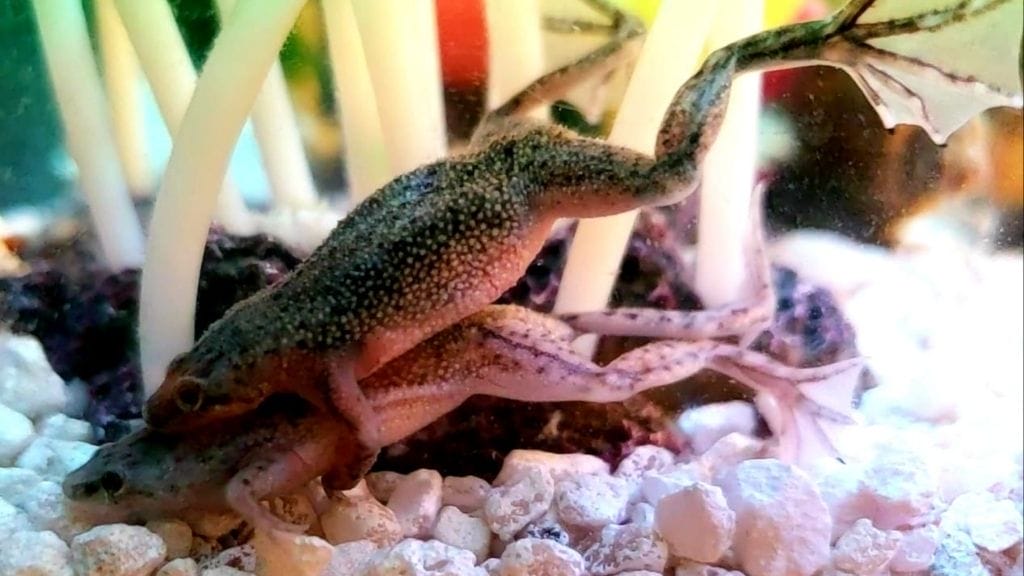
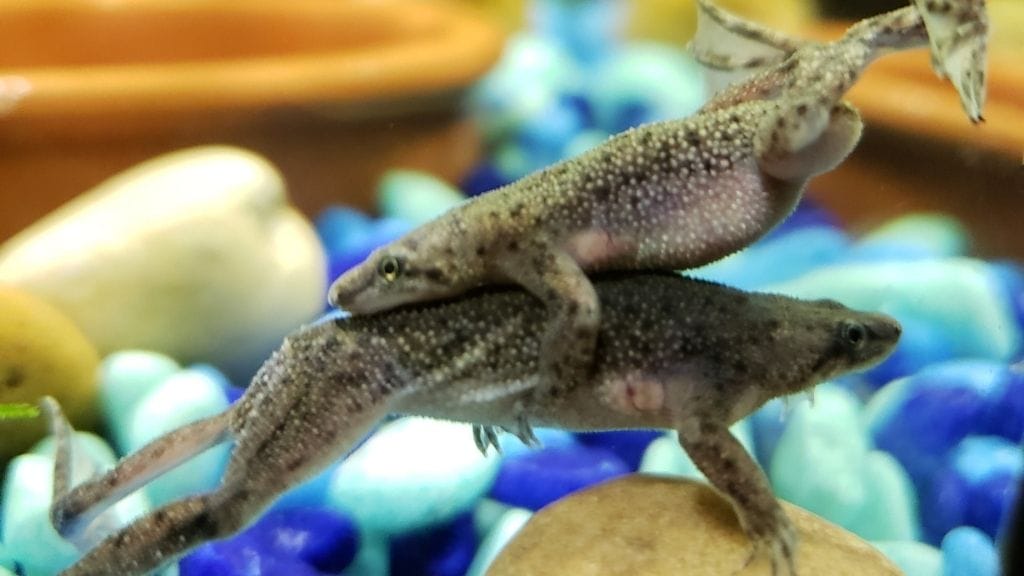
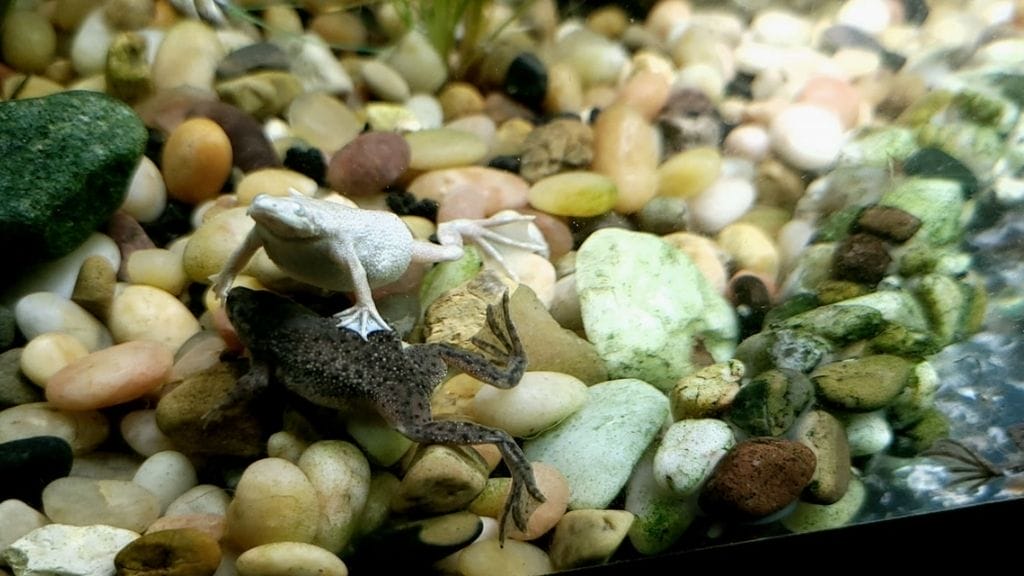
Sometimes you might see two frogs grabbing onto each other and think, “Oh no, they’re fighting!” Nope. That’s mating behavior. The male grabs onto the female (or sometimes another male by mistake) and they can stay locked together for hours or even a couple of days.
It looks dramatic, but it’s completely normal.
Can Two Male African Dwarf Frogs Live Together?
Yes, without any issues at all.
Unlike some frog species where males get territorial and aggressive, male African dwarf frogs couldn’t care less about territory.
They might occasionally try the mating grip on each other if there’s no female around, but that’s about as dramatic as it gets. No fighting, no injuries, no drama.
Experienced keepers on forums regularly report keeping multiple males together with zero problems. One forum user put it perfectly: “It’s impossible for them to get in fights since they don’t have teeth, and they generally don’t care what gender they’re with.”
Can Two Female African Dwarf Frogs Live Together?
Absolutely.
Female African dwarf frogs are slightly larger than males and have a more pear-shaped body. But size difference between females is minimal, and they get along just as well as any other combination.
If anything, keeping two females means you don’t have to deal with mating behavior and the eggs that come with it.
Will African Dwarf Frogs Eat Each Other?
No, adult African dwarf frogs will not eat each other.
They’re toothless, clawless, and only grow to about 1 to 1.5 inches (2.5 to 3.8 cm) in length. An adult frog physically can’t eat another adult frog.
However, there’s one exception you should know about.
Adult frogs may eat baby frogs (fry). These frogs have terrible eyesight and basically try to swallow anything that fits in their mouth. If a tiny baby frog wiggles past them, they might gulp it down without a second thought.
So if you’re breeding them, keep the babies in a separate tank.
How Many Gallons Do Two African Dwarf Frogs Need?
Here’s where a lot of bad advice floats around the internet. Let me set the record straight.
| Number of Frogs | Minimum Tank Size | Recommended Tank Size |
|---|---|---|
| 1-2 frogs | 5 gallons | 10 gallons |
| 3-4 frogs | 10 gallons | 15-20 gallons |
| 5-6 frogs | 15 gallons | 20-30 gallons |
The general rule is about 2 to 3 gallons of water per frog, with a minimum tank size of 5 gallons because it’s nearly impossible to fit proper equipment (heater, filter) in anything smaller.
Now, here’s something important that a lot of articles get wrong: a bigger tank does NOT stress out your frogs. I’ve seen people claim you shouldn’t go above 7 gallons for two frogs because the extra space will stress them out. That’s flat-out incorrect.
More space is almost always better. The only thing to watch out for is tank depth. African dwarf frogs have lungs, not gills. They need to swim to the surface to breathe. If your tank is too deep (more than 12 to 18 inches), your frogs will struggle to reach the surface.
So go wide and shallow, not tall and deep.
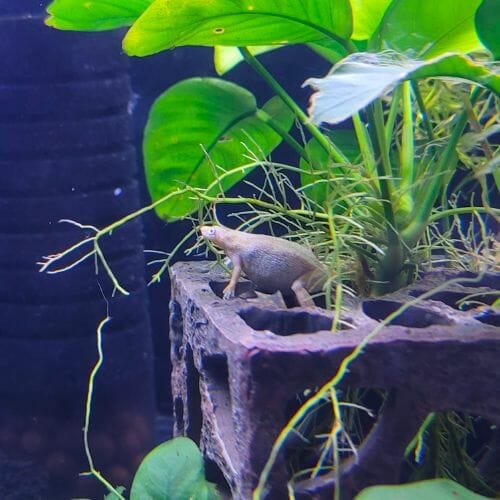
Tank Setup for Two African Dwarf Frogs
Getting two frogs to coexist happily isn’t just about having the right tank size. The setup matters too.
Water Temperature and Parameters
| Parameter | Ideal Range |
|---|---|
| Temperature | 72-78°F (22-26°C) |
| pH | 6.5 – 7.8 |
| Water Hardness | 5-20 gH |
| Tank Depth | No more than 12-18 inches |
These frogs are tropical, so you’ll need a heater. Room temperature water isn’t warm enough in most homes.
Substrate
Use sand or large-grain gravel.
African dwarf frogs forage along the bottom and will try to eat small gravel pieces. If the gravel is small enough to fit in their mouth, they’ll swallow it. And that can kill them.
Some experienced keepers actually prefer a bare-bottom tank because it’s easier to clean and there’s zero risk of the frogs ingesting substrate.
Hiding Spots
These frogs are shy, especially at first. Give them plenty of places to hide.
Live or fake plants, terra cotta pots turned sideways, small caves, and hollow logs all work great. They love sitting on plant leaves near the surface for a quick breathing break.
Filtration
A gentle filter is key. These frogs are not strong swimmers and hate strong currents.
A sponge filter is ideal. If you’re using a hang-on-back filter, make sure the flow isn’t too strong or your frogs will spend all their energy fighting the current instead of, you know, living their lives.
Lid
This one is non-negotiable. African dwarf frogs are notorious jumpers.
They sometimes launch themselves out of the water when surfacing for air. Without a tight-fitting lid, you’ll find a dried-up frog on your carpet. Cover every gap, especially around filter intakes and cord openings. Duct tape works in a pinch.
Feeding Two African Dwarf Frogs
Feeding these frogs is the one area where having two actually requires a bit more attention.
African dwarf frogs have terrible eyesight. Like, impressively bad. They find food mostly by smell and by detecting vibrations in the water.
This means they’re slow eaters. If you have fish in the same tank, the fish will vacuum up all the food before your frogs even realize dinner was served.
What to Feed Them
Their diet should be mostly protein-based. Good options include:
- Frozen bloodworms (the gold standard)
- Frozen brine shrimp
- Sinking frog pellets
- Small earthworms
- Fish fry
You can throw in a weekly treat of small pieces of tuna, salmon, or beef heart. But keep the fatty stuff to once a week max because these frogs gain weight easily.
How Often to Feed
Feed them 3 to 4 times a week. Only give them as much as they can eat in a few minutes.
Pro tip: Use feeding tongs or tweezers to drop food right near their faces. Some keepers tap the glass gently to signal feeding time, and the frogs actually learn to come out for food. They’re smarter than most people give them credit for.
How Many African Dwarf Frogs Can Live in a 10-Gallon Tank?
A 10-gallon tank is a sweet spot for African dwarf frogs.
If you’re keeping frogs only (no fish), you can comfortably house 3 to 4 frogs in a 10-gallon tank.
If you’re adding fish to the mix, dial it back to 2 frogs plus a few small, peaceful fish like guppies or neon tetras. You need to leave room for everyone to breathe, literally and figuratively.
Can African Dwarf Frogs Live with Betta Fish?
This is one of the most common questions out there, and the answer is: it depends on the betta.
Some bettas are chill and couldn’t care less about a frog. Others are aggressive little psychopaths who’ll nip at anything that moves.
If you want to try this combo, use at least a 10-gallon tank and introduce the frogs first. Watch closely for the first few days after adding the betta. If the betta is chasing or nipping at the frogs, separate them immediately.
The bigger issue isn’t aggression, though. It’s food competition. Bettas are fast and aggressive eaters. Your frogs will get outcompeted at every meal unless you target-feed them directly.
Should You Get Other Frog Species as Companions?
No. Stick with the same species.
The biggest mistake people make is housing African dwarf frogs with African clawed frogs. They look similar when young, and pet stores sometimes mislabel them.
But African clawed frogs grow much larger and will eat your dwarf frogs. It’s not a matter of if, it’s a matter of when.
Other frog species generally aren’t good companions either. They may be too aggressive, too large, or have different environmental needs.
If your African dwarf frogs want friends, get them more African dwarf frogs. Simple as that.
Why Do African Dwarf Frogs Hold Each Other?
If you see your frogs locked in a tight embrace for hours, don’t panic.
That’s called amplexus, and it’s their mating behavior. The male grabs onto the female’s back legs, and together they swim to the surface where the female releases eggs and the male fertilizes them.
This can last anywhere from a few hours to a couple of days. It usually happens when the water temperature gets a bit warmer, mimicking the rainy season in their natural habitat.
Sometimes, males will grab onto other males by mistake. It’s awkward for everyone involved, but harmless.
If you don’t want babies, don’t worry too much. In most tanks, the eggs get eaten by the frogs themselves or other tank inhabitants before they can hatch.
How Long Can Two African Dwarf Frogs Live Together?
For their entire lives.
African dwarf frogs typically live 5 to 10 years in captivity, with some owners reporting frogs that lived past 15 or even 20 years with excellent care.
Once you set up a pair, they can be lifelong companions. No territorial disputes, no aggression, no issues as they age.
The key to a long lifespan is simple: clean water, proper temperature, good food, and a stress-free environment. Get those right, and your frogs will be with you for years.
Quick Summary
| Question | Answer |
|---|---|
| Can two African dwarf frogs live together? | Yes, they should be kept together |
| Do they fight? | No, they have zero aggression |
| Can two males live together? | Yes, no issues at all |
| Can two females live together? | Yes, perfectly fine |
| Will they eat each other? | No (but adults may eat fry) |
| Minimum tank for two frogs? | 5 gallons (10 recommended) |
| Ideal group size? | 2-4 frogs |
| Lifespan together? | 5-10+ years |
| Best companions? | More African dwarf frogs |
Final Thoughts
Keeping two African dwarf frogs together isn’t just okay. It’s the right thing to do.
These are social animals that genuinely need companionship. A single frog in a tank is a stressed, bored, unhappy frog. Two frogs in a tank are active, entertaining, and way more fun to watch.
They’ll play, they’ll cuddle, they’ll do that weird floating thing with their arms spread out like tiny superheroes. And when feeding time comes around, watching two frogs scramble for bloodworms is better entertainment than most things on TV.
So if you’re on the fence, go ahead and get that second frog. Your first one will thank you for it.

About Author
Hello, I’m Muntaseer Rahman, the owner of AcuarioPets.com. I’m passionate about aquarium pets like shrimps, snails, crabs, and crayfish. I’ve created this website to share my expertise and help you provide better care for these amazing pets.
Disclaimer
This site is owned and operated by Muntaseer Rahman. AcuarioPets.com is a participant in the Amazon Services LLC Associates Program, an affiliate advertising program designed to provide a means for sites to earn advertising fees by advertising and linking to Amazon.com. This site also participates in other affiliate programs and is compensated for referring traffic and business to these companies.