
This post was created with help from AI tools and carefully reviewed by a human (Muntaseer Rahman) . For more on how we use AI on this site, check out our Editorial Policy.
Check Out These FREE Tools We Made JUST For You!
Black Rain Frog Care: Habitat, Diet, and the Honest Truth About Keeping One

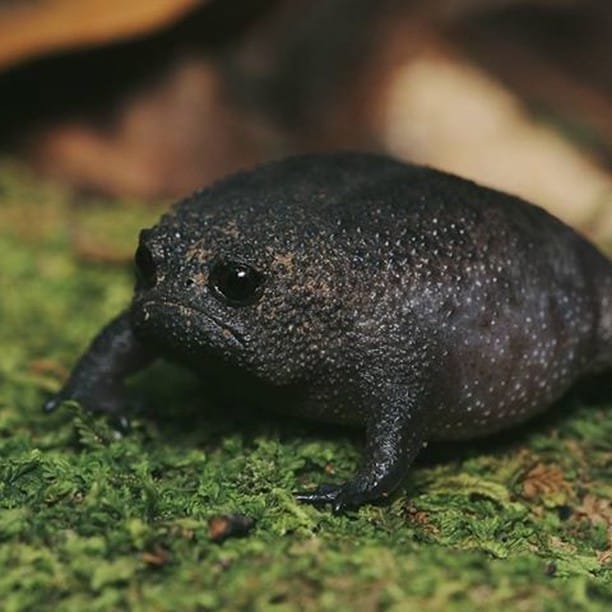
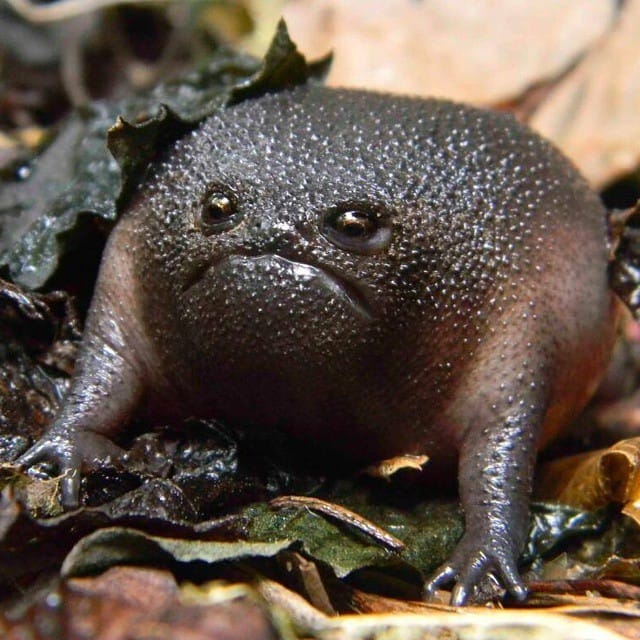
You’ve seen the video. A small, round frog the color of wet asphalt, sulking out from under a leaf like you just asked it to do the dishes. That’s the Black Rain Frog, and somewhere between the memes and the puffed-up squeak videos, a lot of people have started Googling whether they can buy one.
Here’s the part the TikToks skip. The Black Rain Frog is a real animal with very specific needs, a tiny natural range in South Africa, and a captive market that’s basically a pinhole. This guide covers the actual care side — habitat, humidity, diet, lifespan — plus the honest answer to “should I get one.”
Quick Facts
| Field | Detail |
|---|---|
| Scientific name | Breviceps fuscus |
| Family | Brevicipitidae (rain frogs) |
| Native range | Southern slopes of the Cape Fold Belt, South Africa |
| Size | 40–51 mm (about 1.5–2 inches) |
| Lifespan | ~4 years in captivity, up to 15 years in the wild |
| Diet | Small insects (crickets, ants, flies, moths) |
| Activity | Nocturnal, fossorial (burrows underground) |
| IUCN status | Least Concern |
| Beginner-friendly? | No — intermediate at best |
Where Black Rain Frogs Actually Live
Forget the “coastal grasslands” thing you might have read. Breviceps fuscus is endemic to a narrow strip along the southern slopes of the Cape Fold Belt, running from Swellendam to the Outeniqua Mountains.
That habitat is mountain fynbos and Afromontane forest, usually above 1,000 meters in elevation. Where the mountains run down to the sea, the species drops to lower altitudes, but it sticks to that south-facing slope.
It’s not a “found everywhere in Africa” frog. The whole world range is a thin Mediterranean-climate ribbon along one stretch of South Africa’s southern coast.
Built for Burrowing, Not Swimming
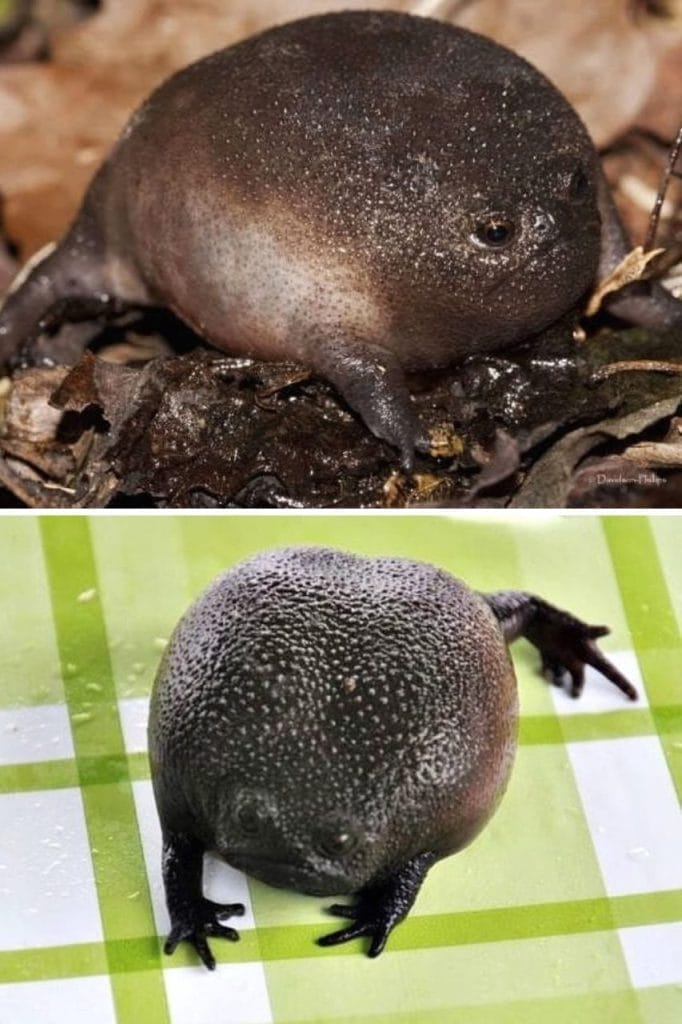
Despite the “rain” in the name, this frog avoids open water on purpose. It doesn’t swim, doesn’t lay eggs in ponds, and doesn’t have tadpoles.
Instead, it digs. With inward-facing back feet, the Black Rain Frog tunnels straight down into damp soil, often up to 150 mm (6 inches) deep. It spends most of its life in those burrows, popping up at night for food or, in rainy weather, to call for a mate.
If you’ve already met this frog’s grumpier cousins on Acuario Pets, you’ll spot the family resemblance — the hub piece on rain frogs covers all the Breviceps species worth knowing.
Why It Looks Permanently Annoyed
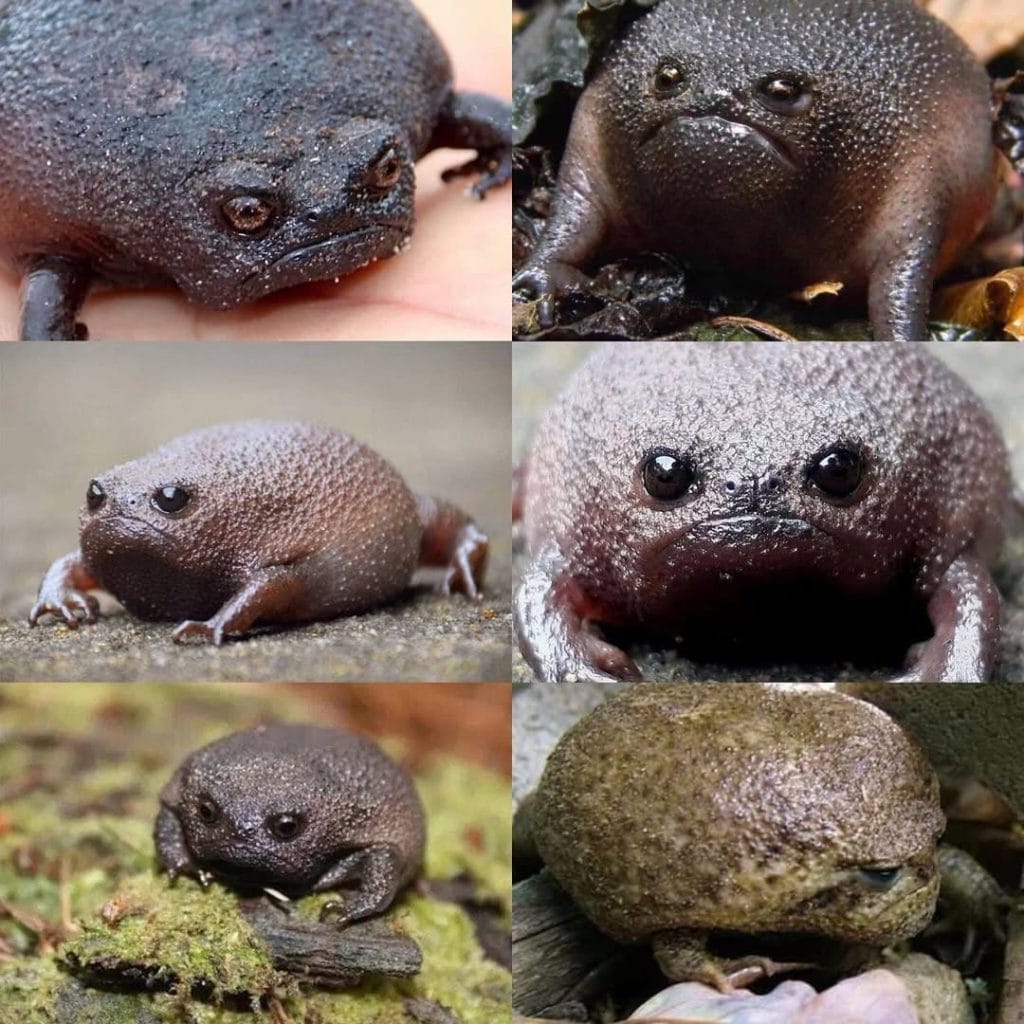
Short answer: it doesn’t have a choice. The Black Rain Frog’s mouth corners turn down naturally, the eyes sit high on the head, and the whole body is shaped like a stress ball with feet.
That face has nothing to do with mood. It’s how the species evolved — the high eyes help it see while mostly buried, and the puffy proportions make it nearly impossible to yank out of a burrow.
The Puff-Up Defense
When threatened, the frog gulps air and inflates. The body roughly doubles in apparent size, the legs lock outward, and the frog wedges itself into its tunnel like a cork in a bottle.
Predators that try to dig it out usually give up. The puffing trick also makes the frog look bigger and meaner than its 2-inch frame would suggest.
The Squeak
The defensive squeak is a real distress call, not a meme effect. Males also call from burrows or from low vegetation up to a meter off the ground, producing short 0.2-second chirps around 1.8 kHz.
In rainy southern hemisphere summers, especially September onward, those calls form choruses that can carry for days.
Breeding: The Glue Frog
This is the part of the Black Rain Frog story that most internet posts skip, and it’s genuinely strange.
Females are noticeably larger than males. That size mismatch makes normal frog amplexus — where the male grips the female from above — physically impossible. So evolution did something weirder.

Adhesive Amplexus
The male secretes a sticky substance from glands on his belly and throat. The female secretes a matching adhesive from glands on her lower back. When the pair lines up, those secretions glue the male to the female’s back, sometimes for days, while she digs the breeding burrow.
It’s the only way the species pulls off mating. No glue, no contact.
Direct Development (No Tadpoles)
The female lays roughly 42–43 yellow eggs, each about 5 mm across, sealed inside 8 mm jelly capsules in a chamber 30–40 mm below the surface. Empty extra capsules are stuffed in around the real eggs, probably to keep the burrow humid.
Then the eggs do something unusual for a frog: they hatch directly into miniature froglets. No tadpole stage, no free-swimming larvae, no water needed. The yolk feeds them through development, and they emerge as fully-formed (very tiny) versions of the adults.
If that sounds wild, it’s the same trick the Mozambique Rain Frog and the Cape Rain Frog use. The whole Breviceps genus skipped the pond stage.
Should You Actually Keep One? (Read This First)
Here’s the part nobody on TikTok wants to admit. The Black Rain Frog is a bad first frog and a borderline pet at all.

Availability
These frogs aren’t farmed in any meaningful way. South Africa tightly regulates wild collection, and almost every legal export goes through a small handful of breeders, often at premium prices. If you see one cheap on a random reptile classifieds site, that’s a red flag, not a deal.
Stress and Handling
This is a fossorial, nocturnal, prey-animal frog that wants to be underground 95% of the time. Picking it up makes it puff and squeak — that’s a stress response, not a party trick.
It’s not toxic, so handling won’t hurt you. But every time you handle it, you’re stressing the frog. Hands off is the right answer almost always.
Climate Match
Their wild climate is cool, damp, Mediterranean. If your house sits at 78°F year-round and you can’t dedicate a cooler room or a chiller, this is the wrong species for you. If your setup runs warm, the Bushveld Rain Frog tolerates a broader temperature range and makes a much more practical starting point for most keepers.
If the legal/ethical/availability picture still hasn’t scared you off, here’s how to actually do it right.
Captive Care Basics
Treat these as starting points, not gospel — your exact setup depends on your room temperature, the size of your frog, and where you live.
Tank Size and Layout
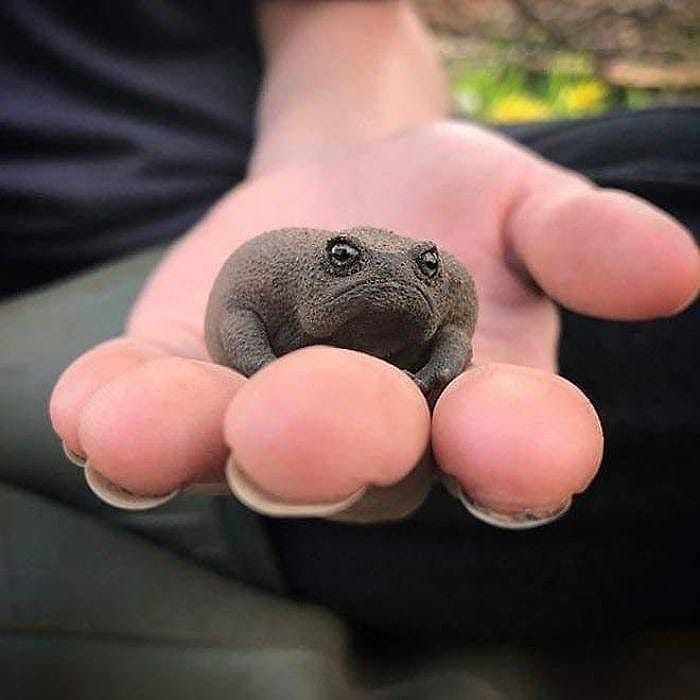
Plan for at least 10 gallons per frog, with the long axis horizontal — these are walkers, not climbers. The tank also needs to be tall enough to hold roughly 8 inches (20 cm) of substrate for tunneling.
A glass terrarium (the glass terrarium I set up for them) with a screened top works. Skip vertical climbing décor; add flat hides, smooth driftwood, and leaf litter (the jackfruit leaves I top the tank with) on the surface.
Substrate
Build a deep, mounded substrate the frog can actually dig in. A working mix is:
- High-quality, pesticide-free topsoil or coco fiber (my go-to substrate base) base
- A handful of clean sand for structure
- Sphagnum moss layered through to retain humidity
- Leaf litter on top for cover
Avoid gravel, bark chips, and anything sharp. Substrate depth matters more than tank floor area for this species.
Temperature
Aim for 50–75°F (10–24°C). They tolerate cool nights better than hot days, and overheating kills.
If supplemental heat is needed, use a low-wattage heat mat (side-mount this, never under the tank) on the side of the tank, not under it — an underside heater turns burrowed frogs into casualties. A thermostat is non-negotiable.
Humidity
Target 55–80% relative humidity, leaning toward the lower end. Do not exceed 80% — chronically wet skin invites bacterial and fungal infections.
A spray bottle (the manual mister I keep handy) and a hygrometer (the combo gauge I keep on the screen) beat any auto-misting system here. Light misting every couple of days is usually enough.
Lighting
Dim ambient light or a low-output LED is plenty. They’re nocturnal and burrowed during the day, so strong UVB isn’t required, though a low-output 2.0 UVB bulb can be added for general health.
Feeding
Offer small, gut-loaded insects 2–3 times per week:
- Pinhead and small crickets
- Black soldier fly larvae
- Small mealworms (rarely)
- Wingless fruit flies for juveniles
A simple rule: the prey item should be smaller than the gap between your frog’s eyes. Anything bigger risks impaction.
Dust feeders with a calcium + D3 supplement at most feedings, and a multivitamin (I suggest this one) once a week.
Handling
Don’t, unless you’re moving it for tank cleaning or vet care. Use a damp container, not bare hands, and put it back fast.
Common Health Issues
Even with a perfect setup, things go wrong:
| Issue | Cause | Sign |
|---|---|---|
| Bacterial infection | Substrate too wet, dirty water dish | Red skin patches, lethargy |
| Fungal infection | High humidity + poor airflow | White or fuzzy patches on skin |
| Ranavirus | Pathogen — high mortality | Lethargy, sudden death |
| Internal parasites (incl. Chilomastix) | Wild-caught animals, dirty feeders | Weight loss, runny stool |
| Impaction | Prey too large or substrate ingestion | Bloating, no appetite |
A good amphibian vet is rare. Find one before you buy the frog, not after.
Conservation
| Field | Status |
|---|---|
| IUCN Red List | Least Concern |
| Population trend | Stable in protected areas |
| Biggest threats | Afforestation (timber plantations), invasive plants, habitat fragmentation |
| Protected | Yes, in multiple South African reserves |
The species isn’t endangered today, but its narrow range makes it sensitive. A single bad fire season or a chunk of converted forest could shift the picture fast.
That’s another reason to be skeptical of cheap or sketchy sources. Wild collection at scale is exactly what would push a small-range species into trouble.
Fun Facts You Won’t See on TikTok
- They’re sometimes called Tsitsikamma rain frogs or plain rain frogs in the South African literature.
- The body tubercles look like warts and probably mimic a toxic species — but the frog itself is non-toxic.
- Males will call from low vegetation up to a meter off the ground, despite looking like creatures that should never leave a burrow.
- The grumpy face is so consistent across photos because the morphology literally won’t let it look any other way.
The Real Takeaway
The Black Rain Frog is a fascinating, ecologically narrow little burrower with one of the strangest mating systems in the amphibian world. It deserves to be talked about. It also deserves not to be impulse-bought because of a 30-second video.
If you’re set on keeping one, do it through a verified, legal breeder, with a cool room, deep substrate, and the patience to mostly leave it alone. If you’re not, watching the videos and reading guides like this one is honestly the better experience for both of you.
Want more grumpy-faced burrowers? The Cape Rain Frog care guide and the Mozambique Rain Frog complete guide cover the closest cousins, and the main rain frog overview puts the whole grumpy family side by side.

About Author
Hello, I’m Muntaseer Rahman, the owner of AcuarioPets.com. I’m passionate about aquarium pets like shrimps, snails, crabs, and crayfish. I’ve created this website to share my expertise and help you provide better care for these amazing pets.
Disclaimer
This site is owned and operated by Muntaseer Rahman. AcuarioPets.com is a participant in the Amazon Services LLC Associates Program, an affiliate advertising program designed to provide a means for sites to earn advertising fees by advertising and linking to Amazon.com. This site also participates in other affiliate programs and is compensated for referring traffic and business to these companies.