This post was created with help from AI tools and carefully reviewed by a human (Muntaseer Rahman) . For more on how we use AI on this site, check out our Editorial Policy.
Check Out These FREE Tools We Made JUST For You!
Rain Frogs: The Grumpy, Squeaky African Amphibians You’ve Definitely Seen Online
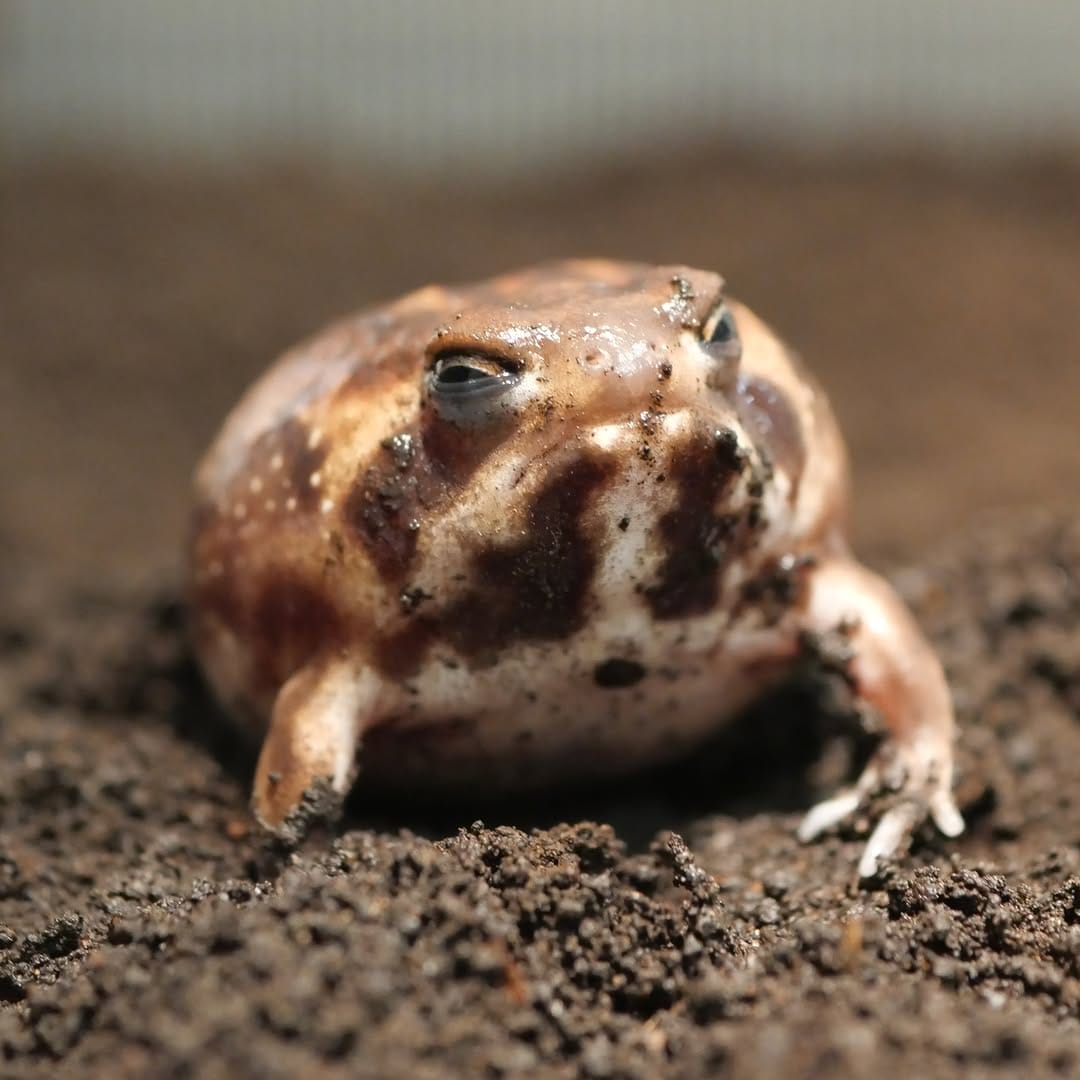
You’ve seen the video. A round little frog the size of a golf ball, looking deeply offended that you exist, letting out a squeak that sounds like a dog toy with a grudge.
That clip has racked up over 25 million views since 2013, and it pretty much single-handedly turned a tiny South African burrowing frog into an internet celebrity.
But here’s the thing nobody seems to mention: that viral squeaky frog isn’t one species. It’s a whole genus. There are 21 known rain frog species, all genuinely strange, and the famous one is just the loudest of the bunch.
Let’s untangle them.

What Is a Rain Frog, Exactly?
Rain frogs belong to the genus Breviceps, in the family Brevicipitidae. They live across arid and semi-arid parts of Eastern and Southern Africa, from Angola down through South Africa.
The name “rain frog” comes from their behavior. They spend most of their lives buried underground and only pop up after heavy rain to feed and breed.
If you live in their range, you might never see one. If it doesn’t rain for months, they don’t come out for months.
Why They All Look Permanently Grumpy
Every rain frog shares the same body plan. Round, stout body. Tiny limbs. Flat little face. Eyes that look like they’re judging you.
That shape isn’t an accident. It’s an adaptation for burrowing.
They have hardened, spade-like bumps on their hind feet called metatarsal tubercles, which let them dig backwards into soil instead of forward like most diggers.
Their legs are too short for hopping. So they walk. Imagine a tiny, angry potato waddling across the dirt — that’s a rain frog moving.
When something startles them, they inflate their bodies like a balloon to look bigger and harder to swallow. It mostly works on small predators. On a curious human holding a phone camera, less so.

Geographic Distribution: Where Rain Frogs Live
The genus splits into two big evolutionary clades, each centered on a different chunk of southern Africa.
The Northeastern Clade (mossambicus group)
This group radiates out from Mozambique into eastern South Africa, Zimbabwe, and as far north as Tanzania and southern Democratic Republic of the Congo. Species here tend to favor savanna, miombo woodland, and bushveld.
Members include the Mozambique Rain Frog, Common Rain Frog, Power’s Rain Frog, Plaintive Rain Frog, and several KwaZulu-Natal endemics.
The Southwestern Clade (gibbosus group)
This group is centered on South Africa’s Cape Floral Region — one of the most botanically diverse areas on Earth. Five species share this small Western Cape territory, all clustered around fynbos, mountains, and Mediterranean-climate scrub.
Members include the Cape Rain Frog, Black Rain Frog, Mountain Rain Frog, Strawberry Rain Frog, and Rose’s Rain Frog.
Habitat Hotspots
| Region | Climate | Species Density |
|---|---|---|
| Western Cape (South Africa) | Mediterranean fynbos | 5+ species |
| KwaZulu-Natal (South Africa) | Subtropical grassland & forest | 4+ species |
| Namib coast (Namibia/SA) | Coastal fog desert | 1 specialist (B. macrops) |
| Namaqualand | Arid succulent karoo | 2 species |
| Mozambique lowlands | Tropical savanna | 3+ species |
| Limpopo / eastern highlands | Mountain forest | 2 species |
| Angola | Highland scarp | 1 endemic (B. ombelanonga) |
The genus has never been found outside Africa. They’re a southern African specialty through and through.

The 21 Rain Frog Species
The genus keeps growing. New species get described every few years as scientists untangle “cryptic” lineages that look identical but are genetically distinct. The most recent addition is B. batrachophiliorum (Boston Rain Frog), described in 2025.
Here’s the full current list:
| Scientific Name | Common Name | Region |
|---|---|---|
| B. acutirostris | Strawberry Rain Frog | Western Cape |
| B. adspersus | Common / Bushveld Rain Frog | Southern Africa |
| B. bagginsi | Bilbo’s Rain Frog | KwaZulu-Natal |
| B. batrachophiliorum | Boston Rain Frog | KwaZulu-Natal |
| B. branchi | Branch’s Rain Frog | Namaqualand |
| B. carruthersi | Phinda Rain Frog | KwaZulu-Natal |
| B. fichus | Highland Rain Frog | Eastern South Africa |
| B. fuscus | Black Rain Frog | Cape fold mountains |
| B. gibbosus | Cape (Giant) Rain Frog | Western Cape |
| B. macrops | Desert Rain Frog | Namib coast |
| B. montanus | Mountain Rain Frog | Western Cape |
| B. mossambicus | Mozambique Rain Frog | Mozambique, eastern SA |
| B. namaquensis | Namaqua Rain Frog | Namaqualand |
| B. ombelanonga | Angolan Rain Frog | Angola |
| B. passmorei | Passmore’s Rain Frog | KwaZulu-Natal |
| B. pentheri | Thicket Rain Frog | Eastern Cape |
| B. poweri | Power’s Rain Frog | Botswana, Zambia |
| B. rosei | Rose’s Rain Frog | Cape Peninsula |
| B. sopranus | Whistling Rain Frog | Mozambique |
| B. sylvestris | Forest Rain Frog | Limpopo |
| B. verrucosus | Plaintive Rain Frog | Eastern South Africa |
Short Profile of Each Rain Frog Species
Some of these are famous. Some have been seen by maybe a hundred biologists ever. Here’s a quick orientation to all 21.
Strawberry Rain Frog (B. acutirostris)
Small, pinkish-brown rain frog endemic to the Western Cape fynbos. Named for its strawberry-pink belly tones. Fairly stable in protected fynbos reserves but rarely seen in trade.
Common / Bushveld Rain Frog (B. adspersus)
The most widespread species — found across Botswana, Namibia, Mozambique, Zimbabwe, and northern South Africa. The “default” rain frog of safari country. IUCN: Least Concern. This is the species behind the famous 2022 mating-glue study, and it’s one of the few legally available as a pet.
Bilbo’s Rain Frog (B. bagginsi)
Tiny, hobbit-themed (yes, named after Bilbo Baggins) rain frog from KwaZulu-Natal. Has a small distribution and is considered vulnerable to habitat loss. Not seen in trade.
Boston Rain Frog (B. batrachophiliorum)
The genus’s newest member, described in 2025 from the KwaZulu-Natal Midlands. Genetically distinct from neighboring species but visually nearly identical. Conservation status pending formal assessment.
Branch’s Rain Frog (B. branchi)
Named after the late South African herpetologist Bill Branch. Adapted to Namaqualand’s arid coastal scrub and one of the few rain frogs that handles desert-edge conditions. Rarely encountered.
Phinda Rain Frog (B. carruthersi)
Small and elusive, restricted to the Phinda Private Game Reserve area in KwaZulu-Natal. Recently described and poorly studied. Not in pet trade.
Highland Rain Frog (B. fichus)
Adapted to higher elevations in eastern South Africa. Cooler-climate specialist within the genus. Limited range.
Black Rain Frog (B. fuscus)
The TikTok-famous moody one. Dark brown to nearly black skin, found only in the Cape fold mountains of southwestern South Africa. IUCN: Near Threatened. Strictly protected — illegal to collect from the wild.
Cape Rain Frog (B. gibbosus)
The biggest rain frog, reaching up to 4-5 inches (10-12 cm). It was the first Breviceps ever scientifically described (1782). Endemic to the Cape Town region of Western Cape. IUCN: Near Threatened due to suburban sprawl.
Desert Rain Frog (B. macrops)
The viral one. Tiny, sandy-colored, with bulging eyes — restricted to a narrow coastal fog belt along Namibia and northwestern South Africa. IUCN: Near Threatened due to coastal diamond mining.
Mountain Rain Frog (B. montanus)
Lives in the Western Cape mountain ranges, an altitude specialist. Smaller range than its cousins but population stable in fynbos reserves.
Mozambique Rain Frog (B. mossambicus)
Found across Mozambique, eastern South Africa, Zimbabwe, and Malawi. Tan to brown body. IUCN: Least Concern and one of the more available species in the legal pet trade.
Namaqua Rain Frog (B. namaquensis)
Adapted to Namaqualand’s dry succulent karoo. One of the smallest rain frog ranges of any species. Rarely seen.
Angolan Rain Frog (B. ombelanonga)
Endemic to Angola’s central highland scarp. Described in 2020 — among the most recent additions. The genus’s only Angolan endemic so far.
Passmore’s Rain Frog (B. passmorei)
Named after South African herpetologist Neville Passmore. Limited distribution in KwaZulu-Natal. Poorly studied.
Thicket Rain Frog (B. pentheri)
Inhabits dense thicket vegetation in the Eastern Cape. The name reflects its preferred habitat — vegetation so dense you basically have to know where to look.
Power’s Rain Frog (B. poweri)
One of the more widely distributed species, ranging across Botswana, Zambia, and parts of northern southern Africa. IUCN: Least Concern.
Rose’s Rain Frog (B. rosei)
Tiny range — primarily Cape Peninsula and small parts of Western Cape. IUCN: Vulnerable due to habitat loss in Cape Town’s suburbs.
Whistling Rain Frog (B. sopranus)
The musical one. Has a distinctive whistle-like call instead of the typical rain frog squeak — that’s where the “soprano” name comes from. Found in Mozambique.
Forest Rain Frog (B. sylvestris)
A forest-floor specialist restricted to small patches of indigenous forest in Limpopo Province, South Africa. IUCN: Vulnerable due to habitat loss.
Plaintive Rain Frog (B. verrucosus)
Coastal forest specialist along eastern South Africa. Has a distinctive plaintive, mournful-sounding call. IUCN: Least Concern.

The Five We Cover in Depth
If you want the full care, breeding, and pet-keeping guide for the most popular species, we’ve got dedicated articles:
- Desert Rain Frog (B. macrops) — the famous viral squeaker
- Black Rain Frog (B. fuscus) — the moody dark one TikTok loves
- Cape Rain Frog (B. gibbosus) — the biggest of the bunch
- Bushveld Rain Frog (B. adspersus) — also called the Common Rain Frog
- Mozambique Rain Frog (B. mossambicus) — the easygoing cousin
The Squeak Heard Around the World
The viral clip everyone’s seen is a Desert Rain Frog (Breviceps macrops) filmed by Dean Boshoff in 2013. That single video is the reason most people know rain frogs exist.
Here’s what’s actually happening when they squeak.
The sound is a distress call, not a threat. It’s the frog saying “please go away” in the loudest, weirdest voice it can manage.
Because they can’t hop and can’t run, the squeak buys them a few seconds — enough to startle a predator while they shuffle backwards into the dirt and disappear.
It works on snakes and small mammals. It does not work on tourists with cameras.
Different species have different vocal signatures. The Whistling Rain Frog actually whistles. The Plaintive Rain Frog sounds mournful. Most others squeak — but the pitch and pattern are species-specific enough that herpetologists can identify rain frogs by call alone.

The Glue. The Famous Glue.
This is the rain frog detail that scientists love and casual fans usually miss.
Male rain frogs are way smaller than females. Like, comically smaller. So small that during mating, the male physically can’t wrap his arms around her — a problem, since amplexus is how most frogs hold on.
So they evolved a workaround: glue.
A 2022 study on Breviceps adspersus showed that during mating, the male’s chest and arms secrete an adhesive, and the female’s back secretes one too. The two secretions cure together into a strong bond, and the pair literally sticks together for the entire mating process.
The glue is mostly proteins — molecules between 25 and 250 kilodaltons, making up roughly half the secretion. It hardens fast and holds tight.
Sometimes pairs get stuck in awkward positions. Sometimes a male even ends up glued to the wrong species by mistake. But under normal conditions, the bond keeps the pair together long enough to dig a nesting burrow as a unit.
It’s one of the only known examples of a vertebrate using its own skin glue for reproduction.

No Tadpoles. None.
Most frogs lay eggs in water. The eggs hatch into tadpoles, the tadpoles swim around, and weeks later they sprout legs and lose their tails.
Rain frogs skip every step of that.
A female lays 20 to 40 large, yolk-rich eggs in an underground chamber. The yolk feeds the developing froglet inside the egg. After 6 to 8 weeks, fully formed mini-frogs hatch out and walk away.
No water. No swimming. No tail. Just instant tiny frog.
This is called direct development, and it’s a huge advantage when you live somewhere that goes dry for months. Other frogs need ponds. Rain frogs need a damp burrow and patience.
Both parents often stay near the burrow during incubation. The male sometimes guards the eggs while the female forages.
What They Eat
Rain frogs are ambush feeders.
Their legs are too short to chase prey, so they wait, motionless, until something edible walks past. Then they snap.
Typical menu:
- Ants — the staple
- Termites — especially after rain when colonies swarm
- Small beetles
- Spiders and other ground-dwelling arthropods
Nothing exotic. Just whatever crawls within reach of a small, round, very offended frog.
Rain Frog Care Basics (For the Few Species That Are Legal Pets)
If you’re keeping a Bushveld or Mozambique Rain Frog — the two most-traded species — here’s the genus-level care framework. Species-specific guides linked above cover the fine details.
Enclosure Size
A 10-gallon (38 L) tank works for one adult. They’re small and don’t move much, so floor space matters more than height. Bigger is always better, but they don’t need huge enclosures the way a Pacman Frog does.
Substrate (The Most Important Part)
Rain frogs are obligate burrowers. Without proper substrate they get stressed and refuse to feed.
- Depth: at least 4-6 inches of loose, moisture-retaining substrate
- Best mix: coconut fiber (my go-to substrate base) + chemical-free topsoil + a layer of sphagnum moss (keeps the humidity right)
- Avoid: sand alone, gravel, reptile carpet, or anything compacted
Humidity
- Target range: 50-70%, depending on species
- Desert Rain Frog wants the higher end (70-85%) due to its fog-belt origin
- Mist lightly once daily; don’t soak the tank
Temperature
- 70-78°F (21-26°C) is the sweet spot for most species
- No basking light needed — these aren’t reptiles
- A low-wattage heat mat (side-mount this, never under the tank) under one side of the tank is helpful in cold rooms
Feeding
- Live insects only: small crickets, ants, termites, soft-bodied beetles, calcium-dusted
- Feed 2-3 times per week; juveniles eat more often
- Drop food near the burrow entrance; don’t try to feed from tongs
Water
- No swimming dish required. Rain frogs hydrate through their skin from the damp substrate
- A very shallow water bowl is fine if you want one
Handling
Don’t. Handling stresses them and triggers the squeak response. They’re observation pets, not interaction pets.

Lifespan & Common Health Issues
Lifespan
Captive rain frogs can live a surprisingly long time — 10 to 15 years under good care. Wild lifespan is harder to measure but estimated at 4-8 years for most species.
The Desert Rain Frog has been recorded as low as 4 years and as high as 14 in captivity, depending heavily on humidity management.
Common Health Problems
| Issue | Cause | Fix |
|---|---|---|
| Dehydration | Substrate too dry | Mist daily, deeper substrate |
| Impaction | Loose sand or gravel substrate | Switch to coconut fiber/topsoil |
| Fungal infection (chytrid) | Stress + poor sanitation | Vet visit, antifungal bath |
| Anorexia | Stress, wrong temps, mites | Check substrate depth, temps, prey size |
| Burrow refusal | Too-shallow substrate | Deepen to 6+ inches |
The single biggest killer in captivity is dehydration from inadequate substrate depth. A rain frog that can’t dig deep enough to find moisture won’t survive long.
Legality: Can You Actually Own a Rain Frog?
Short answer: it depends a lot on where you live and which species.
CITES Status
No Breviceps species is currently listed on CITES (the international wildlife trade treaty). That means there’s no global ban on the genus.
But CITES isn’t the whole story.
Country & Provincial Laws
- South Africa — protects most native rain frogs under provincial wildlife laws. Wild collection requires permits. Black Rain Frog and Cape Rain Frog are essentially off-limits to the pet trade.
- Namibia — similar restrictions, especially for Desert Rain Frog due to its threatened status.
- United States — no federal ban on most rain frogs, but state-by-state rules vary. Always check your state’s exotic-amphibian list.
- EU — generally legal to own, but importation may require origin documentation.
- Australia — exotic amphibians are heavily restricted; most rain frogs cannot be legally owned.
Wild-Caught vs Captive-Bred
Most rain frogs in the pet trade are wild-caught. That’s a problem for several reasons:
- Wild-caught animals stress easily and have higher mortality
- Many regions limit or ban wild collection
- Captive-bred rain frogs are rare and expensive — but always the better choice
If you’re shopping, look specifically for captive-bred Bushveld (B. adspersus) or Mozambique (B. mossambicus) rain frogs from a reputable breeder. Anything else is probably wild-caught — and possibly illegal depending on jurisdiction.
Realistic Pet Options
| Species | Pet Trade Availability | Recommendation |
|---|---|---|
| Bushveld Rain Frog | Some captive-bred | Best option |
| Mozambique Rain Frog | Mostly wild-caught, some CB | OK if CB |
| Desert Rain Frog | Almost always wild-caught | Avoid |
| Black Rain Frog | Illegal to source legally | Avoid |
| Cape Rain Frog | Protected, not in trade | Avoid |
| All other species | Not in trade | N/A |
Rain Frog vs Other Round Burrowing Frogs
People mix these up constantly. Here’s how to tell them apart.
| Feature | Rain Frog (Breviceps) | Pacman Frog (Ceratophrys) | Tomato Frog (Dyscophus) | Budgett’s Frog (Lepidobatrachus) |
|---|---|---|---|---|
| Size | 1.5-3 inches | 4-7 inches | 3-4 inches | 4-5 inches |
| Origin | Southern Africa | South America | Madagascar | South America |
| Habitat | Burrows in soil | Sits in leaf litter (the jackfruit leaves I top the tank with) | Burrows in soil | Aquatic/semi-aquatic |
| Mouth | Tiny | Massive | Medium | Massive |
| Squeak | Yes, loud | No | No | No |
| Diet | Tiny insects | Anything that moves | Insects | Aquatic prey, insects |
If it’s round, looks grumpy, and is the size of a golf ball with a tiny mouth — it’s a rain frog. If it’s round, looks grumpy, and could swallow your finger — it’s a Pacman.
Conservation: Mostly Stable, Some at Risk
Most Breviceps species are doing okay in the wild. The genus as a whole is widespread and adapts well to grassland and bush habitat.
But a few are in trouble.
The Desert Rain Frog (B. macrops) is listed as Near Threatened by the IUCN, mainly because of coastal opencast diamond mining in the narrow strip of Namibian and South African beach where it lives. Road development, livestock grazing, and human settlement aren’t helping either.
It’s not protected in any reserve. Its entire population sits inside a region being actively dug up for diamonds.
The Cape Rain Frog (B. gibbosus) has also lost a lot of habitat to Cape Town’s urban sprawl, though it’s hanging on in pockets. Rose’s Rain Frog (B. rosei) is in similar trouble for the same reason. Forest Rain Frog (B. sylvestris) is listed as Vulnerable due to forest loss in Limpopo.
For the rest of the genus, the biggest long-term threat is climate change — less reliable rainfall means fewer chances to emerge, breed, and feed. A rain frog that can’t predict the rain is in trouble.
Fun Rain Frog Facts
- They’re the only frogs that glue themselves together to mate.
- Some species never see standing water their entire lives.
- They walk instead of hop because their legs are too short.
- The viral “screaming” Desert Rain Frog is barely the size of a golf ball.
- Females are noticeably bigger than males — sometimes nearly twice the size.
- A new species was just described in 2025, and biologists think there are more hiding.
- The Cape Rain Frog was the first species in the genus to be described scientifically, all the way back in 1782.
- Some species can stay underground for months at a time, only surfacing when it rains.
Final Thoughts
Rain frogs look like grumpy little potatoes that hate being alive. The reality is weirder and more interesting.
They’re some of the most specialized burrowers in the amphibian world. They’ve solved the “no water, no problem” puzzle through skin glue, direct development, and a willingness to spend most of their existence underground in total silence.
The squeak is just the part that went viral. The rest of the story is wilder.
Next time you see one in a meme, you’ll know there are 20 other species exactly like it, all equally annoyed, all somewhere in southern Africa, waiting for it to rain.

About Author
Hello, I’m Muntaseer Rahman, the owner of AcuarioPets.com. I’m passionate about aquarium pets like shrimps, snails, crabs, and crayfish. I’ve created this website to share my expertise and help you provide better care for these amazing pets.
Disclaimer
This site is owned and operated by Muntaseer Rahman. AcuarioPets.com is a participant in the Amazon Services LLC Associates Program, an affiliate advertising program designed to provide a means for sites to earn advertising fees by advertising and linking to Amazon.com. This site also participates in other affiliate programs and is compensated for referring traffic and business to these companies.