This post was created with help from AI tools and carefully reviewed by a human (Muntaseer Rahman) . For more on how we use AI on this site, check out our Editorial Policy.
Check Out These FREE Tools We Made JUST For You!
Why Won’t My Chameleon Eat? Complete Troubleshooting Guide

So your chameleon is giving you the cold shoulder at dinner time.
You drop in some perfectly good crickets, and your chameleon just… stares at them like they personally insulted its family.
Don’t panic yet. This is one of the most common experiences every chameleon owner goes through, and in most cases, there’s a totally fixable reason behind it.
Let’s walk through every possible cause and exactly what to do about each one.
First Things First: How Long Can a Chameleon Go Without Eating?
Here’s the thing that will help you sleep tonight.
A healthy adult chameleon can survive up to two weeks without food, as long as it’s still drinking water. Most reptile vets agree on this.
That said, if your chameleon hasn’t eaten in more than three days, it’s worth investigating. If it’s been over a week and you can’t figure out why, a vet visit is a smart call.
Baby and juvenile chameleons are a different story. They need food daily because their little bodies are burning through energy to grow. A baby skipping meals is more urgent than an adult doing the same thing.

The “No Big Deal” Reasons Your Chameleon Won’t Eat
Before you start Googling worst-case scenarios at 2 AM, let’s rule out the simple stuff first.
Your Chameleon Is Just Not Hungry
This one catches new owners off guard all the time.
Chameleons don’t eat like dogs. They’re not going to inhale everything you put in front of them. Adult chameleons only need to eat every 2-3 days, typically consuming 3-8 feeder insects per session.
If your chameleon ate well yesterday and is ignoring food today, it’s probably just… full.
Think about it. These animals spend most of their day sitting on a branch doing absolutely nothing. That doesn’t exactly burn a lot of calories.
Your Chameleon Is Growing Up
Here’s something that freaks out a LOT of new chameleon parents.
Baby chameleons are eating machines. They’ll happily demolish 10-15 insects per day without blinking.
Then one day, around the 7-12 month mark, they start eating less. Way less. And their owner starts spiraling.
Relax. This is completely normal. As chameleons transition from juvenile to adult, their growth rate slows down and so does their appetite. Your chameleon going from 10 crickets a day to 4-5 every other day isn’t a crisis. It’s just growing up.
Shedding
When a chameleon is about to shed, eating is the last thing on its mind.
You’ll notice the signs: dull colors, a foggy film over the body, and a general “leave me alone” attitude. Sound familiar?
Juveniles shed every 3-4 weeks, and adults shed every 6-8 weeks. During this time, appetite drops significantly or stops altogether.
Just leave them be. They’ll eat again once the shed is done.
Boredom With the Menu
Imagine eating nothing but rice every single day for months.
That’s what it’s like for a chameleon that only gets crickets. Every. Single. Feeding.
Chameleons absolutely get bored of the same food. In the wild, they eat dozens of different insect species. Offering just one type in captivity is a recipe for a hunger strike.
If your chameleon has been eating only crickets for weeks and suddenly stops, this might be exactly why.
Your Chameleon Got Bit
This is one that most people don’t even consider.
Feeder insects like superworms and hornworms can actually bite back. If a superworm pinched your chameleon’s tongue or mouth, your chameleon might be too sore or too scared to eat for a couple of days.
Here’s the wild part: chameleons remember which insects hurt them. If a particular feeder insect bit your chameleon, it might refuse to eat that specific insect ever again. They hold grudges.
They’re Being Shy
This one is especially common with new chameleons.
Chameleons are surprisingly self-conscious eaters. Many of them flat-out refuse to eat if you’re standing there watching them.
Some chameleons get comfortable eating in front of their owner within a few days. Others take months before they’ll eat with an audience. If you just brought your chameleon home, give it up to a week to settle in before worrying about food refusal.
Try leaving the room after offering food. You might come back to find everything gone.

Brumation (Seasonal Slowdown)
If your chameleon starts ignoring food as the weather gets cooler, it might be entering a natural brumation phase.
Brumation is the reptile version of hibernation. Chameleons slow down their activity to adapt to cooler, shorter days.
Panther chameleons are known to show duller colors and reduce activity during this period. Parson’s chameleons take it even further and can go 4-6 months with barely any interest in food.
If it’s fall or winter and everything else checks out, this could be the answer.
The “Check Your Setup” Reasons
If the simple explanations above don’t apply, it’s time to grab a thermometer and hygrometer (the combo gauge I keep on the screen) and do some detective work.
Wrong Temperature
This is the #1 husbandry mistake that causes feeding problems.
Chameleons are cold-blooded. They literally cannot digest food properly without the right temperature. If the enclosure is too cold, their metabolism slows to a crawl, and eating becomes pointless because the food just sits in their gut.
Too hot is also a problem. It causes stress and dehydration, which kills appetite just as fast.
Here’s what you’re aiming for:
| Species | Basking Temp | Ambient Temp | Nighttime Temp |
|---|---|---|---|
| Veiled Chameleon | 90-95°F (32-35°C) | 72-80°F (22-27°C) | 65-75°F (18-24°C) |
| Panther Chameleon | 82-88°F (28-31°C) | 75-80°F (24-27°C) | 60-70°F (16-21°C) |
| Jackson’s Chameleon | 80-85°F (27-29°C) | 70-75°F (21-24°C) | 55-65°F (13-18°C) |
Use a digital thermometer or temperature gun to measure these. Those stick-on dial thermometers from the pet store are notoriously inaccurate.
Make sure there’s a proper temperature gradient in the enclosure: warm at the top (basking area), cooler at the bottom. Your chameleon needs options so it can regulate its own body temperature.
Wrong Humidity
Humidity that’s consistently too low or too high causes stress and health problems that directly impact appetite.
Here’s the general guideline:
| Species | Daytime Humidity | Nighttime Humidity |
|---|---|---|
| Veiled Chameleon | 40-60% | 80-100% |
| Panther Chameleon | 40-60% | 75-100% |
| Jackson’s Chameleon | 50-70% | 80-100% |
The key thing most people miss is that humidity should fluctuate throughout the day, not stay at a constant level. Lower during the day, higher at night. This mimics natural conditions.
Use an automatic misting system (the only one I trust for chameleons) or hand mist multiple times a day. A fogger (the one I run at night) running a few hours before “sunrise” can help boost nighttime humidity.
And please use a digital hygrometer to actually measure this. Don’t just guess.

Bad Lighting
Chameleons are visual eaters. If the lighting is wrong, they literally can’t see their food well enough to want to eat it.
Two things to check:
UVB lighting: Your chameleon needs UVB to produce vitamin D3, which is essential for calcium absorption and overall health. UVB bulbs (this is the bulb chameleon keepers actually use) lose their effectiveness over time, even if the light still turns on. Replace them every 6-12 months depending on the bulb type.
A chameleon with insufficient UVB will eventually develop metabolic bone disease, and appetite loss is one of the early warning signs.
Visible light: Chameleons also need bright, visible light to stimulate feeding behavior. A dark or dimly lit enclosure makes them sluggish and uninterested in food.
The Food Cup Is In the Wrong Spot
This sounds so simple it’s almost dumb, but it catches people all the time.
If you’re cup-feeding your chameleon, the cup needs to be high up in the enclosure, not on the floor. Chameleons are arboreal. They spend their lives in trees. They’re not going to come down to ground level to look for food in most cases.
Place the feeding cup where your chameleon can clearly see the insects moving around inside it. Near a favorite perching branch works best.
Also, if you’re only putting 2-3 insects in the cup, they might not be moving around enough to catch your chameleon’s attention. Try putting 15-20 Dubia roaches in there so they bump into each other and create some movement.
Stress From Environment Changes
Chameleons are creatures of habit, and even small changes can throw them off.
Moving to a new enclosure? Expect several days to a week of food refusal while they adjust.
Rearranged the decorations? Changed the lighting schedule? Moved the cage to a different room? All of these can trigger temporary appetite loss.
Even something like a new pet in the house or increased foot traffic near the enclosure can stress a chameleon out enough to stop eating.
Other Chameleons Nearby
This is a big one that people underestimate.
Chameleons are solitary animals. If you’re housing two chameleons in the same enclosure, or even if they can see each other through the glass, the more submissive one might be too stressed and intimidated to eat.
The fix is simple: separate housing, no visual contact between chameleons.
The “Something Might Be Wrong” Reasons
If you’ve checked everything above and your chameleon still won’t eat, it’s time to consider health issues.
Parasites
Parasites living in the gut are more common in chameleons than most owners realize.
The main symptoms are diarrhea, weight loss, and a lack of interest in food. The problem is that chameleons are experts at hiding discomfort, so a parasite load can get pretty bad before you notice anything.
A vet can do a fecal test to check for parasites. This is a simple, inexpensive test that every chameleon should get at least once a year.
Impaction
Impaction is when something blocks the chameleon’s digestive tract. It could be undigested food, a piece of substrate they accidentally swallowed, or even an insect that was too large.
Signs include: no droppings for an extended period, bloating, lethargy, and complete food refusal.
If you suspect impaction, a vet visit is non-negotiable.
Prevent impaction by keeping feeder insects smaller than the space between your chameleon’s eyes, and avoid loose substrate on the enclosure floor.
Metabolic Bone Disease (MBD)
MBD happens when a chameleon doesn’t get enough calcium, vitamin D3, or UVB light.
It weakens the bones, causes pain and difficulty moving, and absolutely destroys appetite. In severe cases, chameleons can’t even grip branches properly.
MBD is preventable with proper supplementation and UVB lighting, but once it sets in, you need veterinary treatment.
Mouth Rot (Stomatitis)
If your chameleon’s mouth looks wrong, like yellow or green pus, soft jaw tissue, or scab-like marks around the mouth, it might have stomatitis.
This is a bacterial infection that makes eating painful. Your chameleon isn’t refusing food because it’s picky. It’s refusing because it hurts.
This needs antibiotics from a reptile vet.
Tongue Problems
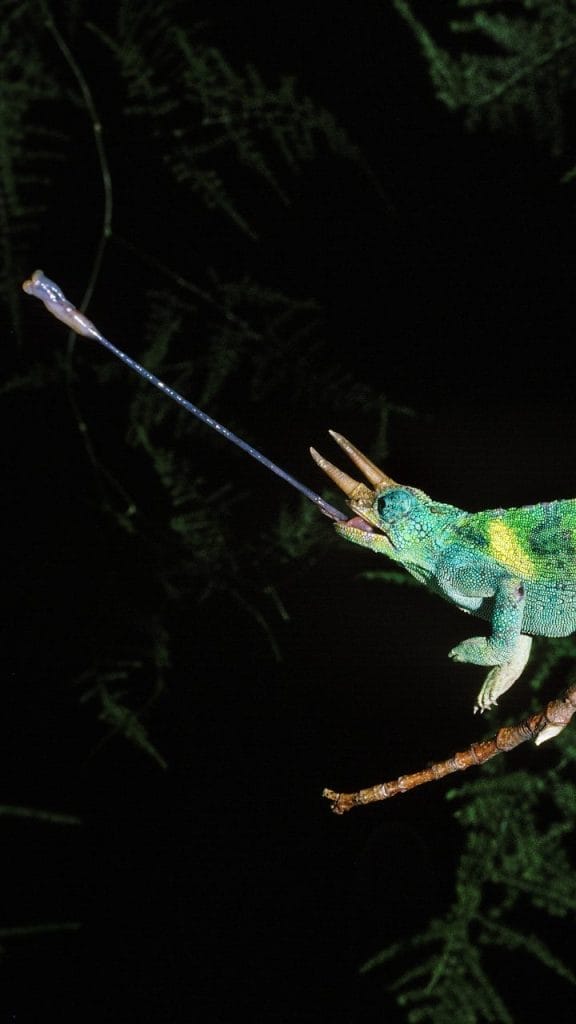
Chameleons rely on that incredible projectile tongue to catch their food. If the tongue is injured, swollen, or not functioning properly, they physically can’t eat.
Tongue issues can result from infections, nutritional deficiencies (especially vitamin A), or physical injury. Some chameleons will try to bite at food directly when their tongue isn’t working, but many will just stop trying altogether.
Gout
Gout in chameleons is caused by excess uric acid crystallizing in their system, usually from too much protein in the diet or chronic dehydration.
It’s extremely painful and severely impacts appetite. It can also make it hard for them to grip branches.
This is a serious condition that requires veterinary care.
Egg Production (Females Only)
If you have a female chameleon, especially a female veiled chameleon, there’s a very specific reason she might stop eating.
Female chameleons produce eggs even without a male present. When they’re getting ready to lay, they often stop eating for 2-4 days before the event.
This is completely normal and expected. But you DO need to make sure she has a proper lay bin in her enclosure. Without one, she can become egg-bound, which is a life-threatening emergency.
How to Get a Stubborn Chameleon Eating Again
Alright, you’ve identified the likely cause. Now here’s how to fix it.
Try a Different Feeder Insect
If your chameleon has been on a cricket-only diet, switch it up immediately.
Great options include: Dubia roaches, black soldier fly larvae, silkworms, hornworms, superworms (as an occasional treat), grasshoppers, and wax moths.
Most chameleons go absolutely crazy for hornworms and silkworms. If your chameleon won’t eat crickets but inhales a hornworm, you know the problem is boredom, not illness.
Skip a Few Feedings
Sounds counterintuitive, but if your chameleon is just being picky, letting it get genuinely hungry can reset its appetite.
Skip 2-3 feedings, then offer a small amount of food. A hungry chameleon is a much less picky chameleon.
Obviously, don’t do this if your chameleon is underweight, sick, or a young juvenile.
Double-Check Your Temperatures and Humidity
Get out that thermometer and hygrometer and actually measure everything. Don’t rely on settings from when you first set up the enclosure. Bulbs lose output over time, seasons change ambient temperatures, and things drift.

Audit Your Supplement Schedule
Improper supplementation causes long-term health problems that eventually kill appetite.
Here’s a solid supplement schedule for veiled and panther chameleons:
| Supplement | Frequency |
|---|---|
| Calcium without D3 | Every feeding (except one per week) |
| Calcium with D3 | Twice per month |
| Multivitamin | Twice per month |
Make sure you’re also gut-loading (the gutload I use weekly) your feeder insects with nutritious foods like collard greens, carrots, squash, and dandelion greens before feeding them to your chameleon. An insect with an empty stomach is basically an empty shell.
Hand-Feed With Tongs
Some chameleons that won’t eat from a cup will eat from feeding tongs. The controlled movement of the insect can trigger their hunting instinct.
Hold the insect at a distance where your chameleon can use its tongue, and wiggle it slightly to get attention.
Replace Your UVB Bulb
If your UVB bulb is older than 6 months (for compact bulbs) or 12 months (for T5 linear bulbs), replace it even if the light is still working. UVB output degrades long before the visible light does.
When to See a Vet
Here’s the bottom line.
Go to a reptile-experienced veterinarian if:
- Your adult chameleon hasn’t eaten in more than 7-10 days and you can’t identify a cause
- Your baby/juvenile chameleon hasn’t eaten in more than 3 days
- Not eating is accompanied by lethargy, closed eyes during the day, weight loss, unusual coloring, weakness, or inability to grip branches
- You notice anything unusual around the mouth, eyes, or limbs
- Your chameleon has stopped both eating and drinking
You can find a reptile vet near you through the Association of Reptile and Amphibian Veterinarians (ARAV) directory at arav.org. Look for the “find a vet” tool and search by your zip code.
Don’t wait until your chameleon is severely ill. Chameleons are masters at hiding sickness, and by the time they look visibly sick, things have often progressed further than you’d think.
Final Thoughts
A chameleon not eating is one of those things that feels way scarier than it usually is.
In most cases, it’s a simple fix. Wrong temperature, boring menu, shedding, or just a chameleon that’s full and not interested right now.
But when it’s something more serious, catching it early makes all the difference. Stay observant, check your husbandry regularly, and don’t be afraid to call a vet if something feels off.
Your chameleon might not show gratitude (they’re chameleons, after all), but it’ll show you with bright colors, active behavior, and yes, eventually eating those bugs you spent good money on.
Now go double-check that basking temperature. You know you want to.
About Author
Hello, I’m Muntaseer Rahman, the owner of AcuarioPets.com. I’m passionate about aquarium pets like shrimps, snails, crabs, and crayfish. I’ve created this website to share my expertise and help you provide better care for these amazing pets.
Disclaimer
This site is owned and operated by Muntaseer Rahman. AcuarioPets.com is a participant in the Amazon Services LLC Associates Program, an affiliate advertising program designed to provide a means for sites to earn advertising fees by advertising and linking to Amazon.com. This site also participates in other affiliate programs and is compensated for referring traffic and business to these companies.