This post was created with help from AI tools and carefully reviewed by a human (Muntaseer Rahman) . For more on how we use AI on this site, check out our Editorial Policy.
Check Out These FREE Tools We Made JUST For You!
Why Pet Stores Keep Selling Bettas in Cups (And What You Can Do)
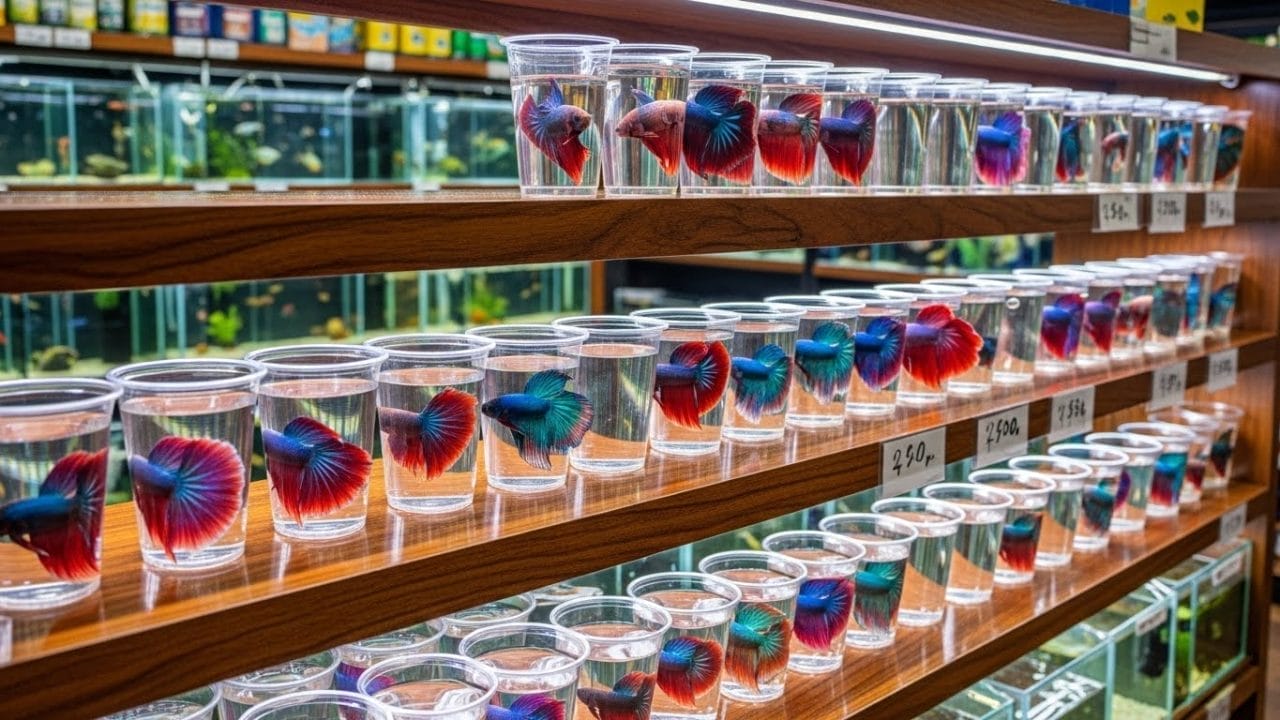
You’ve seen them.
Those sad little betta fish stacked in tiny cups at Petco and Petsmart, barely able to turn around, sitting in water that looks like it hasn’t been changed since the Clinton administration.
And you’ve probably wondered: “Why the heck are these beautiful fish living like they’re in solitary confinement?”
Here’s the thing—there’s actually a twisted logic behind it, and once you understand it, you’ll never look at those cups the same way again.
The Brutal Economics of Betta Sales
Let’s start with the uncomfortable truth: pet stores keep bettas in cups because it’s cheap and space-efficient.
That’s it. That’s the whole reason.
Think about it from a business perspective—male bettas will literally fight each other to death if you put them together. They don’t call them Siamese fighting fish for nothing.
So stores can’t just toss a bunch of males in one tank like they do with goldfish or tetras. Each male needs his own space, and individual 5-gallon tanks for every single betta? That’s a LOT of real estate.
The Space Problem
A typical pet store might stock 20-40 bettas at a time.
If they gave each one even a modest 3-gallon tank, we’re talking about 60-120 gallons of shelf space. That’s the equivalent of 3-6 large aquariums taking up valuable retail space.
Compare that to stacking 40 cups on two shelves, and you see why corporate accountants are basically in love with this system.
The Convenience Factor
Here’s another reason stores love cups: customers can just grab and go.
No waiting for an employee to net your fish out of a community tank. No decision paralysis from trying to pick one out of a crowded aquarium. Just point, grab, pay, and bounce.
From a business standpoint, it’s smooth as butter.
The Secret Superpower That Makes This Possible
Now here’s where things get interesting.
Bettas have this wild biological adaptation called a labyrinth organ—basically a lung-like structure that lets them breathe air directly from the surface.
This is why you see your betta swimming up to gulp air every few minutes. They’re not just being dramatic (okay, they’re a little dramatic), but they actually NEED to do this to survive.
How the Labyrinth Organ Works
The labyrinth organ is made of thin, folded membranes packed with blood vessels. When a betta gulps air, oxygen gets absorbed directly into their bloodstream—kind of like lungs, but weirder.
Here’s the kicker: bettas are “obligate air breathers.” That means they’ll literally drown if they can’t access the surface, even if the water is perfectly oxygenated.
Wild bettas evolved this superpower because they live in shallow rice paddies and slow-moving streams in Southeast Asia. During dry seasons, these areas can become stagnant puddles with barely any dissolved oxygen.
While other fish would suffocate, bettas just pop up for air and keep on living.
Why This Backfires for Captive Bettas
Pet stores have weaponized this biological quirk to justify keeping bettas in cups.
The logic goes: “They can breathe air, so they don’t need much water!”
But that’s like saying humans can hold our breath, so we’d be fine living in a closet with a 2-inch breathing hole. Technically survivable? Sure. A good life? Absolutely not.
The Real Problems With Cup Storage
Let’s talk about what actually happens to bettas in those cups.
Water Quality Nightmare
In a tiny cup with maybe 8-16 ounces of water, waste builds up FAST.
Bettas produce ammonia through their waste and respiration. In a proper tank with filtration, beneficial bacteria convert this ammonia into less harmful compounds through the nitrogen cycle.
In a cup? Ammonia just accumulates until the water becomes toxic. This is like living in a porta-potty that never gets cleaned.
Many stores are supposed to change betta cup water daily or every other day. Guess how often it actually happens? Yeah, not that often.
Temperature Torture
Bettas are tropical fish that need water between 76-82°F to stay healthy.
Most pet stores keep the ambient temperature around 68-72°F. That means cup bettas are living in chronically cold water, which makes them lethargic, suppresses their immune system, and can literally cause their organs to shut down.
It’s like forcing someone to live in a walk-in freezer and wondering why they’re always sick.
Stress From Constant Visibility
Here’s something that makes it even worse: bettas can see each other through those cups.
Many stores stack cups close together or even on top of each other (sometimes blocking the air holes—absolute genius move there). Male bettas are territorial, so seeing rivals constantly makes them flare aggressively, which is exhausting.
Imagine being stuck in a glass box directly across from someone you want to fight, 24/7, with no way to escape. That’s the betta cup experience.
The Mortality Rate
According to betta keepers and forum discussions, many bettas don’t survive more than a few weeks in cups.
Some stores report finding dead or dying fish regularly. And those “discount” bettas that look half-dead with ragged fins? They’ve been sitting there way too long.
Pet stores factor this mortality into their business model—they buy bettas so cheap (often less than $2 wholesale) that losing a few doesn’t hurt profits.
What Proper Betta Care Actually Looks Like
So what DO bettas need to thrive?
Tank Size
The consensus among betta experts is a minimum of 5 gallons for a single betta.
Some say you can go down to 2.5-3 gallons, but smaller tanks are harder to maintain stable water parameters. Think of it like trying to keep your coffee hot—a big mug stays warm longer than a tiny espresso cup.
Bigger is genuinely better here. A 10-gallon tank gives your betta room to actually swim and explore, not just exist.
Temperature Control
Bettas need a heater to maintain 76-82°F consistently.
This isn’t optional. Cold bettas are stressed bettas, and stressed bettas get sick and die early.
Filtration
Yes, bettas need a filter—but a gentle one.
Their long fins make them poor swimmers in strong currents, so adjustable flow filters work best. Sponge filters are perfect for betta tanks.
Water Quality
Regular water changes (about 25% weekly) and monitoring for ammonia, nitrite, and nitrate spikes.
Bettas might be hardy, but “hardy” doesn’t mean “indestructible.”
Enrichment
Bettas are intelligent, curious fish. They need plants (real or silk), hiding spots, and decorations to explore.
A bare tank is boring. Would you want to live in an empty room your whole life?
The Better Alternative: Divided Tanks
Here’s the thing that drives me nuts: there ARE humane ways to house multiple bettas without needing 40 individual tanks.
How Divided Tanks Work
You can take a 20-gallon tank and divide it into 3-4 sections using opaque dividers. Each betta gets about 5 gallons, one heater and filter serve the whole tank, and nobody can see their neighbors.
Pet stores could absolutely do this. Some actually do! But most don’t because cups are cheaper and easier.
The Betta Barracks System
Serious breeders use “betta barracks”—custom setups with multiple small compartments that share filtration and heating. It’s like betta apartments.
These systems house dozens of fish humanely in a compact space. If breeders can do it, so can pet stores.
What You Can Actually Do About This
Alright, so now you know the full ugly truth. What can you do?
Don’t Shop at the Worst Offenders
If a store has bettas sitting in cloudy, dirty water with dead fish on the shelves, don’t give them your money—even for fish supplies.
Vote with your wallet. Stores track what sells and where customers shop.
Support Better Stores
Some pet stores DO take better care of their bettas. They have larger cups, regular water changes, and temperature-controlled displays.
Shop there instead. Tell the manager you appreciate their better standards.
Speak Up (Nicely)
If you see bettas in terrible conditions, ask to speak with a manager.
Don’t go in guns blazing—most store employees are underpaid and overworked, not evil fish torturers. But managers have the power to change policies.
Try something like: “Hey, I noticed your bettas look pretty stressed in those small cups. Have you considered divided tank systems? They’d probably sell better if they looked healthier.”
Educate New Betta Owners
The biggest problem isn’t stores—it’s customer misinformation.
If stores sold bettas properly but customers still bought them for 1-gallon bowls, nothing would change. When you see someone buying a betta with a tiny bowl, gently share knowledge.
“Oh hey, just so you know, bettas actually need at least 5 gallons and a heater. I made the same mistake at first!”
Contact Corporate and Authorities
For really bad situations—like shelves of dead fish or consistently poor conditions—contact corporate headquarters.
Companies care about their image. Complaints that hit social media or go viral get action fast.
For extreme cases, contact local animal welfare authorities. Yes, fish abuse counts.
Consider Rescue Bettas
That sad, half-dead betta in the murky cup? You could save its life.
I’m not saying buy every sick betta (that just rewards bad stores), but if you were planning to get one anyway, rescuing the sickest fish and rehabilitating it feels pretty good.
Just be prepared—rescued bettas often need medication and extra care.
The Uncomfortable Reality
Here’s what sucks: this practice isn’t going away tomorrow.
Pet store chains have used the cup system for decades. It’s baked into their logistics, training, and profit margins. Changing it would require corporate decisions and investment that most companies won’t make unless forced.
But things CAN change when enough people demand it.
Success Stories
Some local fish stores have switched to divided tank systems or larger containers after customer feedback.
Certain Petco locations have improved their betta care dramatically because managers who actually care about fish pushed for change.
The UK and parts of Europe have stricter regulations about selling fish in tiny containers. It’s possible—just not here yet.
The Bottom Line
Pet stores sell bettas in cups because it’s cheap, space-efficient, and possible thanks to the labyrinth organ.
But “possible” doesn’t mean ethical. Bettas can survive in cups the same way humans could survive in prison cells—technically alive, but suffering.
These fish deserve better. They’re intelligent, interactive pets with personalities, not decorative objects.
The next time you walk past that betta display, remember: those fish are breathing air not because they’re fine, but because their bodies are working overtime to keep them alive in terrible conditions.
And now that you know better, you can do better—whether that’s choosing where to shop, how to care for your own betta, or educating others who just don’t know yet.
Because at the end of the day, bettas in cups are only there because we keep accepting it.
Let’s stop accepting it.

About Author
Hello, I’m Muntaseer Rahman, the owner of AcuarioPets.com. I’m passionate about aquarium pets like shrimps, snails, crabs, and crayfish. I’ve created this website to share my expertise and help you provide better care for these amazing pets.
Disclaimer
This site is owned and operated by Muntaseer Rahman. AcuarioPets.com is a participant in the Amazon Services LLC Associates Program, an affiliate advertising program designed to provide a means for sites to earn advertising fees by advertising and linking to Amazon.com. This site also participates in other affiliate programs and is compensated for referring traffic and business to these companies.