This post was created with help from AI tools and carefully reviewed by a human (Muntaseer Rahman) . For more on how we use AI on this site, check out our Editorial Policy.
Check Out These FREE Tools We Made JUST For You!
Top 10 Foods Your Bearded Dragon Will Love – Plus Surprising Treats!
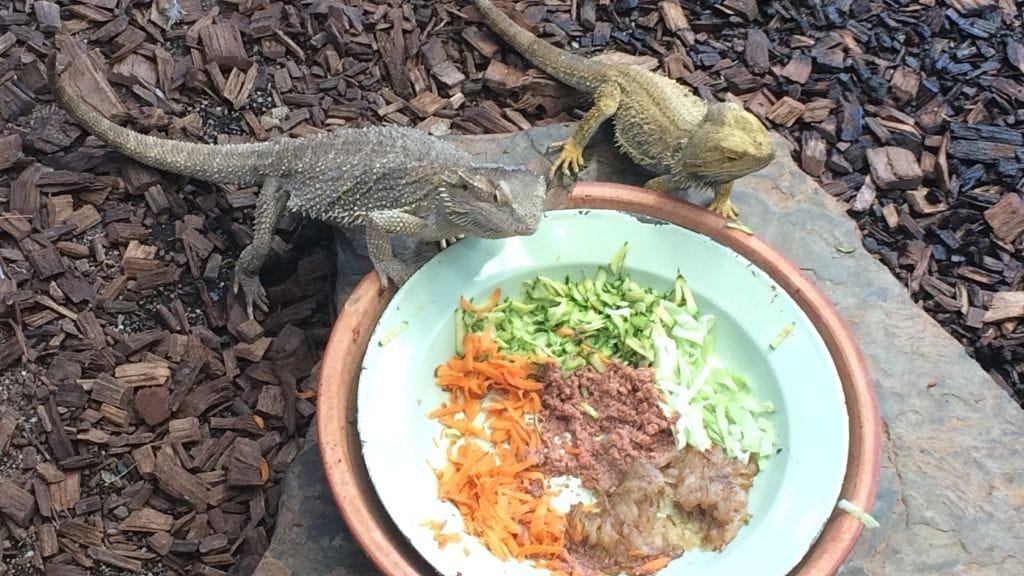
When I first brought my bearded dragon home, I was overwhelmed by the long list of “dos and don’ts” for their diet. I wanted to ensure my little scaly friend thrived, but what I discovered went beyond the basics.
From crunchy favorites to unexpected treats that had my dragon practically dancing in their tank, these top 10 foods are a must-know for every owner.
Before We Talk Food: The Non-Negotiables
The best diet in the world won’t save a dragon in a poorly set-up tank. Before you perfect their menu, make sure you have these basics covered:
Essential Requirements:
Proper Enclosure:
- Baby (0-6 months): 20-40 gallons minimum
- Juvenile (6-12 months): 40-75 gallons minimum
- Adult (12+ months): 75-120 gallons minimum
UVB Lighting (CRITICAL):
Without proper UVB, your dragon can’t metabolize calcium from food—which means even a perfect diet leads to metabolic bone disease.
- T5 HO tube bulb (10.0 or 12%)
- Mounted INSIDE enclosure
- Replaced every 6-12 months
- 12-14 hours daily
Correct Temperatures:
Wrong temperatures = poor digestion = malnourished dragon (even with perfect food)
- Basking spot: 95-110°F (varies by age)
- Warm side: 85-90°F
- Cool side: 75-80°F
Supplements (Non-Optional):
Even with perfect food, bearded dragons need supplements to prevent metabolic bone disease.
- Calcium powder (without D3): Daily for babies, 4-5x weekly for adults
- Calcium with D3: 2-3x per week
- Multivitamin: 1x per week
See complete supplement schedule
Bottom line: Food is just one piece of the puzzle. Get the setup right first.
Age-Appropriate Feeding Ratios (Critical)
The “top 10 foods” list below works for all ages, but the RATIOS change dramatically:
Baby Bearded Dragons (0-6 months):
- 80% insects, 20% vegetables
- Feed insects 3-5 times daily
- Offer vegetables daily (even if ignored)
- Dust insects with calcium every feeding
Juvenile Bearded Dragons (6-12 months):
- 50% insects, 50% vegetables
- Feed insects 2-3 times daily
- Daily vegetable salads
- Calcium with most feedings
Adult Bearded Dragons (12+ months):
- 20% insects, 80% vegetables
- Feed insects 3-4 times per week
- Daily vegetable salads
- Calcium 4-5 times weekly
Why this matters: Feeding an adult dragon like a baby causes obesity and liver disease. Feeding a baby like an adult causes stunted growth.
See complete feeding guide by age


Your Beardie Has More to Say…
This article tells you WHAT to do, but do you know WHY your dragon needs it? Or what they’re thinking when you do it wrong?
Read the full rant (all 20 chapters of it) in: “What Your Bearded Dragon Wishes You Knew”
*Told by a very frustrated beardie who’s had ENOUGH of watching you guess.*
Top 10 Foods For Bearded Dragon
Feeding a bearded dragon is an adventure. Mine’s a picky eater, so I’ve learned the hard way what works and what doesn’t.
Let me save you some trouble with this list of top foods your scaly buddy will love!
| Food | Frequency | Key Benefit |
|---|---|---|
| Collard Greens | Daily | High in calcium. |
| Dubia Roaches | 2–3 times weekly | Excellent protein source. |
| Mustard Greens | Daily | Nutrient-rich green. |
| Butternut Squash | 1–2 times weekly | Vitamin A boost. |
| Blueberries | Occasionally | Fun, antioxidant-rich snack. |
| Hornworms | Occasionally | Hydrating protein treat. |
| Turnip Greens | Daily | High calcium, low oxalate. |
| Papaya | Occasionally | Sweet and hydrating treat. |
| Crickets | 2–3 times weekly | Protein for active dragons. |
| Cactus Pads | Weekly | Hydration and fiber source. |
Important note: All insects should be dusted with calcium powder before feeding. All vegetables should be fresh and chopped to appropriate size.
See our supplement recommendations for the exact products we recommend.
Foods to NEVER Feed Your Bearded Dragon
Just as important as knowing what TO feed is knowing what NOT to feed:
Toxic Foods (Can Kill):
- Avocado (toxic)
- Rhubarb (toxic)
- Fireflies/lightning bugs (deadly toxic—one firefly can kill)
- Wild-caught insects (pesticide risk)
- Citrus fruits (too acidic)
Foods That Cause Problems:
- Iceberg lettuce (no nutritional value, causes diarrhea)
- Spinach (binds calcium—causes metabolic bone disease)
- Beet greens (high oxalates—blocks calcium)
- Cabbage (goitrogens—thyroid issues)
- Onions and garlic (toxic)
Insects to Avoid:
- Wild-caught bugs (pesticides)
- Lightning bugs (deadly)
- Box elder bugs (toxic)
- Insects from bait shops (parasites)
When in doubt, don’t feed it. Stick to the proven safe foods list.
See complete food safety guide
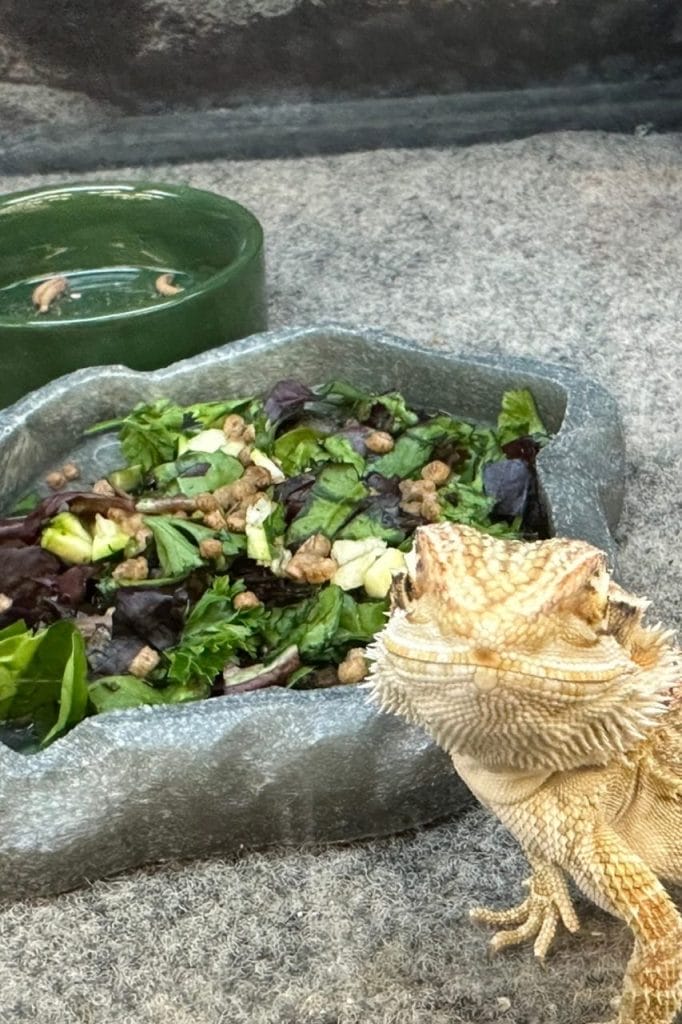
1. Collard Greens
Why It’s Great:
- Rich in calcium, which prevents metabolic bone disease.
- A staple leafy green that’s easy to find in stores.
How to Feed:
- Chop into small pieces.
- Serve fresh and raw, mixed with other greens for variety.
Tips:
✅ Use as a daily food source.
❌ Don’t serve only collard greens—mix things up!
Don’t know if a food is safe for your bearded dragon? Ask this tool.

2. Dubia Roaches
Why It’s Great:
- Packed with protein, especially for growing dragons.
- Easier to digest than crickets.
| Feeding Details | Tips |
|---|---|
| Dust with calcium powder before serving. | ✅ Feed live for stimulation. |
| Feed 3–5 for adult dragons or more for juveniles. | ❌ Avoid wild roaches—they carry diseases. |
Watching my dragon hunt these is like watching a mini Jurassic Park!

3. Mustard Greens
Why It’s Great:
- High in calcium and low in oxalates.
- A great alternative to collard greens.
How to Feed:
- Chop and serve fresh.
- Pair with other greens like turnip or dandelion greens.
Tips:
✅ Rinse thoroughly before feeding.
❌ Don’t let them dominate the salad—dragons need variety.
4. Butternut Squash
Why It’s Great:
- Packed with Vitamin A for eye and skin health.
- Bright orange color makes it irresistible.
| Preparation | Frequency |
|---|---|
| Peel and dice into small cubes. | Offer 1–2 times per week. |
| Steam lightly if too tough. |
I call this “dragon dessert” because mine devours it like candy!

5. Blueberries
Why It’s Great:
- Loaded with antioxidants.
- Juicy, fun-to-eat treats for dragons.
How to Feed:
- Wash thoroughly.
- Offer 2–3 berries at a time.
Tips:
✅ Use as an occasional snack.
❌ Avoid overfeeding—too much sugar isn’t good.
After blueberries, my dragon always has the cutest messy face.
6. Hornworms
Why It’s Great:
- High in moisture, helping with hydration.
- Great source of protein.
How to Feed:
- Offer live and fresh.
- Feed 1–2 worms as a treat or supplement.
Tips:
✅ Perfect for hot weather or dehydrated dragons.
❌ Too many can upset their stomach.
Hornworms wiggle a lot, and my dragon’s hunting skills go into overdrive!

7. Turnip Greens
Why It’s Great:
- Full of calcium and vitamins.
- A nutritious, low-oxalate option.
| How to Serve | Tips |
|---|---|
| Chop finely and mix with other greens. | ✅ Use in daily salads. |
| Always serve raw. | ❌ Don’t overpair with oxalate-rich veggies. |
My dragon loves these mixed with collard greens for extra crunch!
8. Papaya
Why It’s Great:
- Sweet and full of hydration.
- Packed with Vitamin C and antioxidants.
How to Feed:
- Peel, remove seeds, and dice.
- Serve occasionally as a treat.
Tips:
✅ Use for a tropical twist in their diet.
❌ Don’t feed too often—high sugar content.
Papaya is like vacation food for dragons. Mine acts like it’s a rare treasure!

9. Crickets
Why It’s Great:
- A classic protein source that’s widely available.
- Great for younger dragons and active adults.
| Feeding Tips | Warnings |
|---|---|
| Dust with calcium powder before feeding. | ❌ Don’t leave uneaten crickets in the tank. |
| Use as an occasional treat for adults. | ❌ Can stress or bite your dragon. |
The chase is hilarious—my dragon leaps for them every time!
10. Cactus Pads (Prickly Pear)
Why It’s Great:
- High in water content for hydration.
- Loaded with fiber and nutrients.
How to Feed:
- Remove spines carefully.
- Dice into small, safe pieces.
Tips:
✅ Excellent for hot climates or summer months.
❌ Avoid untreated or spiny pads.
Cactus pads might seem exotic, but my dragon loves the soft texture.
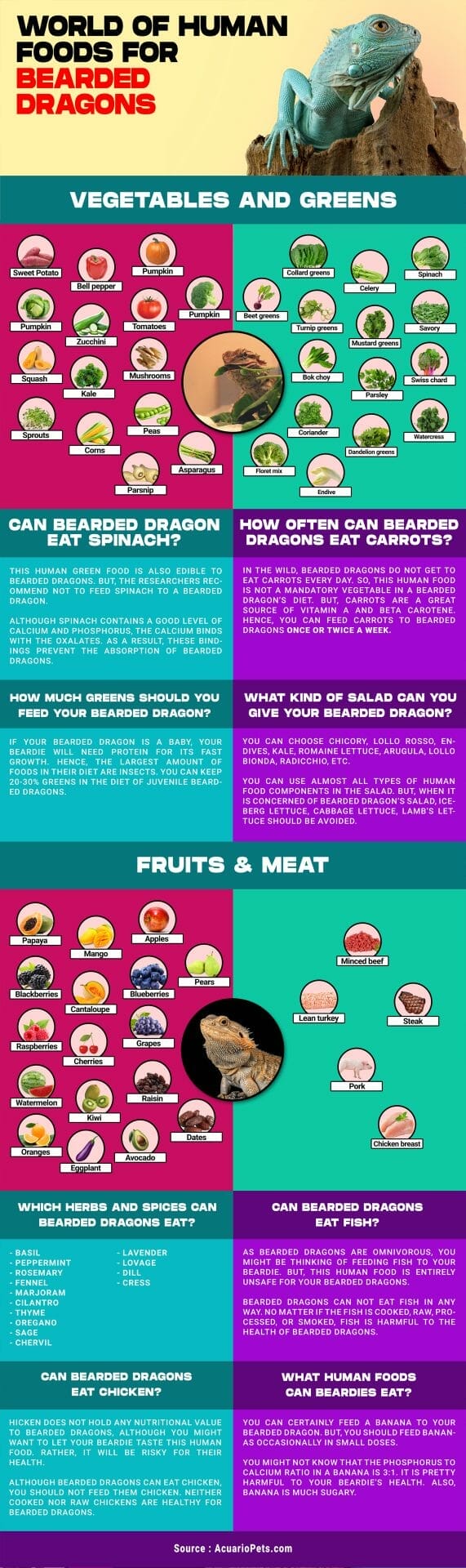
Creating the Perfect Bearded Dragon Salad
A daily salad is one of the best ways to ensure your bearded dragon gets balanced nutrition—but only if you’re also supplementing properly.
Don’t forget: Even perfect salads need calcium powder dusted on top. Without proper supplements, your dragon will develop metabolic bone disease.
The Basic Formula
A healthy bearded dragon salad should follow this ratio:
- 70-80% leafy greens (the foundation)
- 10-20% vegetables (for variety and nutrients)
- 5-10% fruits (occasional treats, 1-2 times per week)
Best Leafy Green Bases
Start every salad with these nutrient-rich greens:
- Collard greens (top choice – high calcium, low oxalates)
- Mustard greens
- Turnip greens
- Dandelion greens
- Endive or escarole
Avoid: Iceberg lettuce (no nutritional value), spinach (high oxalates), and kale (use sparingly due to goitrogens)
Vegetables to Add
Chop finely and mix in small amounts:
- Butternut squash (high in vitamin A)
- Bell peppers (red, yellow, or orange)
- Carrots (shredded, not too often)
- Green beans
- Sweet potato (cooked, occasional)
- Snap peas
Fruit Garnish (1-2x Weekly)
Top with small amounts:
- Blueberries
- Strawberries (quartered)
- Mango pieces
- Papaya
- Figs
5 Sample Salad Recipes
1. The Daily Classic
- 2 parts collard greens, chopped
- 1 part mustard greens
- Sprinkle of shredded butternut squash
- Small dice of red bell pepper
2. Vitamin A Boost
- Turnip greens base
- Grated carrot (small amount)
- Diced butternut squash
- 2-3 blueberries
3. Colorful Variety Mix
- Mixed collard and dandelion greens
- Yellow bell pepper strips
- Snap peas, chopped
- Occasional strawberry slice
4. Calcium Power Salad
- Collard greens (extra portion)
- Turnip greens
- Small amount butternut squash
- Topped with bee pollen (natural supplement)
5. Weekend Treat Bowl
- Endive and mustard green mix
- Bell pepper variety
- Green beans, chopped
- Topped with mango chunks and raspberries
Feeder Insect Care (Gut-Loading Matters)
Your dragon’s nutrition depends on what the insects eat. Well-fed insects = well-fed dragon.
What is Gut-Loading?
Feeding nutritious food to your insects 24-48 hours before feeding them to your dragon. The nutrition passes through to your pet.
Good gut-load foods:
- Collard greens
- Carrots
- Sweet potato
- Squash
- Commercial gut-load powder
Avoid: Dog food, cat food, fish flakes (wrong nutritional profile)
Where to Buy Quality Feeders
Best sources:
- Reputable online breeders (Rainbow Mealworms, Dubia Roaches, etc.)
- Local reptile stores
- Breed your own (advanced)
Never: Pet store crickets (often sick), wild-caught insects (pesticides)
Feeder Storage
Keep your insects alive and healthy:
- Plastic bin with ventilation holes
- Egg crates for hiding spots
- Fresh vegetables for food and moisture
- Temperature: 70-80°F
See complete insect care guide
Preparation Tips
Size matters: Chop all ingredients smaller than the space between your dragon’s eyes to prevent choking.
Freshness counts: Prepare salads fresh daily. Wilted greens lose nutritional value.
Temperature: Serve at room temperature, never cold from the fridge.
Mixing it up: Rotate your greens and vegetables throughout the week to provide diverse nutrients and prevent boredom.
Calcium dusting: Lightly dust the salad with calcium powder 4-5 times per week for juveniles, 2-3 times for adults.
Storage tip: Use a salad spinner to keep greens fresh longer. Wash once, spin dry, store in fridge. Saves time and reduces waste.
Feeding dish: Use a heavy ceramic bowl that won’t tip. See our feeding accessory recommendations.
Age-Specific Adjustments
Juveniles (under 12 months): They need more protein, so salads should be a smaller portion of their diet (20-30%). Focus on softer greens and finely chopped vegetables.
Adults (12+ months): Salads should make up 70-80% of their diet. They can handle larger pieces and more variety.
Seniors (6+ years): Keep salads easy to digest with softer greens and well-chopped vegetables.
Common Mistakes to Avoid
- Using the same greens every single day (leads to nutritional imbalance)
- Too much fruit (causes diarrhea and sugar dependency)
- Pieces too large (choking hazard)
- Forgetting to remove uneaten salad after 1-2 hours (attracts bacteria)
Building the perfect salad takes practice, but once you establish a routine, it becomes second nature. Your bearded dragon will thrive on the variety!
Feed Your Dragon Right—But Get Everything Else Right Too
These top 10 foods and salad recipes will keep your bearded dragon healthy and thriving—but only if the rest of their care is dialed in.
The Complete Picture:
Your dragon needs ALL of these:
- Proper enclosure (75-120 gallons for adults)
- T5 HO UVB lighting (without this, they can’t use calcium from food)
- Correct temperatures (wrong temps = poor digestion)
- Quality diet (that’s what this post covers)
- Calcium supplements (even perfect food needs supplementation)
- Safe substrate (tile, not loose sand)
Complete Setup Checklist:
- [ ] Proper-sized enclosure
- [ ] T5 HO UVB bulb
- [ ] Basking bulb maintaining correct temps
- [ ] Temperature gun
- [ ] Quality feeder insects
- [ ] Fresh vegetables (from this guide)
- [ ] Calcium powder without D3
- [ ] Calcium powder with D3
- [ ] Multivitamin
The Priority Order:
Step 1: Get equipment right (enclosure, UVB, heating)
Step 2: Perfect the diet and supplements (that’s this guide)
Step 3: Monitor and adjust based on your dragon’s health
Remember: Perfect food can’t fix a bad setup. But bad food will ruin a perfect setup. You need BOTH.
Quick Reference: What to Feed Today
For babies (0-6 months):
- Morning: 20-30 dubia roaches or crickets (dusted with calcium)
- Afternoon: 15-20 more insects (dusted)
- Evening: Small salad (they’ll probably ignore it, offer anyway)
For juveniles (6-12 months):
- Morning: 10-15 insects (dusted with calcium)
- Evening: Large salad + 5-10 insects
For adults (12+ months):
- Daily: Large salad (dusted with calcium 4-5x weekly)
- 3-4x per week: 5-10 insects as treats
See detailed feeding schedules
Now go feed your dragon—the right way.

About Author
Hello, I’m Muntaseer Rahman, the owner of AcuarioPets.com. I’m passionate about aquarium pets like shrimps, snails, crabs, and crayfish. I’ve created this website to share my expertise and help you provide better care for these amazing pets.
Disclaimer
This site is owned and operated by Muntaseer Rahman. AcuarioPets.com is a participant in the Amazon Services LLC Associates Program, an affiliate advertising program designed to provide a means for sites to earn advertising fees by advertising and linking to Amazon.com. This site also participates in other affiliate programs and is compensated for referring traffic and business to these companies.