This post was created with help from AI tools and carefully reviewed by a human (Muntaseer Rahman) . For more on how we use AI on this site, check out our Editorial Policy.
Check Out These FREE Tools We Made JUST For You!
10 Nano Aquarium Aquascaping Ideas That’ll Make Your Desk Pop

Listen, I get it—you’re staring at that tiny 5-gallon tank on your desk thinking “how the heck am I supposed to make this look good?”
Here’s the thing about nano aquariums: they’re like the espresso of the fish tank world—small, concentrated, and way more intense than you’d expect.
I’ve set up more nano tanks than I can count (okay, it’s 14, but who’s counting?), and I’ve learned that nano tanks under 10 gallons can pack just as much visual punch as those massive 75-gallon monsters.
The secret? Knowing which aquascaping styles actually work in tight spaces without making your tank look like a cluttered mess.
Why Nano Aquascaping Is Actually Harder Than You Think
Before we jump into the fun stuff, let’s talk about why nano tanks are sneaky difficult.
Small water volumes mean everything happens faster—temperature swings, ammonia spikes, and algae blooms can turn your cute little underwater garden into a green soup overnight.
But here’s the payoff: when you nail a nano aquascape, it’s like creating a perfect miniature world that fits on your nightstand.
The maintenance is quicker (we’re talking 20 minutes weekly instead of an hour), and you can actually afford those fancy rocks without selling a kidney.
1. Iwagumi Style – The Zen Master’s Choice
What Makes It Special
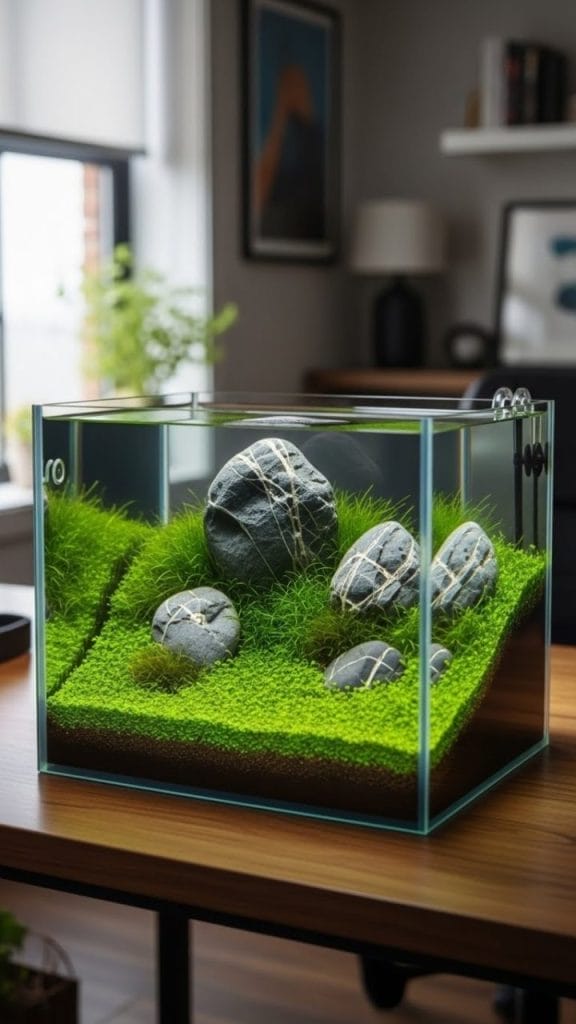
Imagine if Marie Kondo designed an aquarium—that’s Iwagumi.
This Japanese style uses odd-numbered rocks (typically 3 or 5) arranged asymmetrically with carpeting plants like dwarf hairgrass or monte carlo creating a lush lawn effect.
The Secret Sauce
The largest rock (called the Oyaishi or “father stone”) should be about 2/3 the height of your tank.
Place it using the golden ratio—roughly one-third from the left or right edge, not dead center like some amateur.
Pair it with smaller “supporting stones” that look like they’re paying respect to the main rock.
Best Plants for Nano Iwagumi
Dwarf hairgrass (Eleocharis acicularis) is your best friend here, growing into that perfect carpet look.
Monte carlo and Hemianthus callitrichoides ‘Cuba’ (aka HC Cuba) work too, but fair warning—they’re needy and demand CO2 injection to look their best.
Real Talk
Iwagumi looks simple but it’s actually the hardest style to pull off.
One rock in the wrong spot and your whole zen vibe goes out the window faster than my patience during water change day.

2. Dutch Style – The Plant Collector’s Paradise
When Plants Are the Star
Dutch aquascaping is what happens when a gardener decides underwater plants need the same respect as roses.
This style uses no hardscape—just plants arranged in terraces with different colors, textures, and leaf shapes creating that “wow, did they hire a landscape architect?” look.
The Dutch Approach in Nano Tanks
You’ll want to use stem plants grouped tightly in “streets” that run from front to back, creating depth.
Think of it like painting with plants—red Rotala next to green Ludwigia, feathery plants beside broad leaves.
For nano tanks, stick to 5-7 plant species max or it’ll look like a vegetable drawer exploded in your tank.
Maintenance Reality Check
Dutch style requires weekly trimming to keep those perfect terraces looking sharp.
Miss a week and your carefully planned design turns into an unruly jungle (which, honestly, might lead you to our next style).

3. Jungle Style – Controlled Chaos Done Right
The Wild Child of Aquascaping
If Dutch style is a formal garden, jungle style is that overgrown backyard that somehow still looks intentional.
This is perfect for beginners because you can literally hide mistakes under dense plant growth and call it “artistic vision.”
How to Jungle Your Nano Tank
Use fast-growing plants like water sprite, Amazon swords (dwarf varieties for nano), and let floating plants like dwarf water lettuce create a canopy.
Add some driftwood leaning at dramatic angles like fallen trees and you’re golden.
The key is making it look wild but not actually letting it become wild—there’s a difference between “lush jungle” and “I forgot this tank existed for three months.”
Why I Love This Style
Jungle scapes are forgiving as heck.
Your plants growing unevenly? That’s the aesthetic. Algae on a rock? Adds to the ancient forest vibe.
4. Nature Aquarium/Diorama – Recreating Mother Nature
Takashi Amano’s Legacy
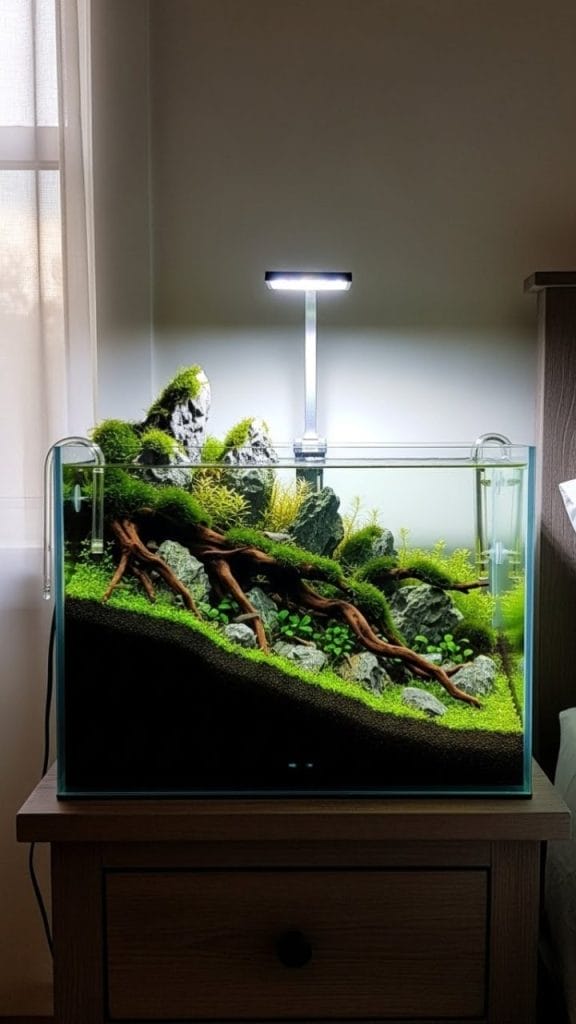
This style aims to recreate actual landscapes underwater—think mountains, valleys, or forest paths, just tiny.
It’s like building a model train set, except with real plants and fish swimming through your miniature world.
Building Your Landscape
Use sloped substrate rising from front to back to create depth.
Position driftwood to look like fallen logs or tree roots, and strategically place rocks to suggest a mountain range or riverbank.
Plants should appear to grow naturally from these features—moss on wood, ferns in crevices.
Scale Is Everything
In a nano tank, you need to trick the eye into thinking it’s bigger than it is.
Use smaller-leaved plants in the background and larger leaves up front (counterintuitive, I know) to create forced perspective.
5. Island Layout – Desert Oasis Vibes
The Central Focus Design
Picture a tropical island surrounded by white sand beaches—now put that in a fish tank.
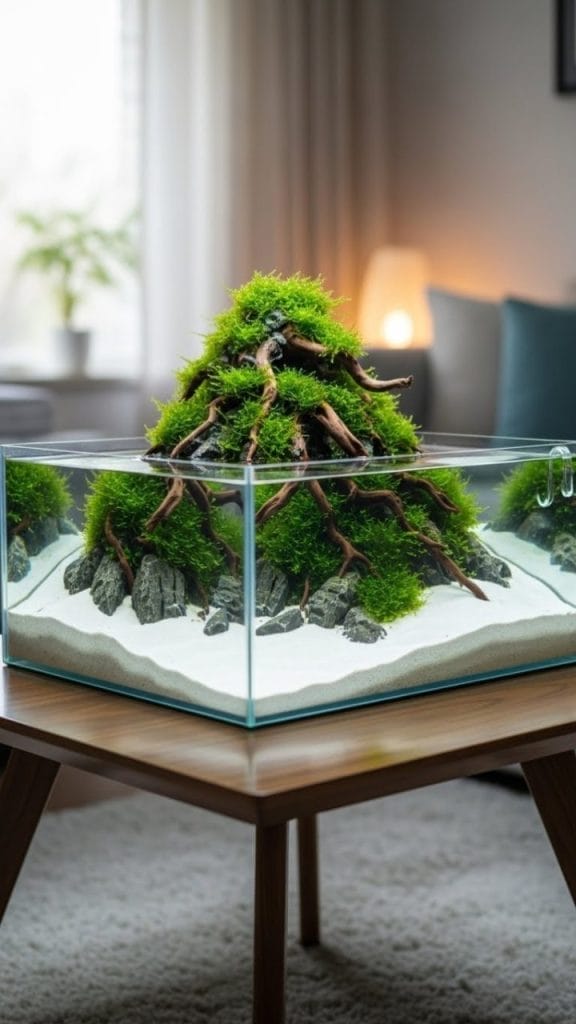
Island layouts use a central mound of hardscape and plants with open sand or substrate surrounding it, creating negative space that makes your tank feel bigger.
Building Your Island
Start with a pile of rocks or driftwood slightly off-center (that golden ratio again).
Plant it with epiphytes like anubias, Java fern, or moss attached to the hardscape.
Surround everything with fine white sand or light-colored substrate for that beach effect.
Fish Love This Setup
That open swimming space around the island? Your fish will use it like a racetrack.
Watching a school of neon tetras circle your mini island never gets old, trust me.
6. Shrimp Paradise – When Invertebrates Are the Stars
Designing for the Tiniest Residents
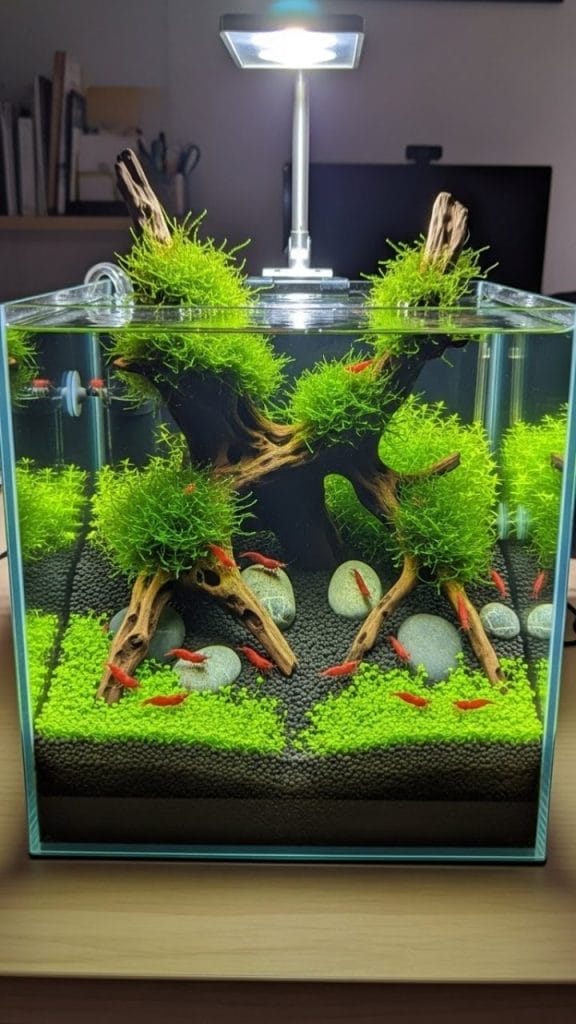
Shrimp tanks need different priorities than fish tanks—more surface area for grazing, tons of hiding spots, and plants that won’t uproot when you’re doing maintenance.
A well-designed shrimp nano can support 10 shrimp per gallon comfortably.
The Perfect Shrimp Setup
Java moss is non-negotiable—shrimp love grazing on the biofilm that grows on it.
Add some cholla wood (it’s like shrimp crack, they can’t resist it), river stones for more surfaces, and maybe some floating plants so shrimp can hang upside down like tiny acrobats.
Keep It Simple
Use dark substrates to make your colorful cherry or blue dream shrimp pop visually.
A simple piece of dragon stone with moss attached and a carpet of dwarf hairgrass is all you need for a stunning shrimp paradise.
The No-Filter Option
You can actually run a shrimp nano without a filter if you have enough plants and don’t overstock.
This Walstad method approach needs fast-growing plants like hornwort to naturally filter the water, but when it works, it’s pretty magical watching a self-sustaining ecosystem do its thing.
7. Biotope – The Naturalist’s Dream
Recreating Real Habitats
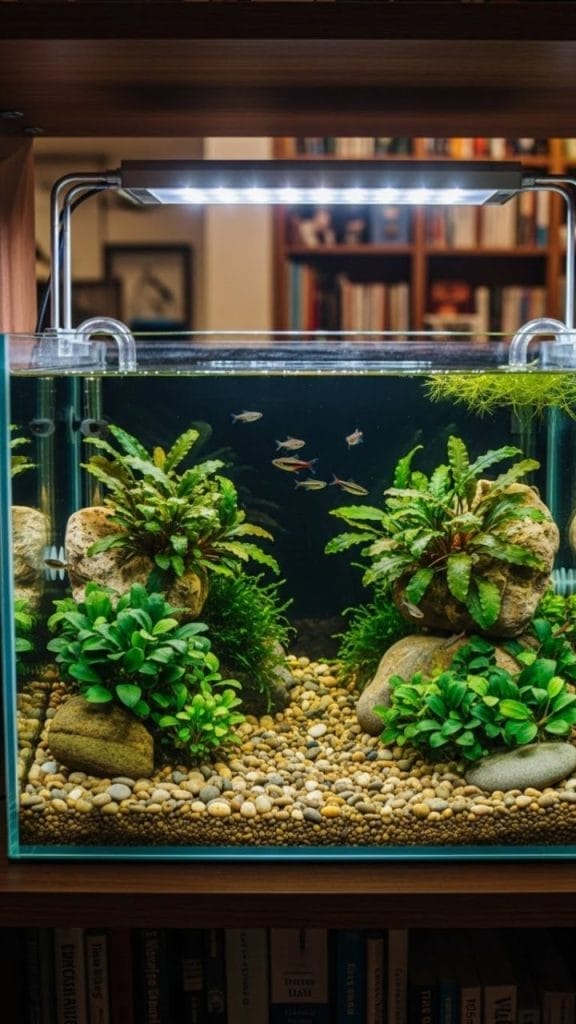
Biotope aquascaping means picking a specific place on Earth and recreating it as accurately as possible.
We’re talking matching the fish species, plants, rocks, water parameters—everything from that exact location.
Popular Nano Biotopes
Southeast Asian streams work great for nanos—think crystal-clear water, smooth river rocks, and plants like Cryptocoryne and Bucephalandra.
Amazon blackwater streams are another favorite, using tannin-stained water, driftwood, and leaf litter for that authentic murky jungle vibe.
African rift lake setups look stunning with rocky caves and minimal plants, though these need specific water chemistry to pull off right.
Why Go Biotope?
Your fish and plants thrive because you’re giving them conditions they evolved for over millions of years.
Plus, you learn a ton about actual ecosystems instead of just randomly throwing pretty fish together and hoping they don’t murder each other.

8. Minimalist/Zen – Less Is Definitely More
The Power of Empty Space
Minimalist aquascaping is having the confidence to leave 70% of your substrate visible and calling it a design choice.
This style uses maximum negative space with just a few carefully selected elements—maybe one piece of driftwood, three rocks, and a single plant species.
Making Minimalism Work
Every element needs to be intentional and perfectly placed.
One perfectly positioned piece of Seiryu stone with some Riccardia moss and a sand foreground can be more striking than a tank crammed with decorations.
The Psychological Effect
Minimalist tanks are weirdly calming to look at—like meditation in aquatic form.
They’re also stupid easy to maintain because there’s less stuff to clean and fewer plants to trim.
9. Carpet/Lawn Style – The Living Green Rug
Wall-to-Wall Plant Coverage
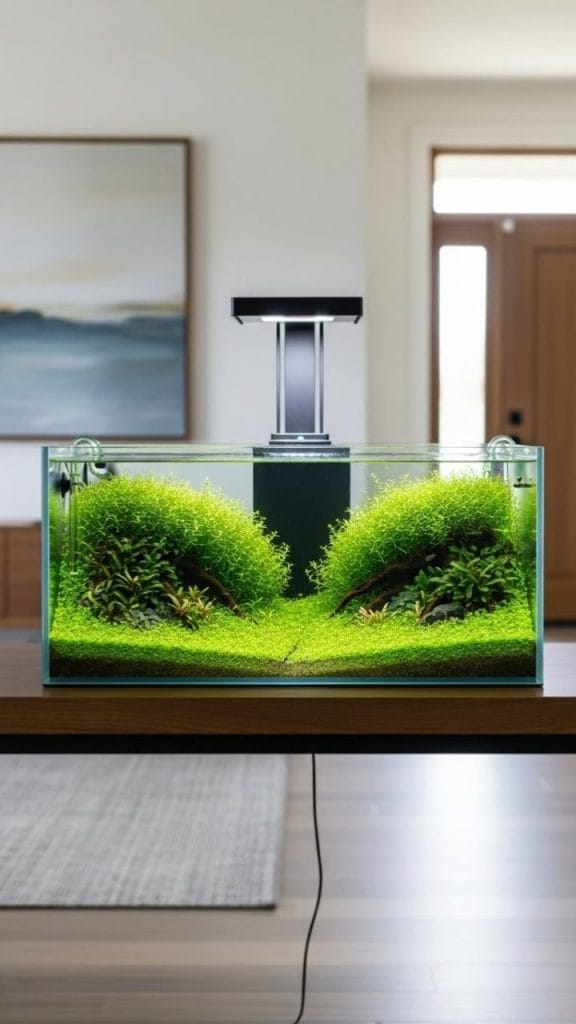
Imagine a perfectly manicured lawn, but underwater and about 2 inches tall.
Carpet style focuses on complete substrate coverage with low-growing plants creating that lush, green field effect.
Best Carpeting Plants for Nano Tanks
Monte carlo spreads like crazy and doesn’t need CO2 (though it helps).
Dwarf baby tears (Hemianthus callitrichoides) create the finest carpet but demand high light and CO2.
For the lazy aquascaper (no judgment), dwarf sag grows tall initially but mows itself down into a carpet-like lawn.
The Waiting Game
Carpeting plants take 4-8 weeks to fill in properly, and those first few weeks look rough.
You’ll be staring at patches of substrate wondering if you wasted your money, then suddenly one day it explodes into that Instagram-worthy lawn.

10. Desktop Jar/Bowl – The Ultimate Space Saver
Aquascaping Without the Tank
Who says you need a traditional aquarium? Glass jars, wide vases, and even large bowls can become stunning planted setups.
These 2-3 gallon setups are perfect for shrimp or can even go fish-free if you just want a planted display.
The No-Equipment Setup
Jar aquariums often run without filters, heaters, or special lights—just a desk lamp with a daylight bulb works.
Use slow-growing plants like Anubias nana petite, Java fern, and a marimo moss ball or two.
Add some red cherry shrimp and you’ve got a living, self-contained ecosystem on your work desk.
The Catch
These tiny setups are super sensitive to temperature changes and overfeeding.
Skip one water change and you might come back to a cloudy mess, but stay on top of it and they’re impressively low-maintenance.
Picking the Right Style for Your Nano Tank
Consider Your Commitment Level
Be honest about how much time you’ll actually spend on maintenance.
Dutch and carpeting styles need weekly attention, while jungle and minimalist setups can coast on biweekly care.
Match Your Livestock
Shrimp need different setups than fish—more surfaces for biofilm, less open swimming space.
Betta fish prefer dense planting with calm water, while schooling nano fish like chili rasboras need that open swimming area.
Budget Reality
Iwagumi and minimalist styles are cheaper upfront because you need fewer plants and decorations.
Dutch and jungle styles require more plants initially but you can propagate them forever, essentially getting free plants through trimming.
Common Nano Aquascaping Mistakes (And How to Avoid Them)
Overstocking the Hardscape
I’ve seen people cram five pieces of driftwood into a 5-gallon tank like they’re playing underwater Jenga.
In nano tanks, one or two hardscape pieces max—any more and your fish have nowhere to swim.
Using Full-Sized Plants
That Amazon sword might look tiny at the store, but it’ll outgrow your nano tank in two months.
Stick to dwarf varieties and slow-growing species unless you enjoy constant pruning.
Forgetting About Maintenance Access
Don’t hardscape yourself into a corner where you can’t reach the back glass to clean algae.
Leave at least 1 inch between your rocks and the glass—your future self will thank you.
Trying to Do Everything
New aquascapers want to combine six different styles into one tank and end up with visual chaos.
Pick one style, commit to it, and resist the urge to add “just one more” decoration.
Essential Gear for Nano Aquascaping Success
Lighting Makes or Breaks Your Scape
Cheap LED clip-on lights work fine for low-tech setups with easy plants.
For carpeting plants or demanding species, invest in a proper aquarium light with 30-50 PAR at substrate level.
CO2: To Inject or Not to Inject?
Liquid CO2 alternatives like Excel work okay for nano tanks and don’t require a full injection setup.
If you want that lush growth and perfect carpet, though, a small nano CO2 kit is worth the investment.
Substrate Choices
Active substrates like ADA Aquasoil provide nutrients and buffer pH but they’re expensive.
Inert substrates like sand or small gravel are cheaper and more stable for beginners, just add root tabs for hungry plants.
The Right Tools
Aquascaping tweezers and scissors aren’t just fancy—they’re necessary for planting and trimming in tight spaces.
Trying to plant with your fingers in a 5-gallon is like trying to thread a needle while wearing oven mitts.
My Final Thoughts on Nano Aquascaping
Here’s what I’ve learned after years of setting up nano tanks: start simple, then get weird.
Your first nano should probably be a basic planted tank with some Java fern and easy plants.
Once you’ve kept that alive for a few months and understand how nano tanks behave, then go wild with elaborate aquascapes and challenging plants.
The beauty of nano aquascaping is that you can completely rescape a small tank in an afternoon.
Don’t like your current design? Rip it up and start fresh—the stakes are low and the learning is high.
And honestly? There’s something deeply satisfying about creating a perfect little world that fits on your desk.
It’s like having a window into nature, except you get to play God and decide where the mountains go.
So pick a style that speaks to you, grab some plants and rocks, and start building your miniature aquatic masterpiece.
Your future self sitting at your desk staring at that thriving nano tank will thank you for taking the plunge.
About Author
Hello, I’m Muntaseer Rahman, the owner of AcuarioPets.com. I’m passionate about aquarium pets like shrimps, snails, crabs, and crayfish. I’ve created this website to share my expertise and help you provide better care for these amazing pets.
Disclaimer
This site is owned and operated by Muntaseer Rahman. AcuarioPets.com is a participant in the Amazon Services LLC Associates Program, an affiliate advertising program designed to provide a means for sites to earn advertising fees by advertising and linking to Amazon.com. This site also participates in other affiliate programs and is compensated for referring traffic and business to these companies.