
This post was created with help from AI tools and carefully reviewed by a human (Muntaseer Rahman) . For more on how we use AI on this site, check out our Editorial Policy.
Check Out These FREE Tools We Made JUST For You!
How Long Do Chameleons Live? Lifespan by Species
So you’re thinking about getting a chameleon, or maybe you already have one and you’re wondering how long you’ll get to hang out with your color-changing buddy.
Here’s the thing: asking “how long do chameleons live?” is like asking “how long is a piece of string?” except with more scales and way cooler eyes.
The Short Answer (That’s Not Really Short)
Chameleons can live anywhere from 4 months to over 20 years.
I know, I know—that’s a huge gap. But stick with me here, because the species you pick makes all the difference.
Quick Reference: Chameleon Lifespan by Species
| Species | Male Lifespan | Female Lifespan | Size Category |
|---|---|---|---|
| Parson’s Chameleon | 10-15 years (up to 20+) | 10-12 years | Largest |
| Jackson’s Chameleon | 5-10 years | 5-8 years | Medium |
| Veiled Chameleon | 5-8 years | 3-6 years | Large |
| Panther Chameleon | 5-7 years (up to 12) | 3-5 years | Medium-Large |
| Meller’s Chameleon | 4-12 years | 4-10 years | Large |
| Oustalet’s Chameleon | 3-7 years | 3-6 years | Large |
| Carpet Chameleon | 1-3 years | 1-2 years | Small |
| Pygmy Chameleon | 1-3 years | 1-2 years | Smallest |
| Labord’s Chameleon | 4-5 months (shortest-lived tetrapod!) | Small | |
Note: Lifespans shown are for captive chameleons with proper care. Wild chameleons typically live 2-3 years due to predators, disease, and environmental pressures.
Size Matters (And So Does Everything Else)
Think of chameleons like dogs. A Great Dane and a Chihuahua are both dogs, but they’ve got totally different lifespans.
Generally speaking, bigger chameleons live longer than smaller ones. It’s like nature’s way of balancing things out—the tiny guys burn bright and fast, while the big ones are in it for the long haul.
Popular Pet Chameleons: What to Expect
Veiled Chameleon
Lifespan: 5-8 years (males), 3-6 years (females)
The veiled chameleon is basically the golden retriever of the chameleon world—super popular, relatively easy to care for, and they’ll be around for a decent chunk of time.
Males typically outlive females because, well, making eggs is hard work. We’ll get into that drama later.
Panther Chameleon
Lifespan: 5-7 years (males), 3-5 years (females)
Panthers are the show-offs of the chameleon world with their crazy colors.
With proper care, some keepers are reporting males living up to 10-12 years. That’s like your chameleon potentially outliving your college career and then some.
Jackson’s Chameleon
Lifespan: 5-10 years
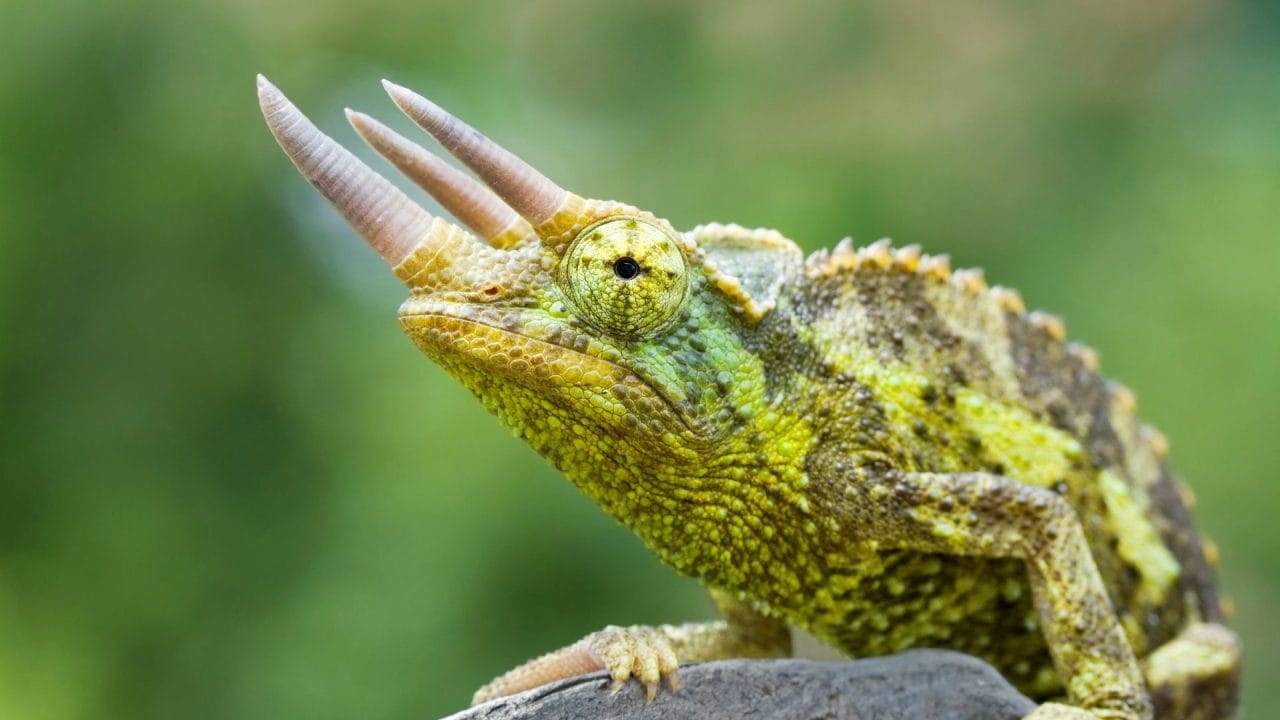
These are the ones with the three horns that make them look like tiny dinosaurs.
Jackson’s chameleons can hit that 10-year mark with good care, though most keepers see around 5-7 years in practice.
Pygmy Chameleon
Lifespan: 1-3 years
The tiny speed demons of the chameleon world.
They’re small enough to sit on your fingertip, reach breeding age super fast, and live like they’re in a constant hurry. Think of them as the mayflies of the reptile world, except they get a couple years instead of a day.
Parson’s Chameleon
Lifespan: 10-15 years (average), up to 20+ years (possible)
Now we’re talking commitment.
Parson’s chameleons are the giants of the chameleon world, weighing in at 500-700 grams (that’s over a pound of chameleon). The confirmed record in captivity is 14 years, but experts believe they could potentially reach 20-23 years with perfect care.
That’s longer than most dogs live. Your kid could graduate high school with this chameleon still chilling in its enclosure.
Meller’s Chameleon
Lifespan: 4-12 years
Another big boy with a wide lifespan range.
These guys are less common as pets, but they’re in it for the medium-to-long haul.
Oustalet’s Chameleon
Lifespan: 3-7 years
A rare breed in the pet trade, but they’ve got a respectable lifespan.
Some keepers report females hitting 6+ years when raised from eggs, which suggests males might do even better.
Carpet Chameleon
Lifespan: 1-3 years
Super colorful, super short-lived.
These guys from Madagascar live fast and die young, rarely making it past 3 years even with top-notch care.
The Wild Card: Labord’s Chameleon
Lifespan: 4-5 months (as adults)
Hold onto your hat for this one.
The Labord’s chameleon holds the record for the shortest lifespan of any four-legged animal on Earth. They hatch in November when the rains come in Madagascar, grow at breakneck speed, reach sexual maturity in less than 2 months, breed, and then the entire adult population dies off by March.
But here’s the kicker: they spend 8-9 months developing inside their eggs. So technically they’re “alive” for about a year total, they’re just spending most of it underground like some kind of scaly time capsule.
It’s not sad—it’s just their strategy. When you live somewhere with brutal dry seasons, sometimes it’s better to wait it out as an egg.
Why Females Get the Short End of the Stick
Notice how males always live longer? There’s a reason for that.
Making eggs is brutal. Female chameleons need massive amounts of water, calcium, and other minerals to form eggs. Then they have to dig a tunnel and lay them, which is basically chameleon CrossFit.
Many species can produce multiple clutches per year—some veiled chameleons lay over 70 eggs at once. Imagine doing that three times a year while you’re still technically growing yourself.
Meanwhile, the males are just… vibing. Living their best lives. No wonder they outlast the ladies by a couple years.
Wild vs. Captive: It’s Not Even Close
Wild chameleons typically only make it 2-3 years.
Between predators, parasites, diseases, deforestation, and just trying to find enough food, nature is rough. In captivity, with no predators, regular vet care, and unlimited bugs delivered to their door like some kind of reptile DoorDash, chameleons can easily double or triple their wild lifespan.
The catch? You have to actually know what you’re doing.
What Actually Kills Pet Chameleons Early
Bad Husbandry (The Silent Killer)
Most pet chameleons die way too young because their owners don’t know what they need.
Wrong temperature? Dead chameleon. Wrong humidity? Dead chameleon. Wrong lighting? You guessed it.
Wild-Caught vs. Captive-Bred
Wild-caught chameleons arrive at pet stores after a brutal journey from places like Madagascar or Africa.
They’re stressed, dehydrated, and often loaded with parasites. Many never fully recover. Always buy captive-bred if you can.
Stress
Chameleons are basically stress sponges.
Housing two chameleons together? Stressful. Handling them too much? Stressful. Putting them near your pet parrot? Super stressful. Even ceiling fans freaking them out because they look like giant predator birds.
Every little stress adds up and shortens their life.
Poor Nutrition
Your chameleon needs variety—gut-loaded crickets, roaches, hornworms, and more.
Feed them nothing but crickets from the pet store and you’re basically giving them the reptile equivalent of a gas station hot dog diet.
How to Help Your Chameleon Live Forever (Almost)
Get the Basics Right
Temperature: 70-80°F cool side, 80-100°F basking spot
Humidity: 50-80% depending on species
Cage size: Bigger is always better—think 3’x3’x4′ for large species
Feed Them Like You Mean It
Gut-load your insects (feed the bugs good food before feeding them to your chameleon).
Offer variety—dubia roaches, crickets, hornworms, grasshoppers. Think buffet, not drive-through.
Give Them Privacy
Chameleons need dense plants to hide behind.
They’re not dogs—they don’t want to hang out with you. Give them options to disappear when they feel like it.
Keep Them Alone
One chameleon per cage, period.
They’re not social. They don’t get lonely. They’ll just fight and stress each other out.
Find a Reptile Vet
Not a cat-and-dog vet. A reptile specialist.
Get your chameleon checked when you first bring them home, especially if you couldn’t get captive-bred.
The Changing Game
Here’s something cool: chameleon lifespans are increasing.
Breeders and keepers are figuring out better husbandry techniques every year. What used to be “typical” for a panther chameleon—5 years—is now being pushed to 7 years, with some hitting 10+.
The goal? Making 10-year-old chameleons the norm instead of the exception.
The Bottom Line
How long your chameleon lives depends on three things: species, gender, and how well you take care of it.
Pick a larger species if you want a longer commitment. Pick a male if you want to add a couple extra years. And most importantly, do your homework before bringing one home.
These color-changing weirdos are way more complex than they look, and keeping them alive isn’t as simple as tossing crickets in a tank once a week.
But get it right? You could be hanging out with your scaly friend for the better part of a decade—or even longer.
Not bad for a lizard that can look in two directions at once.

About Author
Hello, I’m Muntaseer Rahman, the owner of AcuarioPets.com. I’m passionate about aquarium pets like shrimps, snails, crabs, and crayfish. I’ve created this website to share my expertise and help you provide better care for these amazing pets.
Disclaimer
This site is owned and operated by Muntaseer Rahman. AcuarioPets.com is a participant in the Amazon Services LLC Associates Program, an affiliate advertising program designed to provide a means for sites to earn advertising fees by advertising and linking to Amazon.com. This site also participates in other affiliate programs and is compensated for referring traffic and business to these companies.