
This post was created with help from AI tools and carefully reviewed by a human (Muntaseer Rahman) . For more on how we use AI on this site, check out our Editorial Policy.
Check Out These FREE Tools We Made JUST For You!
How Big Should a Chameleon Cage Be? Species-by-Species Breakdown
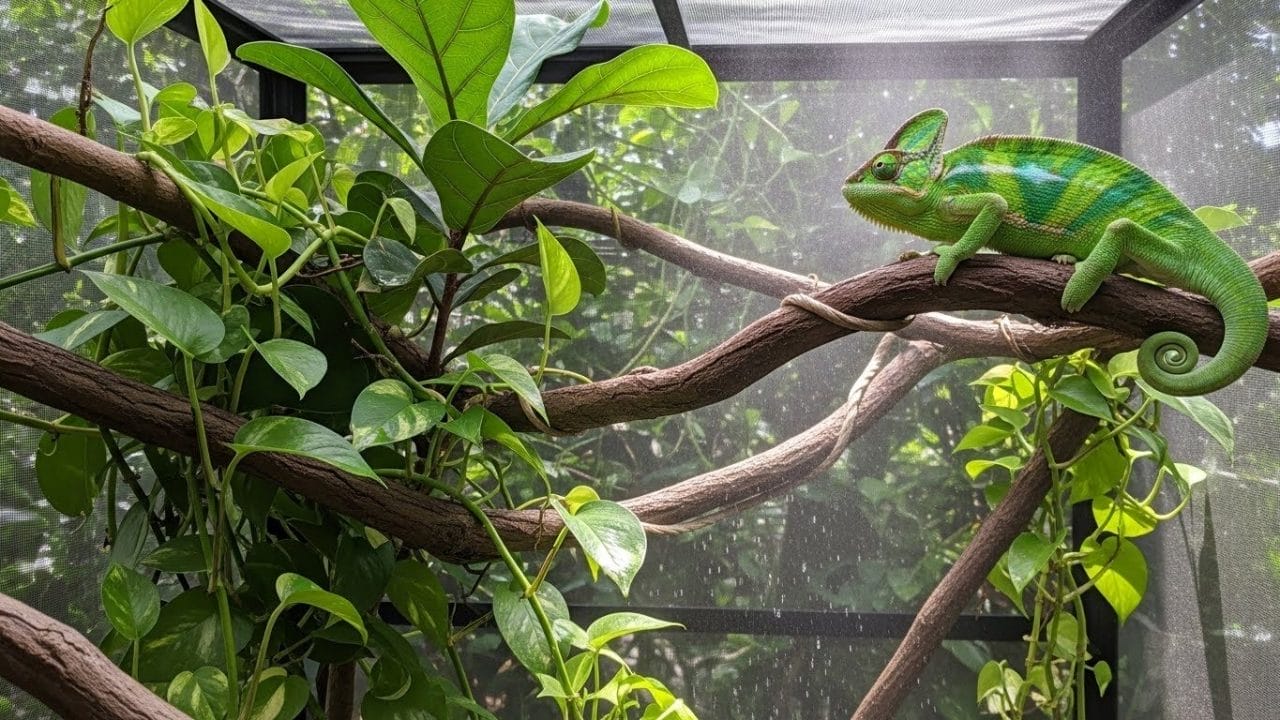
Look, if you’re here, you’re probably standing in a pet store staring at those tiny glass boxes wondering if your future chameleon will be happy in there.
Spoiler alert: They won’t.
Let me save you some money and heartache right now. Those cute little 12x12x18 terrariums? Those are basically chameleon jail cells. And nobody wants to be the person who puts their color-changing buddy in solitary confinement.
Why Cage Size Matters More Than You Think
Here’s the thing people don’t get about chameleons.
They’re not hamsters. They don’t run on wheels or burrow in bedding.
These guys live in TREES. Like, actual trees that stretch dozens of feet into the air with branches going every direction.
When you cram them into a space that’s too small, they can’t do chameleon things. No temperature surfing between hot and cool spots. No humidity zones. No hiding when they want privacy (and trust me, they’re introverts).
Small cages = chronic stress = sick chameleon = expensive vet bills = sad you.
Cage Size Comparison Table
Here’s everything at a glance so you don’t have to scroll back through my ramblings:
| Species | Minimum Size | Recommended Size | Adult Length |
|---|---|---|---|
| Veiled Chameleon | 24″x24″x48″ | 48″x24″x48″+ | Up to 22″ |
| Panther Chameleon | 24″x24″x48″ | 48″x24″x48″+ | 18-24″ (males), 12″ (females) |
| Jackson’s Chameleon | 18″x18″x36″ | 24″x24″x48″ | 8-13″ |
| Carpet Chameleon | 18″x18″x24″ | 24″x24″x24″ | 6-10″ |
| Pygmy Chameleon | 18″x18″x18″ | 18″x18″x18″+ | 3-3.5″ |
Note: These are MINIMUMS for survival. More space is always better.
The “Bigger is Better” Rule (Yes, It Actually Applies Here)
Every single chameleon expert I researched said the same thing: bigger is always better.
And I’m not talking “oh, a few inches more would be nice.” I’m talking about the difference between a chameleon that survives and one that actually thrives.
Think of it like this. Would you rather live in a closet or an apartment? Sure, you CAN live in a closet. You won’t die. But are you going to be happy? Healthy? Living your best life?
Exactly.

Veiled Chameleon Cage Size: The Green Grumps
Veiled chameleons are the most common pet chameleons, and they’re basically the moody teenagers of the reptile world.
Minimum cage size: 24″ x 24″ x 48″ (that’s 2 feet wide, 2 feet deep, 4 feet tall)
But here’s what nobody tells you: that’s the MINIMUM. Like, bare-bones survival minimum.
Male veileds can grow up to 22 inches long. Imagine being 22 inches long and living in a 24-inch box. Not exactly comfortable, right?
If you can swing it, go for 48″ wide x 24″ deep x 48″ tall or even bigger. Your veiled will actually use every inch of that space, I promise.
And females? Don’t fall for that “females are smaller so they need less space” nonsense. Female veileds need the same size as males, especially because they need room for a laying bin when they start producing eggs (yes, even without a male around).
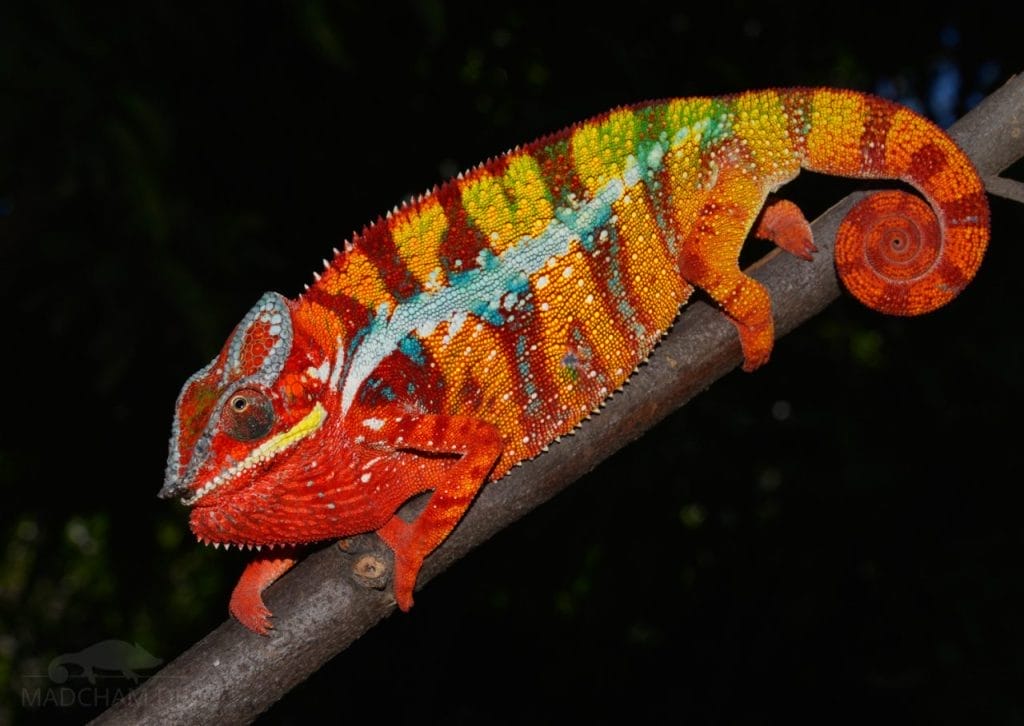
Panther Chameleon Cage Size: The Colorful Drama Queens
Panthers are the supermodels of the chameleon world – gorgeous, high-maintenance, and they know it.
Minimum cage size: 24″ x 24″ x 48″
Same as veileds, but listen closely: this is where the controversy starts.
Some old-school care sheets will tell you females can live in 18″ x 18″ x 36″ cages. Technically? Sure. Will they survive? Probably. Is it ideal? Absolutely not.
Bill Strand from the Chameleon Academy (basically the chameleon whisperer) changed his recommendation specifically because bigger cages make for happier chameleons and happier owners.
Here’s what he said: the smaller size CAN work, but why would you settle for “can work” when you could give your panther an actual home instead of a holding cell?
Panthers can reach 18-24 inches in males and about 12 inches in females. They’re active, they like to cruise horizontally through branches, and they need space to show off their colors.
Recommended upgrade: 48″ x 24″ x 48″ or larger if you’ve got the room.
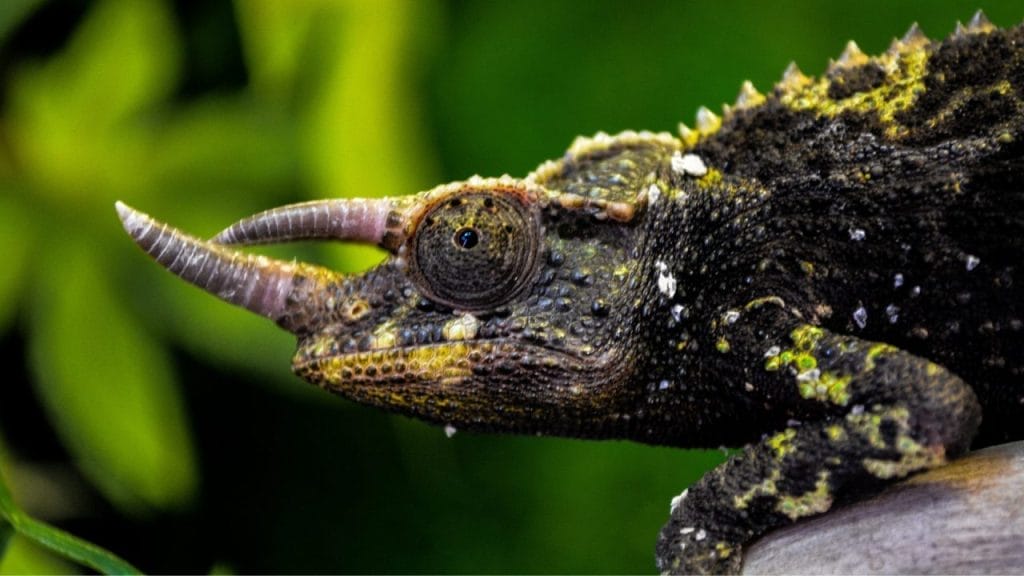
Jackson’s Chameleon Cage Size: The Horned Homebodies
Jackson’s chameleons are the little dinosaurs of the group, complete with three horns that make them look like tiny triceratops.
Minimum cage size: 18″ x 18″ x 36″ for adults
But (and this is a big but), most experienced keepers actually recommend 24″ x 24″ x 48″ for long-term housing.
Why? Because Jackson’s might be smaller than veileds and panthers (around 8-13 inches long), but they’re surprisingly active.
One keeper on the Chameleon Forums said their Jackson’s is “quite restless” and uses every inch of a 2x2x4 cage. During breeding season, males apparently go absolutely bonkers trying to find females.
Translation: Give them space or prepare for a stressed-out, wall-climbing chameleon.
Carpet Chameleon Cage Size: The Jeweled Cuties
Carpet chameleons (also called jeweled chameleons) are like the compact cars of the chameleon world – smaller but still need proper specs.
Minimum cage size: 18″ x 18″ x 24″
But here’s where it gets interesting. Carpets are more horizontal than vertical climbers, so floor space matters more than height for these guys.
Most experts actually recommend 24″ x 24″ x 24″ (a cube!) because it gives them more room to cruise around.
These guys only grow to about 6-10 inches, so you’d think they’d be fine in smaller spaces, right? Wrong. They’re active little explorers and they’ll use whatever space you give them.
Plus, with a bigger cage, you can actually create proper temperature gradients and humidity zones without everything overlapping into one mediocre environment.
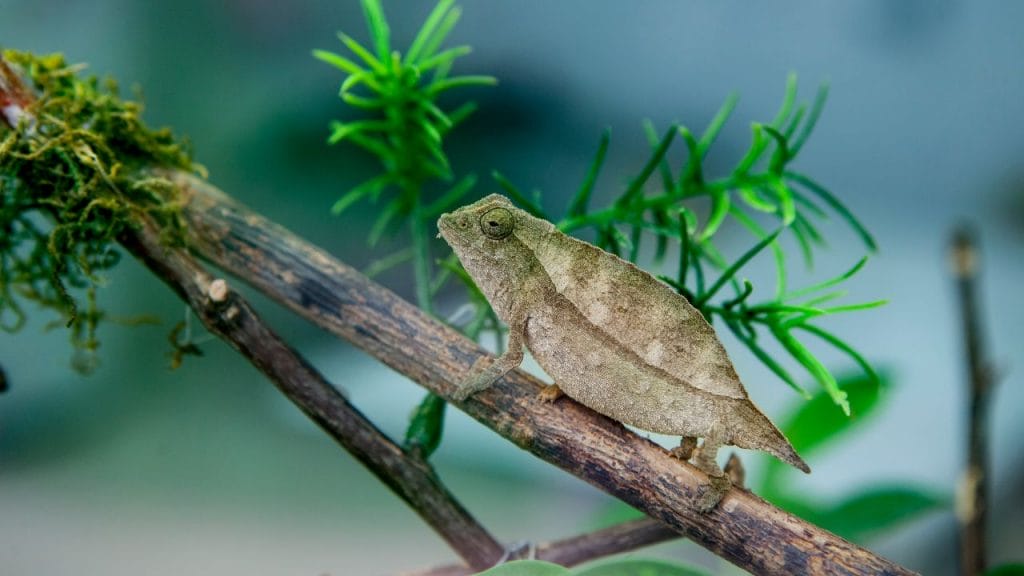
Pygmy Chameleon Cage Size: The Tiny Floor Dwellers
Okay, NOW we can talk about smaller enclosures.
Pygmy chameleons are the exception to basically every rule because they’re not really tree dwellers – they hang out on the forest floor.
Minimum cage size: 18″ x 18″ x 18″
And here’s the wild part: you can actually keep multiple pygmies together (as long as you don’t have multiple males fighting over territory).
The rule of thumb is 5 gallons per chameleon. So a 10-gallon tank works for two, a 20-gallon for four, and so on.
But unlike other chameleons that need tall screen cages, pygmies do better in glass terrariums because they need higher humidity and lower temperatures than their arboreal cousins.
These little guys only grow to 3-3.5 inches, which is basically the size of your thumb. Adorable, but also delicate as heck.
The Screen vs. Glass Debate (It’s Complicated)
Everyone’s going to tell you chameleons NEED screen cages for ventilation.
And they’re… partially right.
Screen cages are great if:
- You live somewhere with decent humidity
- Your house stays warm enough
- You don’t mind misting 47 times a day
Glass or PVC cages work better if:
- You live in a desert (looking at you, Arizona)
- Your house is air-conditioned to Arctic temperatures
- You want to maintain humidity without losing your mind
Hybrid cages (solid sides with screen top and front) are actually the sweet spot for most people. You get ventilation but you can actually maintain humidity without turning your room into a rainforest.
The key is making sure there’s enough airflow to prevent stagnant air, which leads to respiratory infections faster than you can say “vet bill.”
Height Matters, But Not How You Think
Here’s something that blew my mind while researching this.
Everyone says “chameleons need tall cages” and technically that’s true. But what REALLY matters is that the cage sits high up.
A 36″ tall cage sitting on a 3-foot dresser? Better than a 48″ tall cage sitting on the floor.
Why? Because chameleons are prey animals. They feel safer when they’re above eye level. When your chameleon can look down on you (literally), they’re way less stressed.
So before you buy the tallest cage possible, think about WHERE you’re putting it.
Width is Underrated
Chameleons move horizontally through trees way more than they climb up and down.
So a 4-foot WIDE cage is actually more useful than a 4-foot TALL cage in many cases.
If you’re choosing between 24″x24″x48″ and 48″x24″x36″, go wider. Your chameleon will cruise back and forth like they’re commuting to work.
Multiple keepers mentioned that when they upgraded to wider cages (like 4x4x2 feet), their chameleons were visibly more active and seemed happier.
Baby Chameleons: The Great Grow-Out Cage Scam
Here’s a controversial take straight from the experts: you don’t need a small cage for baby chameleons.
The pet industry will try to sell you on “grow-out cages” – smaller enclosures for juveniles so they can “find their food easier.”
But chameleons literally hatch in the wild and immediately have to navigate an entire forest. They can handle a big cage.
The truth: A 3-month-old chameleon can go straight into an adult-sized cage as long as you:
- Have a consistent feeding station
- Provide enough plant cover
- Make sure they can still reach basking spots
Bill Strand (that chameleon expert I mentioned) has raised babies in full-sized 48″ cages with “great success.”
The only time smaller cages make sense is if you’re a breeder trying to monitor multiple hatchlings. But for a single pet? Skip the middle step and save yourself $200.
The Laying Bin Situation (For Females)
If you’ve got a female chameleon – ANY species – you need space for a laying bin.
Even if she never meets a male in her life, she’s going to produce eggs. It’s just what they do. (Nature is weird.)
That bin needs to be at least 8-12 inches deep filled with moist sand and soil mixture.
Try fitting that in an 18″x18″x36″ cage along with all the plants and branches. It’s like trying to pack for a month-long vacation in a carry-on. Technically possible, but why make your life harder?
This is another reason why bigger cages are non-negotiable for females.
Common Cage Size Mistakes (Don’t Be That Person)
Mistake #1: “I’ll upgrade when they’re bigger”
Wrong. Chameleons grow FAST. You’ll barely blink and your cute little 3-inch baby is a full-grown adult climbing the walls (literally).
Buy the adult size first. I promise you’ll save money and stress.
Mistake #2: “The pet store said this size is fine”
Pet stores are in the business of selling you stuff, not giving you accurate husbandry advice. They’re the same people who keep betta fish in cups.
Mistake #3: “My chameleon seems fine in a small cage”
“Fine” and “thriving” are different things. Chameleons are masters at hiding stress until they’re seriously sick. By the time you notice something’s wrong, the damage is done.
Mistake #4: “I don’t have room for a big cage”
Then you don’t have room for a chameleon. I’m not trying to be harsh, but these animals have specific needs. Getting one anyway is like adopting a Great Dane when you live in a studio apartment.
The Real Cost of Cage Size
Let’s talk money for a second.
- A cheap 18″x18″x36″ screen cage? About $80-100.
- A proper 24″x24″x48″ screen cage? Around $150-200.
- A high-quality 48″x24″x48″ setup? $300-500+.
Seems like a big difference, right?
But here’s the math people ignore:
Small cage = stressed chameleon = higher chance of illness = $200+ vet visit + medication = way more than you “saved” on the cage
Plus, if you buy too small and then upgrade, you’re paying for TWO cages anyway.
Do it right the first time. Future you will thank past you.
What About Custom-Built Cages?
If you’re handy (or know someone who is), building a custom cage is actually pretty easy.
You just need:
- Aluminum framing
- Screen mesh
- Some wood for structure
- Basic tools
The biggest advantage? You can make it exactly the size you want instead of whatever the manufacturers decided to make.
Some keepers have built absolutely massive 8x4x4 foot enclosures. Their chameleons basically live in a tree room. It’s extra, but also kind of amazing.
Just make sure you use aluminum or vinyl-coated screen – not hardware cloth or chicken wire. Those can damage their feet and catch their nails.
The Bottom Line
If there’s one thing you take away from this novel of a blog post, let it be this:
Your chameleon’s cage is their entire world.
They can’t go for walks. They can’t explore the house. They can’t change their scenery when they’re bored.
Every single day of their 5-8 year life (if you’re lucky) will be spent in whatever box you choose.
So yeah, get the biggest cage you can afford and fit in your space. Your chameleon might not be able to thank you in words, but they’ll show you through better colors, less stress, and actually wanting to come out and interact instead of hiding in the corner.
And honestly? Watching a chameleon cruise through a well-set-up cage is one of the coolest things ever. Those slow-motion feet, the tongue zaps, the color changes – you want to see all that in its full glory, not in a cramped space where they can barely turn around.

About Author
Hello, I’m Muntaseer Rahman, the owner of AcuarioPets.com. I’m passionate about aquarium pets like shrimps, snails, crabs, and crayfish. I’ve created this website to share my expertise and help you provide better care for these amazing pets.
Disclaimer
This site is owned and operated by Muntaseer Rahman. AcuarioPets.com is a participant in the Amazon Services LLC Associates Program, an affiliate advertising program designed to provide a means for sites to earn advertising fees by advertising and linking to Amazon.com. This site also participates in other affiliate programs and is compensated for referring traffic and business to these companies.