
This post was created with help from AI tools and carefully reviewed by a human (Muntaseer Rahman) . For more on how we use AI on this site, check out our Editorial Policy.
Check Out These FREE Tools We Made JUST For You!
Do Chameleons Need Light at Night?
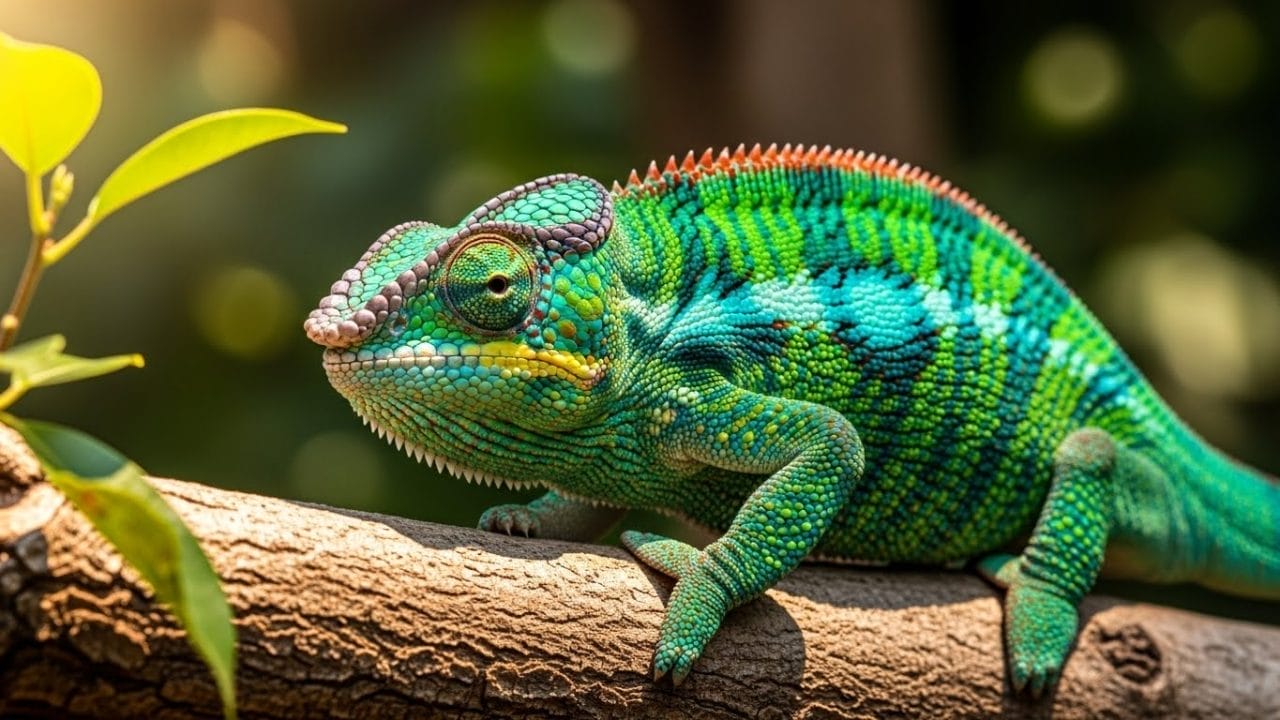
Here’s the short answer: No, chameleons do not need light at night.
In fact, leaving any light on while your chameleon sleeps can seriously mess up their health.
I know, I know. Pet stores sell those fancy red and blue “night bulbs” like they’re the greatest thing since sliced crickets. But here’s what they don’t tell you at checkout.
The Truth About Chameleon Night Lighting
Chameleons need complete darkness to sleep properly.
This isn’t me being dramatic. It’s biology.
Your chameleon has something called a parietal eye (also known as their “third eye”) sitting right on top of their head. It looks like a tiny gray or clear dot between their regular eyes.
This thing is basically a light detector connected directly to their brain.
What the Parietal Eye Actually Does
The parietal eye doesn’t see images like their regular eyes do.
Instead, it senses light intensity and sends signals to the pineal gland, which controls their sleep cycles and hormone production. Even when a chameleon closes its regular eyes, this third eye stays “on.”
Think of it like having a smoke detector that goes off every time someone turns on a light anywhere in your house.
You’d never get proper sleep either.
Why Red and Blue “Night Lights” Are a Scam
Pet stores have been selling red heat bulbs (this one is dependable, choose the correct watt) for reptiles for decades based on a myth: that reptiles can’t see red light.
This is completely false for chameleons.
Chameleons can absolutely see red light. Their color vision is actually more advanced than ours. They can see into the ultraviolet spectrum, which means they perceive colors we can’t even imagine.
The Chameleon Academy puts it bluntly: pet stores often send new keepers home with red heat bulbs for nighttime heating, and this is both unnecessary and unhealthy.
The parietal eye detects wavelengths from infrared all the way to ultraviolet. Red light is smack in the middle of what it can sense.
So when you leave that red bulb on “because it simulates moonlight,” your chameleon’s brain is screaming “THE SUN IS STILL UP” all night long.
What Happens When Chameleons Don’t Get Proper Darkness
Sleep deprivation in chameleons isn’t just them being grumpy the next morning.
Long-term exposure to light at night leads to:
- Chronic stress
- Weakened immune system
- Poor digestion
- Exhaustion
- Disrupted circadian rhythms
- In severe cases, death
The famous “sudden death syndrome” in Jackson’s chameleons? Many experts believe physical exhaustion from inadequate sleep plays a major role.
Without proper darkness and temperature drops at night, their bodies simply never get the rest they need. The system slowly breaks down until one day, they just give out.
But What About Heat at Night?
This is where people get confused.
Yes, chameleons are cold-blooded. Yes, they need heat to function. But they also need a temperature drop at night.
This isn’t a bug in their system. It’s a feature.
In the wild, temperatures naturally fall when the sun goes down. Chameleons evolved to expect this. Their metabolism, digestion, and sleep cycles all depend on it.
| Chameleon Species | Safe Night Temperature Range |
|---|---|
| Veiled Chameleon | 50-65°F (10-18°C) |
| Panther Chameleon | 60-70°F (15-21°C) |
| Jackson’s Chameleon | 50-65°F (10-18°C) |
Research from experienced keepers like Bill Strand at Chameleon Academy shows that cold nights are needed for deep sleep, which directly impacts chameleon health and longevity.
When You Actually Need Night Heat (And How to Do It Right)
Most homes stay warm enough that you won’t need any supplemental heat at night.
If your house regularly drops below 50°F (10°C), then you might need something.
But here’s the critical part: use heat without light.
The Right Way to Heat at Night
A ceramic heat emitter (CHE) produces warmth without any visible light. This is the only acceptable option if you genuinely need nighttime heating.
Some keepers hook these up to thermostats so they only kick on when temperatures drop below a certain point.
Even better? Heat the whole room instead of the enclosure. A space heater set to a minimum temperature is often more effective than trying to warm a mesh cage (the cage I actually love) that’s just going to leak heat everywhere.
The Wrong Way to Heat at Night
- Red heat bulbs (chameleons can see them)
- Blue heat bulbs (same problem)
- Regular incandescent bulbs (obvious light)
- Any “night viewing” light
- Leaving daytime lights on longer
All of these disrupt sleep. All of them cause stress over time.
The 12-Hour Rule
Chameleons thrive on a consistent 12 hours of light, 12 hours of darkness cycle.
This mimics equatorial conditions where most chameleon species originate. The sun rises, they wake up and bask. The sun sets, they find a sleeping spot and shut down for the night.
A simple timer on your lights makes this foolproof.
Lights on around 7-8 AM. Lights off around 7-8 PM. Done.
Your chameleon doesn’t need you to tuck them in or check on them with a flashlight. They need you to leave them alone in the dark.
What About Moonlight?
Funny you should ask.
Some newer research suggests that completely pitch-black nights might not be entirely natural either. In the wild, chameleons would experience moonlight, starlight, and ambient nighttime glow.
However, this is extremely low intensity light — we’re talking less than 5 lux. The moon reflects barely enough to see by.
If you have a window in the room that lets in some natural nighttime light, that’s probably fine. What you don’t want is a bright bulb actively illuminating their enclosure.
The difference between moonlight and a 25-watt red bulb is like comparing a candle to a car headlight.
How to Tell If Your Chameleon Isn’t Sleeping Well
Watch for these signs:
- Sleeping during the day (huge red flag)
- Restlessness at night
- Dark, stressed colors more often
- Decreased appetite
- Lethargy
- Weakened grip
A chameleon sleeping during daytime hours is a chameleon that didn’t get proper rest at night. It could indicate lighting problems, illness, or both.
Setting Up the Perfect Night Environment
Here’s your checklist:
- All lights off — UVB, basking, plant lights, everything
- Complete darkness — cover any LED indicators, close blinds if streetlights are bright
- Temperature drop — let it fall naturally to species-appropriate range
- Humidity increase — misting in the evening and nighttime fogging helps
- No disturbances — don’t shine flashlights in to “check on them”
Your chameleon will find a comfortable sleeping spot, usually on a branch near the top of the enclosure. They’ll change to a pale sleeping color and stay motionless until morning.
Let them.
The Bottom Line
Chameleons don’t need light at night. Period.
They need darkness, a temperature drop, and to be left alone.
Every “night light” product marketed for chameleons is at best unnecessary and at worst actively harmful. The parietal eye ensures they can’t escape the effects of any light source, no matter how dim it seems to you.
If your house is cold, use a ceramic heat emitter or heat the room. If you want to see your chameleon at night, get a camera with infrared instead of disturbing them with visible light.
Your chameleon spends roughly half its life asleep. Making that sleep quality matters more than most people realize.
Give them the darkness they evolved to expect, and they’ll reward you with better health, brighter colors, and a longer life.
Now turn off that red bulb and let your chameleon sleep.

About Author
Hello, I’m Muntaseer Rahman, the owner of AcuarioPets.com. I’m passionate about aquarium pets like shrimps, snails, crabs, and crayfish. I’ve created this website to share my expertise and help you provide better care for these amazing pets.
Disclaimer
This site is owned and operated by Muntaseer Rahman. AcuarioPets.com is a participant in the Amazon Services LLC Associates Program, an affiliate advertising program designed to provide a means for sites to earn advertising fees by advertising and linking to Amazon.com. This site also participates in other affiliate programs and is compensated for referring traffic and business to these companies.