
This post was created with help from AI tools and carefully reviewed by a human (Muntaseer Rahman) . For more on how we use AI on this site, check out our Editorial Policy.
Check Out These FREE Tools We Made JUST For You!
Can Bearded Dragons Go Outside in Winter?
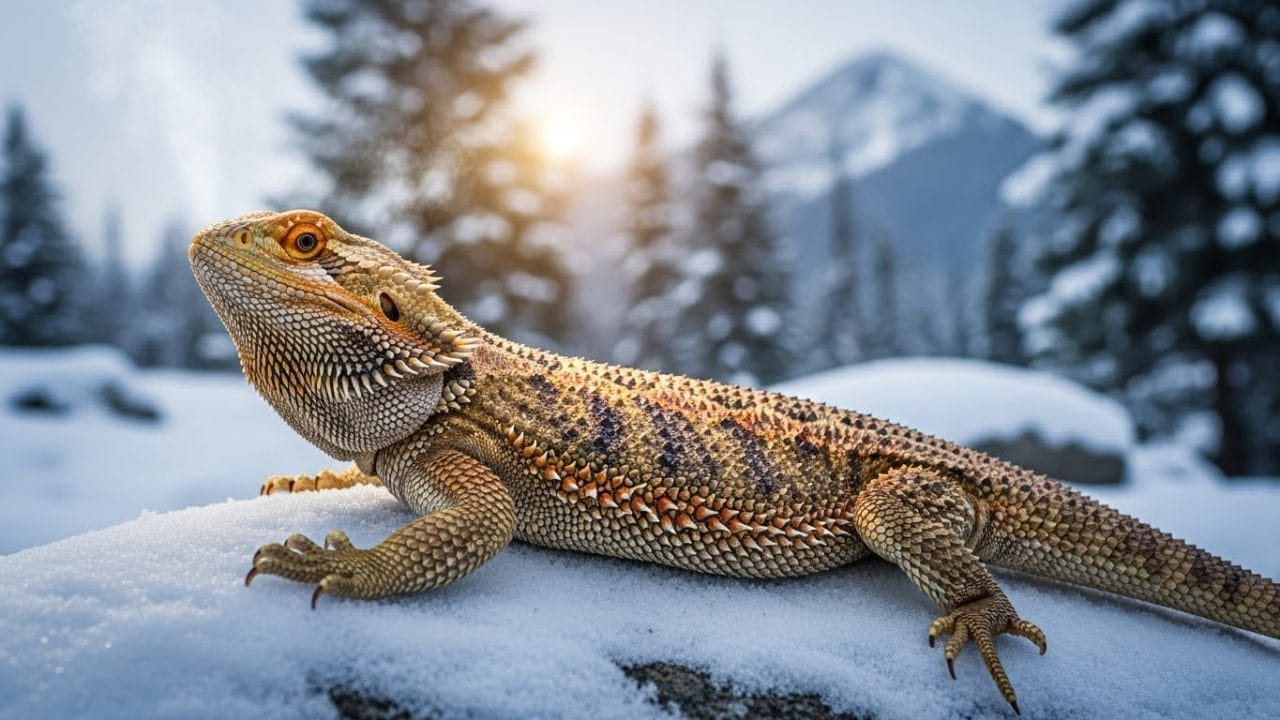
No, bearded dragons should not go outside in winter unless temperatures are consistently above 70°F. Even then, 80°F or higher is much safer for outdoor time.
Winter temperatures are dangerous for bearded dragons because they’re cold-blooded and can’t generate their own body heat. When exposed to cold, their immune systems weaken fast, making them vulnerable to serious respiratory infections that can be fatal.
In this guide, you’ll learn exactly when it’s safe to take your beardie outside during winter months, what warning signs to watch for, and how to keep them healthy when outdoor time isn’t possible.
Quick Answer: Winter Safety for Bearded Dragons
- Never take them out if temps are below 70°F
- 80-95°F is the safe temperature range for outdoor time
- Cold exposure can cause life-threatening respiratory infections
- Even 15 minutes of cold exposure can make them sick
- Babies and juveniles (under 1 year) need temps above 80°F minimum
- Always check both air temperature AND wind chill
Why Temperature Matters So Much for Bearded Dragons
Here’s the thing: bearded dragons are ectothermic.
That’s a fancy way of saying they rely completely on outside heat sources to regulate their body temperature. Unlike us, they can’t shiver to warm up or sweat to cool down.
When temps drop below their comfort zone, everything in their body slows down. Digestion stops working properly. Their immune system crashes. They become sitting ducks for infections.
What Happens When They Get Too Cold
Cold exposure isn’t just uncomfortable for bearded dragons.
It directly weakens their immune system and makes them vulnerable to respiratory infections. These infections can turn into pneumonia if you don’t catch them early.
Your beardie might seem fine at first. But the damage is already happening internally.

Your Beardie Has More to Say…
This article tells you WHAT to do, but do you know WHY your dragon needs it? Or what they’re thinking when you do it wrong?
Read the full rant (all 20 chapters of it) in: “What Your Bearded Dragon Wishes You Knew”
*Told by a very frustrated beardie who’s had ENOUGH of watching you guess.*
The Real Temperature Requirements for Outdoor Time
Let’s get specific about numbers.
Minimum Safe Temperatures
For bearded dragons under 1 year old, outdoor temperatures should be at least 80°F. Otherwise they’ll get too cold too quickly.
Dragons older than a year can handle temperatures above 75°F, but 80-95°F is much better.
But honestly? Don’t mess around with the bare minimum.
The Ideal Temperature Range
The ideal outdoor temperature for bearded dragons is between 80°F and 95°F. This range lets them bask properly and maintain healthy body functions.
At these temps, they can:
- Digest food properly
- Move around normally
- Regulate their temperature by moving between sun and shade
- Enjoy outdoor time without stress
Don’t Forget About Wind Chill
Air temperature isn’t the whole story.
If there’s a breeze, temperatures up to 92°F can work fine. But wind chill can make things feel way colder than the thermometer says.
On a windy winter day, even if your thermometer reads 75°F, your beardie might experience much colder conditions.
What Actually Happens in Winter Temperatures
Winter isn’t just about discomfort.
Cold temperatures trigger serious health problems in bearded dragons. And some of these problems can be permanent or even fatal.
Respiratory Infections Are the Biggest Danger
Respiratory infections in bearded dragons are caused by stress, improper feeding, or cold and dirty conditions. Winter outdoor exposure checks all those boxes.
Signs your beardie has a respiratory infection:
- Wheezing or labored breathing
- Discharge from nose or mouth
- Bubbles coming from the nose
- Open-mouth breathing
- Loss of appetite
- Extreme lethargy
- Coughing during or after baths
If you see any of these signs, get to a vet immediately. Respiratory infections can advance to septicemia, a bloodstream infection that’s often fatal.
Their Whole System Shuts Down
When bearded dragons get too cold, they basically go into shutdown mode.
Their metabolism slows to a crawl. They can’t digest food. They become lethargic and won’t move around.
Cold exposure can cause brumation-like paralysis due to slowed metabolism, with symptoms including lethargy, immobility, and unresponsiveness.
This looks scary. Your normally active dragon will seem almost lifeless.
Long-Term Immune System Damage
Even if your beardie doesn’t get sick immediately, repeated cold exposure weakens their immune system over time.
Infections in captive reptiles are more common at lower ambient temperatures. You’re basically setting them up to get sick later, even if they seem fine now.
Signs Your Bearded Dragon Is Too Cold Outside
Your beardie will tell you when they’re uncomfortable.
You just need to know what to look for.
Immediate Warning Signs
Watch for these red flags:
- Getting sleepy or slow-moving
- Trying to burrow or hide
- Dark coloration (stress coloring)
- Puffing up their beard
- Becoming aggressive or trying to bite
- Sluggish movements
- Refusing to move at all
If they show signs of getting sleepy or slow, this indicates they’re getting too cold and it’s time to go back inside.
Don’t ignore these signs. Bring them in immediately.
What Different Behaviors Mean
Some dragons puff up and turn dark when they’re outside. This dark coloration and beard puffing indicates stress from temperature changes, feeling threatened, or being in an unfamiliar environment.
Others will try to run away or escape. They’re looking for warmth instinctively.
If your dragon is frantically trying to get away or hide, that’s a clear sign something’s wrong.
When Winter Outdoor Time Is Absolutely Off the Table
There are some situations where you should never take your beardie outside, no matter what.
Temperature-Based Rules
Never take them out if:
- Air temperature is below 70°F
- There’s wind chill factor making it feel colder
- It’s cloudy and temps are borderline (clouds mean no basking heat)
- Nighttime is approaching (temps drop fast at dusk)
Outdoor temperatures in winter are almost certainly far too cold in most climates.
Location Matters
Bearded dragons should not be kept outside if temperatures fall below 65°F year-round, as they would die during cold winter months in places like the northeastern US.
If you live in:
- Northern states with actual winters
- Areas with freezing temperatures
- Regions where it drops below 70°F regularly in winter
Then outdoor time is off the menu until spring.
Health-Based Restrictions
Don’t take your dragon outside if they’re:
- Under 6 months old (they’re more vulnerable to temperature stress)
- Already sick or recovering from illness
- Going through brumation
- Showing any signs of respiratory issues
Young dragons are especially at risk. Animals under 1 year old need temperatures of at least 80°F outside, otherwise they will tend to get too cold.
What to Do Instead During Cold Winter Months
Just because your beardie can’t go outside doesn’t mean they’re missing out.
You can give them everything they need indoors.
Your Indoor Setup Is Actually Better
Real talk: a properly set up indoor enclosure is safer than outdoor time in most cases.
You have complete control over:
- Temperature gradients
- UVB exposure
- Humidity levels
- Safety from predators
Bearded dragons don’t actually need sunlight if they have a decent UV bulb – they can survive all year round without ever seeing real sun.
Make Sure Your Winter Setup Is Correct
Winter is when you need to pay extra attention to their tank.
No lights or warmth are needed at night unless temperatures drop below 62°F. If your house gets that cold, you’ll need a ceramic heat emitter (CHE).
Here’s what you need:
- Basking spot: 95-110°F for babies, 95-100°F for adults
- Cool side: 80-85°F during the day
- Nighttime: Can drop to 65-70°F safely
- UVB light running the length of the tank
- Replace UVB bulbs every 6-8 months
If Your House Gets Really Cold
If nighttime temps drop to 60°F or below, use a 10-20 watt CHE to bump the temperature up to 65-70°F. Don’t use anything higher – you don’t want them hot at night.
Never use colored night bulbs. They disrupt sleep.
And don’t put towels or blankets on them. They’re cold-blooded, so blankets don’t work the way they do for us.
What If I Live Somewhere With Mild Winters?
Lucky you.
If you’re in Texas, Arizona, Southern California, or similar climates, you might have warm winter days.
Check These Conditions First
Before taking your beardie out on a warm winter day:
- Air temp is 80°F or higher
- There’s direct sunlight (not just warm but cloudy)
- No wind or very light breeze
- It’s midday (not early morning or late afternoon when temps drop)
- You can stay outside to supervise the entire time
In Texas and similar areas, winters can have odd warm days hitting 80°F even in December, making occasional outdoor time possible.
Start With Short Sessions
Even if the temperature is perfect, start with just 10-15 minutes.
Watch your dragon carefully. If they seem happy and active, you can gradually increase time.
Never leave them unattended. Ever. Not even for a minute.
Common Winter Mistakes That Make Bearded Dragons Sick
Let me save you from the mistakes I see all the time.
Trusting “It Feels Warm to Me”
A good rule is: if it’s too cold to sit around in the sun in just a t-shirt and light pants, it’s too cold for bearded dragons.
But honestly, that’s the bare minimum. Your beardie needs it warmer than you do.
Always use an actual thermometer. Your skin is lying to you.
Taking Them Out “Just for a Few Minutes”
Even short cold exposure can cause problems.
Improper temperature conditions, even briefly, can weaken their immune system and lead to infections.
It’s not worth the risk for a quick outdoor visit.
Confusing Brumation With Being Cold
Brumation is a natural hibernation-like state that some bearded dragons go through in winter.
But here’s the confusion: a cold dragon looks a lot like a brumating dragon. Both are lethargic and don’t eat much.
The difference? During healthy brumation, weight should remain fairly stable even though they’re not eating, and they should look normal with no discoloration or blackened beard.
If they lose more than 5-10% of body weight during this time, it’s not brumation – it’s illness, and you need a vet.
Using Outdoor Time as Their Main UVB Source
Some people think bearded dragons need outdoor time for proper UVB.
They don’t. A good UVB bulb gives them everything they need.
Don’t risk their health trying to give them “natural” sunlight when your indoor setup works fine.
Emergency: What to Do If Your Beardie Gets Too Cold
Accidents happen. Power outages. Unexpected temperature drops. Whatever.
Here’s how to help.
Warm Them Up Gradually
Immediate warming with a controlled heat source is essential, but avoid sudden temperature changes to prevent shock.
Don’t stick them directly under a super hot basking lamp. That’s too much too fast.
Instead:
- Bring them inside immediately
- Place them in a warm (not hot) area of their tank – around 85-90°F
- Don’t put them directly on a hot rock or under the basking light
- Let them warm up gradually over 30-60 minutes
When to See a Vet Immediately
Get to a vet ASAP if your dragon:
- Shows signs of respiratory infection (wheezing, discharge, open-mouth breathing)
- Is completely unresponsive or paralyzed
- Has been in cold temps (below 60°F) for more than a few hours
- Isn’t improving after being warmed up for a few hours
If paralysis persists after warming, seek veterinary care for possible hypothermia treatment.
Don’t wait to see if they get better. Cold-related illnesses can go from bad to fatal really fast.
FAQs About Bearded Dragons and Winter
Can I take my bearded dragon outside in winter if I keep them warm with a blanket?
No. Blankets don’t work on cold-blooded reptiles because they can’t generate their own body heat. The blanket would just trap the cold air around them. You need actual heat sources, not insulation.
How long can a bearded dragon survive in cold temperatures?
Bearded dragons can handle nighttime drops as low as 50°F without immediate ill effect if daytime temperatures are correct. But extended exposure to temps below 65°F will cause illness. Don’t test their limits – cold exposure weakens them even if they survive.
My bearded dragon seems fine after being outside in 65°F weather. Is that okay?
Not really. Just because they seem fine doesn’t mean damage isn’t happening. Weakened immune systems from cold exposure may not show symptoms immediately but make them vulnerable to infections later. Stick to 80°F or higher for outdoor time.
Do bearded dragons from pet stores need outdoor time in winter?
No. Pet store bearded dragons are captive-bred and raised entirely indoors. They don’t need outdoor time to be healthy, especially not in winter. A proper indoor setup with UVB lighting gives them everything they need year-round.
What’s the difference between brumation and being too cold?
Brumation is a natural hibernation cycle in response to seasonal changes, where dragons sleep more but maintain stable weight. Being too cold is an emergency – they’ll show stress signs like dark coloring, beard puffing, lethargy, and potential weight loss. If you’re unsure, keep their lighting and temperature normal and consult a vet.
The Bottom Line on Winter Outdoor Time
Winter and bearded dragons don’t mix well in most places.
Unless you live somewhere with consistently warm winters and can guarantee 80°F+ temperatures with direct sunlight, keep them inside during cold months.
Your indoor setup with proper heating and UVB is safer and better for them anyway. They won’t miss outdoor time, and you won’t risk making them seriously ill.
Save the outdoor adventures for spring and summer when you can safely give them the warmth they need.

About Author
Hello, I’m Muntaseer Rahman, the owner of AcuarioPets.com. I’m passionate about aquarium pets like shrimps, snails, crabs, and crayfish. I’ve created this website to share my expertise and help you provide better care for these amazing pets.
Disclaimer
This site is owned and operated by Muntaseer Rahman. AcuarioPets.com is a participant in the Amazon Services LLC Associates Program, an affiliate advertising program designed to provide a means for sites to earn advertising fees by advertising and linking to Amazon.com. This site also participates in other affiliate programs and is compensated for referring traffic and business to these companies.