This post was created with help from AI tools and carefully reviewed by a human (Muntaseer Rahman) . For more on how we use AI on this site, check out our Editorial Policy.
Check Out These FREE Tools We Made JUST For You!
Betta Fish Bloated: Is It Constipation, Dropsy, or Overfeeding?
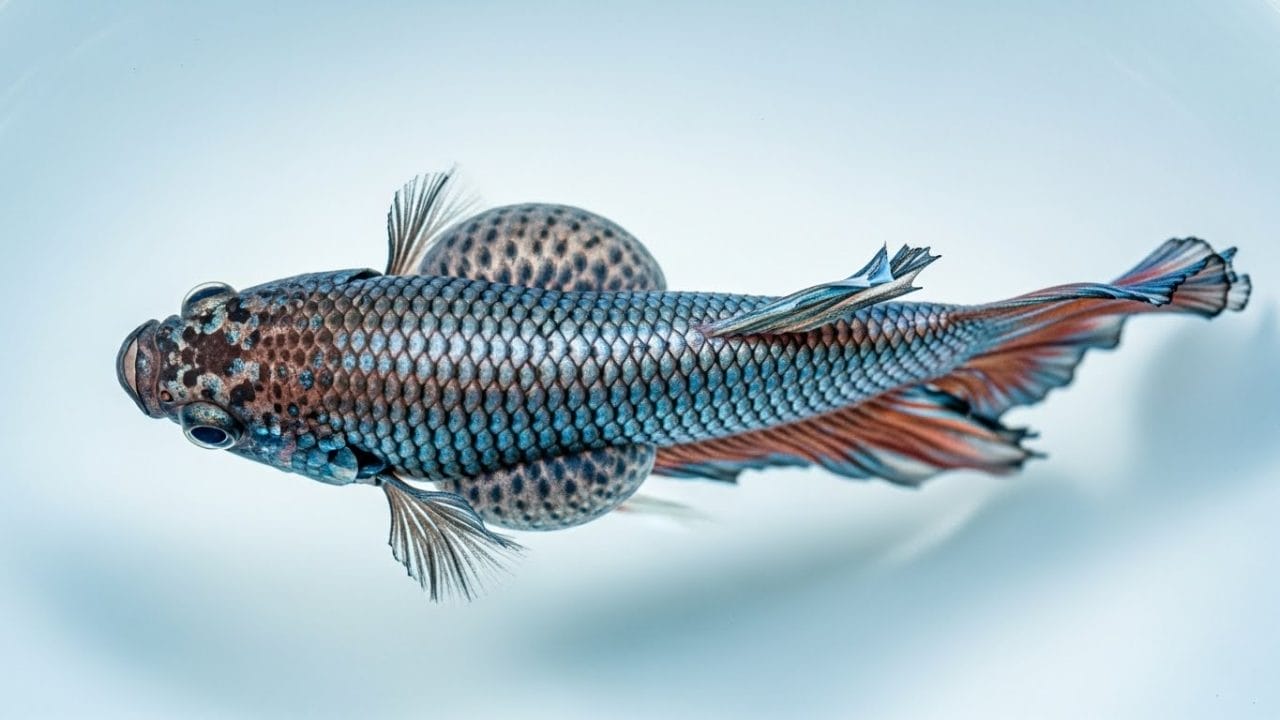
If your betta looks like it swallowed a marble, you’re probably freaking out right now. The bloated belly could be simple constipation from overfeeding, or it could be dropsy—a serious condition that’s often fatal.
Here’s the thing: constipation is fixable in 2-3 days with fasting and diet changes. Dropsy is a whole different story and needs immediate treatment with antibiotics.
In this guide, you’ll learn exactly how to tell the difference, what’s causing your betta’s bloat, and the step-by-step actions you need to take right now to help your fish.
Quick Answer: What’s Wrong With Your Betta?
- Constipation – Bloated belly, scales lay flat, fish still somewhat active, no poop for days
- Dropsy – Scales stick out like a pinecone (VIEW FROM ABOVE), extreme lethargy, curved spine
- Overfeeding – Belly swells right after eating, goes down within hours, fish acts normal
- The test: Look at your betta from above. If the scales stick out sideways making a pinecone pattern, it’s dropsy—get antibiotics NOW. If scales are smooth but belly is round, it’s likely constipation.
- Emergency sign: Pinecone scales + extreme bloating = dropsy. This is life-threatening. Start treatment immediately.
How to Tell If It’s Constipation (The Most Common Cause)
Constipation is hands down the most common reason bettas get bloated. Your fish basically can’t poop, and everything backs up in their tiny digestive system.
What constipation looks like:
- Swollen belly (only in the stomach area, not the whole body)
- Scales remain flat and smooth
- No poop at the bottom of the tank for 3+ days
- Long stringy white poop hanging from the fish
- Fish refuses food or spits it out
- Less active than usual but still swimming around
- Sometimes trouble staying upright (in severe cases)
The belly will be noticeably round when you look from the side. But here’s the key: when you look down at your betta from above, the scales should still be lying flat against the body.
If your betta still greets you at feeding time or flares at its reflection, it’s probably constipation, not dropsy.
Why Bettas Get Constipated So Easily
Your betta’s stomach is about the size of its eyeball. Yeah, tiny.
Most beginners don’t know this and feed way too much. The food packaging says “feed what they can eat in 2-5 minutes”—that’s for goldfish, not bettas.
Common causes:
- Overfeeding (feeding more than 2-3 pellets per meal)
- Dry pellets that swell up inside the stomach
- Too many bloodworms (they’re fatty and hard to digest)
- Only feeding pellets with no variety
- Not enough exercise (too small tank)
Pellets and flakes contain less than 10% moisture. When they hit your betta’s stomach, they absorb water and expand like crazy, which can cause a blockage.
Plus, many cheap pellets are packed with fillers like wheat meal and soybean meal. Bettas are carnivores—they can’t digest that plant stuff properly.
How to Tell If It’s Dropsy (The Serious One)
Dropsy isn’t actually a disease. It’s a symptom of internal organ failure, usually from a bacterial infection.
When a betta has dropsy, fluid builds up inside their body cavity. This pushes the organs aside and makes the scales stick out.
What dropsy looks like:
- Pinecone scales (this is THE defining symptom)
- Severe whole-body swelling (not just the belly)
- Extremely lethargic, barely moving
- Lying on the bottom or floating at the top
- No appetite at all
- Pale or faded gills
- Bulging eyes (popeye)
- Curved or bent spine
- Gasping at the surface for air
Here’s how you check: look at your betta from directly above. If the scales are sticking out from the body at an angle (like a pinecone), it’s dropsy.
With constipation, the scales stay smooth even though the belly is round. With dropsy, the scales literally point outward.
Dropsy usually kills bettas within 15-20 days without treatment. Even with treatment, survival rates are low once the pinecone appearance shows up.
What Causes Dropsy
Dropsy happens when your betta’s immune system is already weak. The bacteria that causes it (usually Aeromonas) lives in most tanks but only attacks sick fish.
Risk factors:
- Poor water quality (ammonia or nitrite spikes)
- Stress from aggressive tank mates
- Temperature swings
- Too small tank with no filtration
- Old age (older bettas have weaker immune systems)
- Poor diet lacking proper nutrition
Think of it like this: a healthy betta fights off the bacteria no problem. A stressed, poorly cared-for betta can’t, and the infection takes over.
How to Tell If It’s Just Overfeeding
Sometimes your betta isn’t sick at all. You just gave them too much food at once.
Temporary bloating from overfeeding:
- Belly swells immediately after feeding
- Goes back to normal within a few hours
- Fish acts totally normal otherwise
- Still active and responsive
- Pooping regularly
If your betta looks round right after you feed but slim again by the next morning, you’re just feeding too much per meal.
The fix is simple: cut back to 2-3 pellets twice a day, max.
Step-by-Step: How to Treat Constipation
Good news: constipation is super treatable if you catch it early. Most bettas recover in 2-5 days.
Step 1: Stop feeding immediately (Days 1-3)
Your betta needs to fast for 2-3 days. I know it feels mean, but they’ll be fine.
Bettas can go weeks without food in the wild. A few days of fasting won’t hurt them and gives their digestive system time to clear out.
Step 2: Feed high-fiber food (Day 4)
After fasting, feed one of these:
- Frozen or live daphnia (best option—acts as a natural laxative)
- A tiny piece of cooked, peeled pea (about 1/4 of a pea)
- Brine shrimp
Daphnia is what I’d recommend first. It’s high in fiber and helps things move along naturally.
If you’re using a pea, boil it until soft, remove the skin, and cut off a piece smaller than your betta’s eye. Squish it a bit so it sinks.
Step 3: Try an Epsom salt bath (if needed)
If fasting and daphnia don’t work after 3-4 days, try an Epsom salt bath.
How to do it:
- Get a clean container (not the tank)
- Add 1 teaspoon of Epsom salt per gallon of dechlorinated water
- Mix until fully dissolved
- Gently place your betta in the bath for 10-15 minutes max
- Watch closely for signs of stress (erratic swimming, gasping)
- After 10-15 minutes, move the fish back to the tank
You can repeat this daily for up to 3 days. Epsom salt helps draw out excess fluid and can relieve pressure.
Never leave your betta in the Epsom salt bath longer than 15 minutes. It can be fatal.
Step 4: Adjust feeding going forward
Once your betta poops and the bloating goes down, you need to prevent it from happening again.
- Feed only 2-3 pellets twice a day
- Soak pellets in tank water for 5-10 minutes before feeding
- Add variety: daphnia, brine shrimp, bloodworms (as treats only)
- Fast your betta one day per week
- Make sure the tank is at least 5 gallons so they get exercise
Pre-soaking pellets is huge. It lets them expand in the cup instead of in your betta’s stomach.
Step-by-Step: How to Treat Dropsy
I’m not gonna sugarcoat this: dropsy is tough to treat, and many bettas don’t survive.
But if you catch it super early (before the pinecone appearance), there’s a chance.
Step 1: Quarantine immediately
Move your betta to a hospital tank (1-5 gallons) with clean, dechlorinated water at 78-80°F.
If you don’t have a hospital tank, you’ll need to treat them in the main tank, but this makes dosing harder.
Step 2: Add aquarium salt (optional)
Add 0.5 teaspoons of aquarium salt per gallon. This helps reduce swelling and supports the fish’s ability to regulate fluids.
Make sure it’s fully dissolved before adding your betta.
Step 3: Use antibiotics
The best medications are:
- Kanaplex (kanamycin)
- Maracyn Two (minocycline)
Follow the instructions on the package exactly. These antibiotics absorb through the skin and gills, which is good because your betta probably isn’t eating.
Add an air stone to keep oxygen levels up—antibiotics can lower oxygen in the water.
Step 4: Maintain perfect water quality
Do small daily water changes (10-20%) in the hospital tank to keep ammonia and nitrite at zero.
Keep the temperature stable at 78-80°F.
Step 5: Monitor closely
Watch for any improvement. If your betta starts eating again and the swelling goes down, that’s a good sign.
If the pineconing gets worse or your betta stops moving entirely, the infection has likely progressed too far.
At that point, the most humane option might be euthanasia with clove oil to prevent suffering.
What NOT to Do (Common Mistakes)
Don’t make these rookie errors—they’ll make things worse.
Don’t keep feeding a constipated betta
Adding more food on top of a blockage just makes it worse. Always fast first.
Don’t confuse the two conditions
Treating dropsy like constipation (or vice versa) wastes time and stresses your fish. Always check for pinecone scales.
Don’t use Bettafix or “general cure” products for dropsy
Dropsy needs strong antibiotics, not tea tree oil. Bettafix won’t do anything for a bacterial infection.
Don’t overfeed bloodworms
Bloodworms are like betta candy—high in fat, low in nutrition. Use them as treats, not daily meals.
Don’t leave pellets unsoaked
Dry pellets swell up inside your betta’s stomach. Soak them for 5-10 minutes first.
Don’t keep bettas in tiny tanks
Bowls and 1-gallon tanks don’t give bettas enough room to swim and exercise, which leads to constipation. Aim for at least 5 gallons, ideally 10.
When to See a Vet (Or Consider Euthanasia)
Sometimes you need professional help or have to make a tough call.
See an aquatic vet if:
- Your betta shows pinecone scales but you’re unsure of the diagnosis
- Constipation doesn’t improve after 5-7 days of treatment
- You suspect a tumor (hard lump that doesn’t go away)
- Your betta’s condition is getting worse despite treatment
Consider humane euthanasia if:
- Dropsy has progressed to severe pineconing and your betta can’t swim
- Your betta is lying on its side and gasping
- There’s been no improvement after 2 weeks of antibiotic treatment
- Your betta is clearly in pain and suffering
The most humane method is clove oil euthanasia. You can find guides online, or ask your vet to help.
It sucks, but sometimes letting them go peacefully is kinder than prolonging suffering.
How to Prevent Bloating in the Future
Prevention is way easier than treatment. Here’s how to keep your betta’s belly healthy.
Feed correctly:
- Only 2-3 pellets twice a day (or an amount the size of the betta’s eyeball)
- Soak pellets in tank water for 5-10 minutes before feeding
- Offer variety: pellets, frozen daphnia, brine shrimp, occasional bloodworms
- Fast your betta one day per week
Maintain water quality:
- Test weekly for ammonia, nitrite, and nitrate
- Keep ammonia and nitrite at 0 ppm
- Do 25% water changes weekly
- Use a good filter (sponge filters work great for bettas)
Provide proper housing:
- Minimum 5-gallon tank (10 gallons is better)
- Heater to keep water at 78-80°F
- Gentle filtration
- Plants or decorations for enrichment
Reduce stress:
- Don’t house bettas with fin nippers or aggressive fish
- Avoid sudden temperature changes
- Give them hiding spots
A healthy, unstressed betta in clean water with a proper diet rarely gets constipation or dropsy.
FAQ: Betta Fish Bloating Questions
Can a betta fish survive dropsy?
Dropsy has a low survival rate, especially once pinecone scales appear. If caught very early and treated aggressively with antibiotics, some bettas survive, but it’s rare. Most bettas with advanced dropsy die within 15-20 days.
How long should I fast my constipated betta?
Fast for 2-3 days. After that, offer high-fiber food like daphnia or a small piece of cooked pea. Don’t fast longer than 5 days without offering food.
Can overfeeding kill my betta?
Yes, indirectly. Chronic overfeeding leads to constipation, which can cause swim bladder problems and organ stress. In severe cases, a blockage can be fatal if untreated.
What does betta fish poop look like?
Normal betta poop is dark brown and sinks immediately to the bottom. Constipated bettas produce long, stringy white or clear poop, or no poop at all.
Can I use regular aquarium salt for dropsy treatment?
Yes, aquarium salt can help reduce swelling. Use 0.5 teaspoons per gallon in a hospital tank. However, salt alone won’t cure dropsy—you need antibiotics for the bacterial infection.
Final Thoughts
A bloated betta can be scary, but now you know what to look for.
If the scales are smooth and your fish is still somewhat active, it’s probably constipation. Fast for 2-3 days, feed daphnia or peas, and you’ll likely see improvement.
If the scales stick out like a pinecone and your betta is barely moving, it’s dropsy. Start antibiotic treatment immediately, but prepare yourself—the odds aren’t great.
The good news? Most bloating cases are constipation, which is totally fixable with proper feeding and care.
Keep your betta’s tank clean, feed the right amount, and give them space to swim. You’ve got this.
About Author
Hello, I’m Muntaseer Rahman, the owner of AcuarioPets.com. I’m passionate about aquarium pets like shrimps, snails, crabs, and crayfish. I’ve created this website to share my expertise and help you provide better care for these amazing pets.
Disclaimer
This site is owned and operated by Muntaseer Rahman. AcuarioPets.com is a participant in the Amazon Services LLC Associates Program, an affiliate advertising program designed to provide a means for sites to earn advertising fees by advertising and linking to Amazon.com. This site also participates in other affiliate programs and is compensated for referring traffic and business to these companies.