This post was created with help from AI tools and carefully reviewed by a human (Muntaseer Rahman) . For more on how we use AI on this site, check out our Editorial Policy.
Check Out These FREE Tools We Made JUST For You!
Are Chameleons Good Pets? Species Guide for Beginners

Look, I’ll be straight with you right from the start.
Those color-changing mini dinosaurs you’re eyeing at the pet store? They’re basically the polar opposite of a goldfish in terms of care difficulty.
But here’s the thing – they’re also incredible. Like, watching-a-nature-documentary-in-your-living-room incredible.
So let’s talk about whether chameleons make good pets for beginners, and more importantly, whether you’re actually ready for one.
The Brutal Truth About Chameleon Ownership
Chameleons aren’t “difficult” pets in the sense that rocket science is difficult.
They’re difficult in the sense that they have zero tolerance for mistakes.
Think of it like this: a bearded dragon might forgive you for messing up the temperature for a day or two. A chameleon? It’ll get sick, stop eating, and you’ll be making an emergency vet visit faster than you can say “metabolic bone disease.”
Here’s what experienced keepers say: Most forum posts from new chameleon owners go something like “HELP! My chameleon isn’t eating and I just got it three days ago!”
That’s because people treat them like geckos or snakes and wonder why things go wrong.

Why Everyone Says “Don’t Get a Chameleon as Your First Reptile”
The chameleon community has a reputation for being, well, a bit negative to newcomers.
But they’ve got their reasons.
The setup alone will cost you $600+ minimum – and that’s just the “needs,” not the “wants.”
You need:
- A massive 24″ x 24″ x 48″ mesh enclosure (bigger than most dogs get)
- Specific UVB lighting that costs $50-100 and needs replacing every 6 months even if it still looks bright
- A misting system (the only one I trust for chameleons) because these guys won’t drink standing water (they’re picky like that)
- Live plants to create humidity and drinking surfaces
- Temperature gradients with basking spots at precise temps
- A drainage system because you’ll be spraying 2+ gallons of water per day
And that’s before you even buy the chameleon.
The “You’ll Think I’m Kidding But I’m Not” Requirements
They Need Their Own Ecosystem
You’re not just setting up a cage. You’re building a miniature Yemeni forest or Madagascar rainforest in your spare bedroom.
Every. Single. Day. you need to:
- Mist the enclosure 2-3 times (or more for Jackson’s)
- Feed live insects that you’ve been “gut-loading (the gutload I use weekly)” for 48 hours beforehand
- Check temperatures with digital thermometers (those stick-on ones are garbage)
- Spot clean any waste
- Make sure humidity is at 60-70% but airflow is still good
And here’s the kicker: you’re also taking care of their food.
Hope you’re cool with crickets, roaches, and superworms living in your house. Because chameleons only eat live insects, and those bugs need to be fed nutritious food for 2 days before you feed them to your chameleon.
It’s like meal-prepping, but for bugs, which your lizard eats.
They Absolutely Hate You (And That’s Normal)
Let me paint you a picture of what “bonding” with a chameleon looks like:
You walk past the cage. Your chameleon pretends it didn’t see you.
That’s it. That’s the dream scenario.
Chameleons are solitary and territorial. In the wild, they basically avoid each other except for mating. They don’t want friends. They don’t want cuddles. They definitely don’t want to be your shoulder buddy.
The BEST you can hope for is one that tolerates you. Some keepers describe their chameleons as “living art” – gorgeous to look at, fascinating to watch, but fundamentally not interested in human interaction.
One owner put it perfectly: “He’s a lizard that lives in my house and generously allows me to feed him.”
The Vet Situation Is Rough
You need a reptile vet lined up BEFORE you buy a chameleon.
Not a regular vet. A reptile-specialized exotic vet who actually knows chameleon medicine.
And here’s the reality: chameleon vet visits are expensive, and they hide illness until it’s nearly too late. By the time you notice something’s wrong, you’re often looking at serious health issues.
If the nearest reptile vet is 2+ hours away and you don’t have the time or money for emergency visits, that’s a dealbreaker.
But Wait – Are They Really THAT Hard?
Here’s where it gets interesting.
After you’ve done the research, bought all the equipment, and set everything up correctly, daily care only takes 15-20 minutes.
Experienced keepers say the “difficult” reputation comes from:
- The learning curve (which is steep)
- The upfront cost (which is high)
- How unforgiving they are of mistakes (which is very)
But the actual day-to-day maintenance? Not that bad.
One keeper said: “After you have everything set up and have the basics down, it’s not too difficult.”
The problem is most people skip the “everything set up correctly” part and wonder why their chameleon dies within a year.
The Three Best Beginner Chameleon Species (Ranked)
If you’re still reading and haven’t been scared off, let’s talk species.

1. Veiled Chameleon – The “Budget” Option
- Cost: $30-50 for a baby
- Adult Size: 18-24 inches (males bigger than females)
- Lifespan: 6-8 years (males), 4-6 years (females)
- Difficulty: Beginner-friendly (relatively speaking)
Veiled chameleons are the Honda Civics of the chameleon world – widely available, relatively affordable, and pretty hardy.
They’re from Yemen and can handle a wider temperature range than other species, which gives you a bit more wiggle room if your heating isn’t perfect.
The downsides:
- They’re known for being cranky and territorial
- Females have shorter lifespans due to egg-laying stress
- They’re not as colorful as Panthers
- They get stressed easily and will make themselves sick if handled too much
Best for: First-time chameleon owners who want to learn the ropes without spending $400 on the lizard itself.
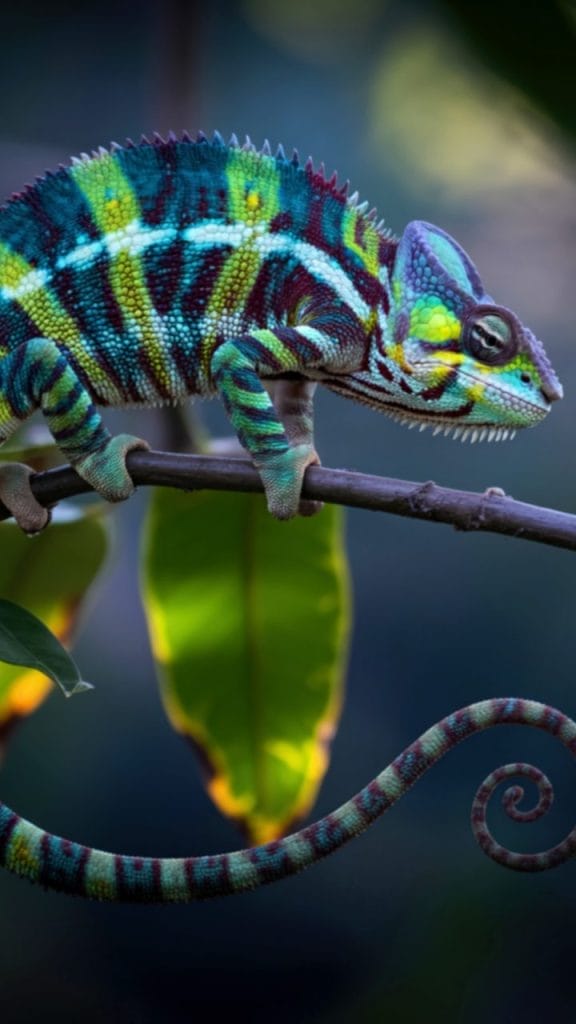
2. Panther Chameleon – The “Worth It” Option
- Cost: $250-450 depending on color morph
- Adult Size: Up to 20 inches
- Lifespan: 5-7 years
- Difficulty: Intermediate
If Veileds are Honda Civics, Panthers are like BMWs – more expensive, way more impressive, and people will definitely notice.
These guys are absolutely stunning. Depending on which locale they’re from (Ambilobe, Nosy Be, Ambanja, etc.), they can be electric blue, fiery red, turquoise, pink – basically any color except boring.
The upsides:
- Most colorful chameleon you can get
- Better personalities than Veileds (for a chameleon)
- More tolerant of occasional handling
- Intelligent – they’ll recognize you and learn feeding schedules
The downsides:
- Expensive initial cost
- Need higher humidity than Veileds (can be tricky)
- Still don’t actually like being handled
Best for: Someone with a bit of reptile experience who wants a jaw-dropping display animal and can afford the higher price tag.
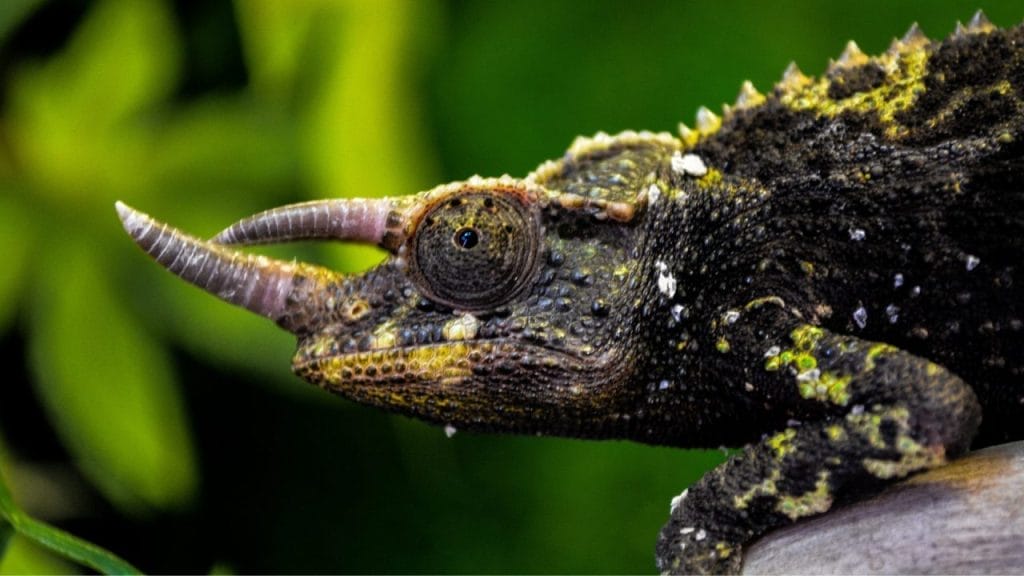
3. Jackson’s Chameleon – The “Cool Looking But Fussy” Option
- Cost: $100-150
- Adult Size: 6-14 inches
- Lifespan: 8-10 years
- Difficulty: Intermediate
These are the ones with three horns like a mini Triceratops. Males look prehistoric and awesome.
The upsides:
- Calmer temperament than Veileds or Panthers
- Unique appearance with those horns
- Longer lifespan than most other species
- More tolerant of handling
The downsides:
- Need higher humidity (think 70-80%)
- Require cooler temperatures than other species
- Need more misting (3+ times per day)
- More sensitive to vitamin overdoses (tricky supplementation)
- Not as readily available as Veileds or Panthers
Best for: Intermediate keepers who live in naturally humid areas and want something unique with a chill personality.
The “Are You Actually Ready?” Checklist
Let’s be real for a second.
Here’s the checklist you need to honestly answer “yes” to before getting a chameleon:
✓ Can you spend $600-800+ on setup before getting the chameleon?
✓ Are you comfortable keeping live insects in your home?
✓ Can you mist an enclosure 2-3 times daily OR afford an automatic mister ($150+)?
✓ Do you have a reptile vet within reasonable driving distance?
✓ Are you prepared for 5-10 years of daily care?
✓ Can you handle a pet that will never “love” you back?
✓ Do you rarely travel, OR can you find a pet sitter who can handle chameleon care?
✓ Can you afford surprise vet bills that might cost $200-500+?
✓ Are you okay with a pet you mostly just watch and admire?
If you answered “no” or “maybe” to more than two of these, you’re not ready for a chameleon yet.
And that’s totally fine! There are plenty of awesome reptiles that are more forgiving.
What Experienced Keepers Wish They’d Known
I dug through forums to find the most common regrets and “wish I’d known” moments.
Here’s what pops up repeatedly:
“I wish I’d known they need a vet BEFORE getting sick.”
Line up your reptile vet before you bring the chameleon home. Get a wellness check even if it seems healthy. Chameleons hide illness until it’s critical.
“I wish I’d bought an automatic misting system from the start.”
Hand-misting 2-3 times daily gets old fast, especially if you work long hours. An Exo-Terra Monsoon or similar ($100-150) is worth every penny.
“I wish I hadn’t bought from a chain pet store.”
Reptiles from big box stores are often stressed, parasite-ridden, or sick. Buy from reputable breeders who can give you care advice after the sale.
“I wish someone had told me the UVB bulb needs replacing every 6 months.”
Even if it’s still glowing, UVB output drops after 6 months. Mark your calendar or your chameleon will develop metabolic bone disease.
“I wish I’d gotten a male instead of a female.”
Female chameleons lay eggs even without mating (yes, really). The egg-laying process is stressful and they have shorter lifespans as a result. Males live longer and have fewer complications.
The Surprising Perks Nobody Talks About
Okay, I’ve been pretty heavy on the warnings. But let’s talk about why people fall in love with chameleons despite all this.
They’re dead silent. If you work from home or value peace and quiet, a chameleon won’t make a peep. No barking, no chirping, no midnight wheel-running.
They don’t smell. Unlike some reptiles (and most mammals), chameleons are basically odorless. Clean up waste daily and your room won’t smell like “reptile.”
They’re mesmerizing to watch. Those independently moving eyes tracking different things? The tongue shooting out faster than you can blink? The color changes based on mood? It never gets old.
They teach you precision and patience. Chameleon keeping makes you GOOD at reptile husbandry. If you can successfully keep a chameleon, you can keep pretty much any reptile.
The community is incredible. Chameleon forums are full of passionate, knowledgeable people who genuinely want to help. Yes, they’ll call you out if you mess up, but they’ll also guide you through every crisis at 2am.
The Equipment Shopping List (So You Know What You’re Getting Into)
Here’s what you actually need to buy:
| Item | Cost Range | Notes |
|---|---|---|
| Screen enclosure (24x24x48″) | $100-150 | Mesh is non-negotiable for airflow |
| UVB fixture + bulb (T5 HO) | $60-100 | Reptisun 5.0 or Arcadia 6% |
| Heat bulb + fixture | $30-50 | Simple white incandescent, 40-60W |
| Automatic misting system | $100-200 | Exo-Terra Monsoon, MistKing, etc. |
| Live plants | $50-100 | Pothos, Ficus, Schefflera |
| Branches and vines | $30-60 | Various diameters for climbing |
| Thermometers (digital) | $20-30 | Need at least 2 for different zones |
| Hygrometer | $10-20 | For measuring humidity |
| Drainage system | $30-80 | DIY or commercial |
| Supplements (calcium, vitamins) | $30-40 | Last 6+ months |
| Feeder insects | $20-40/month | Ongoing cost |
| UVB bulb (this is the bulb chameleon keepers actually use) replacements | $30-50 | Every 6 months |
- Total startup cost: $600-900+
- Monthly ongoing: $30-60
And that’s not counting the chameleon itself.
The Real Answer: Should YOU Get a Chameleon?
After all that research and all those forum posts, here’s what I’ve learned:
Chameleons are NOT good pets for absolute beginners to reptile keeping.
If you’ve never owned a reptile before, start with a bearded dragon, leopard gecko, or crested gecko. Learn the basics of heating, lighting, and live food without the added pressure of “one mistake could kill it.”
But chameleons CAN be good pets for committed beginners who:
- Have done extensive research (you’re already doing this)
- Have the budget for proper setup
- Are realistic about what chameleon ownership involves
- Don’t need a cuddly, interactive pet
- Have time for daily maintenance
- Live near a reptile vet
One person who’d never owned reptiles before bought a Panther chameleon and said: “This has proved to be a great decision. My chameleon is incredibly happy and healthy.”
So it’s possible. You just need to go in with your eyes wide open.

About Author
Hello, I’m Muntaseer Rahman, the owner of AcuarioPets.com. I’m passionate about aquarium pets like shrimps, snails, crabs, and crayfish. I’ve created this website to share my expertise and help you provide better care for these amazing pets.
Disclaimer
This site is owned and operated by Muntaseer Rahman. AcuarioPets.com is a participant in the Amazon Services LLC Associates Program, an affiliate advertising program designed to provide a means for sites to earn advertising fees by advertising and linking to Amazon.com. This site also participates in other affiliate programs and is compensated for referring traffic and business to these companies.