This post was created with help from AI tools and carefully reviewed by a human (Muntaseer Rahman) . For more on how we use AI on this site, check out our Editorial Policy.
Check Out These FREE Tools We Made JUST For You!
Veiled vs Panther vs Jackson’s Chameleons: Complete Comparison

You’re staring at three different chameleons at the pet store and honestly, you have no idea which one to pick.
The veiled’s got that crazy helmet thing going on, the panther looks like someone threw a paint store at it, and the Jackson’s is basically a tiny triceratops.
Here’s the thing nobody tells you: picking the wrong chameleon for your lifestyle is like buying a sports car when you live on a dirt road.
Let me break down everything you need to know about these three popular species so you don’t end up with a stressed-out lizard and an empty wallet.
Quick Comparison Table
| Feature | Veiled | Panther | Jackson’s |
|---|---|---|---|
| Size (Male) | 18-24″ | 15-20″ | 8-13″ |
| Lifespan (Male) | 6-8 years | 5-7 years | 8-10 years |
| Temperament | Aggressive | Moderate | Docile |
| Care Level | Beginner | Intermediate | Intermediate-Advanced |
| Colors | Moderate | Stunning | Subtle |
| Price | $50-150 | $200-500+ | $75-200 |
| Humidity Needs | 40-70% | 50-80% | 60-80% |
| Temperature | Warmer | Warm | Cooler |
| Special Feature | Large casque | Rainbow colors | Three horns |
| Diet | Insects + greens | Insects only | Insects only |
| Reproduction | Eggs | Eggs | Live birth |
Size: Who’s the Heavyweight Champion?
Veiled Chameleons: The Big Boys
Male veiled chameleons can hit 18-24 inches from snout to tail tip.
We’re talking about a lizard that’s nearly two feet long. Females are smaller at around 14 inches, but they’re still pretty chunky compared to some other species.
Males weigh 120-250 grams, while females clock in at 85-180 grams. That’s like holding a small hamster versus a big one.
Panther Chameleons: Slightly More Compact
Panthers are almost as big but not quite. Males reach 15-20 inches and weigh 140-180 grams.
Females are noticeably smaller at 8-12 inches and 60-100 grams. The size difference between male and female panthers is way more obvious than with veileds.
Jackson’s Chameleons: The Pocket-Sized Option
Jackson’s are the runts of this group. Males grow to 8-13 inches and weigh around 90-150 grams.
Females are even tinier at 7-8 inches. If you don’t have space for a massive enclosure, Jackson’s might be your guy.
But here’s the kicker: smaller doesn’t always mean easier to care for.
Lifespan: How Long Are You In This Relationship?
This is where things get depressing, honestly.
Veiled Chameleons
Males live 6-8 years with proper care. Some lucky ones make it to 9.
Females? 3-5 years. The constant egg production absolutely destroys their bodies, even if they never mate.
Panther Chameleons
Males can reach 5-7 years, occasionally pushing to 8 with excellent care.
Females typically make it 3-5 years. Same deal as veileds – the reproductive cycle is brutal.
Jackson’s Chameleons
Here’s where it gets interesting. Males live 8-10 years, which is actually longer than the other two species.
Females live 3-6 years. Jackson’s give birth to live young instead of laying eggs, which is less taxing but still rough.
The bottom line: If you want the longest relationship with your chameleon, get a male Jackson’s. If you don’t want to watch a female slowly wear herself out from constant egg production, get a male of any species.

Appearance: The Beauty Contest
Veiled Chameleons: The Helmet Heads
Veileds have that huge casque (the helmet thing) on their heads. Males have way bigger casques than females.
They’re usually green with yellow, blue, brown, and orange patterns. The colors are nice but not mind-blowing.
That casque isn’t just for looks – it channels water toward their mouth like a built-in rain gutter.
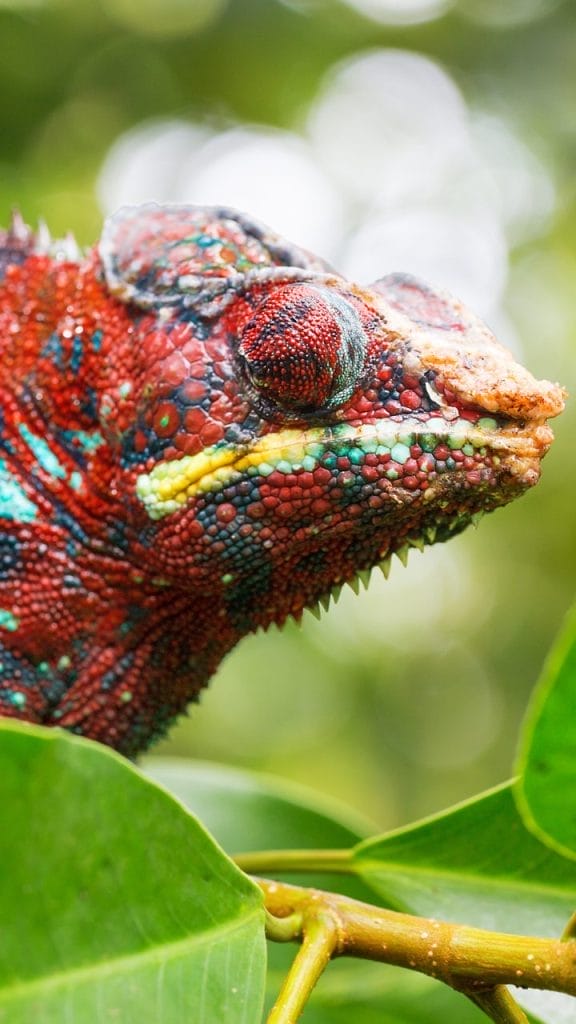
Panther Chameleons: The Rainbow Warriors
Panthers are hands-down the most colorful. We’re talking reds, blues, greens, yellows, oranges – basically every color except purple.
The color depends on where they’re from (called “locales”). Ambilobe panthers are different from Nosy Be panthers.
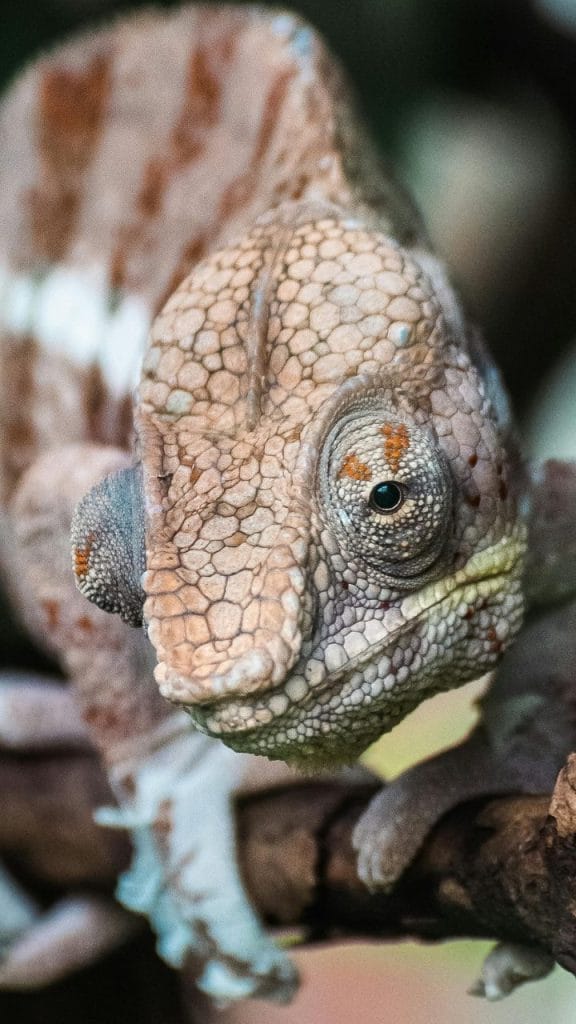
Females are way less colorful – mostly tan or peachy-pink. It’s like comparing fireworks to a beige wall.
Jackson’s Chameleons: The Dinosaurs
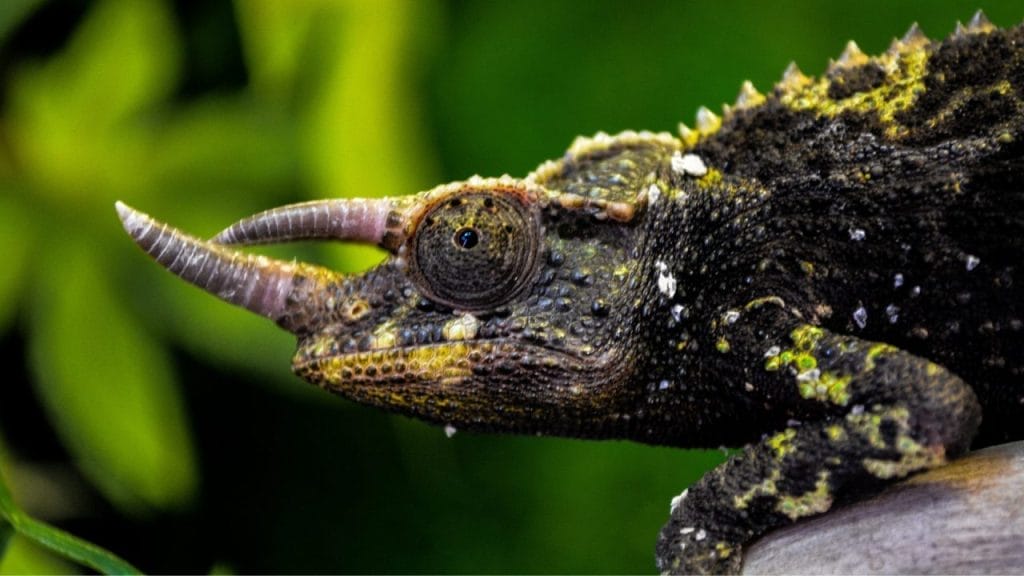
Males have three horns on their faces like a mini triceratops. Two on top of the head, one on the nose.
Females either have tiny horn stubs or no horns at all. Easy way to sex them.
They’re mostly green with brown or darker green patterns. Not flashy, but those horns make up for it.
My take: If you want the coolest-looking chameleon, get a male panther. If you want the most unique-looking, get a male Jackson’s.
Temperament: Who’s the Cranky One?
Let’s be real: no chameleon wants to be your cuddle buddy.
But some are way more tolerant than others.
Veiled Chameleons: The Grumpy Old Men
Veileds have a reputation for being aggressive and territorial. They’ll hiss, gape their mouths, and lunge at you.
Some veileds are sweethearts. Most are not. It’s like playing chameleon roulette.
Female veileds are often meaner than males. Multiple owners report their females trying to murder them during simple cage cleaning.
Panther Chameleons: The Chill Dudes
Panthers are generally more laid-back and tolerant of handling. They’re still not dogs, but they’re not actively trying to fight you.
They tend to be curious and will come to the front of their cage. Some will even hand-feed willingly.
They’re still territorial and don’t want roommates, but toward humans they’re the friendliest of the three.
Jackson’s Chameleons: The Zen Masters
Jackson’s are the most docile species. They’re slower to show aggression and easier to handle when necessary.
They’re still shy and would prefer you leave them alone, but they won’t freak out if you need to check on them.
Reality check: Even the friendliest chameleon should only be handled when necessary. They’re display animals, not pets you take out to play with.
Care Difficulty: Who’s High Maintenance?
Veiled Chameleons: Beginner-Friendly (Relatively)
Veileds are considered the easiest chameleon to keep. They tolerate a wider range of temperatures and humidity levels.
They’re hardy and forgiving of minor husbandry mistakes. If you screw up slightly, they’re more likely to survive than the others.
Temperature: 75°F ambient, 90-95°F basking spot, 55-70°F at night
Humidity: 40-70%
They’ll eat almost any insect you throw at them, plus they’ll munch on greens. Less picky about food than panthers or Jackson’s.
Panther Chameleons: Intermediate Level
Panthers need higher humidity than veileds (50-80%), which can be tricky to maintain while keeping good airflow.
Temperature: 75-80°F ambient, 90-95°F basking, 65-70°F at night
They’re picky eaters sometimes and can go on random hunger strikes. Nobody knows why.
They’re just as hardy as veileds if you get the environment right, but getting it right is harder.
Jackson’s Chameleons: The Needy Ones
Jackson’s are more demanding than both veileds and panthers.
They need cooler temperatures (70-80°F ambient, 80-85°F basking) and higher humidity (60-80%). Some owners go through 2 gallons of water daily with misting systems (the only one I trust for chameleons).
Here’s the brutal part: they’re from mountainous regions and need less supplementation than other species. It’s super easy to overdose them on vitamins A and D3.
They’re also more sensitive to poor husbandry. A mistake that a veiled would shrug off might kill a Jackson’s.
The verdict: If this is your first chameleon, get a veiled. If you’ve kept reptiles before and want something prettier, get a panther. Only get a Jackson’s if you’re committed to nailing the specific care requirements.
Enclosure Requirements: Space Invaders
All chameleons need tall, screened enclosures with excellent airflow. Glass tanks will kill them.
Minimum Enclosure Sizes
Veiled Chameleons:
- Males: 24″W x 24″D x 48″H (bigger is better)
- Females: 18″W x 18″D x 36″H minimum
Panther Chameleons:
- Males: 24″W x 24″D x 48″H minimum (go bigger if possible)
- Females: 18″W x 18″D x 36″H minimum
Jackson’s Chameleons:
- Males: 24″W x 24″D x 36-48″H
- Females: 18″W x 18″D x 30″H minimum
They all need tons of branches and live plants to climb on. Think vertical jungle.
Diet: What’s On The Menu?
Veiled Chameleons: The Omnivores
Veileds eat crickets, roaches, superworms, hornworms, silkworms – basically any bug.
They also eat dark leafy greens like collard greens and ficus leaves. This makes them easier to feed a varied diet.
Panther Chameleons: The Insect Fanatics
Panthers eat only insects. Crickets, locusts, roaches, silkworms, hornworms, waxworms (as treats).
They won’t touch vegetables. Some go on weird hunger strikes for no reason.
Jackson’s Chameleons: Pure Carnivores
Jackson’s eat only insects. No vegetables at all.
They need the same variety as panthers but require way less supplementation. This is where people mess up – they over-supplement and poison their Jackson’s.
All three need: UVB lighting, calcium supplementation, varied diet, and gutloaded insects.

Breeding: Live Birth vs Eggs
Here’s a wild difference.
Veiled and Panther Chameleons: Egg Layers
Both species lay 20-95 eggs per clutch. Females will lay eggs even if they never see a male.
The constant egg production shortens their lifespan significantly. It’s like running a marathon every few months.
You need to provide a laying bin or your female could become egg-bound and die.
Jackson’s Chameleons: Live Birth
Jackson’s give live birth to 7-30 babies after a 6-9 month gestation.
This is way less common in reptiles. The babies come out wrapped in membranes they have to break free from.
No laying bin needed, but pregnant females still get stressed and need special care.
Cost: What’s This Gonna Run You?
Veiled Chameleons: Cheapest option, usually $50-150 for captive-bred babies.
Panther Chameleons: More expensive, $200-500+ depending on locale and colors.
Jackson’s Chameleons: Middle ground, $75-200 typically.
But the chameleon itself is the cheap part. The enclosure, lighting, misting system, plants, and vet bills will run you $500-1000+ easily.
Common Health Problems
All three species can get:
- Metabolic Bone Disease (from improper UVB/calcium)
- Respiratory infections (from poor ventilation)
- Parasites
- Eye infections
- Stress-related illness
Veileds are especially prone to MBD.
Panthers suffer from dystocia (difficult egg-laying) in females.
Jackson’s are more sensitive to vitamin overdose.
The Final Verdict: Which One Should You Get?
Get a Veiled Chameleon If:
- This is your first chameleon
- You want the most forgiving species
- You’re on a budget
- You don’t mind a potentially grumpy personality
- You like that unique casque look
Get a Panther Chameleon If:
- You’ve kept reptiles before
- You want the most colorful species
- You can maintain higher humidity
- Money isn’t a huge concern
- You want a friendlier temperament
Get a Jackson’s Chameleon If:
- You’ve successfully kept chameleons before
- You love the three-horned look
- You can provide cooler temperatures
- You’re meticulous about supplementation
- You want a longer-lived male chameleon
- You want the most docile species
Don’t Get Any Chameleon If:
- You want a pet you can handle regularly
- You can’t afford proper setup and vet care
- You don’t have time for daily misting and feeding
- You want something low-maintenance
- You live somewhere with extremely dry or humid conditions
The Harsh Truth Nobody Tells You
Chameleons are hard. All of them.
They’re expensive, time-consuming, and fragile. They don’t like being handled. They can die from stress alone.
But if you’re willing to put in the work, watching a chameleon hunt, change colors, and navigate its enclosure is absolutely worth it.
I’ve watched people get chameleons because they look cool, then surrender them to rescues six months later because they didn’t realize what they were signing up for.
Do your research. Set up the enclosure before you buy the chameleon. Find a reptile vet before you need one.
And for the love of god, don’t impulse-buy a chameleon because you saw a cool TikTok.
These are living creatures that deserve proper care, not Instagram props.

About Author
Hello, I’m Muntaseer Rahman, the owner of AcuarioPets.com. I’m passionate about aquarium pets like shrimps, snails, crabs, and crayfish. I’ve created this website to share my expertise and help you provide better care for these amazing pets.
Disclaimer
This site is owned and operated by Muntaseer Rahman. AcuarioPets.com is a participant in the Amazon Services LLC Associates Program, an affiliate advertising program designed to provide a means for sites to earn advertising fees by advertising and linking to Amazon.com. This site also participates in other affiliate programs and is compensated for referring traffic and business to these companies.