This post was created with help from AI tools and carefully reviewed by a human (Muntaseer Rahman) . For more on how we use AI on this site, check out our Editorial Policy.
Check Out These FREE Tools We Made JUST For You!
Panther Chameleon Locale Guide: Ambilobe, Nosy Be, Ambanja, and More
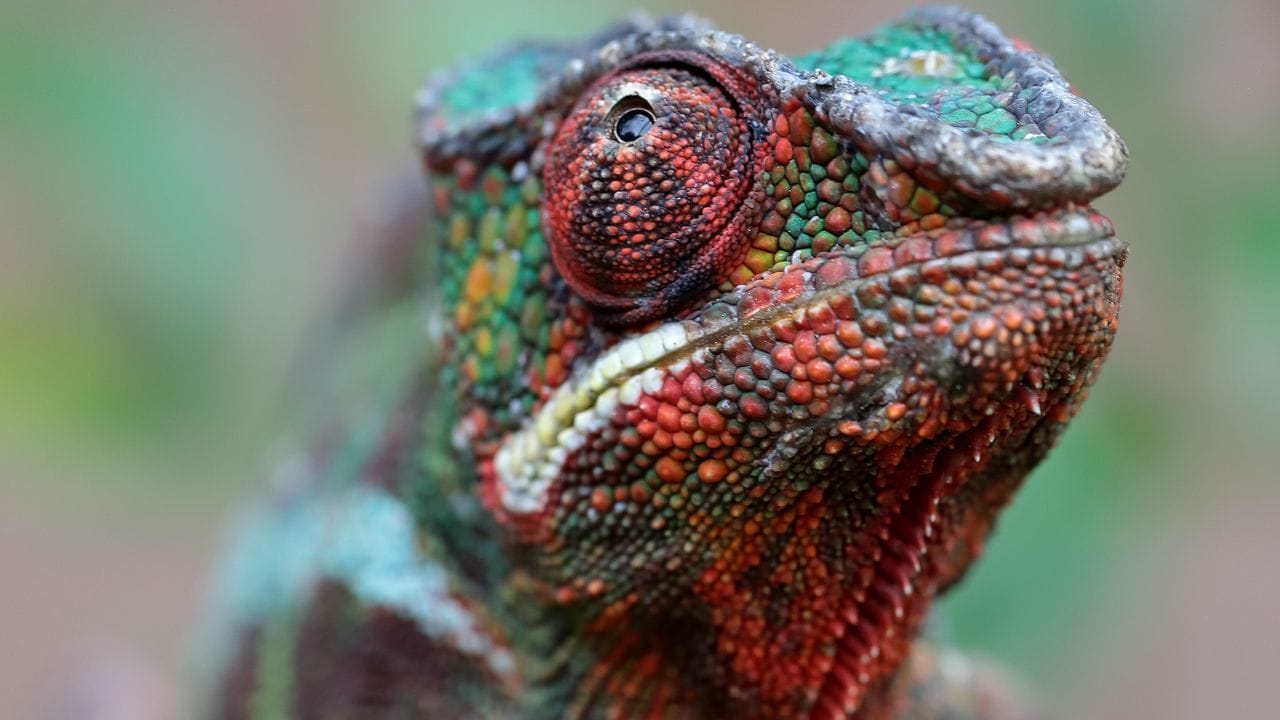
So you want a panther chameleon, huh?
That’s when things get weird because suddenly you’re not just picking a chameleon—you’re picking between towns in Madagascar you’ve never heard of.
Welcome to the wonderfully confusing world of panther chameleon locales.
What the Heck is a Locale Anyway?
A locale is basically where your chameleon’s ancestors came from in Madagascar.
Think of it like dog breeds, except instead of “Golden Retriever” you get “Ambilobe” or “Nosy Be.”
Same species, wildly different looks.
The crazy part? Nobody knows why panther chameleons developed such different colors in different locations. They could theoretically mix in areas where their ranges overlap, but they just… don’t.
Scientists are stumped, but chameleon keepers aren’t complaining.
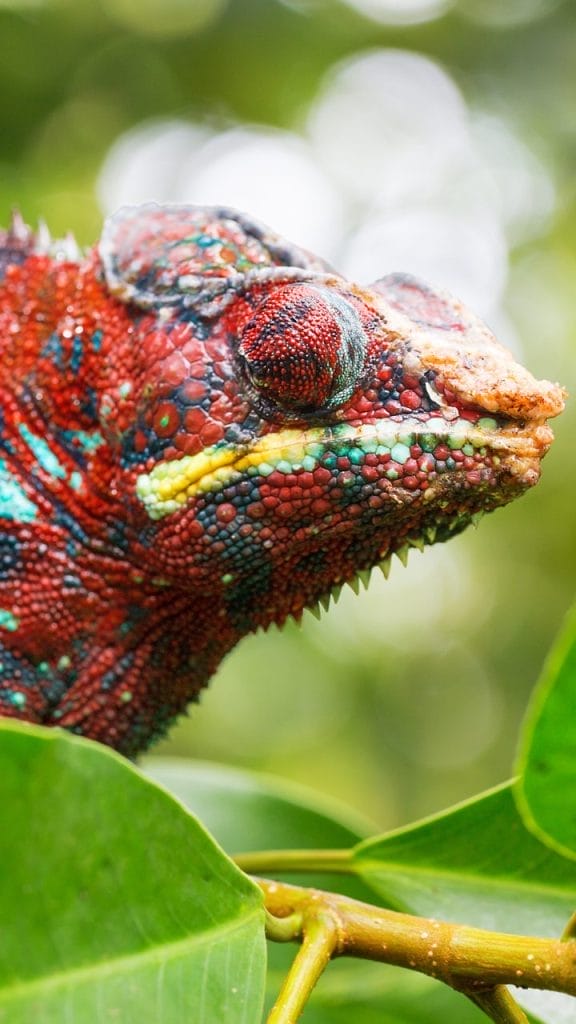
The Geography Lesson You Didn’t Ask For
Panther chameleons live around the coastal regions of northern Madagascar.
If you see “Nosy” in front of a locale name, that’s the Malagasy word for island—so Nosy Be literally means “Big Island.”
Here’s the wild part: colors loosely transition from hot to cool as you follow the coast counterclockwise around Madagascar.
Start in the central eastern part with reds, keep going around, and boom—you hit blues in the northeast.
Nature’s color wheel, basically.
The Big Four: Your Main Options
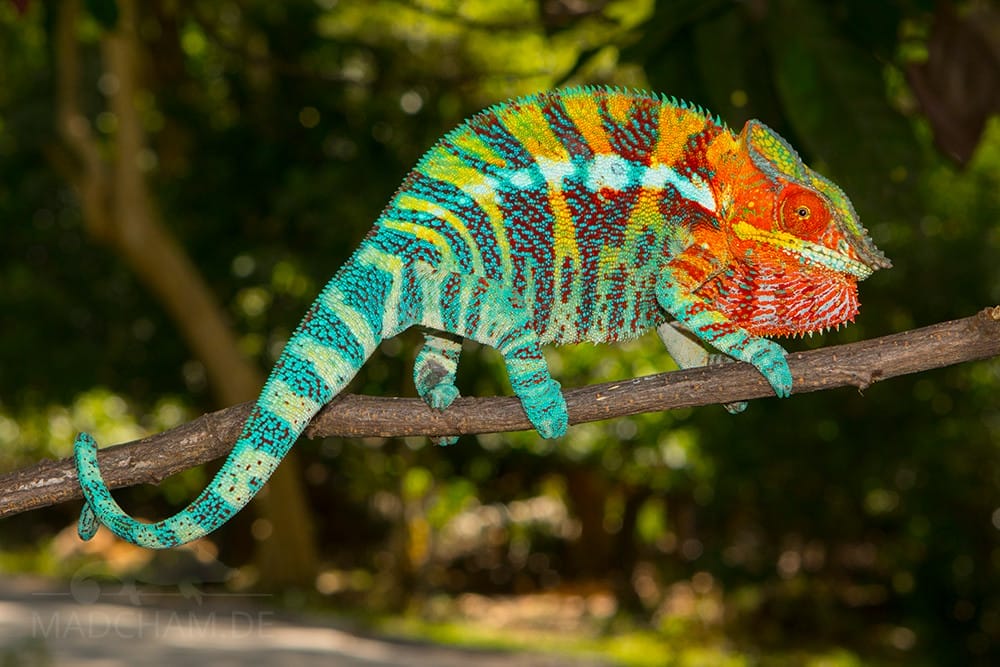
Ambilobe: The Rainbow Explosion
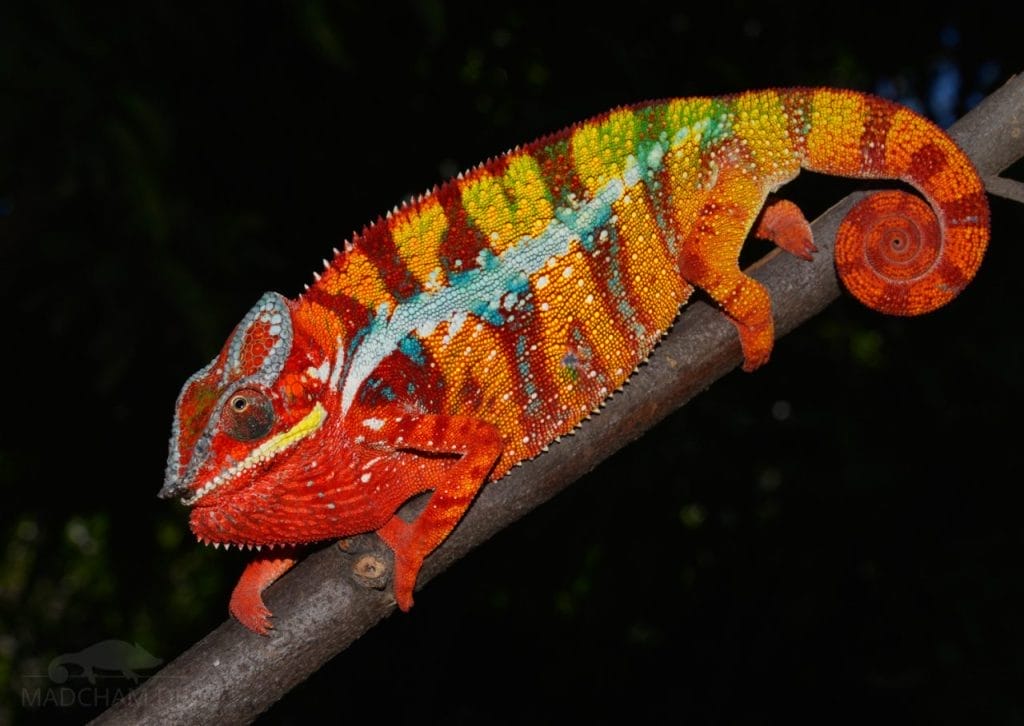
Ambilobe is the rock star of panther chameleons.
These guys are like someone took every color in the crayon box and said “yes, all of them.”
Red body, blue bars, yellow body, blue bars, green stripes, orange patches—Ambilobe males are living kaleidoscopes.
The colors have insane contrast between the body and bar patterns, and they change dramatically when they’re fired up or feeling warm.
You’ll see bright red around the face, feet, and belly, with orange or yellow patterns running down the spine, all separated by bold blue or green stripes.
Most commonly available in the pet trade right now, and for good reason.

Nosy Be: The Famous Blue Boy
Once upon a time, a Nosy Be panther graced the cover of Vivarium magazine.
This particular chameleon was missing yellow pigment and turned out completely bubble gum blue.
The chameleon world lost its collective mind.
Nosy Be got absolutely stripped of any chameleon that remotely looked like that magazine model, and breeders scrambled to create captive lines of these “true blue” panthers.
Today’s Nosy Be panthers are typically sea foam green to blue with less pattern complexity than Ambilobes—think solid, bold colors rather than a rainbow explosion.
Wild-caught Nosy Bes actually have more color variation (green, yellow cheeks, red around the eyes), but captive breeding has refined them into more consistent blues.
They have a slightly sloped casque (head crest) with a less pronounced nose compared to other locales—if you care about that sort of thing.
Ambanja: The Purple Mystery
Ambanja is where things get controversial.
Traditional Ambanja panthers show a blue-green body with purple saddles and a pixelated mix of red and blue in their bars.
They’re known for being larger and having a more prominent nose shape than other locales.
Their colors blend in smooth gradients rather than sharp contrasts—think watercolor painting instead of comic book.
Some breeders say Ambanja panthers are calmer and more tolerant of human interaction, moving more deliberately than the faster, more erratic Ambilobes.
But here’s the drama: there’s a whole debate about “blurple” panthers (blue-purple crosses) that may have Nosy Be genetics mixed in, creating a monochromatic mess instead of the high-contrast patterns true Ambanjas should have.
Incubation period: 7-12 months. Yeah, you read that right.

Sambava: The Warm-Toned Gentle Giant
Sambava panthers are for people who like their chameleons spicy.
We’re talking yellows, oranges, and reds—the whole warm side of the color spectrum.
At rest, they’re typically green, but when fired up? That green body turns bright yellow with orange and red highlights.
They’re known for having a “U bar” pattern on their flanks instead of the typical Y or V shape you see in other locales.
Sambava tend to be larger within captive populations—so if size matters, there’s your guy.

Other Locales Worth Knowing
Nosy Faly
Like Nosy Be’s more colorful cousin.
Blue-green background with white patches and spots that break up their shape like natural camouflage.
They can show wild variation from blue-green to yellow, red-green, or even mostly white.
When stressed or cold, the reds and blues in their spotted pattern turn almost black—dead giveaway something’s wrong.
Ankaramy: The Pink Panther (For Real)
Marketed as “Pink Panthers” because male Ankaramy chameleons are a vibrant pink coloration.
Yes, pink chameleons exist.
No, I’m not making this up.
Nosy Mitsio
Shows yellow base with green bars and red eye turrets, with orange-red barring on the flanks.
Similar to several other locales, which is why the rare locale market gets tricky.
Diego Suarez, Andapa, Tamatave
These locales exist and have dedicated breeders, but they’re not as established in the captive breeding world.
Colors can overlap with the big four, making them harder to identify and market.
Why Everyone’s So Obsessed with Keeping Locales Pure
Here’s the thing about mixing locales: it’s like mixing all your crayons together in grade school.
Remember what color that made? Yeah. Brown. Maybe a muddy purple if you were lucky.
Panther chameleons can absolutely interbreed—they’re all the same species (Furcifer pardalis).
But mixing an Ambilobe with a Nosy Be doesn’t give you double the colors.
Usually you get a monochromatic blob that loses the high-contrast patterns both locales are known for.
Plus, once you mix locales, you can never get them back. That genetic combination is permanent.
This is why reputable breeders are passionate (sometimes obsessively so) about keeping bloodlines pure.
The Female Problem
Here’s the kicker: you cannot tell a female’s locale just by looking at her.
Females of all locales look pretty much the same—pink, salmon, brown, maybe some grey patterning.
When gravid (carrying eggs), they turn dark brown or black with orange stripes to tell males to back off.
This creates a huge problem in breeding because exporters in Madagascar sometimes (accidentally or “accidentally”) mislabel females.
If someone orders 100 Ambilobe females and the exporter only has 80, those extra 20 might be Ambanja females because hey, who’s gonna know?
This is why proven females—ones whose male offspring have been raised to confirm their locale—are incredibly valuable in the breeding world.

Personality: Does Locale Matter?
Short answer: No.
Longer answer: Seriously, no.
Every chameleon has its own personality regardless of locale.
Some Nosy Bes are friendly, some are jerks. Same with Ambilobes, Ambanjas, and every other locale.
Panther chameleons as a species are generally more tolerant of humans than veiled chameleons, but that’s as far as generalizations go.
Some keepers swear Ambanjas are calmer, but plenty of people have chill Ambilobes and spicy Ambanjas.
It’s individual, not locale-based.
Chameleons aren’t dogs—they’re look-don’t-touch display animals who sometimes tolerate being handled.
Physical Differences (Besides Color)
There ARE subtle physical differences:
Nosy Be: More sloped casque, less pronounced nose Ambanja: More prominent nose shape (rostral process) Sambava: Tend to be larger overall
But honestly? You’re picking based on color. Let’s be real.
How to Choose Your Locale
Want a Rainbow?
Ambilobe is your answer. Reds, blues, yellows, greens—all the colors, maximum contrast.
Want Solid Blue?
Nosy Be or “True Blue” Nosy Be if you want that bubble gum blue look.
Want Blue-Purple Gradients?
Ambanja gives you smooth color transitions and those purple saddles.
Want Warm Colors?
Sambava delivers yellows, oranges, and reds.
Want Something Different?
Nosy Faly has wild variation with blue-green and white patterns.
Want Pink (Yes, Really)?
Ankaramy is your pink panther.
The Rare Locale Rabbit Hole
There are dozens of other locales: Nosy Radama, Nosy Komba, Masoala, Sirama, Ampiskiana, Ankify, Ambato…
Most casual buyers won’t pay premium prices for rarer locales unless they have jaw-dropping colors.
The market truth? Most first-time buyers want Ambilobe, Nosy Be, Ambanja, or Sambava because these locales have been refined through generations of captive breeding.
The colors are more vibrant, more predictable, and more established than wild-caught or rare locales.
Rare locale breeding is mostly for collectors who’ve evolved past the “I want a pet chameleon” phase into “I want ALL the locales” territory.
The Designer Cross Debate
Some breeders experiment with crossing locales to see if they can create new color combinations.
Most results look like mud.
There are exceptions—some crosses produce gorgeous chameleons—but you’re gambling.
Plus, selling mixed locale babies is WAY harder than selling pure locales.
Nobody wants to drop $300+ on a mystery chameleon that might turn out looking like you mixed all the paint colors together.
If you’re breeding for the first time, stick with pure locales. Your future self trying to sell 30 babies will thank you.
Breeding Considerations
Males mature around 8-12 months depending on how quickly they grow.
Females should NOT be bred until at least 12 months old and 65+ grams so they don’t strip calcium from their own growing bones.
Clutches can contain 20-70 eggs (yes, seventy), and incubation takes 7-12 months depending on temperature.
A single breeding can produce multiple clutches over time due to sperm retention.
Females can lay 1-3 clutches per year, and heavy breeding absolutely shortens their lifespan.
This is serious business with serious time and space commitments.

What About Hybrids and “Designer” Panthers?
The term “blurple” gets thrown around for blue-purple crosses.
Among serious breeders, it’s kind of derogatory—indicates you’ve mixed Nosy Be, Ambilobe, and Ambanja genetics into an unpredictable mess.
Some people rebrand these as “blue Ambanja” to make them sound fancier.
Don’t be fooled. If someone’s selling a chameleon that looks like it has way more blue than any pure Ambanja should have, ask about the bloodline.
Crosses might look cool as babies, but often mature into lower-quality, wholesale-grade adults within a year.
If you’re dropping serious money on a baby chameleon, get the pure locale.
The Bottom Line
Locales are basically color morphs tied to geography.
The “Big Four” (Ambilobe, Nosy Be, Ambanja, Sambava) dominate the market because they’re established, reliable, and gorgeous.
Pick based on what colors you like because personality varies by individual, not locale.
Don’t mix locales unless you want to gamble with genetics and have a hard time selling babies.
Buy from reputable breeders who can prove their bloodlines—especially important for females since you can’t tell their locale by looking.
And remember: whether you choose the rainbow explosion of an Ambilobe or the chill blues of a Nosy Be, you’re getting one of the most incredible reptiles on the planet.
Just don’t ask them to change colors to match your couch. That’s not how this works.
Ready to Pick Your Locale?
The good news? You can’t really go wrong with any of the main locales as long as you’re buying from a reputable breeder.
The bad news? Now you’re going to spend the next three weeks looking at pictures and changing your mind.
Welcome to the panther chameleon obsession.
It starts with “I want one chameleon” and ends with “I need one of each locale.”
You’ve been warned.
About Author
Hello, I’m Muntaseer Rahman, the owner of AcuarioPets.com. I’m passionate about aquarium pets like shrimps, snails, crabs, and crayfish. I’ve created this website to share my expertise and help you provide better care for these amazing pets.
Disclaimer
This site is owned and operated by Muntaseer Rahman. AcuarioPets.com is a participant in the Amazon Services LLC Associates Program, an affiliate advertising program designed to provide a means for sites to earn advertising fees by advertising and linking to Amazon.com. This site also participates in other affiliate programs and is compensated for referring traffic and business to these companies.