This post was created with help from AI tools and carefully reviewed by a human (Muntaseer Rahman) . For more on how we use AI on this site, check out our Editorial Policy.
Check Out These FREE Tools We Made JUST For You!
Crayfish Eggs: Hatching Stages, Berried Female Care & When to Move the Babies
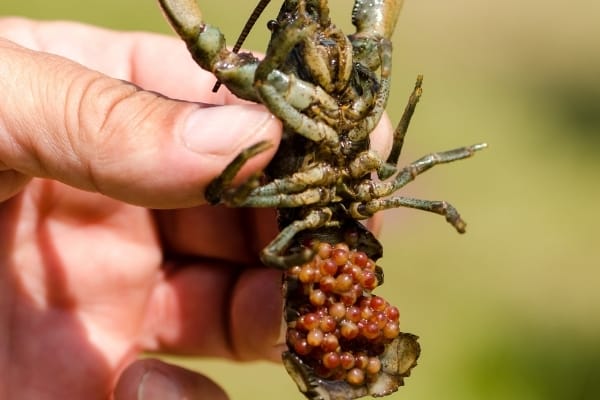
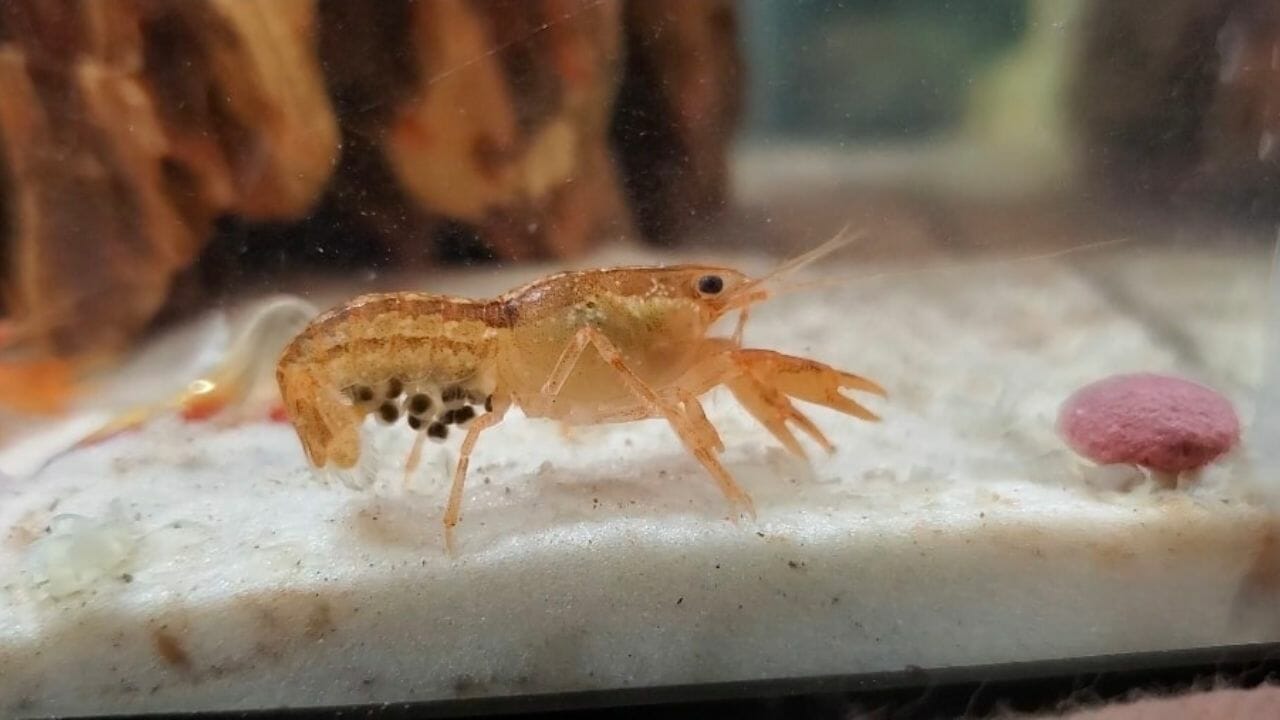
So you walked up to the tank and noticed your crayfish is carrying a cluster of dark dots under her tail. Congrats. You have a berried female.
Now what? Do you do something? Do you leave her alone? Do you panic?
None of the above. You read this, then you act. Berried crayfish are way more predictable than people think. Most of the work is just leaving her the hell alone in the right setup.
This is the no-fluff guide to crayfish eggs. What they look like at every stage, how long they take, and exactly when to pull mom out before she eats her own kids.
How Crayfish Actually Get Pregnant
Female crayfish do not just lay eggs. They wait for the male first.
When a sexually mature female is fed well and the water parameters are stable, her body starts producing eggs. But those eggs are unfertilized at this point. They will not hatch without a male crayfish in the picture.
Mating works like this. The male deposits a sperm packet on the female’s underside. When she releases her eggs, they pass through that packet on the way out and get fertilized in transit.
Here is the wild part. The female can store that sperm packet for up to 6 months. So if she develops eggs months after the last mating, those eggs can still come out fertilized.
After fertilization, she tucks the eggs under her tail. That is the moment she becomes “berried.”
What a Berried Female Looks Like
You’ll know one when you see one. The eggs cluster under the tail like a tiny bunch of grapes.
The fan of swimmerets (called pleopods) holds them in place. She’ll constantly fan water over the eggs to keep them oxygenated and clean.
Most berried females also get extra shy. They burrow more. They hide under driftwood (the driftwood I use for crayfish hides). They stop eating for stretches.
That is all normal. Do not pull her out to “check on” the eggs. You stress her, she eats them.
Crayfish Egg Color Stages (What Each One Means)
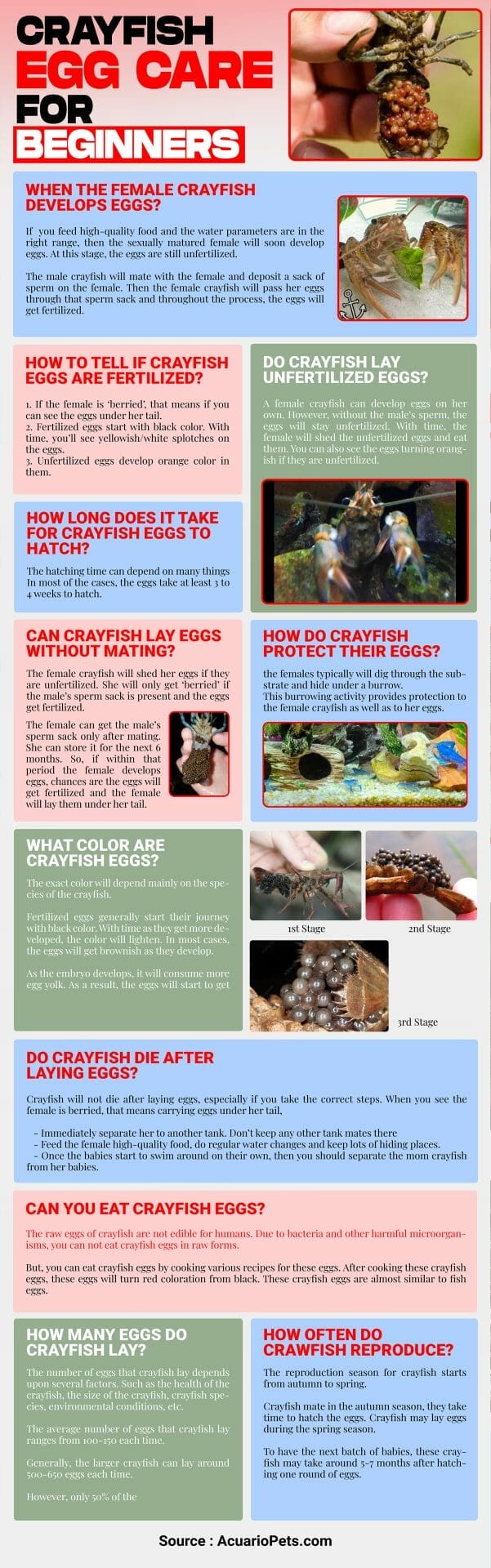
The color of the eggs tells you almost everything you need to know about how far along they are.
| Color | Meaning |
|---|---|
| Solid black or dark brown | Just fertilized. Early stage. 2-6 weeks from hatch depending on species. |
| Black with yellow/white splotches | Eyes are forming inside. Close to hatching. |
| Light brown, becoming translucent | Embryo is consuming the yolk. Hatch is imminent. |
| Orange or bright red | Usually unfertilized. She’ll drop these and eat them. |
| White and fuzzy | Fungus. The eggs failed. Water quality issue or unfertilized. |
If you see fuzz on the eggs, that is fungus growing on dead eggs. It means either the eggs were never fertilized, or the water got rough enough to kill them mid-incubation.
The female usually sheds the bad ones on her own. She eats them, ironically — protein is protein.
How Many Eggs to Expect
This depends on her size, her species, and how well she’s been eating.
| Species | Typical egg count |
|---|---|
| Dwarf crayfish (Cambarellus patzcuarensis) | 20-60 |
| Blue / Electric Blue (Procambarus alleni) | 100-300 |
| Red Swamp (Procambarus clarkii) | 200-500 |
| Red Claw (Cherax quadricarinatus) | 300-1,000 |
| Marbled crayfish (Procambarus virginalis) | 200-400 (parthenogenic — no male needed) |
A big healthy female can carry up to 650 eggs at a time. But realistically, only about half make it to free-swimming juveniles. Cannibalism, fungus, and bad water take their cut.
If you bought a marbled crayfish, fair warning — they clone themselves. No male required. One female and you have a hatchery, whether you wanted one or not.
How Long Until They Hatch
Hatching time depends on two things: species and water temperature.
| Species | Hatch time at ~70-75°F |
|---|---|
| Blue crayfish (P. alleni) | 20-30 days |
| Red Swamp (P. clarkii) | 3-4 weeks |
| Dwarf crayfish | 3-4 weeks |
| Red Claw | 6-8 weeks |
| Marbled crayfish | 3-4 weeks |
Warmer water = faster hatch. Colder water = slower. Most aquarium species hit the 3 to 4 week mark at typical room temperatures.
Do not try to “speed it up” by cranking the heater. Crayfish embryos are not impressed. You’ll just stress mom.
Setting Up the Breeding Tank
The single biggest reason crayfish eggs fail is other tank residents eating them.
The fix is simple. Move the berried female to her own tank the moment you spot eggs.
Here is what that tank needs.
Minimum size
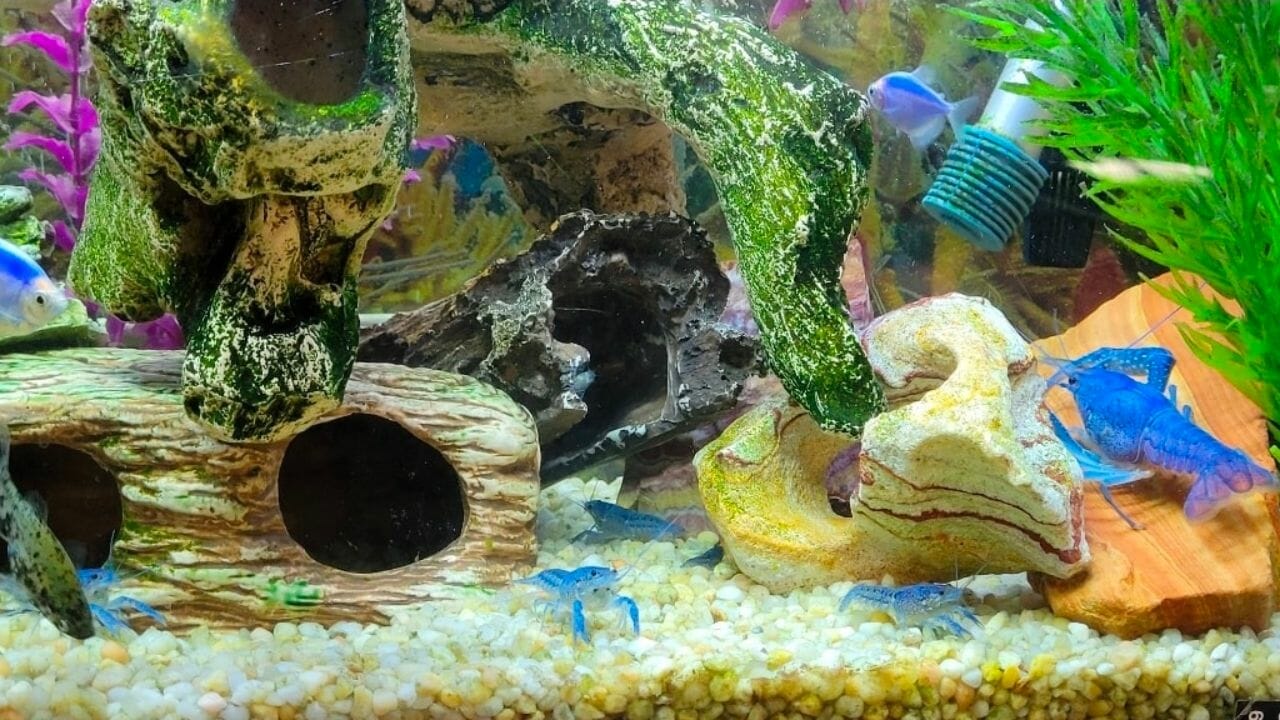
A 10-gallon is the smallest I’d use. 20-gallon long (the size most adult crayfish actually need) is better because the babies will need space when they hatch.
Substrate that lets her burrow
Crayfish dig. A berried female digs even more because burrowing is how she protects herself while she’s carrying eggs.
Use 4-5 inches of fine sand (the fine sand that lets crayfish actually burrow) or small-grain gravel. Not the cheap chunky stuff — actual fine substrate. She needs to be able to scoop it with her claws. Check our best substrate for crayfish breakdown if you’re unsure what to grab.
Hides everywhere
Stack two or three PVC pipes (— the cheapest cave a crayfish actually uses), a piece of driftwood, and a terracotta pot (the unglazed pot crayfish actually use as a cave) on its side. Crayfish that feel exposed eat their eggs out of stress.
Gentle filtration
A sponge filter (the gentle sponge filter I run in my crayfish tanks) is the move. No HOB, no canister with strong intake — newly hatched crayfish are tiny and they will get sucked in. A sponge filter cycles the water without the suction risk.
Water parameters
- Temperature: 68-78°F. Sweet spot around 72°F.
- pH: 7.0-8.0
- GH: Medium-hard. Eggs and shells need calcium.
- Ammonia / Nitrite: 0. Always.
A cycled tank is non-negotiable here. New tank syndrome will torch a batch fast.
What to Feed a Berried Female
Mostly the same diet as always, but skew protein-heavy.
Sinking pellets or wafers, blanched veggies (zucchini, spinach, cucumber), the occasional bloodworm or piece of shrimp. Calcium-rich foods help with shell maintenance for both her and the developing eggs.
Drop food gently and remove anything she doesn’t eat within a few hours. Decaying food fouls water, and foul water kills eggs.
Do Crayfish Eat Their Own Eggs?
Yes and no.
Healthy fertilized eggs? She protects those. She fans them, she cleans them, she will literally fight other tank mates over them.
Unfertilized or fungused eggs? She eats them. This is normal cleanup behavior, not a failure on your part.
If she eats the entire clutch, it usually means one of three things:
- The eggs were never fertilized
- Water quality crashed
- She was so stressed she gave up
The first one is the most common. Without a sperm packet present, the eggs were always going to fail.
How Often Crayfish Reproduce
In captivity? Whenever conditions are right.
In the wild, breeding usually clusters in autumn for many North American species, with babies arriving in spring. In a heated indoor tank with stable parameters, that seasonal pattern flattens out completely.
A healthy female can produce a new clutch every 5 to 7 months. Some species hit it more often, some less. Marbled crays will produce a clutch every couple of months because they don’t need to wait on a male.
If she keeps producing infertile eggs, your setup is fine — you just don’t have a male, or he isn’t mating with her.
After Hatching — When to Pull Mom
This part trips up most new breeders.
When the eggs hatch, the babies stay clamped to mom’s underside and tail fan for 1-2 weeks. They look like tiny translucent specks. She’ll keep fanning, she’ll keep protecting, she’ll keep being a good mom.
Then they start swimming on their own. They drop off her tail and start exploring the tank.
This is when you pull mom out.
Once the babies are independent, mom stops seeing them as her offspring and starts seeing them as snacks. She will eat them. Not because she’s cruel — because she’s a crayfish, and to a crayfish, tiny things that move are food.
Net her out gently. Move her back to her original tank. Leave the babies in the breeding tank with a sponge filter, hides, and crushed sinking pellets (— what I drop in for my cray).
For the next phase, hit our baby crayfish care guide — it covers feeding, separating juveniles, and how to stop them from eating each other.
Common Mistakes That Kill Clutches
In rough order of how often I see them:
- Leaving the berried female with tank mates. Other fish pick eggs off her tail when she’s not looking. Tank mates and breeding don’t mix.
- Strong filter intake. Newly hatched crayfish are 2-3mm and they vanish into HOB filters instantly.
- Shallow substrate. Less than 3 inches means she can’t burrow, which means she’s stressed, which means dropped eggs.
- Checking on her constantly. Lifting decor to “see the eggs” makes her bolt and drop the clutch.
- Not separating mom from babies post-hatch. She’ll eat 80% of them inside a week.
- Adding fertilization confusion. If you’ve never seen a male sperm packet on her, the eggs are probably unfertilized. No amount of optimization fixes that.
Frequently Asked Questions
Will my crayfish die after laying eggs?
She won’t, as long as you keep her tank clean, fed, and quiet. Crayfish are not salmon. The clutch is not a death sentence.
Can crayfish eggs hatch without the mother?
Technically yes, but the success rate plummets. Without her constantly fanning oxygen over them, the eggs fungus over within days. If she dies mid-incubation, you can try a small airstone aimed near the eggs and a methylene blue treatment — but expect heavy losses.
Why did my crayfish’s eggs turn white?
White and fuzzy means fungus, and fungus means the eggs were either unfertilized or the water quality killed them. The female will clean them off her tail on her own.
How can I tell if my crayfish is even old enough to breed?
Most aquarium crayfish are sexually mature by 5-6 months old or once they hit roughly 2 inches in body length (not counting the tail). Smaller than that, no eggs.
Can a single female crayfish lay eggs without a male in the tank?
She can produce eggs, but they won’t be fertilized unless she mated within the previous 6 months (sperm packet storage) or she’s a marbled crayfish (which clones itself). Unfertilized eggs just drop off and get eaten.
Final Thoughts
A berried crayfish is not a crisis. It’s just biology doing biology.
Move her to her own tank, give her sand to burrow in, feed her well, and let her cook the eggs for 3-4 weeks. Pull her once the babies start swimming. That’s it.
If she eats the whole clutch this time, don’t take it personally. Crayfish breed often. The next batch is probably a few months away.
And if you’re new to crayfish in general, walk through our pet crayfish care guide and the crayfish tank setup guide so the base is solid before the next clutch shows up.
Good luck. You’re about to have a lot of tiny crayfish.

About Author
Hello, I’m Muntaseer Rahman, the owner of AcuarioPets.com. I’m passionate about aquarium pets like shrimps, snails, crabs, and crayfish. I’ve created this website to share my expertise and help you provide better care for these amazing pets.
Disclaimer
This site is owned and operated by Muntaseer Rahman. AcuarioPets.com is a participant in the Amazon Services LLC Associates Program, an affiliate advertising program designed to provide a means for sites to earn advertising fees by advertising and linking to Amazon.com. This site also participates in other affiliate programs and is compensated for referring traffic and business to these companies.